


Wood rot repair is one of those boat problems that tends to sneak in quietly, and it’s often very good at staying out of sight. At first look, everything may seem fine, which makes it easy to think there’s nothing to worry about. Below the surface, though, small changes often begin to stack up. Then something starts to feel wrong: a soft spot where the deck should be solid, or a transom that just doesn’t feel right. Sometimes it shows up as an engine mount that flexes when it shouldn’t, which is never comforting. By the time most boat owners notice these signs, the rot has usually had time to spread deeper into the structure, and that’s when quick or simple fixes are no longer possible.
Finding wood rot early often changes everything. When it’s caught soon enough, repairs don’t have to feel overwhelming or costly. This guide looks at how to spot boat wood rot repair needs and how to prevent wood rot on boats before it turns into a safety problem, such as weakened stringers or mounting points. The approach stays simple, with clear steps and no heavy jargon, so it’s easy to understand what matters and what to do next.
Whether someone runs a fishing boat on weekends or manages a working vessel, knowing how marine wood rot treatment works can often save money and help protect the boat over time. In my view, it mostly comes down to knowing where to look and taking action earlier than most people expect to.
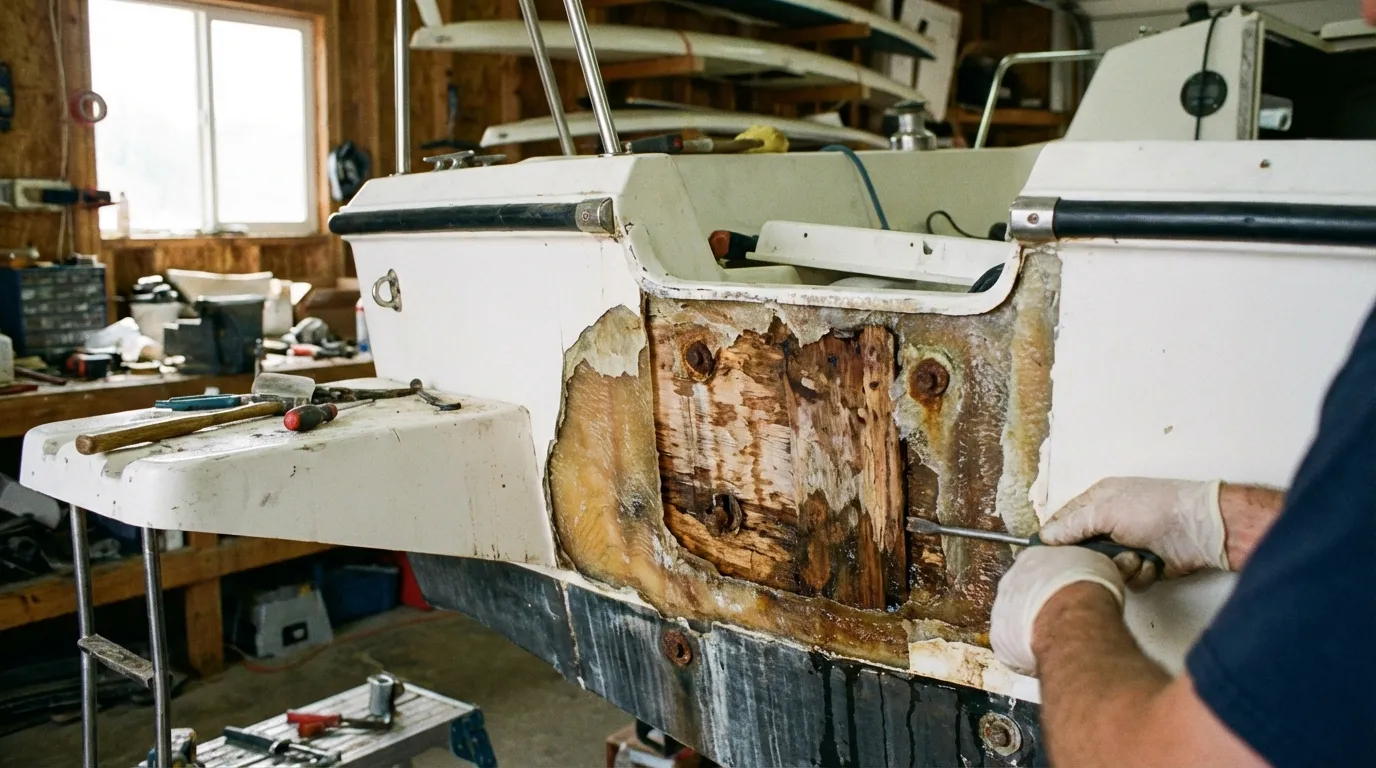
How Wood Rot Starts and Why Boats Are at Risk
Wood rot usually starts when wood stays wet and warm for long stretches. Boats often create these conditions without anyone noticing. Even solid, well-built boats can trap water inside transoms, stringers, decks, and bulkheads, especially in tight or boxed-in areas. Once moisture gets in, rot can start quietly and then spread faster than most people expect. Early on, it’s often hidden, which tends to be the biggest problem.
Many boats use wood cores sealed inside fiberglass. When small holes form, cracks develop, or sealant ages and fails, water finds its way inside, sometimes through an opening that’s easy to overlook. Over time, the wood softens and loses strength. That’s why repair rotted wood on boat projects often lead back to hardware and deck fittings, especially around engine mounts. In many cases, the damage begins right where parts are bolted down.
Rot does more than affect how a boat looks. It weakens the structure that holds engines, fuel tanks, and steering systems in place. That can lead to serious problems, especially since it rarely looks bad at first. Inspections on working vessels often reveal hidden rot in load-bearing areas, which isn’t surprising.
During Bear’s 2024, 2025 annual maintenance haulout, rot was identified in the bilge areas. The most significant damage affects the majority of the smaller steam-bent frames.
This damage didn’t happen overnight. It built up slowly as moisture stayed trapped, inspections were skipped, and time did what it usually does.
Early Warning Signs You Should Never Ignore
Wood rot usually doesn’t show up out of nowhere. Most of the time, it leaves clues well before repairs get expensive. Knowing what to watch for makes it easier to step in early and keep damage under control. The tricky part is that the signs are often small, easy to miss, and they tend to build quietly. That’s often where people get caught out.
Soft spots underfoot and dark staining around fittings are common early hints. Below deck, a musty smell can be another signal. It often appears after other changes are already there, which can be frustrating. Screws that spin without ever tightening are another giveaway. It can all feel subtle at first, but it’s rarely harmless. Usually, that’s a quiet warning worth taking seriously.
The transom deserves extra attention. Boat transom wood rot often shows up as engine movement or visible flex when trimming the motor. Spider cracks might appear, but movement is often the detail that raises concern. That’s the red flag.
Suspecting rot doesn’t mean guessing blindly. One useful approach is checking with a moisture meter to spot wet cores. You may also find that light tapping with a plastic hammer reveals hollow sounds that don’t match nearby areas. Simple tests, but they often tell you a lot.
When rot goes unnoticed, the consequences can be serious. No shortcuts here.
Rotten wood and poor inspection regime most likely cause of the historic Maine schooner Grace Bailey demasting.
That situation shows how structural wood failure can turn into a real safety issue, tied to loss of strength and stability, not just repair costs.
Boat Wood Rot Repair Options That Actually Work
Not all rot looks or behaves the same, and that’s usually where people get confused. The right fix depends on how deep the damage goes and how much strength the wood still has, which you can often figure out by probing the area and checking moisture levels. When rot is caught early, it can often be stabilized without tearing anything out. That’s the best-case situation, and it’s always a relief when it happens. Once rot goes deeper, removing and replacing the damaged wood is usually the realistic choice. Shortcuts may seem appealing, but they rarely last very long.
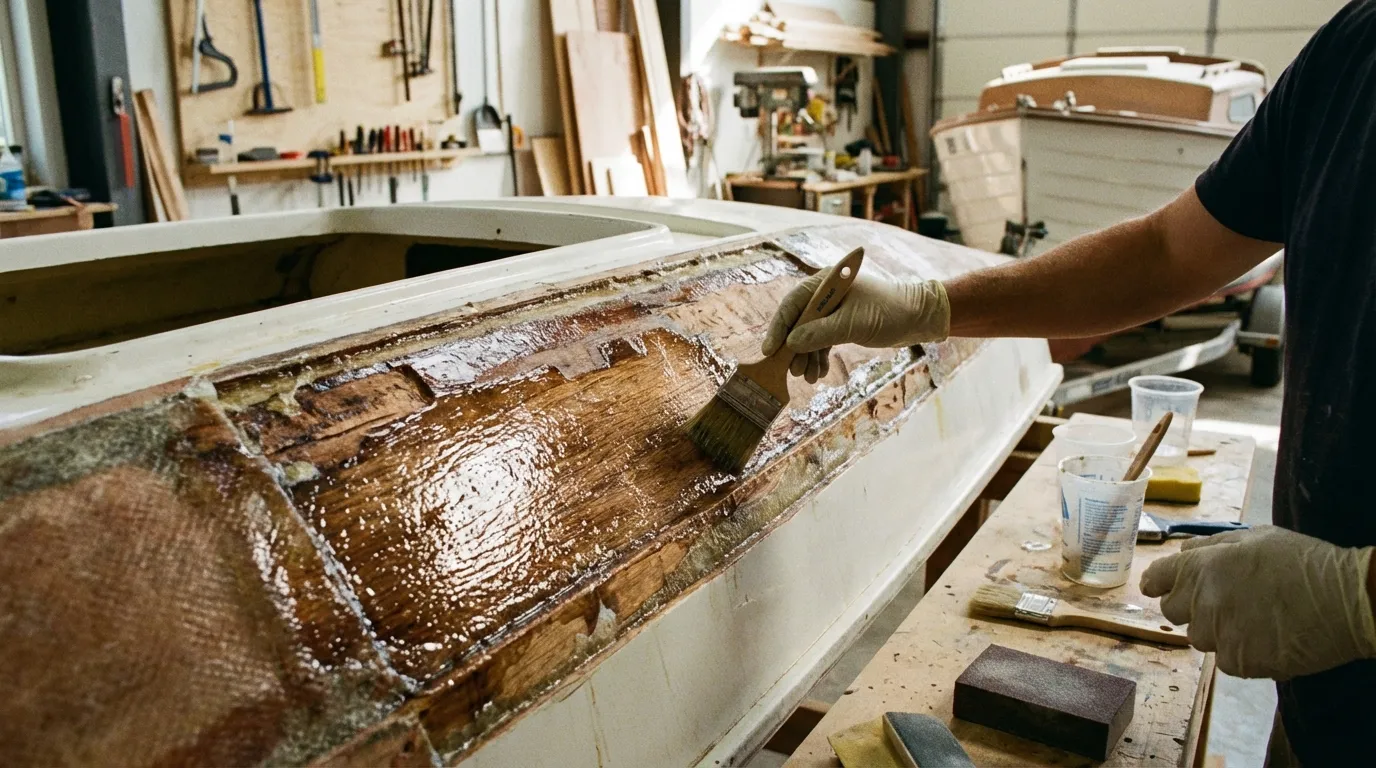
With minor damage, marine wood rot treatment products usually rely on penetrating epoxy that soaks into softened wood and hardens inside it. This process can slow or stop the spread and bring back some strength, even if the wood never fully returns to its original condition. Epoxy wood repair marine systems work best when moisture is controlled before and during the repair, and that step often matters more than people expect.
Epoxy is generally preferred over polyester for structural repairs, especially when strength and long-term durability matter.
Epoxy has a negligible shrinkage rate. Polyester /Vinylester has about an 8% shrinkage.
Low shrinkage helps keep a tight bond with the surrounding wood. That bond affects how long the repair holds up once the boat is back in the water and flexing during normal use.
For moderate repairs, builders often remove soft material, treat nearby wood with penetrating epoxy, and rebuild the area using thickened structural epoxy. This method is common on decks and transoms and has a solid history of working well.
Severe rot usually means full replacement. It takes more work, but when the wood can’t support a load anymore, it’s often the safest route.
We covered transom and deck repairs in more detail in this guide on marine wood rot repair, breaking the process down step by step for that type of damage.
What Wood Rot Repair Really Costs
Many boat owners put off repairs because the price sounds scary (I get it). What often surprises people is that fixing issues early usually keeps the cost lower than waiting until parts need to be torn apart.
Prices vary a lot, based on how bad the damage is and how easy it is to reach. Small epoxy fixes can cost a few hundred dollars, while bigger structural repairs can run into the thousands.
| Repair Type | Typical Cost Range | Repair Scope |
|---|---|---|
| Early-stage epoxy treatment | $200, $500 | Surface or localized rot |
| Moderate structural repair | $600, $1,200 | Partial core rebuild |
| Major wood replacement | $1,500, $2,000+ | Transom or stringer replacement |
So why does timing matter? Acting early often means less downtime, for example, fixing a small soft spot instead of removing an entire section.
Prevent Wood Rot on Boats With Simple Habits
Stopping problems early is usually easier, and cheaper, than fixing them later, especially on boats. Wood rot tends to appear in the same weak areas again and again. In most cases, it comes down to keeping water out and catching small issues early, before they spread and get worse.
One helpful habit is sealing every fastener properly. Any screw or bolt that goes through a deck or transom should be sealed with marine‑grade sealant or epoxy, not standard hardware‑store products. Plywood edges are often more exposed than people expect, so they need this care every time, not only during major repairs.
Ventilation also makes a clear difference. When moisture gets trapped, rot usually grows faster. Good airflow through bilges and lockers helps damp wood dry between trips, which often works better than many boat owners think.
Regular yearly inspections are worth the effort. Instead of guessing, many DIY owners use moisture meters and small inspection cameras around engine mounts and deck hardware. Rot often shows up near corrosion, so handling both at the same time usually makes sense. We also wrote about advanced marine corrosion prevention, and it works well as part of a solid rot‑prevention plan, in my view.
Tools and Materials That Make DIY Repairs Easier
Many boat owners handle small wood rot repairs themselves when the right tools are nearby (often within arm’s reach). A basic kit usually has a moisture meter, drill, scraper, disposable brushes, you’ll use more than you think, and proper safety gear. Nothing fancy, often already in the shop, but it tends to matter more than expected, especially in tight or awkward areas.
When rot is just beginning, penetrating epoxy systems are often used. Thickened epoxy is brought in to rebuild missing edges or sections. Marine fillers help level uneven spots before sealing and can save time. From my experience, small details often decide if a repair lasts.
Patience makes a real difference. Repairs fail most often when things move too fast. Let treated wood dry fully, follow cure times closely, and don’t rush, why undo good work?
If fiberglass skin needs removal or rebuilding, it helps to return to surface prep basics. No shortcuts. That’s covered here: fiberglass repair made simple.
Common Questions People Ask
How do I know if wood rot is structural?
So wood that carries weight or makes up the deck and hull is usually structural. If it bends, feels soft, or moves under load, repair is needed because movement often means rot weakened strength.
Can epoxy really stop wood rot?
Yes, for early rot, usually. Epoxy can soak in, firm up soft wood, and help keep moisture out. But if the wood has already lost its strength, it won’t help much. This is mainly about catching damage early.
Is boat transom wood rot always visible?
No, it’s not always visible. Transom rot can hide behind fiberglass (annoying). You might notice strange engine movement or cracks that don’t seem to make sense.
With good prep and a tight seal, epoxy repairs often last for years, at least in my experience. If prep slips or moisture sneaks in, the lifespan drops; skipping steps almost never pays off.
Should I fix rot myself or hire a pro?
For safety, large structural repairs often need professional tools and hands-on experience. Small repairs found early are usually simple to do on your own because the damage is light.
Protect Your Boat Before Small Problems Grow
Timing makes a real difference with wood rot repair. When you catch issues early, the fix usually stays manageable, which is a relief for most boat owners. Wait too long, and small leaks or soft spots can quietly turn into bigger repairs and higher costs, something that happens more often than people expect.
What helps most? Regular inspections that fit into your normal routine, even quick checks. Seal openings as soon as they appear. A practical option is using epoxy wood repair marine products when it makes sense, and replacing wood that has already lost strength instead of trying to save it. Why wait, when acting early is often simpler?
Boats are built for enjoyment, not constant worry. A bit of prevention can keep the vessel water-ready and the owner more relaxed, so time on the water is about using it, not stressing over what could go wrong.
