


Choosing marine navigation systems can feel confusing at first. There are chartplotters, GPS units, AIS, radar, sonar, and full multifunction displays, so yes, it can feel like a lot to figure out. Some systems are made for weekend fishing trips, while others are designed for heavy commercial use. Buy too little, and you might miss key safety features. Go too far the other way, and you will probably pay for tools you do not really need.
That is why the best choice is not always the biggest screen or the newest model. Here, the best marine navigation systems are the ones that fit your boat, the waters you usually travel, your skill level, and your budget. It is pretty simple. They should also be easy to read in bright sun and easy to update, which often matters more than people think. And when weather changes or visibility drops fast, you need to be able to trust them.
This guide breaks the process into simple steps. It covers the main types of marine navigation systems, the features that matter most, how to compare systems for fishing or work use, and the common mistakes to avoid. It also looks at maintenance, power needs, and smart upgrades so your setup stays dependable season after season out on the water.
What Marine Navigation Systems Include Today
Modern marine navigation systems do a lot more than just show a boat’s position on a map. On many boats, one screen can manage chart plotting, GPS, AIS targets, radar overlays, sonar, engine data, and route planning, which is a pretty big change. That helps explain why the market keeps growing. Emergen Research values the global marine navigation system market at USD 14.82 billion in 2025. In the broader marine electronics category, navigation systems make up 45% of the market according to Precedence Research.
| Market Segment | Value | Notes |
|---|---|---|
| Marine navigation systems | USD 14.82 billion | 2025 estimate |
| Marine electronics market | USD 7.0 billion | 2025 estimate |
| Navigation share of marine electronics | 45% | 2025 share |
| Recreational navigation software | USD 8.23 billion | 2025 estimate |
For boat owners, that means more options and better integration. A basic setup might only include GPS and chart plotting. A more advanced one can add AIS receive and radar, plus fish finder tools, which many people will likely want over time. At the top end, the system may also connect with autopilot, engine sensors, battery data, and mobile apps.
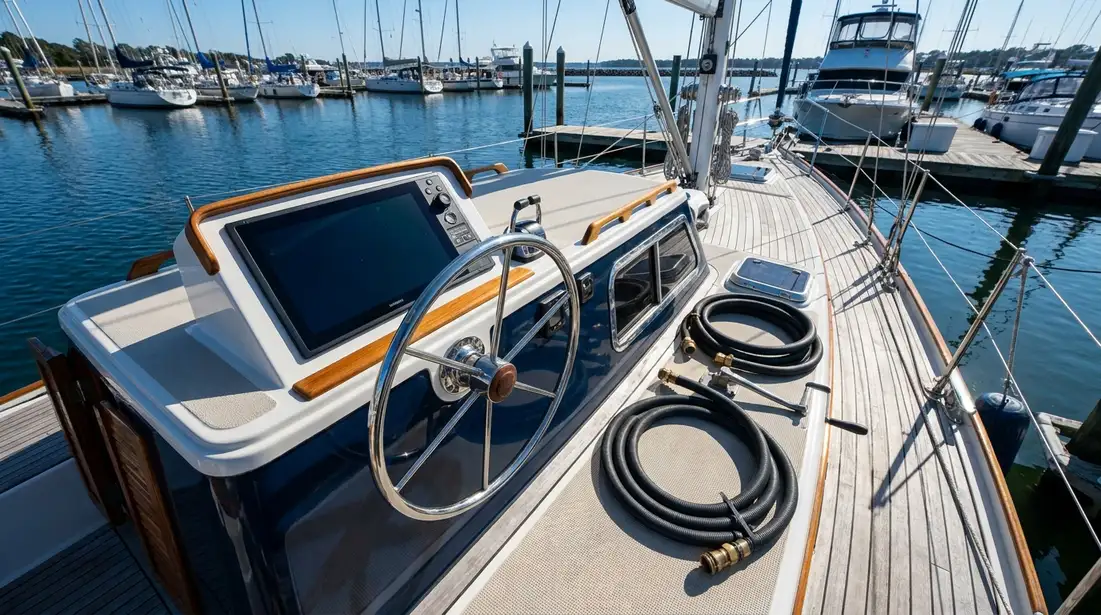
It often helps to think of the system as a connected setup rather than just one device. That idea is simple, but here it matters because future upgrades are easier. So if there are plans to add sensors later, choosing a system with strong network support from the start will usually save trouble down the line.
Match Marine Navigation Systems to How You Actually Boat
The first step is being honest about how the boat is really used. A lake angler will likely need something pretty different from a coastal cruiser, and that changes again for a commercial operator.
In shallow water, sonar and waypoint control may matter more than radar. But when early starts before sunrise or runs in fog are part of the routine, AIS and radar should usually move much higher on the list.
For boats carrying passengers for work, reliability tends to matter even more, and backup systems become important. That is hard to avoid. A good buying process often starts by matching the system to the actual job the boat does.
1. Define your main use
Think about where you usually boat, how far you usually go, and what weather you most often face. It’s pretty simple, honestly. Inland boating often needs less gear than offshore navigation, especially farther from shore.
2. List must-have features
Examples: GPS, chartplotter, AIS receive, transceiver AIS, radar, CHIRP sonar, side-scan, plus app syncing, which is really handy. Just a simple list, I think.
3. Check your boat size and helm space
A big screen usually sounds great. But it only works well if it fits your boat and stays easy to see from the helm, where you’ll actually use it.
4. Review your power system
Navigation electronics depend on steady battery power and clean wiring, and that detail is easy to miss. Before adding more gear, it usually helps to get a clear sense of your boat’s electrical basics. That’s often the best place to start. For planning, Demystifying Marine Electrical Systems: Maintenance and Troubleshooting can likely be useful here.
For many recreational boaters, ease of use matters more than extra features. If a menu takes too long to learn, it probably will not help much in rough weather, which is often when it matters most. In this situation, simple really does help.
Key Features in Marine Navigation Systems That Matter More Than the Marketing
Flashy screens and long feature lists can be distracting, and that happens a lot. But the best marine navigation systems usually come down to a few practical things: visibility, reliability, compatibility, and backup support. From this angle, those are the things that really matter once a boat is out on the water, much more than extras that probably will not be used very often.
Human error is also a major issue, and the numbers here are hard to ignore. Research shows 58.4% of more than 2,800 maritime incidents in 2023 involved human failure, including poor equipment maintenance. On small vessels, American Sailing says mis-entered waypoints are the most common electronic navigation failure, appearing in 20% to 40% of cases. Failures linked to NMEA 0183 or NMEA 2000 networks make up 15% to 25% of electronic navigation failures. Chartplotter firmware crashes account for 10% to 20% of small-vessel electronic failures.
| Common Issue | Estimated Rate | Why It Matters |
|---|---|---|
| Mis-entered waypoints | 20% to 40% | Can send boat off course |
| NMEA network failures | 15% to 25% | Breaks device communication |
| Chartplotter firmware crashes | 10% to 20% | Can disable key display tools |
| GPS signal loss or degradation | 5% to 15% | Can reduce position confidence |
So these features are worth looking at more closely:
Screen readability
Good visibility in bright sunlight matters a lot. Clear menus help too, and split-screen layouts should stay easy to read in motion.
AIS integration
On busy routes, AIS can help crews spot nearby vessels more easily. Research shared by Premier Science also found it may cut navigation incidents by 20%.
Network compatibility
Choose systems that work well with other onboard electronics, since that often matters. It’s especially important if autopilot, radar, fuel flow, or engine data gets added later, and probably sooner than expected.
Software support
The software side now often matters nearly as much as the hardware. Frequent updates, chart support, and easy route syncing for rides add real value, even if they seem small.
Why Redundancy and Maintenance Matter as Much as the Display
A lot of buyers focus on what a screen can do on day one. Fewer think about what happens after a season of sun, salt, vibration, and strain on the wiring, which is pretty normal on the water. Even an advanced setup that looks great at the dock can stop working after months outside, whether connectors corrode at the terminals, batteries begin to weaken, or software updates are missed.
In some conditions, GPS signal loss or degradation shows up in 5% to 15% of small-vessel cases. Jamming and spoofing are still uncommon, estimated at 0.1% to 1%, but those numbers are going up. That is why smart operators usually cross-check what they see. UK maritime guidance says it clearly: electronic tools are powerful, but mariners still need traditional navigation skills. Even reliable gear should not be the only thing they rely on.
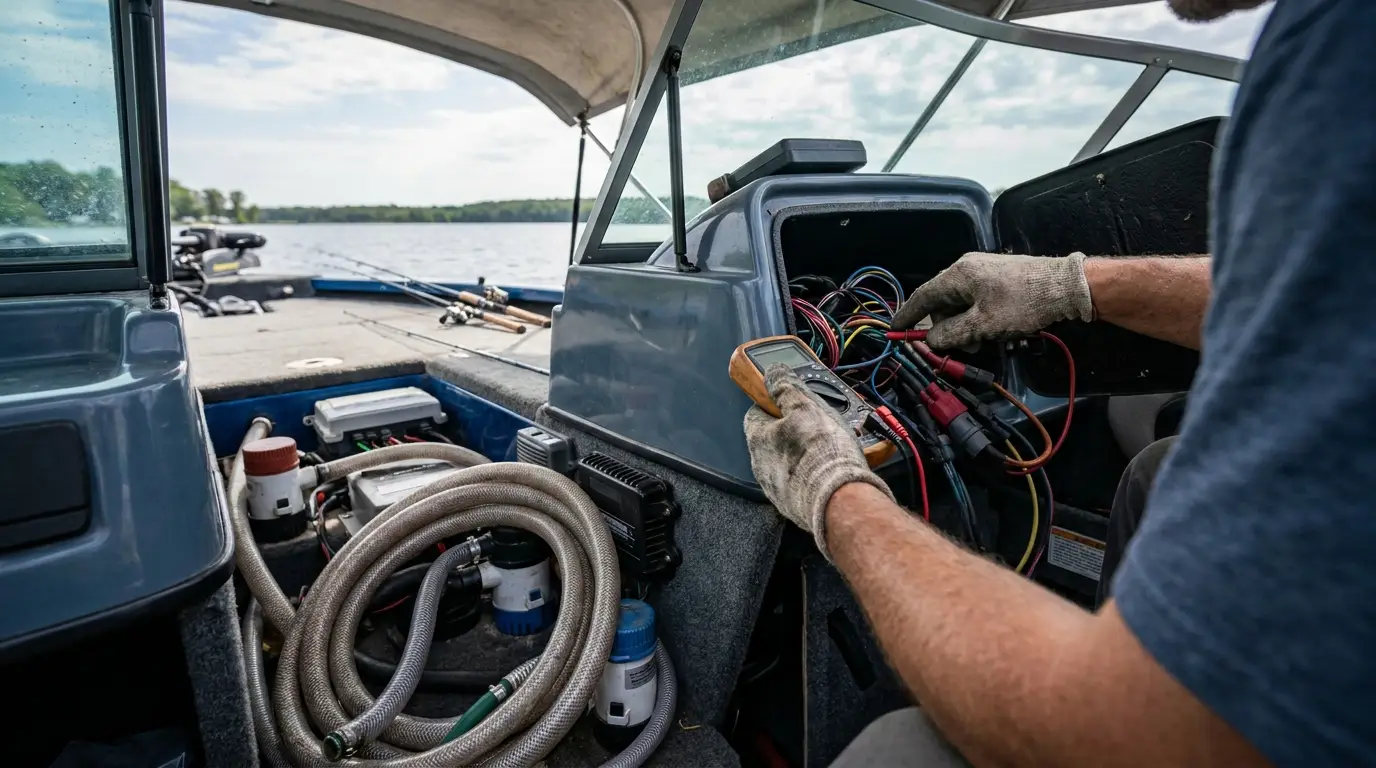
A solid setup also needs a backup plan. That might be a handheld GPS, knowing how to use paper charts, or just having another way to confirm position. It is basic stuff, but it often makes a real difference. Keeping up with maintenance matters too, since it helps catch problems before a trip instead of discovering them offshore.
Firmware updates
It’s usually best to install updates before the season, I think. Not during a trip.
Wiring and connectors
Use marine-grade parts; they’re usually worth it. They help stop corrosion, I think.
Battery health
On boats, weak voltage often makes electronics act weird, and it happens a lot. If yours uses several banks or lithium power, another helpful read covers Marine Battery Chargers for Multi‑Bank & Lithium Systems. You’ll probably find it useful.
Network checks
During routine service, check NMEA backbone connections and terminations; it really helps.
And if you’re a DIY boater who likes hands-on maintenance, you’ll often get better long-term results because you tend to catch small issues early before they become bigger problems.
Best Marine Navigation Systems Setups for Recreational, Fishing, and Commercial Boats
Different users should choose setups based on different priorities. That sounds obvious, but people still shop based on brand hype instead of thinking about how they really use the boat, and that often causes problems later.
For recreational cruising, a clear chartplotter with built-in GPS, app syncing, and AIS receive is often enough. The main goal is usually a system that’s simple to use and quick when setting a route from the dock or making changes underway. No extra hassle. For fishing, the best marine navigation systems usually center on an MFD with chart plotting, fish finders, CHIRP sonar, and waypoint control. Split-screen performance often matters a lot in that setup, especially when charts and sonar need to stay visible at the same time, because delays are usually where things start getting frustrating.
Commercial operators should focus more on reliability, serviceability, and redundancy. The priorities are different here. AIS transceiver, radar integration, and strong network support matter more than flashy extras in day-to-day use. According to a peer-reviewed summary cited in the research, GPS systems can deliver 150% ROI, and AIS systems can deliver 125% ROI. That generally matches real-world use too, since lower risk and fewer delays can save money over time.
If your boat already has several electronic systems onboard, Troubleshooting Marine Electrical Systems: A DIY Guide can help sort out faults before adding new navigation gear.
Trends Shaping the Next Generation of Marine Navigation Systems
The biggest shift is integration. Buyers now usually expect chartplotters to work with radar, sonar, AIS, autopilot, engine data, mobile devices, and other onboard systems, which is pretty standard now. Software value is rising too. The recreational marine navigation software market is estimated at USD 8.23 billion in 2025 and projected to reach USD 11.81 billion by 2030. That likely means buyers care about user experience, route syncing, and update support, not just the hardware itself.
There’s also wider use of cloud planning, better mobile companion apps, stronger fish finder integration, and more connected onboard workflows, little by little. For many anglers, the line between marine navigation systems and fish finders keeps getting smaller. On the commercial side, system uptime matters a lot, especially in daily operations. Network health and crew training usually stay near the top of the priority list too.
Thinking a few years ahead often makes more sense than buying only for the next trip. If the boat and budget allow it, leaving room for future sensors and smart upgrades can make later changes much easier.
A Simple Checklist Before You Buy
Before picking a system, write down the non-negotiables. Start with where the boat is used and how often it’s used for fishing or cruising, since that usually shapes what matters most, along with the safety tools already on board. Then check screen size, mounting space, battery capacity, waterproof rating, and network compatibility. In most cases, covering the basics first is the smartest move.
Support and replacement parts matter too, especially when upgrades or routine maintenance are part of the plan. That’s one reason many boaters use resources like First Choice Marine. A navigation system often works best when the rest of the boat is ready for it too, including batteries, wiring, and mounting hardware, not just the display.
And what about simplicity? If possible, choose the unit that can be learned fast. Usually, the best system is the one that can still be used calmly in wind, rain, glare, or stress, without digging through menus.
Frequently Asked Questions
What is the most important part of a marine navigation system?
For most boaters, the core is a reliable chartplotter with GPS. That gives you position, route planning, and map awareness. After that, the best add-ons depend on how you use the boat, such as AIS for traffic awareness or sonar for fishing.
Do I need AIS on a recreational boat?
Not every recreational boat needs AIS, but it is very useful in busy water, fog, or coastal traffic. Even AIS receive can improve awareness of nearby vessels. Just remember it should support, not replace, radar, visual checks, and safe boating judgment.
Are multifunction displays better than separate units?
Often, yes. A multifunction display can save helm space and make it easier to view charts, sonar, and AIS in one place. Separate units can still work well if you want simple backups or already own some electronics.
How often should marine navigation systems be updated?
Check for firmware and chart updates before each season and before long trips. If the manufacturer releases stability fixes, install them sooner rather than later. Many issues blamed on bad hardware are really old software or poor network connections.
Can I install a marine navigation system myself?
Many DIY boat owners can handle a basic install if the wiring is in good shape and the instructions are clear. The hard part is often network setup, power protection, and clean cable routing. If you need connectors, electrical supplies, or other rigging parts, First Choice Marine is one example of a marine parts resource that fits into that planning process.
What else should I check before upgrading navigation electronics?
Look at your batteries, charging system, fuse protection, and helm space first. A new display will not perform well if voltage drops or wiring is weak. For many boaters, checking boat-wide readiness before buying saves money and prevents repeat work. You can also review Marine Electrical Systems: Troubleshooting Common Issues before making larger upgrades.
The Right System Is the One You Can Trust
The best marine navigation systems are not chosen by screen size alone. They’re chosen by how well they fit. A good setup should match the way someone boats, work with the boat’s power and wiring, and give clear information when it’s actually needed, especially in low visibility or crowded channels (that’s often the real test). Recreational users may want simple controls or mobile syncing. Anglers often care more about sonar and waypoint control. Commercial operators usually need stronger redundancy and deeper integration (especially across multiple systems).
The research points in a practical direction: better electronics usually help only when they’re maintained, updated, and used carefully. That part matters in real conditions. Human error, weak networks, dead batteries, and wrong waypoint entry still cause plenty of trouble. In many cases, it makes more sense to build a setup that is easy to understand, simple to support, and easy to back up.
For anyone shopping, the most useful place to start is with must-have features and actual boating conditions. After that, consider power, wiring, and room for future expansion. That usually makes it more likely you’ll choose a system that works well for years, not just on the first trip (which, arguably, doesn’t reveal much anyway).
