


Table of Contents
- What 3M Marine Restorer and Wax Does
- 3M Marine Restorer and Wax on Gelcoat: Oxidation Removal by Severity
- Marine Compound vs Polish: When to Use Each Step
- How to Use 3M Marine Restorer and Wax: Hand and Machine Application
- Boat Wax Application: Protecting Your Finish
- Product Comparison and Selection Guide
- Durability and Maintenance Schedule
- Frequently Asked Questions
Last Updated: October 19, 2026
What 3M Marine Restorer and Wax Does
A marine restorer and wax is a single-step product that combines compounding and protection, removing oxidation from fiberglass and gelcoat while applying a protective wax finish.
The 3M Marine Restorer and Wax line uses abrasive minerals to cut through chalky, oxidized surfaces, then leaves a wax coating that protects against sun, salt spray, and weathering.

At First Choice Marine, we stock multiple formulations of 3M's marine restorer and wax products.
3M Marine Restorer and Wax on Gelcoat: Oxidation Removal by Severity
Gelcoat oxidation appears as a chalky, faded layer on your hull, ranging from light dullness to deep chalking. Matching your product to the oxidation level restores shine without over-compounding a lightly oxidized surface.
Test the Surface Before You Buy
Before choosing a product, run three quick checks on an inconspicuous area of the hull, such as the transom or a section below the rub rail:
- The white-powder test. Wipe a clean white cloth across the surface with moderate pressure. A faint gray tint means light oxidation. A distinct white chalky transfer means medium. A thick, dry powder that cakes on the cloth means heavy.
- The water-bead test. Mist a small area with clean water. If water beads tightly and rolls off, the wax layer is intact and oxidation is light. If water sheets and spreads, the protective layer is gone and oxidation is at least medium. If water soaks in and the surface darkens unevenly, oxidation is heavy.
- The fingernail test. Drag a fingernail lightly across the surface. A smooth glide means light. A slight drag or grit means medium. A rough, catch-and-skip feel means heavy.
Run all three checks in the same spot and trust the rougher result when they disagree. Repeat on the bow, topsides, and transom, since sun exposure often makes one end worse.
Light Oxidation
Light oxidation shows up as lost gloss and minor color fading, with a smooth surface and the original color visible underneath.
For light oxidation, the 3M Marine Polish+Wax Perfect-It Light Quart (#36110) at $64.74 is the right choice.

A quart covers roughly the topsides of a 20- to 24-foot boat in a single pass, so most trailerable boats need one quart per season.
Medium Oxidation
Medium oxidation appears as noticeable chalking and color fading across large areas, with a slightly rough surface and the original gelcoat color harder to see.
The 3M Marine Polish+Wax Perfect-It Light Quart (#36110) handles this level too, though application takes longer because it must work through more buildup.
If a single pass with the quart product does not clear the chalk after buffing, you are working on medium-to-heavy oxidation and should step up rather than apply a second pass of the same product.
Heavy Oxidation
Heavy oxidation manifests as thick, chalky buildup that feels rough and looks significantly faded.
For this level, the 3M Marine High Gloss Gelcoat Compound 1 Gallon (#06039) at $125.14 is the appropriate choice.
Heavy oxidation usually needs a follow-up step. Compound removes the chalk but leaves a slightly hazy surface, so plan on a polish-and-wax pass with the quart product (#36110) or a dedicated wax (#36113) after compounding.
Matching Product to Severity at a Glance
| Oxidation Level | How It Tests | First Product | Follow-Up |
|---|---|---|---|
| Light | Faint cloth tint, water sheets, smooth nail glide | Polish+Wax Quart #36110 | None required; optional wax #36113 |
| Medium | Clear chalk on cloth, water spreads, slight grit | Polish+Wax Quart #36110, one pass | Second pass only if chalk persists; then step up |
| Heavy | Thick powder, water soaks in, rough catch | High Gloss Gelcoat Compound #06039 | Polish+Wax #36110 or Wax #36113 |
Marine Compound vs Polish: When to Use Each Step
Compound uses larger, more aggressive abrasives to remove heavy oxidation, scratches, and chalky film. Polish uses finer abrasives to smooth the surface and prepare it for wax.
For heavily oxidized boats, many professionals recommend a separate compounding step followed by polish and wax for maximum control.
The trade-off is precision versus efficiency. Separate steps let you apply the right abrasive level to each area; a combined product is faster but assumes uniform oxidation.
How to Use 3M Marine Restorer and Wax: Hand and Machine Application
Hand Application
Hand application of marine restorer and wax works best on smaller boats or detailed areas where a machine might damage trim or hardware.
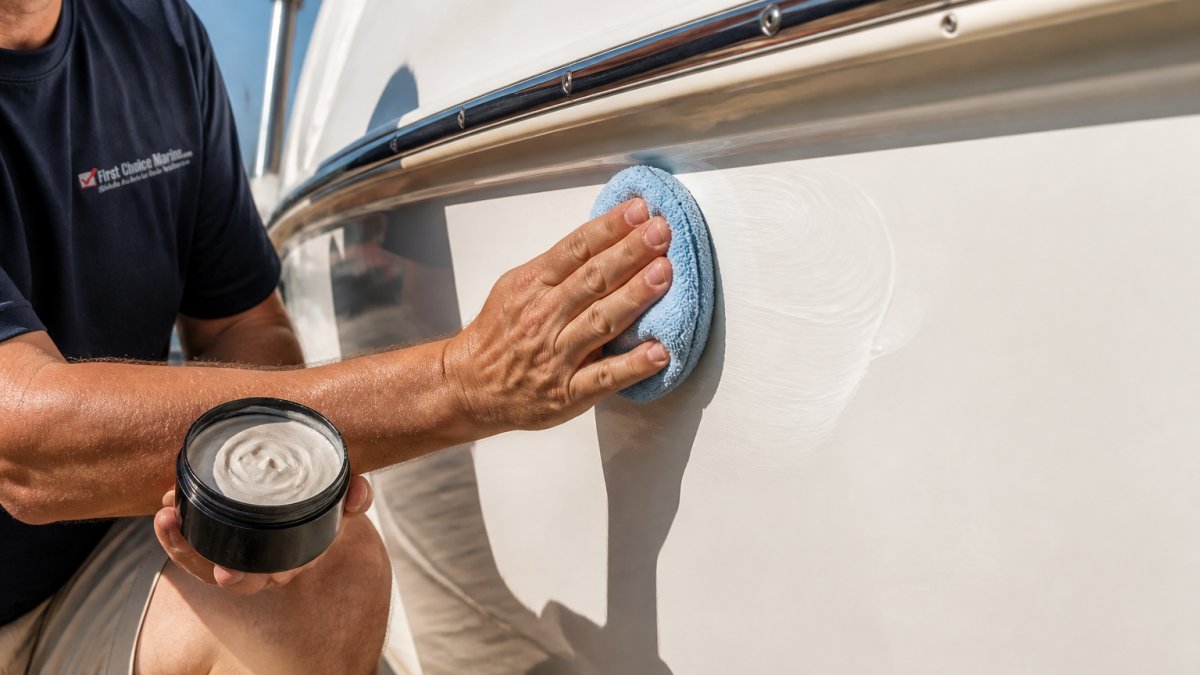
Work the product into the gelcoat in circular motions, covering a 2-by-2-foot section at a time with moderate pressure.
Continue section by section across the hull. This method takes longer than machine application but gives complete control and is safer around through-hull fittings, antennas, and decals.
3M Marine Metal 18 oz Restorer and Polish #09019 →
Machine Application
Machine application dramatically speeds up larger boats or full-hull jobs.
Apply a thin, even line of product across the surface. Move the machine in overlapping passes, letting the pad do the work without pressing hard; excessive pressure generates heat and can burn through gelcoat.
Machine application covers a large hull in a fraction of the time required for hand work. Keep the pad moving, and practice on a small area first if you're new to machine polishing.
Boat Wax Application: Protecting Your Finish
After removing oxidation with compound or a restorer-and-wax product, a dedicated wax layer extends the life of your finish. The 3M Marine Wax Perfect-It Quart (#36113) at $59.22 contains pure Brazilian carnauba wax, known for a hard, show-quality finish that resists weathering.

Apply wax with a clean microfiber applicator pad in thin, even coats. Work in small sections and buff each with a dry cloth before moving on; carnauba dries quickly, so don't let it sit too long.
If you used a restorer-and-wax product that includes wax protection, a dedicated wax layer is optional but recommended for boats in harsh environments or intense sun.
Product Comparison and Selection Guide
| Product | Price | Best For | Oxidation Level |
|---|---|---|---|
| 3M Marine Polish+Wax Perfect-It Light Quart #36110 | $64.74 | One-step restoration with wax protection | Light to Medium |
| 3M Marine High Gloss Gelcoat Compound 1 Gallon #06039 | $125.14 | Heavy oxidation requiring aggressive cutting | Heavy |
| 3M Marine Wax Perfect-It Quart #36113 | $59.22 | Final protective wax layer after compounding | All levels (final step) |
| 3M Perfect-It Gelcoat Light Cutting Polish Plus Wax-Gallon #36111 | $180.66 | Large-scale projects with light to medium oxidation | Light to Medium (bulk) |
| 3M Marine Metal 18 oz Restorer and Polish #09019 | $59.73 | Metal hardware restoration (stainless, brass, chrome) | All oxidation levels (metals only) |
Choosing between these products depends on three factors: area size, oxidation severity, and whether you're working on gelcoat or metal hardware. For a single hull with light to medium oxidation, the 3M Marine Polish+Wax Perfect-It Light Quart offers the best balance of cost and convenience. For larger projects or heavy oxidation, the gallon size reduces per-application cost.
Durability and Maintenance Schedule
A properly applied marine restorer-and-wax finish typically lasts 6-12 months depending on environmental exposure. Covered storage extends it; salt spray, intense UV, and frequent water contact shorten it.
What Shortens or Extends the Finish
Four factors drive how long the wax layer survives:
- Sun exposure. A hull stored under cover or in a shaded slip holds its finish noticeably longer than one kept on an open mooring. UV breaks down the wax film first, which is why horizontal surfaces like the foredeck and gunwale tops fade before the vertical topsides.
- Water contact. Freshwater rinsing after each use removes salt and grit that abrade the wax. Boats left with salt film between outings lose protection faster.
- Wash chemistry. Harsh detergents strip wax. A pH-neutral boat wash preserves the layer; a strong degreaser or dish soap removes it in one wash.
Reapplication Signals
Rather than waiting for a calendar date, watch for these signs that the wax layer is gone:
- Water no longer beads on the hull and instead sheets or soaks in.
- The surface feels slightly chalky to the touch after washing.
- The color looks duller in direct sun than it did a month earlier.
When two or more of these appear, a maintenance coat of wax (#36113) restores protection without a full compound step. Addressing minor oxidation early prevents it from becoming heavy oxidation that demands aggressive compound work.
Seasonal Rhythm
Spring is the ideal time for major restoration work, since oxidation has had months to develop during winter storage. A thorough compound-and-wax cycle removes that buildup and applies fresh protection for the season.
Fall haul-out is a second maintenance opportunity. Before winter storage, apply a fresh wax layer to protect the finish during months of inactivity, preventing deep oxidation and making spring restoration faster.
Surface Compatibility
Restorer-and-wax products are formulated for gelcoat and fiberglass, and they also work on fully cured painted surfaces. A few areas need different treatment:
- Decals, striping, and vinyl graphics. Abrasives can dull or lift edges. Tape them off or work around them by hand with light pressure.
- Clear-coated or freshly painted surfaces. Fresh paint needs to cure fully before any wax or abrasive product goes on; check the paint manufacturer's cure window first.
- Non-skid decks. Abrasive products can clog the texture and leave residue. Use a dedicated non-skid cleaner instead.
Safety and Working Conditions
Wear nitrile gloves and eye protection when handling compounds and waxes, and work in a ventilated area. Avoid breathing compound dust if you buff a dried section.
Frequently Asked Questions
What does 3M Marine Restorer and Wax do?
3M Marine Restorer and Wax combines polishing and protection in one application. It removes light to medium oxidation, swirl marks, and minor scratches from gelcoat surfaces while leaving a high-gloss wax finish. The formula works on fiberglass, gelcoat, paint, and marine metals. Unlike separate compounding and waxing steps, this one-step product reduces labor and material costs while delivering professional results on boat hulls and other marine surfaces.
How long does 3M Marine Restorer and Wax protection last?
The wax coating provides protection against weathering and UV exposure. Most boat owners reapply annually or before spring maintenance and haul-out season. Duration varies based on sun exposure, saltwater environment, and how often your boat is used. Regular inspection of the finish will show when the glossy protective layer begins to dull, signaling it is time for reapplication. The carnauba wax formula creates a durable shell, but marine environments demand regular maintenance schedules.
Can you apply 3M Marine Restorer and Wax by hand?
Yes, 3M Marine Restorer and Wax can be applied by hand using a dry rag or microfiber applicator. Work the paste in circular motions over small sections at a time. Hand application takes longer than machine buffing but works well for detailed areas, railings, and smaller repairs. For larger hull surfaces, many boat owners use an orbital buffer to speed up the process and ensure even coverage. Both methods deliver the same professional high-gloss finish when done correctly.
What is the difference between marine compound and polish in a restorer and wax product?
A marine compound contains abrasive minerals that cut through heavy oxidation and chalky film on gelcoat. Polish removes lighter oxidation and swirl marks after compounding. A restorer and wax product combines the polishing step with wax protection, eliminating the need for separate applications. If your gelcoat has heavy oxidation, you should use a separate compound first, then apply the restorer and wax product for final protection and shine.
Does 3M Marine Restorer and Wax work on all boat surfaces?
3M Marine Restorer and Wax works on gelcoat, fiberglass, paint, and marine metals including stainless steel, brass, and aluminum. The formula is suitable for boat hulls, coach roofs, houseboats, and other marine applications. It is ideal for non-silicone-sensitive gelcoat surfaces. Always test on a small inconspicuous area first to confirm compatibility with your specific boat's finish before applying to visible surfaces.
