


Fishing boats are changing fast, and 2026 often feels like a real turning point. Both recreational and commercial builds now focus on smart connectivity and automation, with onboard systems that talk to each other and share data. Not long ago, this sounded futuristic. Now it’s expected on many new boats, mostly because owners already use similar tech in cars, homes, and phones. Safer trips, better fishing results, and easier maintenance usually top the wish list, and that makes sense. Manufacturers are responding with connected setups that show what’s happening onboard, cut down wasted time during trips, and help owners stay in control without extra hassle, even on busy days. The change is easy to spot.
Smart connectivity matters more now because many people boat year‑round, fuel and maintenance costs stay high, and electronics sit at the center of navigation, safety, and finding fish. From touchscreen helms to bilge pumps you can check on your phone, fishing boats often feel like floating smart homes, in a good way. This shift also changes how boats are rigged, cared for, and upgraded. That’s why this guide looks at 2026 boating trends, explains how smart systems work day to day, and outlines what owners should think about before upgrading or buying their next fishing boat. For more insights, explore 2026’s Smartest Boating Trends: Rigging Your Boat for the Future which dives deeper into rigging and setup choices.
Smart Connectivity Is Redefining Modern Fishing Boats
By 2026, smart connectivity usually sits at the center of how fishing boats are designed. Builders aren’t just adding electronics at the end anymore. More often, the boat is planned around one connected system where navigation, engines, safety gear, and fishing tools all work together. That approach changes the experience right away. Data moves in real time, and in many cases owners can check key systems from a phone or tablet, whether they’re onboard or back at the dock. From the first startup, the helm feels different, and most people notice it quickly.
The biggest change shows up at the helm. Many newer fishing boats now use connected displays that pull GPS, radar, sonar, engine data, and weather into one screen. Instead of bouncing between multiple displays, operators can see fuel use next to battery status, depth, and charts in one view. This usually feels calmer and easier on the eyes during long days on the water. Having fewer separate boxes and less wiring helps as well. Smart alerts add extra peace of mind by pointing out issues like overheating, low batteries, or water coming in early, when fixes are simpler and stress stays lower.
How common is this now? Looking at recent adoption across the marine industry makes it pretty clear, and there’s little guesswork involved.
| Smart Feature | Estimated Adoption | Common Use |
|---|---|---|
| Connected multi-function displays | 70% | Navigation and sonar |
| Mobile monitoring apps | 55% | Remote boat status |
| Integrated engine data | 65% | Fuel and performance tracking |
| Networked safety systems | 48% | Bilge and alarms |
All of this connects directly to rigging choices. Updating an older fishing boat works best with a clear plan. Layout, wiring routes, power control, and mounting often matter more than expected. There’s also a guide on smart boat rigging for the future that explains how to set things up so systems work together without constant troubleshooting. It’s straightforward, practical, and easy to use.
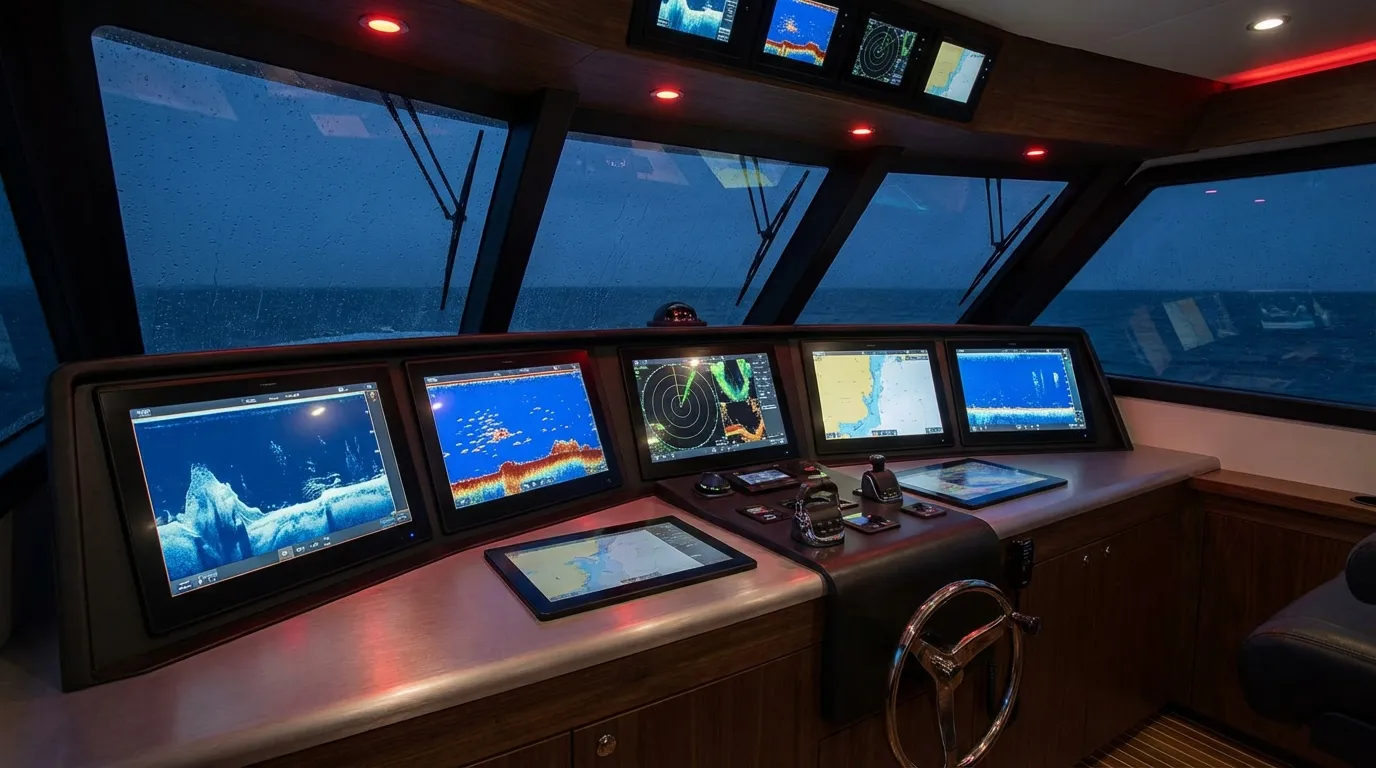
Advanced Fishing Technology Improves Results and Efficiency
Smart connectivity isn’t just about convenience. On the water, it often shapes results more than many anglers expect. By 2026, fish finders and trolling motors are tightly connected, which still surprises some people. When sonar marks a fish, the system can usually drop a waypoint right on the spot, adjust boat position, and control speed automatically. The result is simple and useful: less guessing, fewer constant tweaks, and more time reacting to clear, live data as wind, current, and light change during the day. That steady feedback helps many anglers feel more relaxed and sure of their choices while fishing.
Connected trolling motors now rely on GPS anchors and share data with chart plotters, which really helps when fishing structure. Holding over a rock pile, weed edge, or ledge becomes far more consistent, without always correcting for drift. There’s less fuss and less button pressing overall. Some systems can follow depth contours on their own, which is especially helpful on lakes or rivers you don’t know well. For solo anglers or small crews, this kind of automation often means covering more water while still staying focused on what’s going on around the boat. You can learn more about these systems in Electric Trolling Motors: Eco-Friendly Fishing 2026.
Real use on the water shows why this technology matters. Anglers often talk about returning to productive spots within just a few feet, leading to steadier catches, especially during long days. Commercial operators see gains too, including fuel savings from cleaner routes and automatic speed control using live data. Over a season, those small gains usually become noticeable.
There are still a few pitfalls. Mixing brands without checking compatibility can cause dropped data or failed connections at the worst time. Another common problem is weak electrical systems. Modern electronics need steady voltage and healthy batteries, and shortcuts tend to cause trouble fast.
Safety Systems Are Becoming Smarter and More Proactive
One of the more noticeable changes on fishing boats right now is how safety systems work quietly in the background. That’s a big reason smart connectivity keeps appearing onboard, and it usually makes sense. By 2026, these systems focus less on reacting after something breaks and more on spotting small issues early, often before anyone onboard notices. Instead of alarms going off only when something fails, smart boats monitor conditions all the time and send a calm warning before problems grow. That change makes a real difference and is generally helpful.
Connected bilge pumps are a clear example. They can send alerts as water levels rise, even when the boat is tied up at the dock. Battery monitoring and integrated lighting are often part of the same setup. Batteries are tracked for charge cycles and temperature, which usually lowers the risk of failures offshore. Lighting can adjust itself in low visibility or during emergencies, so there’s no rush to find switches in the dark. There’s less guessing involved and, honestly, less stress. Learn more about these innovations in The Rise of Smart Bilge Pumps: Trends to Watch in 2026.
This shift matters more now because many fishing boats stay out longer and travel farther from shore. Crews are smaller, with fewer people to catch problems early. Automation helps cover those gaps. Industry estimates show boats with connected safety systems often have fewer breakdown-related tow calls and less water damage over time. That’s not hype; it’s measurable.
Thinking about safety upgrades? Understanding how bilge and lighting systems support each other helps. We covered smart bilge pump trends and how they fit into a modern safety plan, like getting an alert while the boat’s tied up instead of finding water damage later.
Power Management and Electrical Planning Matter More Than Ever
As fishing boats keep adding connected gear, electrical systems are a much bigger concern in 2026 boating trends. That’s mostly because smart connectivity depends on clean, steady power, it’s not optional anymore. There really aren’t shortcuts here. Voltage drops and poor grounding still cause plenty of headaches, and older wiring often makes those issues worse than they should be (you’ve probably seen this on older rigs). Because of that, many new fishing boats now come with dedicated electronics batteries, stronger charging setups, digital power monitoring, and clearer separation between systems. That change alone often makes things run a lot smoother.
One of the most helpful updates is how smart power systems show exactly how much energy each device is using at any moment. It’s clear, visual, and easy to understand, which is honestly comforting. Planning longer trips feels less like guessing since battery life is easier to predict. When power starts running low, some systems step in automatically. Navigation stays on, communication gear keeps working, and lower‑priority accessories shut down first, which usually cuts down stress pretty fast.
For DIY boaters, this trend means electrical maintenance can’t be ignored anymore. Regular inspections matter, corrosion needs attention, especially in saltwater, and fuse protection has to be set correctly. In most cases, owners start by upgrading to modern marine batteries or newer chargers before adding more electronics. Learning these basics early often saves time, money, and a lot of frustration later, like dealing with a dead system halfway through a long day on the water. For an in-depth look at energy systems, see Marine Electrical Systems 2026: Adopting Next-Gen Power Innovations for Small Boats.
Smart Connectivity Is Influencing Boat Buying Decisions
By 2026, smart features are usually no longer seen as nice extras. They directly affect which fishing boats people buy and how much they’re willing to pay, showing a clear change in priorities. Instead of only looking at hull design or engine size, buyers often look at whether onboard systems work well together, get software updates over time, and allow remote access. Boats that can support future upgrades often see stronger resale interest later, mostly because they don’t feel outdated as fast.
Manufacturers have responded by using modular systems to meet these expectations. The idea is simple. Owners can begin with basic connectivity and add features later as their needs change or budgets open up. This approach often lowers the upfront cost and helps boats stay useful for longer, which supports sustainability by extending a boat’s life instead of pushing full replacements.
For commercial operators, connected boats can make reporting easier and maintenance planning more accurate. Usage data helps crews catch issues earlier, before small problems turn into costly failures, and over time that usually reduces downtime and repair costs for you.
Questions People Ask Most
Crews often notice the difference, you can feel it. In 2026, fishing boats are usually built around connected systems. Navigation, engines, safety gear, and fishing tools share data across the boat and work together. Older boats still rely on separate, stand‑alone electronics.
Do smart fishing boats require constant internet access?
No, they don’t. Most smart systems usually run locally on onboard networks, so internet is mainly for remote monitoring, software updates, and weather data when it’s available there.
Can older fishing boats get smart connectivity upgrades?
Yes, this is common. Many owners update older boats with connected displays, sensors, power systems, and battery improvements (often). Good wiring shows up during everyday use, and you’ll usually feel the difference.
Modern marine electronics are built to handle vibration and wet, shifting seas. In harsh conditions, they’re usually reliable when installed correctly and kept up.
Is smart connectivity worth the cost for casual anglers?
But even casual anglers often get improved safety, navigation, and fish tracking, since these systems can grow, you can start small and add more later (I find this helpful for you).
Where Fishing Boats Are Headed Next
Fishing boats in 2026 are heading in a clear direction. Smart connectivity usually isn’t optional anymore, and that shows up in daily use. It affects maintenance and long-term value in practical ways. For boat owners, this often means more control and better safety, and when systems are set up well, fishing results can get better too. That usually comes after some trial and error. The real value comes from knowing how systems work together and planning upgrades carefully instead of guessing.
When buying new or upgrading an existing boat, a simple question comes up: what matters most? Focusing on how systems connect and how power is handled pays off, especially with future compatibility in mind. Strong results often start with a solid electrical base, then adding connected systems that can grow over time. To explore upcoming innovations, check out Navigating the Future of Boating: Key Trends to Watch in 2026.
