


Breakdowns on the water never happen at a good time. A dead battery at the dock is frustrating, but a fuel problem offshore can get serious fast. More boat owners are beginning to think beyond basic scheduled service and see how predictive maintenance fits into smarter marine care (and yeah, it helps to understand it).
Predictive maintenance is really about paying attention to how equipment is working, catching small warning signs early, and fixing issues before they turn into bigger failures. On a large commercial fleet, that can mean sensors, software, and live monitoring, which is pretty advanced. For a weekend angler or DIY boater, though, it can be much simpler: tracking engine hours, battery voltage, bilge pump activity, fuel burn, or changes in temperature over time (nothing too complicated).
Boats face harsh conditions, and that wears parts down. Salt, heat, vibration, moisture, and long idle periods all add up. In time, those small effects build up. In this guide, you’ll learn what predictive maintenance looks like for marine equipment, how it differs from regular upkeep, which systems need attention first, and how to put together a simple plan that works for both recreational and commercial use.
What Predictive Maintenance Really Means for Marine Maintenance on a Boat
Some people hear the term and think it only applies to huge ships loaded with advanced software. But in real life, predictive maintenance can be a lot simpler than that. The basic idea is taking care of equipment based on its condition, not just the calendar. Instead of waiting for something to fail or swapping parts too early, operators use data and patterns over time to make smarter calls.
Current market estimates suggest this area is growing quickly across maritime industries. Depending on the source, the predictive maintenance market for marine and maritime use was valued at roughly $433 million to $509.2 million in 2024. One estimate also said the commercial shipping segment made up more than 52.84% of the market. Hardware, including sensors and monitoring devices, accounted for over 48.4%. That points to a real shift.
| Metric | Value | Year |
|---|---|---|
| Maritime predictive maintenance market | $433M | 2024 |
| Marine applications predictive maintenance market | $509.2M | 2024 |
| Commercial shipping market share | 52.84%+ | 2024 |
| Hardware share | 48.4%+ | 2024 |
These figures come from market research firms, so they are better used as general indicators than hard facts to follow. Even so, the trend is easy to see. More operators are using sensors, engine data, and digital service records to reduce unexpected repairs, especially when downtime and major repair bills can hurt.
On a small boat, the idea is usually pretty easy to notice in daily use. Maybe fuel burn at cruising speed suddenly goes up, battery voltage drops faster than usual, or the bilge pump starts cycling more often. Those are signs the boat is trying to tell you something. Good marine maintenance means catching those changes before the issue turns into a far more expensive fix.
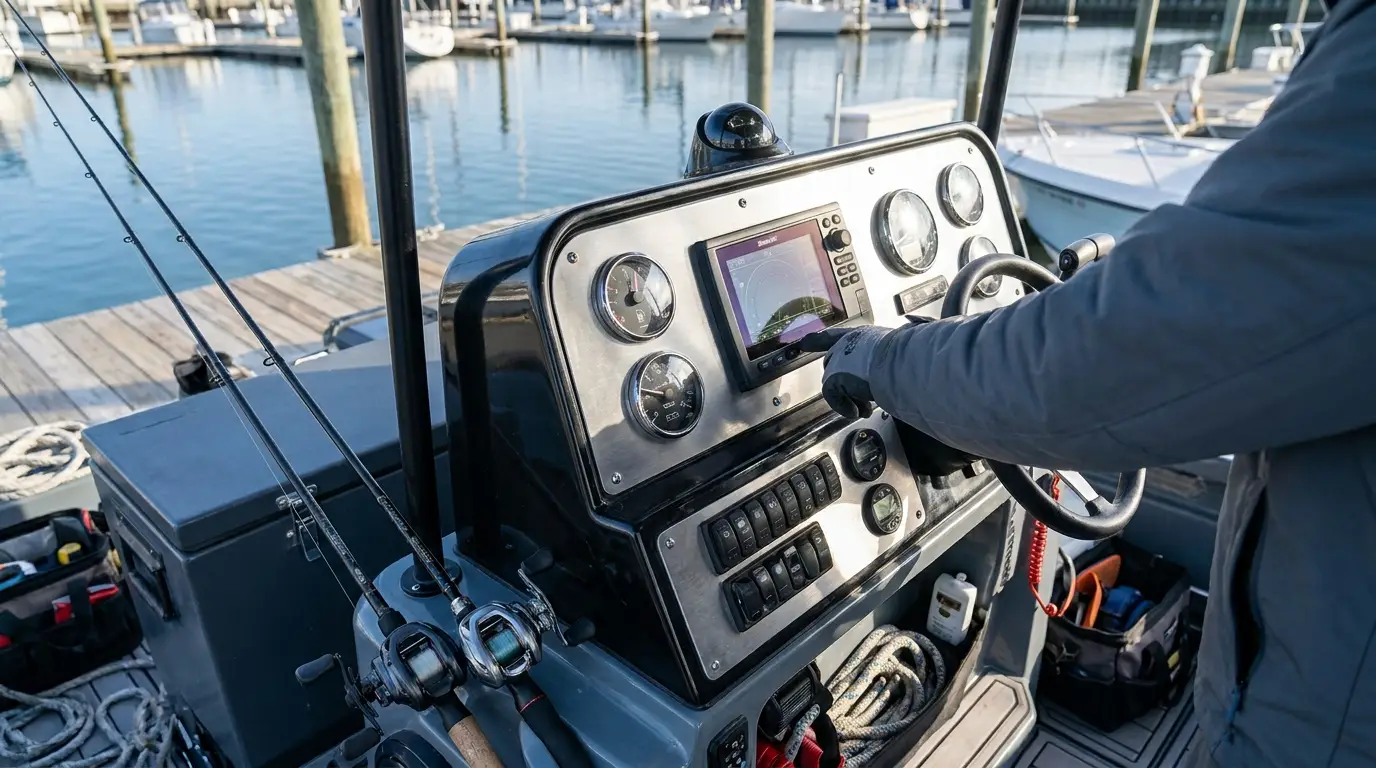
The Marine Systems That Benefit Most From Predictive Maintenance
Not every part on a boat needs advanced tracking, and that’s okay. It makes more sense to focus on systems that break down often, cost a lot to fix, or can create safety risks, especially when problems can get worse fast.
Engine and propulsion marine maintenance
Engine and propulsion systems should be checked first. Watch oil pressure, coolant temperature, engine hours, vibration, smoke, starting behavior, and fuel use at your usual RPM (that’s a big one). Even small changes can mean something. A change here may point to clogged filters, cooling issues, worn belts, ignition problems, or trouble in the fuel system (so don’t ignore it). For more detail, see Marine Propulsion Systems Explained: Options and Maintenance.
Batteries and charging
Battery trouble is one of the most common reasons boats will not start. Predictive marine maintenance checks resting voltage, charging voltage, and how fast power drops under load. It is a simple way to catch problems early. For more basics, A Beginner’s Guide to Marine Batteries: Selection and Maintenance is worth a look.
Bilge and pump systems
If a bilge pump starts running more often than usual, it may mean there’s a leak, a loose hose, a bad float switch, or a problem with the shaft seal (not ideal). Watching pump cycles is a simple habit that helps catch water getting in early.
Electrical systems for marine maintenance
Corrosion, loose terminals, weak grounds, and damaged wiring can cause tricky problems, and yeah, they can be hard to spot. A dim light, a blown fuse, or weak power to your electronics can be an early warning. We covered this in Marine Electrical System Maintenance: Complete Boater Guide.
Fuel systems
Water in fuel, varnish buildup, dirty filters, or weak pumps can cause rough starts, power loss, or poor fuel economy, which are all pretty clear signs. They also make good predictive maintenance targets, since those symptoms usually show up before a total failure, giving you a chance to catch them early.
How to Build a Simple Predictive Marine Maintenance Routine
This does not take a commercial fleet budget. For most boat owners, a small, regular routine is enough, and that is really the whole point. It is pretty simple, right?
Step 1: Pick a few key readings
Start by tracking five to seven items; that’s enough. Good ones include engine hours, battery voltage, charging voltage, normal cruise RPM, fuel use, coolant temperature, oil pressure, and bilge pump activity. Keeping it simple makes it easier to be consistent.
Step 2: Create a baseline
After a few normal trips, it gets easier to spot what “healthy” looks like on the boat. Maybe the outboard usually stays in a regular temperature range. Meanwhile, the house battery may settle at a certain voltage, and fuel burn at cruise often stays reliable (that’s a useful clue). Those normal numbers become a reference point. A simple one you can trust.
Step 3: Log changes after every trip
Write down anything unusual, even small things. Was the engine harder to start? Did the trolling motor drain the battery faster? Was there more vibration at speed, or did the bilge run when it usually stays quiet? Small signs matter, especially if the same issue shows up more than once.
Step 4: Match trends to maintenance actions
If battery voltage keeps dropping, start by load-testing the battery, then check the terminals and test the charger. If engine temperature starts creeping up, check the impeller, intake blockage, thermostat, and cooling passages. If fuel burn rises, check filters, props, hull condition, and any tune-up needs. Start with the simple fixes.
Step 5: Use digital tools if they help
NMEA 2000 displays, battery monitors, engine apps, and service reminders can make this easier, if they work for you. They can help with service timing, but it’s not about adding more gadgets, and extra stuff isn’t needed.
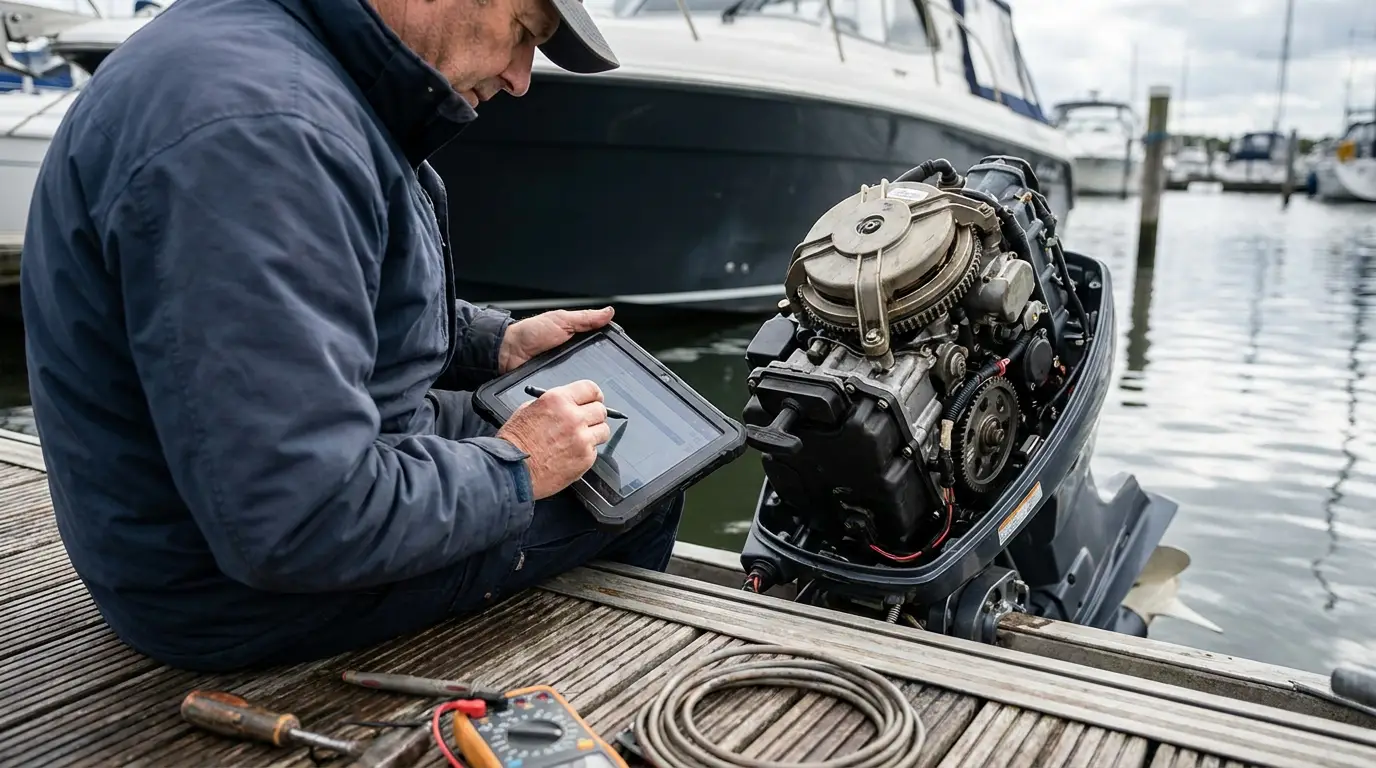
Common Mistakes That Defeat Good Marine Maintenance
Predictive maintenance works best when it starts with consistent habits. Many problems begin when owners skip the basics (it happens fast), and those early signs are easy to miss.
A common mistake is relying only on time-based service. Seasonal service still matters, but boats do not all wear down at the same rate. A heavily used commercial boat and a lightly used fishing skiff should not be judged by the calendar alone (that part’s pretty simple).
Another problem is brushing off small changes just because the boat still runs. Rising vibration, longer cranking time, higher fuel use, and unusual smells often appear before a real breakdown. Wait too long, and a minor repair can turn into something much bigger. A costly one.
Poor recordkeeping causes trouble too. According to technical research from maritime engineering sources, predictive maintenance depends on structured data such as inspection logs, fault history, condition trends, and similar records. Without that history, maintenance becomes guesswork. And guessing rarely ends well (not on the water, anyway).
It also hurts reliability when the focus stays only on the engine while support systems are ignored. Battery health, charging output, fuel delivery, exhaust, cooling, and bilge performance all matter. If fuel issues are a concern, we covered that here: Marine Fuel System Maintenance Strategies for 2025.
Across several trips, for example, a charter operator might notice a slight rise in engine temperature along with a drop in top-end RPM. Catch it early, and it may only need a simple cooling-system fix. Let it go, and the result could be an overheated engine, lost charter time, and a much larger repair bill.
Why Predictive Maintenance Matters Even More in 2025 and Beyond
Marine equipment is getting smarter. More boats now use connected electronics, digital gauges, battery monitors, fuel-flow sensors, app-based engine data, and similar tools. Because of that, predictive maintenance is becoming more useful for everyday owners, not just large operators (which is a big change). It’s a clear shift.
Commercial marine users also face more pressure around uptime, safety, inspections, fuel efficiency, and emissions. Regulations may not use the exact phrase ‘predictive maintenance.’ Even so, they still favor better monitoring and better recordkeeping (even if they don’t say it directly). That part is pretty clear.
Academic work in this field is moving more toward machine learning and remaining useful life prediction. It may sound advanced, but the basic idea is still straightforward. If good data is collected over time, it gets easier to spot when a part is starting to move toward failure.
For most readers, the main point is practical. Marine maintenance is not only about fixing what breaks. It also means seeing what is changing before it breaks. That will matter even more in the years ahead.
Tools and Habits That Make Marine Maintenance Systems Work
The best predictive-maintenance setup is the one that fits real boating habits, so it helps to start with practical tools and simple routines you can actually stick with.
A basic toolkit might include a digital log, multimeter, battery monitor, fuel-water separator checks, engine hour tracking, an infrared thermometer, and visual inspections after each trip. It’s all pretty simple. If your boat supports it, smart gauges or networked sensors can give you some extra useful detail too.
The routine matters just as much as the tools. Before launch, a quick walkaround helps catch small issues early. Check fluid levels, battery connections, belts, and hoses, and watch for leaks. After the trip, log the hours and note anything unusual. During storage, maintain the batteries, stabilize fuel if needed, and review any service items that still need attention.
A trusted parts source also helps keep things moving. Spotting a trend early only helps if reliable replacement parts, lubricants, cleaners, and electrical supplies are easy to get when you need them. That means less scrambling and fewer last-minute guesses. Many boaters use resources like First Choice Marine for regular upkeep on trolling motors, engine care items, batteries, and other onboard systems.
What makes the system work is being consistent with the small stuff. A five-minute check before or after each trip can be enough to help you avoid a five-hour tow later.
Frequently Asked Questions
What is predictive maintenance in boating?
Predictive maintenance in boating means using condition data and performance trends to decide when service is needed. Instead of waiting for something to fail, you watch for early warning signs like low voltage, high temperature, rising vibration, or unusual fuel use.
Is predictive maintenance only for commercial vessels?
No. Commercial fleets may use advanced systems, but small-boat owners can use the same thinking in a simpler way. A notebook, battery monitor, engine-hour log, and regular inspections are often enough to catch problems early.
What marine equipment should I monitor first?
Start with the engine, battery bank, charging system, fuel system, and bilge pump. These systems have a big impact on safety, reliability, and trip success. Once you build a habit, you can add steering, trim, electronics, and trailer components.
Do I need expensive sensors to improve marine maintenance?
Not always. Many useful warning signs come from basic checks such as voltage readings, fuel filter condition, engine temperature, and pump activity. If you want to expand later, First Choice Marine offers parts and maintenance products that can support a more organized monitoring routine.
How often should I update my maintenance log?
After every outing is best. Record engine hours, battery condition, unusual sounds, alarm history, and any changes in performance. Short, regular notes are much more useful than trying to remember everything at the end of the season.
Where can I find marine maintenance products for a predictive routine?
Look for a supplier that carries reliable engine care products, battery items, pumps, lubricants, and electrical parts in one place. For many boat owners, First Choice Marine is a practical resource when routine checks show it is time for service or replacement parts.
Put Predictive Maintenance to Work
Predictive maintenance helps make boating more reliable without making it feel complicated. Keep an eye on a few key systems, watch for changes, and act on early warning signs, and you can lower the risk of breakdowns, waste fewer parts, and leave the dock with more confidence, which is really the goal.
The best marine maintenance plans mix older habits with newer tools. Seasonal service, fluid changes, inspections, and cleaning still matter. Those basics handle a lot of the work. Then it helps to add a few condition checks that show how your boat is running in real time. That is usually where predictive maintenance starts to pay off, and it does not have to turn into a huge project.
Keep it simple at first. Focus on your engine, batteries, fuel system, and bilge pump. Build a baseline, then log what changes over time. Small issues are easier to fix before they turn into major repairs. For a workboat, bay boat, or weekend fishing rig, that habit can save money, protect equipment, and make each trip feel a little safer for everyone onboard.
