


Owning a boat is exciting, but it also takes real work. Every vessel changes over time, and the signs show up all over. Engines wear down. Hulls collect growth. Electrical parts corrode. Fuel systems get dirty. Even a well-built boat can lose performance when routine care gets missed. Proper marine maintenance from the day you buy the boat until the day you sell, upgrade, or rebuild it helps keep it running well.
For recreational boaters, this can mean fewer breakdowns during family trips and fishing days. For commercial operators, it can mean less downtime and lower running costs. DIY owners get a clear plan for smart marine maintenance instead of jumping from one random repair to the next. This guide lays out the full process in simple steps. You’ll learn how to protect performance, reduce wear, improve fuel use, plan seasonal service, and make better choices about parts and upkeep. If you want your vessel to run safer, last longer, and feel more reliable year after year, start here.
Start With the Full Life of the Boat
Boat care means more than fixing what breaks. It covers the whole boat, from the hull and engine to the propeller, electrical system, steering, batteries, pumps, safety gear and onboard accessories. Marine maintenance works best when all of those systems work together.
A simple way to look at boat care is by stages: daily care, scheduled service, seasonal prep, storage and long-term upgrades. Small steps at each stage can help you avoid major repair bills later. For example, a clean hull helps keep speed and fuel efficiency up. Less drag. Removing algae, stains and marine growth from the bottom also supports performance over time.
| Lifecycle Stage | Main Goal | Common Tasks |
|---|---|---|
| Routine use | Prevent wear | Fluid checks, rinse-downs, visual inspection |
| Seasonal service | Keep systems reliable | Oil changes, fuel treatment, battery checks |
| Storage period | Avoid damage | Winterization, moisture control, covering |
| Long-term ownership | Improve value and uptime | Part replacement, system upgrades, corrosion prevention |
Owners who follow these stages can catch problems earlier. When maintenance is delayed, issues can spread from one system to another in ways that cost more and take longer to fix. A weak battery can strain the charging system. Dirty fuel can hurt engine performance. Even a damaged propeller can cause vibration and affect seals, bearings and onboard comfort.
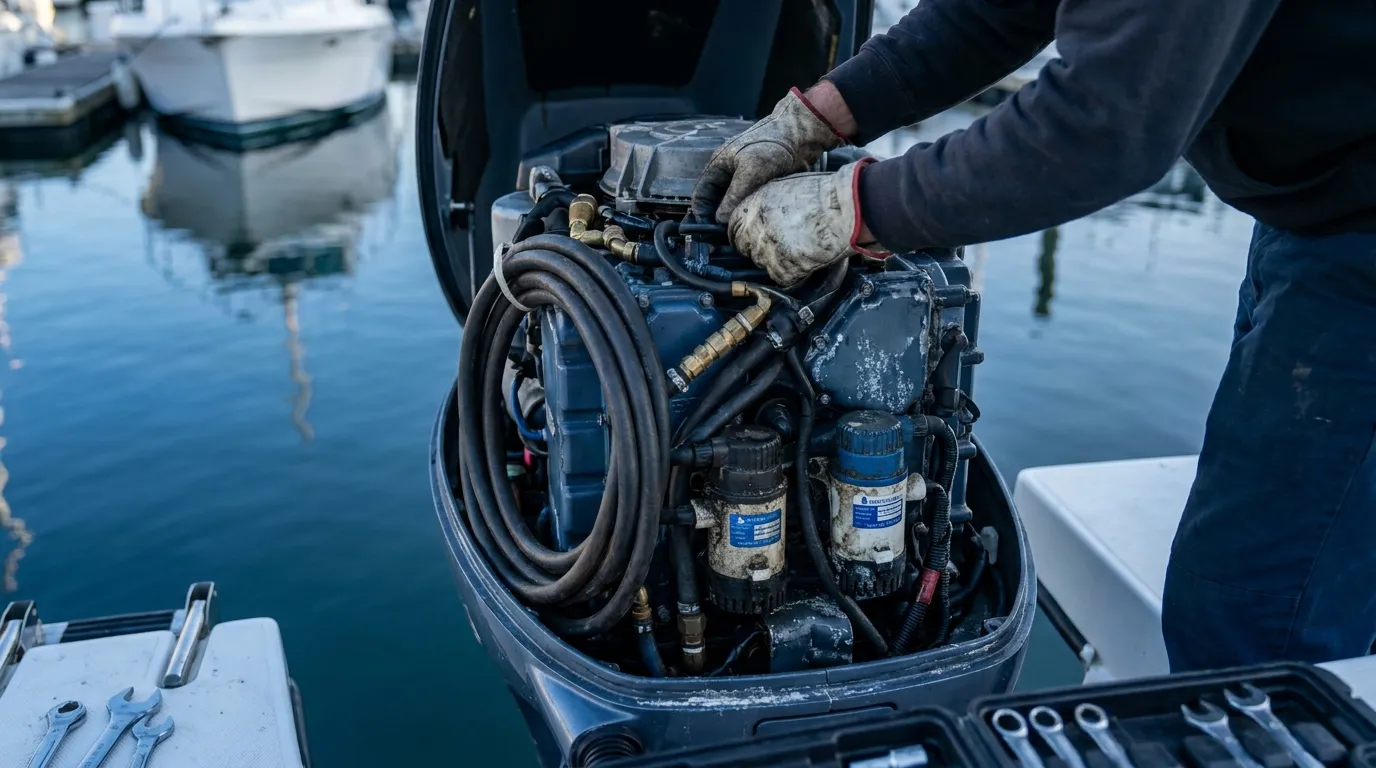
Protect the Hull, Prop, and Exterior for Marine Maintenance
A lot of owners start with the engine, and that makes sense, but the outside of the vessel also affects how the boat performs. A dirty hull adds drag. Barnacles, algae, and stains around the waterline can slow the boat down and make the engine work harder than it should. That burns more fuel and puts extra stress on the powertrain.
Regular washing helps, but some of the biggest gains come from proper bottom care. Use marine-safe cleaners to remove growth, rust streaks, and waterline stains without being too harsh on boat surfaces. If the boat stays in the water for long periods, check the bottom regularly. A smooth hull does more than look clean, too. It can improve speed, handling, and overall efficiency.
The propeller needs close attention too. Even a nicked or bent blade can create vibration and reduce thrust. Over time, that may hurt fuel economy and make steering feel rougher than normal. Check the prop shaft for fishing line, inspect the blades for damage, and watch for corrosion.
Real-world use makes this clear. A fishing boat that runs every weekend in brackish water may need hull cleaning more regularly than a trailer-kept freshwater boat because the conditions are different. Every boat has its own needs. Still, the rule stays the same: when a boat moves through water, its underwater surfaces directly affect lifecycle cost.
Another good habit is pairing hull inspection with pump and bilge checks. If someone is already cleaning and walking the boat, it is easy to add a quick look at drains, bilge pumps, and transom hardware. That turns one task into a wider marine maintenance routine and helps catch minor issues before they become bigger ones.
Build a Marine Maintenance Engine and Fuel Care Plan
Vessel reliability depends heavily on engine care. Whether a boat runs an outboard, inboard or diesel setup, maintenance should follow time, hours and operating conditions, not whatever feels convenient in the moment. Don’t wait. Hard starting, rough idle, smoke or loss of power usually mean a small problem is already getting worse.
Start with the basics. Change oil and filters on schedule. Use the right lubricants for the engine, and check cooling passages and water pumps before minor wear turns into a bigger repair. After saltwater use, flush the engine. Inspect belts, hoses and clamps. Also check for leaks around fuel lines, lower units and seals. Simple checks like that keep marine maintenance on track and can catch trouble before it spreads through the system.
Fuel care matters just as much. Water contamination, stale fuel and varnish buildup can all cause serious problems, especially after storage, when systems have been sitting longer than they should. Fuel stabilizer helps protect gasoline during the off-season. With diesel systems, quality diesel fuel additives may help with storage stability and cleanliness when used the right way. Keep tanks as clean and dry as possible. Replace fuel filters early, before they turn into a bigger issue.
For a closer look at the boat’s fuel side, read Marine Fuel System Maintenance Strategies for 2025. It pairs well with this approach. Fuel problems can affect the engine, the starting system and overall reliability at the same time.
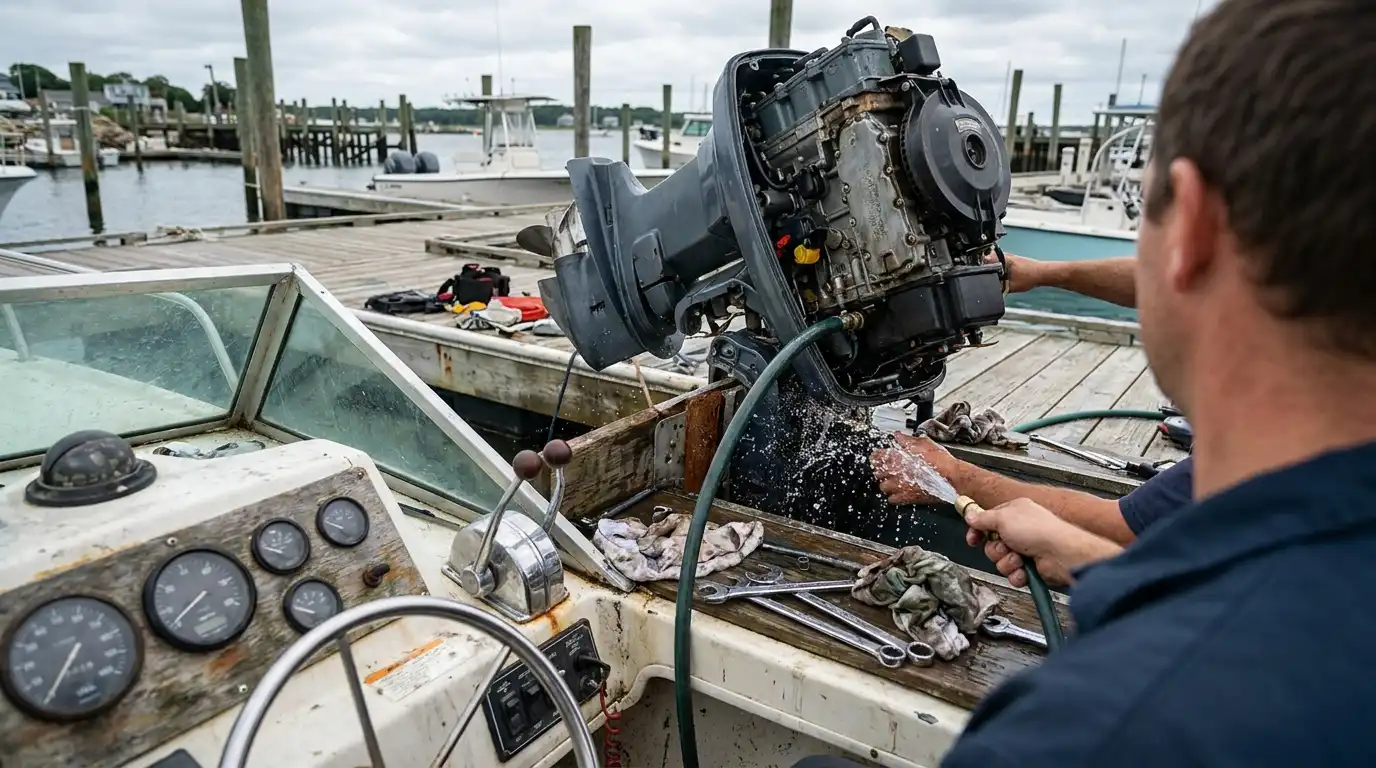
Keep Electrical Systems and Batteries Healthy
Many marine electrical problems come from the same handful of issues: low battery charge, dirty terminals, loose connections, damaged wiring, and moisture getting where it should not. Boats run in a rough environment, so electrical care plays a big part in lifecycle optimization.
Start with the battery bank. Check the charge level, terminal condition, mounting security, and cable integrity. Corroded terminals can restrict current flow, which can lead to hard-start problems. Battery setup matters too. A boat with a trolling motor, fish finder, lights, pumps, and other electronics puts very different demand on the system than a basic runabout.
Charging habits are easy to miss. Repeated deep discharge can shorten battery life, especially when batteries are stored partly drained. Smart charging helps. Clean cable ends and regular testing help too, and all of it can add seasons of reliable use.
Some mistakes show up again and again: mixing old and new batteries, ignoring slow cranking, or assuming a dead battery is the only issue when the real cause is a corroded cable or a weak charging circuit. These problems are easy to miss. Good records make troubleshooting much easier. Write down voltage readings, replacement dates, and charging behavior so patterns stand out before they turn into bigger problems.
For more battery-specific help, see A Beginner’s Guide to Marine Batteries: Selection and Maintenance. If a wider system view is more useful, Marine Electrical System Maintenance: Complete Boater Guide is worth a look.
Owners who shop with First Choice Marine come here for practical solutions, because battery care, charging parts, and onboard accessories all connect directly to day-to-day reliability on the water.
Use Seasonal Service to Prevent Expensive Repairs
Seasonal change is hard on boats. A vessel that runs fine all summer can still get damaged in storage if the owner doesn’t prep it the right way. Winterization, fuel treatment, moisture control, and battery care help prevent problems that can stay hidden for months.
When the season ends, stabilize the fuel, change fluids if needed, flush raw-water systems, protect the engine, and remove or maintain batteries correctly. Then cover the boat. Keep water out, but let air move through. Trapped moisture can lead to mildew, odors, corrosion, and soft materials breaking down over time.
At spring launch, don’t assume the boat is ready just because it starts. Test the lights, pumps, steering, navigation gear, safety equipment, and charging output. Check seals, hoses, and trailer parts too. Lifecycle optimization works best when owners treat off-season storage and spring commissioning as one connected process. Problems can start during storage and only show up once the boat goes back in the water.
Track Wear, Costs, and Upgrade Timing
Some parts need maintenance. Others need replacing before they fail. Knowing the difference is a big part of smart vessel ownership. Keep a log with engine hours, service dates, part numbers, battery age, prop damage, and recurring issues. It’s simple and useful. A good log turns guesswork into planning.
A noisy bilge pump, an aging fuel hose, or stiff steering aren’t just random annoyances. They can show that the boat is moving into a different stage of its life. With a maintenance log, owners can make a clearer call on whether a part should be repaired, upgraded, or replaced entirely.
Thinking ahead helps. Instead of waiting for a breakdown during a trip, owners can act on patterns they’re already seeing. If that idea sounds worth a closer look, Predictive Maintenance for Marine Equipment: What You Need to Know is a useful next step.
Upgrades should match how the boat is used. Anglers may get more value from better trolling motor systems or marine batteries. Cruising owners may care more about lighting, pumps, and reliable electronics, while commercial users may focus on uptime and easier service access. The right upgrade lowers stress and supports how the boat is really used.
Frequently Asked Questions
What does lifecycle optimization mean for a boat?
It means managing the boat from purchase through long-term ownership with a plan. Instead of waiting for failures, you use regular marine maintenance, seasonal service, cleaning, and timely upgrades to reduce wear and control costs.
How often should I perform marine maintenance on my vessel?
Some checks should happen before every trip, such as fluid levels, battery condition, and visual inspections. Other tasks follow engine hours, the season, or storage periods. The best schedule depends on whether the boat is used in saltwater, freshwater, heavy commercial duty, or occasional recreation.
Why is hull cleaning part of lifecycle optimization?
A dirty hull creates drag, which can reduce speed and fuel efficiency while making the engine work harder. Cleaning away marine growth, stains, and buildup helps the boat perform better and may reduce long-term wear on related systems.
How can I make my marine batteries last longer?
Keep them fully charged, clean the terminals, secure the mounting, and avoid repeated deep discharge unless the battery type is designed for it. If you need parts or battery-related care items, First Choice Marine is one example of a retailer that focuses on boat owners maintaining these systems properly.
What systems should I inspect before putting a stored boat back in the water?
Check the engine, fuel system, battery charge, wiring, bilge pumps, lights, steering, propeller, and safety gear. Also inspect hoses, clamps, and the hull for leaks, damage, or corrosion before your first run.
Where can boat owners find parts for routine lifecycle maintenance?
A good marine parts source should cover engine care, trolling motors, lubricants, pumps, sealants, batteries, and cleaning supplies in one place. Many owners use First Choice Marine when building a reliable marine maintenance routine because it aligns with common boat system needs.
Put Lifecycle Thinking Into Practice
One of the biggest benefits of lifecycle optimization is peace of mind. When boat owners know the condition of the hull, engine, fuel system, batteries, and onboard gear, boating feels easier and safer. There’s less stress, more time on the water, and less time dealing with surprises that can ruin a trip or turn a simple outing into a headache.
Start simple. Make a checklist for pre-trip inspections, monthly cleaning, seasonal service, and an annual review of parts. Record engine hours and battery age. Clean the hull before growth gets out of hand. Treat fuel before storage. Replace worn parts before they fail, whether that happens at the dock or farther offshore. It’s not complicated. Over time, those steps make a real difference.
Good marine maintenance means doing the right things at the right time. Boat owners don’t need to do everything at once. Whether they use a small fishing boat, a family cruiser, or a hard-working commercial vessel, lifecycle thinking helps protect value, improve performance, and keep the boat ready for the next trip.
