


A good marine adhesive can save a weekend on the water, while a bad one can leave leaks, loose hardware, stained surfaces, or repairs that fail after a rough ride or a few hot days at the dock. That’s why choosing the right product matters. Boats face tougher conditions than many people realize: water, salt, sun, vibration, heat, and constant movement. Because of that, a glue or sealant that works fine at home can fail quickly on a boat, which is frustrating.
For boat owners, the hard part usually isn’t finding a marine adhesive. It’s picking the right one for the specific job. Some products are made to stay flexible, while others create a bond that is almost permanent. Some work better for fiberglass repair, and some are better for bedding deck hardware so water does not seep around fittings. Others are used to seal hatches or bond metal to composite parts. Use the wrong type, and it can easily create more work later, and probably more expense too.
This guide explains it in simple terms. It covers the main types of marine adhesive, where each one usually works best, which mistakes to avoid, and how to get results that tend to last longer. Whether someone runs a fishing boat, a work boat, a family cruiser, or something in between, these tips can help with better repair decisions. Many owners also use First Choice Marine for parts, maintenance items, and everyday boating basics like cleaners, sealants, and replacement hardware.
Why marine adhesive matters more than many boat owners think
Marine adhesive is not really some tiny niche anymore. Industry estimates show strong demand as repair work, maintenance, and marine construction keep growing. The marine adhesives market is estimated at USD 574.26 million in 2025, while the broader marine adhesive sealant market is estimated at USD 2.84 billion in 2025. Marine sealants on their own are estimated at USD 1.2 billion in 2025. They are still estimates, of course, but they point to something pretty clear: boat builders and repair shops use these products every day, which probably will not surprise anyone who spends much time around boats.
| Market Segment | Estimated Value | Year |
|---|---|---|
| Marine adhesives market | USD 574.26 million | 2025 |
| Marine sealants market | USD 1.2 billion | 2025 |
| Marine adhesive sealant market | USD 2.84 billion | 2025 |
That growing demand is pretty easy to understand. Modern boats combine fiberglass, aluminum, stainless steel, plastics, composites, wood, and rubber parts in a single hull. Many repairs mean joining different materials together while also keeping water out at the same time. That is where marine sealants often help a lot. They help keep water out, stay flexible as the boat shifts and moves, and usually hold up to UV and salt exposure better than general-purpose products. That matters even more if the boat gets used a lot or sits out in the open for long stretches.
Polyurethane products account for a big share of this market. One estimate puts polyurethane-based sealants at 27.5% market share in 2025. That matches real boating work. Polyurethane gets used a lot because it handles vibration well and works for many common jobs, from hardware bedding to deck-to-hull joints. In most cases, it is a dependable everyday material for the kind of work boat owners and repair shops deal with all the time.
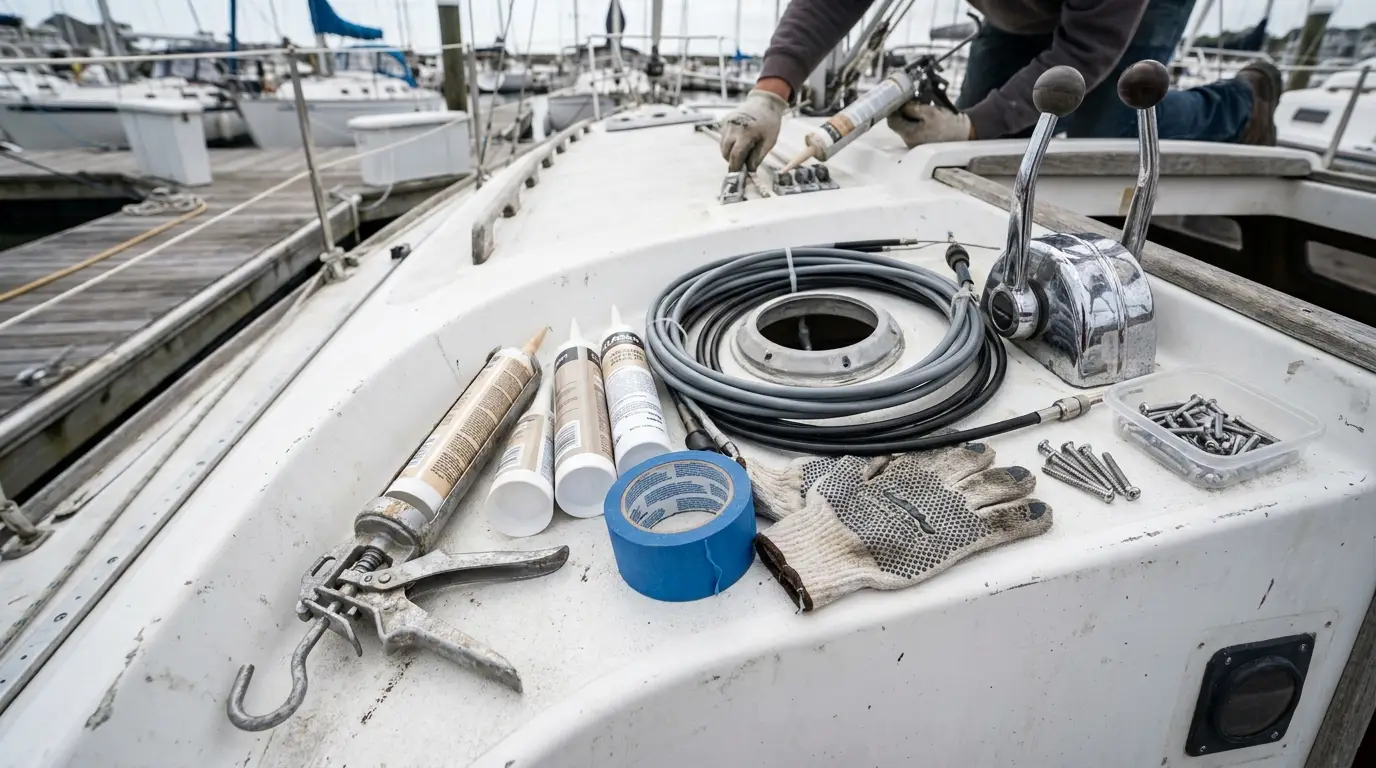
The main types of marine adhesive and what each one does best
Not every marine adhesive works the same way, which is usually the easiest place to start. Some are made to seal, others are made to bond, and a few can do both jobs. That’s probably the simplest way to think about them here.
Polyurethane adhesive and sealant
For boat work, this is a very common choice, and usually for good reason. It bonds really well, stays flexible, and handles vibration and movement well too. You’ll see it used in lots of places, on deck hardware, rub rails, deck seams, and topside fittings, as well as bonding jobs with fiberglass, wood, or metal. When a strong bond still needs some flex, polyurethane is often a smart option.
Silicone marine sealant
Silicone is a good choice when flexibility and a strong water seal matter, especially around windows, hatches, and some plastic parts, where it usually works best. It’s useful, and often easier to remove later than products with a stronger bond.
However, it’s not always the right choice for structural jobs, and some surfaces can be harder to paint after silicone has been used, so that’s good to know.
Epoxy
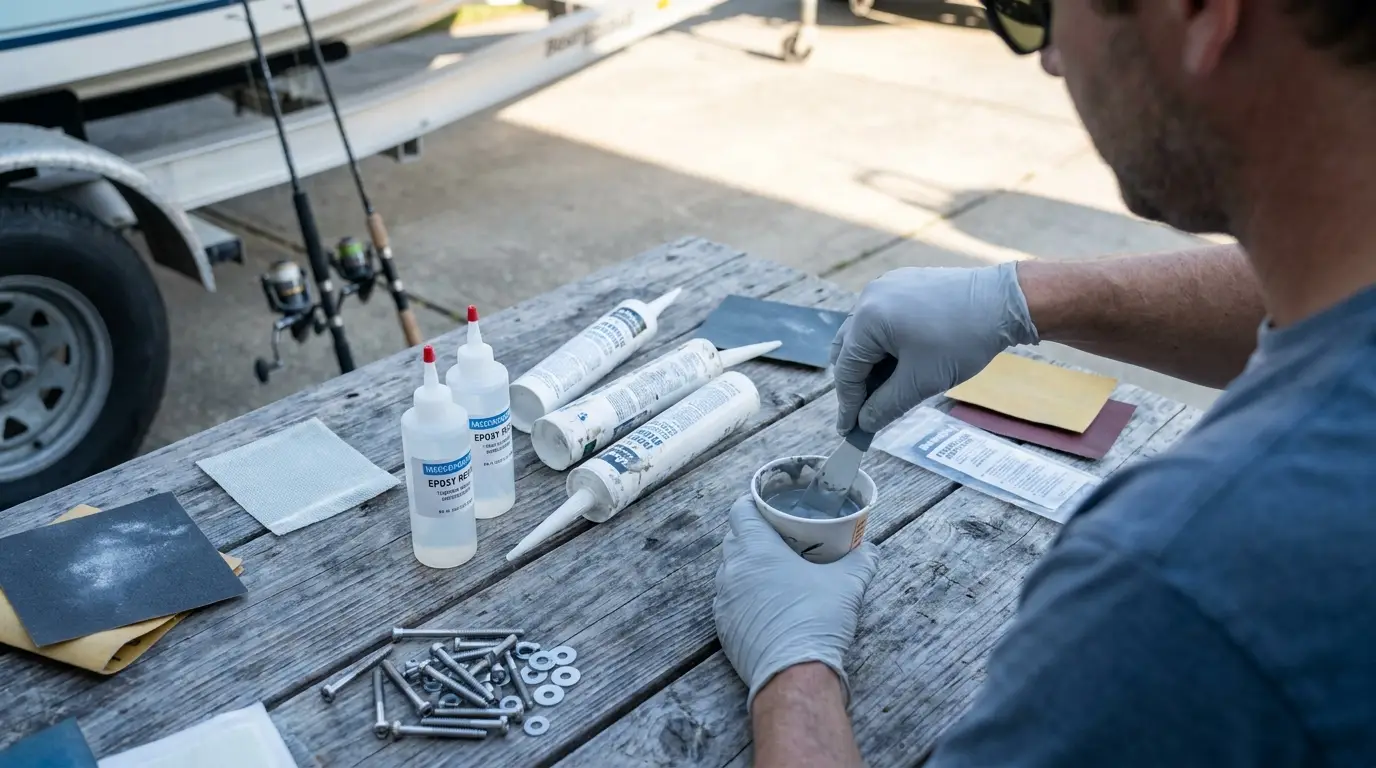
Epoxy is usually the first choice when a repair needs to be hard, strong, and rigid, which is often why people pick it to begin with. It’s commonly used for fiberglass work, filling voids, and structural repair areas that do not need much flex. It’s a solid option. For fixing cracks, chips, or damaged laminate, epoxy is probably the better choice. Marine epoxy for boat repairs is covered in this guide.
Polysulfide and other specialty sealants
These can be a really good option for some sealing jobs, especially where fuel resistance, weathering, and long-term flexibility matter most. They’re often best for specific uses, like fuel-exposed areas, but you still need to check the label for below-waterline use and make sure they work with the material.
The main point here is pretty simple: the strongest product usually isn’t the best one for every job. If a part may need service later, a very permanent adhesive can turn a small repair into a real headache, and probably an expensive one. A big one.
How to choose the right marine adhesive for the job
Start with the job, not the brand. Ask a few simple questions before you buy anything. That’s often the better choice for a decision like this.
1. What materials are you bonding?
Fiberglass to fiberglass isn’t the same as aluminum to plastic. Stainless to wood is different too, and that’s common on boats like these. Since boats use a mix of materials, surface compatibility matters a lot. A product that works on one surface may still fail on another.
2. Does the area move or vibrate?
Engines, deck fittings, consoles, and hull joints usually move a little, which is pretty normal. Flexible adhesives often work better in those areas. Rigid repair products are best where you need strength and probably do not expect much movement.
3. Is the area exposed to sun and weather?
For topside repairs, UV resistance really matters, especially in direct sun. A seal can look fine at first, but after a lot of sun exposure, it often cracks or changes color, which happens pretty often.
4. Is the area above or below the waterline?
That’s usually the key point: some products work really well for topside sealing. But they are not made for constant water exposure, so in most cases it’s best to use an adhesive that fits the exact spot where it will be used.
5. Will you need to remove the part later?
This is where a lot of DIY repairs start to go wrong. Hardware, hatches, and service panels often need to be opened again later, so in those spots, it usually makes more sense to use something that seals well but still lets the part come off without turning the whole job into a mess.
A very common real-world example is rebedding cleats or rail bases. What usually helps most is a continuous bead, clean surfaces, and giving the sealant the full cure time it needs. Rushing usually causes problems here. It also helps not to over-tighten the fasteners before the sealant has set the way it should. If the project involves wiring or nearby fixtures too, thinking ahead about related systems like 2025 marine lighting trends or boating safety also helps, since that part gets missed a lot.
Best use cases for top marine adhesive categories
Choosing a marine adhesive is usually easiest when it fits the specific repair job; that’s a simple way to narrow down your options.
Best for deck hardware bedding
For bedding cleats, rails, hinges, rod holders, and similar hardware, a flexible marine sealant or adhesive sealant is usually the best choice, often a polyurethane-based one. These parts often move under load, so the seal needs to stay flexible while keeping water out, which is really the main goal here. One market estimate says deck-to-hull joints account for 18.7% of marine sealant use, which likely shows how important flexible sealing is for stressed joints, especially in those areas.
Best for fiberglass repair
Epoxy works well for fixing cracks, gouges, laminate damage, or spots that need strength and gap filling, especially on solid panels. In areas with lots of movement, it’s not always as forgiving, I think. Still, for solid structural repairs, it usually works really well.
Best for metal-to-fiberglass bonding
A good polyurethane product is often a solid option for this kind of job. It usually handles metal, fiberglass, and vibration better than many rigid options, which often matters here.
Best for windows, hatches, and trim
For windows, hatches, and trim, use a product made for clean sealing, UV exposure, and easier service later. For these jobs, being able to remove it later often matters nearly as much as keeping water out.
Best for engine room and bilge-area sealing
In the engine room or bilge, heat and vibration usually matter more than on many deck jobs. Moisture resistance is important, and if oil is involved, that matters too. It also needs to work with the materials around it, and that’s one of the easiest things to miss.
A very common mistake here is using household caulk. Another common mistake is applying too much product and smearing it over unfinished surfaces, which happens often. In these areas, clean lines and proper prep usually matter more than just reaching for the “strongest” tube on the shelf.
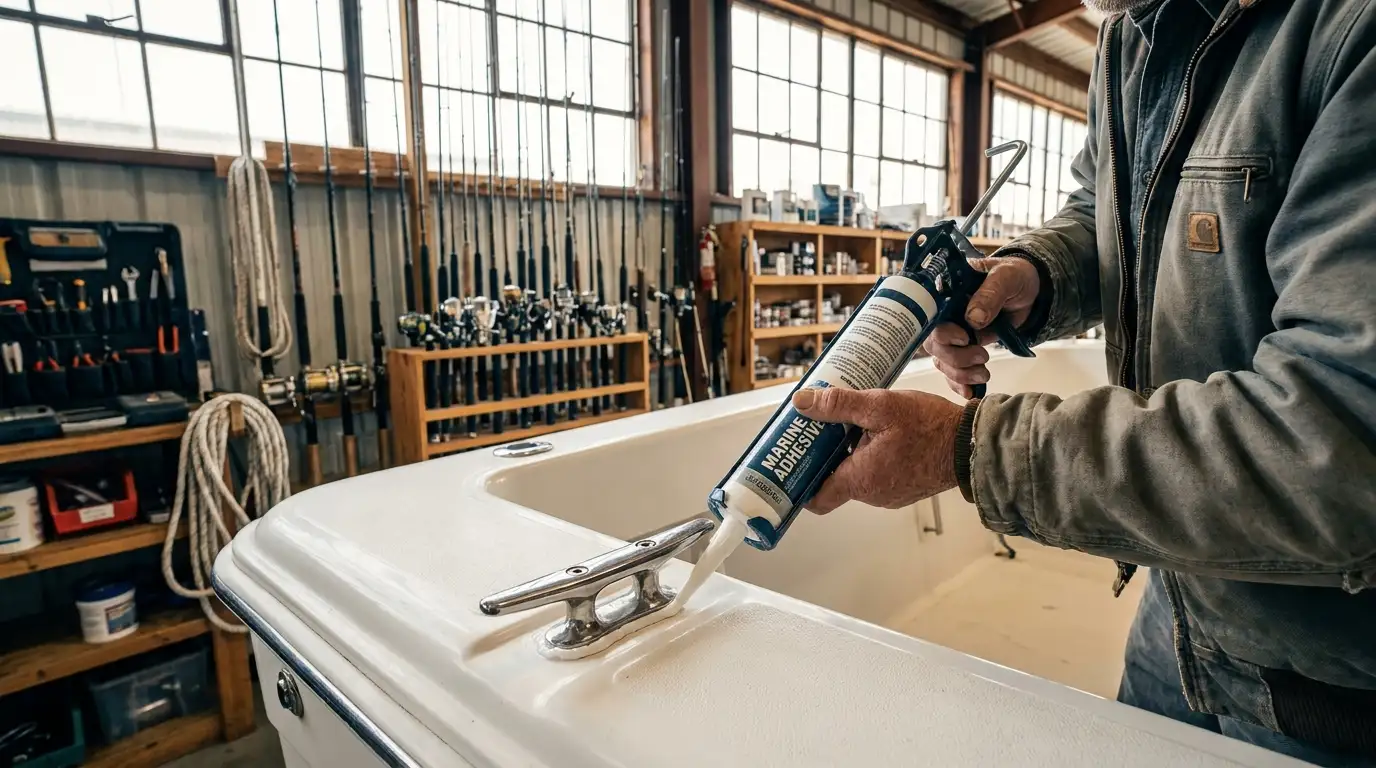
Simple application steps that improve results
Even the best marine adhesive can fail if the prep work is messy. Most product guides, I think, usually come back to the same few basics.
Start with the surface: clean off dirt, oil, wax, salt, and any old loose sealant. It also needs to be as dry as the product requires. Some products handle damp conditions better than others, but many need a clean, dry area to bond the way they should, and that part is often easier to miss than it sounds. A small detail can make a big difference here. One useful method is to apply a continuous bead instead of a few random dabs, since gaps can let water work its way in around a seam or fitting. Then follow the cure-time directions exactly. The surface may feel dry, but that does not mean it is ready for launch.
Marine repairs often fail at the edges instead of the center, which is why these habits help so much. Water can get into weak prep work fast, especially around corners and fastener holes. You will also find that tape lines help keep the job neat, especially in visible areas, and that usually matters more than people expect. Tighten hardware evenly. If squeeze-out appears, clean it the right way before it cures.
If you’re also handling broader upkeep, adhesive jobs often connect with moisture control and corrosion prevention. Many owners pair sealing work with regular checks, like the ones covered in advanced marine corrosion prevention.
Trends shaping marine adhesive choices
The market is clearly moving toward products that can bond a wider mix of materials and still hold up in harsher conditions, which matches how newer boats are built. Since modern boats usually use more kinds of materials than older ones, adhesives often need to work well across more surfaces. Better flexibility, UV resistance, and strong waterproofing are now basically expected instead of being seen as extras.
Industry estimates also point to solid growth ahead. One forecast puts the marine adhesives market at USD 600.53 million in 2026, while another projects USD 1,379.8 million by 2034. Marine sealants are also expected to grow at 6.5% from 2025 to 2030 in one estimate. Asia-Pacific is expected to account for 43.6% of market growth, mostly because of shipbuilding and marine manufacturing, especially in major production hubs.
For boat owners, the practical takeaway is simple: these products are being pushed to do more. They need to bond different materials, handle movement, and resist salt and sun, while still staying serviceable in some applications. That is probably good news for DIY repairs. It also means the label matters more than ever, so it helps to check which materials a product is made for and how well it is expected to last. Some owners also follow broader industry changes through topics like adhesives and sealants driving fishing innovations 2026.
Frequently Asked Questions
What is the best marine adhesive for deck hardware?
For many deck hardware jobs, a flexible marine adhesive sealant is the best choice. Polyurethane products are common because they handle vibration, movement, and water well. The exact best option depends on the hardware, surface material, and whether you may need to remove it later.
Can I use regular household adhesive on my boat?
It is not a good idea. Boats deal with UV rays, saltwater, vibration, and constant moisture. A true marine adhesive is made for those conditions, while household products often break down early.
Is epoxy better than polyurethane for boats?
Neither is better for every job. Epoxy is great for rigid fiberglass repair and structural filling. Polyurethane is usually better where flexibility, sealing, and mixed-material bonding matter.
How long does marine adhesive take to cure?
It depends on the product, temperature, humidity, and bead thickness. Some skin over quickly but still need much longer to fully cure. Always follow the label because moving the boat too early can weaken the seal.
Where can I find marine adhesive and other repair supplies?
Many boat owners look for marine parts and maintenance products in one place so they can plan a full repair at once. Sites like First Choice Marine are useful because they focus on marine-specific parts, chemicals, repair items, and everyday boating gear rather than general hardware alone.
What should I buy along with marine adhesive for a repair job?
It helps to get the full setup: cleaners, masking tape, gloves, surface prep tools, and any matching repair materials for fiberglass or paint. First Choice Marine can also be a practical place to compare related maintenance categories, especially if your adhesive job is part of a bigger boat care project.
The bottom line for smarter boat repairs
The best marine adhesive is the one that fits the job you need to do. That usually means checking the surface, how much water it will face, movement, UV exposure, cure time, and whether you might need to take it apart later before you open the tube. For bedding deck hardware and flexible joints, polyurethane products are often a good choice, especially on parts that move a bit. For rigid fiberglass repair, epoxy is usually the better option. For windows, trim, and parts that may need service later, flexibility and removability matter just as much as bond strength, and sometimes they matter even more.
If there is one thing to remember, it is this: do not shop based on the word ‘strongest’ alone. On a boat, a repair usually works best when sealing, bonding, and serviceability work together. Clean prep, a solid bead, and patience during cure time often decide whether a repair lasts one season or keeps working through many more. That is often what separates a quick fix from one that holds up to regular use.
A few extra minutes of planning before buying anything can make the choice much easier. You will want to check the materials involved and think about where the boat flexes and moves, around fittings, joints, and deck hardware for example. Why not read the label closely before deciding? Doing that gives your next repair a better chance of holding up in rough weather or through repeated use.
