


Choosing the right oil for boat engines can seem more confusing than it really should be. Walk into a marine store or do a quick search online, and you will see different grades, labels, certifications, and lots of brand claims to sort through, which can get confusing fast. Some oils even look nearly the same at first glance, so it is easy to miss what sets them apart. Still, using the wrong oil can lead to poor lubrication, extra engine wear, rust inside the engine, hard starts, and expensive repairs.
That is why this guide keeps things simple. It explains how marine engine oil is different from automotive oil, how to match oil to the engine type, and what labels like FC-W and TC-W3 actually mean. It also covers how climate, engine hours, and storage can affect the choice, since those details are often overlooked. Common mistakes are covered too. For boats that get heavy use, oil analysis is included, along with a practical checklist to review before buying. Whether someone owns a fishing boat, runs a small commercial vessel, or does service at home, this article is meant to help with choosing with more confidence. When parts, fluids, and maintenance supplies are needed in one place, First Choice Marine is a useful resource for boat owners looking for dependable gear and clear information.
Why Marine Engine Oil Is Not the Same as Car Oil for Boat Engines
It’s pretty simple: don’t assume car oil is enough for a boat. Marine engines run in a wet, harsh environment, and that usually changes what the oil has to handle. They often run under heavy load for long stretches, out on the water instead of dealing with normal stop-and-go road driving. On top of that, they deal with storage, humidity, fuel dilution, and corrosion in ways many cars just do not. In most cases, that means the oil has to do more than basic lubrication.
Recent market data shows the global marine lubricants market is worth USD 8,368.1 million in 2025, with the engine oil segment making up 49.6% of that total. That gives a pretty clear sense of how much engine oil matters in marine maintenance. It also shows this is not some small niche detail, but a major part of keeping boats running the way they should.
| Marine Lubricant Metric | Value | Year |
|---|---|---|
| Global marine lubricants market | USD 8,368.1 million | 2025 |
| Engine oil segment share | 49.6% | 2025 |
| Projected market size | USD 11,931.6 million | 2033 |
Those numbers also reflect a broader change. Boat owners and operators are paying more attention to choosing the right oil, instead of just reaching for the cheapest jug on the shelf, which may have been more common before.
Mercury Marine guidance says owners should choose crankcase oil based on the exact engine year and model, rather than using a generic automotive substitute. The reason comes down to how these engines are used: marine oils are made to resist corrosion, keep their viscosity, and handle sustained high-RPM operation over longer stretches. For many 4-stroke outboards and sterndrives, NMMA FC-W certification is a key standard to look for. For many 2-stroke outboards, TC-W3 is the standard you will want to find.
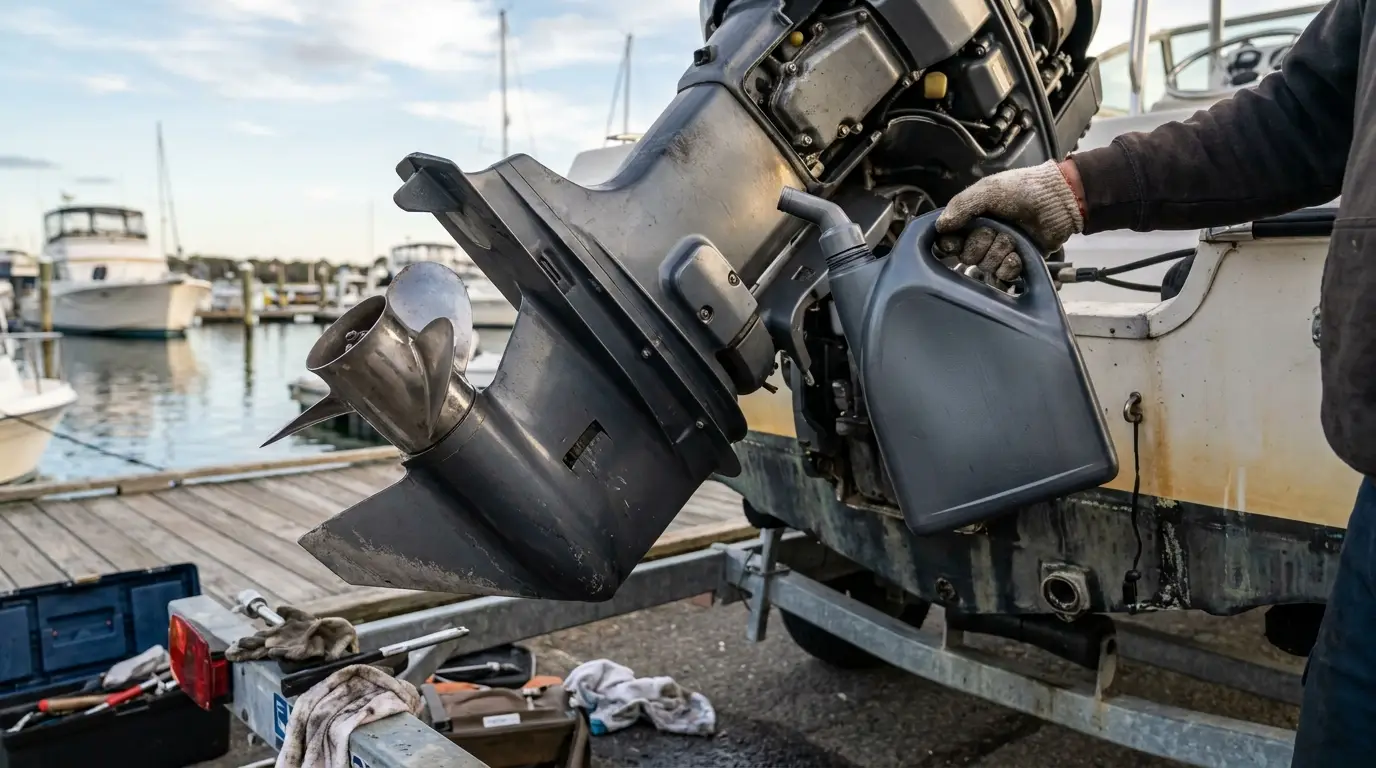
Match the Oil for Boat Engines to Your Engine Type First
Before you think about brand, start with the engine itself, since that’s usually where you begin. The right oil for a boat engine often comes down to a few simple questions. Is the engine 2-stroke, 4-stroke, or diesel? What viscosity does the manual call for, you’ll probably find it there? And does the manufacturer require a specific certification?
For 2-stroke outboards
These engines usually need oil that meets TC-W3. In water-cooled marine engines, it usually burns cleaner, which helps, and it often protects internal parts better. The wrong 2-stroke oil, though, can leave deposits and may increase wear.
For 4-stroke outboards and sterndrives
These usually need marine oil with NMMA FC-W certification, and that’s the main thing to check. Common grades are 10W-30, 10W-40, 20W-40, 25W-40, and 25W-50. The right one likely depends on your engine and the climate where you boat.
For diesel marine engines
Diesel engines usually need a different oil formula than gas engines, and they often get even more value from oil analysis, especially on boats that build up long running hours. The demands are simply different in real use.
Where and how the boat runs matters too. Saltwater, long idle periods, hot southern summers, cold spring starts, and seasonal storage all put extra stress on oil. A weekend freshwater angler will probably have very different needs. But a charter captain running hard three days a week is dealing with something else, and that usually shows up in wear and maintenance needs.
If the boat is a work boat or follows a set maintenance schedule, pairing the right oil with regular inspections matters just as much as the oil itself. And if broader service work is already on the list, this guide on boat engine parts can help put the full maintenance picture into context, not just the oil change.
Understanding Viscosity, Certifications, and Labels for Oil for Boat Engines
Oil labels may seem technical at first, but you usually only need a few basics. It’s pretty simple, I think.
Viscosity
Viscosity is the oil’s thickness, or basically how heavy it feels. A grade like 10W-30 usually flows better in cold weather than a thicker oil. For heavier marine use, though, 25W-40 can often be a better choice, especially under tougher loads, if your engine manual allows it. The engine maker’s recommendation should still come first.
FC-W for 4-stroke marine engines
FC-W is more than just another label. It means performance made for marine use, which is a pretty big deal. Oils with this certification are made for corrosion protection, shear stability, and resistance to fuel dilution. That usually matters most when the engine is out on the water.
TC-W3 for 2-stroke engines
This standard helps make sure the oil works well in modern, water-cooled 2-stroke marine engines, which is often especially important. It also helps support clean operation and proper lubrication in most cases.
Synthetic, blend, or conventional oil for boat engines?
There is no one right answer for every boat, and that is usually the main thing to remember. Some engines run perfectly well on conventional marine oil. Others do better with synthetic blends or full synthetic, especially when they handle high heat or heavier loads. In most cases, the best choice is whatever the manufacturer recommends for the engine’s age, design, and duty cycle.
Picking oil by price alone is a common mistake. So is switching grades just because a friend uses something different, and that happens a lot. That can be risky. Marine engines are not all made the same, even in the same horsepower class, so what works for one setup will not always work for another.
main engine damage accounts for 28% of all machinery claims and 34% of the costs, with an average claim cost close to USD 650,000.
That figure comes from larger marine operations, but the same point often applies to smaller boats too: lubrication mistakes can get expensive very quickly. In most situations, good oil costs very little compared with engine damage.
How Usage Patterns Change the Best Oil Choice for Boat Engines
The best oil for boat engines is not just about the engine model. It also depends on how the boat is really used, and people often miss that.
If someone fishes on short trips and then lets the engine sit for weeks, corrosion protection and storage stability usually matter a lot. On long runs at a steady speed, heat stability usually matters more. Towing, carrying heavy loads, or running a commercial boat puts more stress on the oil. Different use patterns mean different priorities, and that becomes pretty clear once you think about it that way.
Research from Oxford Academic shows that oil analysis intervals can affect failure risk. In fleet operations, the study reported a 3.3-month average sampling interval. It found the mean probability of failure was 0.0368% at a 3-month interval. At a 2-month interval, that number was 0.0247%. The difference seems small, but it is still worth paying attention to here.
| Oil Analysis Interval | Mean Failure Probability | Maximum Failure Probability |
|---|---|---|
| 2 months | 0.0247% | 0.0313% |
| 3 months | 0.0368% | 0.0524% |
| Average fleet sampling interval | 3.3 months | N/A |
For most recreational owners, this does not mean constant lab testing is needed. It does suggest that checking oil condition on high-hour engines is a smart move, especially for boats used often. Commercial users, guides, and serious offshore boaters should usually take oil analysis more seriously as part of preventive maintenance.
If the goal is also to improve boat setup or balance engine load better, boat rigging best practices were covered here because they can help reduce strain across the whole system. It is simple, practical stuff that often helps most on longer runs.
Common Oil Mistakes Boat Owners Make
Most oil problems usually come from simple mistakes, not rare defects. One common issue is using whatever oil is already in the garage, which is easy to do. Another is looking only at viscosity and missing marine certification, even though that often matters too. It’s also easy to miss that older and newer engines may need different oil types.
Here are mistakes to avoid:
Ignoring the owner’s manual
Usually, it’s best to follow the manual. If it says FC-W 25W-40, don’t just guess and use 10W-30, it happens, really, unless the maker says both are approved. Simple enough.
Mixing products carelessly
Topping up with a different oil in an emergency can happen, and it probably does. But if it keeps happening, it can reduce the benefits of using the right product that matches that engine.
Waiting too long between oil changes
Oil breaks down over time from heat, contamination, and storage, it just does. Even low-hour boats still often need fresh oil, since moisture and acids can build up slowly over time.
Forgetting the filter
Fresh oil with a dirty filter only does part of the job. It’s usually best to change both when the service schedule says to.
Overlooking related systems
Poor trim, the wrong prop load, or charging issues can all add to engine stress. For example, weak battery support can cause hard starts and extra wear on short runs, which often happens. It may seem like small stuff, but understanding Battery Chargers for Boats: How to Size and Install for Long Life helps with overall engine care.
A Simple Buying Checklist You Can Use for Oil for Boat Engines
When shopping for oil for boat engines, it helps to keep a simple checklist close by.
A good first step is to write down the engine’s exact make, model, year, horsepower, and type. You’ll also want to check the owner’s manual for the required viscosity and certification, since it’s easy to miss a small detail. From there, think about how the boat is really used: freshwater or saltwater, hot weather or cold conditions, heavier use, long storage periods, or frequent trips. Real-world use often matters more than people expect here. It’s also smart to decide whether regular oil changes are enough or if oil analysis could be useful for that boat.
If supplies are being bought online, First Choice Marine can be a useful place to compare maintenance items and put together a full service order instead of buying one product at a time. That often makes the process easier, especially when filters, additives, and other engine-care items are needed too. In many cases, getting those parts together is simply more convenient.
Another easy habit that can help prevent problems later is keeping a maintenance log. Record the date, engine hours, oil type, viscosity, filter part number, and any notes about color, smell, or metal in the drained oil. Small details often become useful later, because over time it gets much easier to spot patterns and notice changes sooner.
Frequently Asked Questions
Can I use car oil in a boat engine?
Usually, no. Marine engines face more moisture, corrosion risk, and long heavy-load operation than car engines. It is safer to use oil that matches your engine maker’s marine specification.
What does FC-W mean on marine oil?
FC-W is a marine standard used for many 4-stroke boat engines. It signals that the oil is built for marine conditions such as rust protection, viscosity stability, and high-RPM performance.
What oil should I use in a 2-stroke outboard?
Most modern 2-stroke outboards need oil that meets TC-W3. Check your owner’s manual first, because some older or specialized engines may have more specific requirements.
How often should I change oil in a boat engine?
Follow the service interval in your manual, based on engine hours or time. Even if you do not run many hours, seasonal changes still matter because moisture and contamination can build up during storage.
Where can I find marine oil and related service parts in one place?
Many boat owners look for a retailer that carries oil, filters, engine-care products, and other maintenance items together. First Choice Marine is one example of a marine-focused online store that can help simplify that search.
Is oil analysis worth it for small boats?
For casual recreational use, maybe not every time. But for diesel engines, high-hour outboards, charter boats, and commercial use, oil analysis can help catch wear and contamination early before they turn into larger problems.
The Smart Way to Protect Your Engine with Oil for Boat Engines
Choosing the right oil for boat engines really comes down to matching the oil to the engine, the workload, and the conditions where it runs, and that is often the part people miss. Start with the manual and check whether the engine calls for TC-W3, FC-W, or a diesel-specific formula. From there, pick the right viscosity for both the engine and the climate. It also helps to stay consistent with oil and filter changes, keep good records, and pay closer attention to how the boat is actually used on the water.
The research points pretty clearly in one direction: lubrication choices matter here. Engine oil makes up a large share of the marine lubricants market, and poor maintenance is linked to many engine problems. That is the practical side of it. In this case, small, informed choices can often make a real difference, usually without adding much extra cost.
If the next oil change is coming up, it is worth taking a few extra minutes before you buy anything. You will want to confirm the spec and the grade, then think about storage conditions, salt exposure, and engine hours. That extra check can give the engine a better chance at easier starts, cleaner running, and a longer life on the water.
