


A bilge pump is one of those boat parts people usually forget about until it suddenly matters. That’s a big reason why picking the right marine bilge pumps setup matters so much. A weak pump, a bad hose run, a clogged strainer, or a dead float switch can turn a small issue into a serious one fast, often at the worst possible time.
For most boaters, the hard part isn’t finding a pump at all. It’s figuring out what size really makes sense, which type fits the boat, and how to keep the whole system ready when it’s needed. That sounds simple, but it isn’t always as clear as it should be. A lot of pump ratings look better on the box than they do in real conditions. Lift, hose bends, wire size, and battery voltage can all cut performance, sometimes more than people expect.
This guide keeps it simple. It explains how marine bilge pumps really work, how to compare manual, automatic, smart, and other models, how to size a pump for real-world use, and what to check during regular maintenance. We’ll also look at common mistakes, safety planning, and when using more than one pump is the smarter setup, which often makes sense on bigger boats. And if a closer look at system basics sounds useful, that Bilge Pumps Explained: Sizing, Installation, and Maintenance Tips guide covers that side of things.
Why Marine Bilge Pumps Matter More Than the Box Rating
A lot of buyers shop by GPH alone. GPH means gallons per hour, and it helps, but it does not tell the whole story. A pump rated at 2,000 GPH in a lab can move much less water once it is installed in a real boat, and that is usually the part people miss. Based on safety material used by the U.S. Naval Academy and marine consultant Steve D’Antonio, real installed output is often closer to half the rated capacity after lift, hose routing, voltage drop, and other losses are figured in.
That matters because flooding can build faster than many owners expect, honestly faster than most people think. One widely cited flooding example shows that a 1.5-inch hole 3.5 feet below the waterline can admit 82.4 GPM. Compare that with a 1,600 GPH pump, which comes out to only 26.7 GPM, or a 2,000 GPH pump at 33.3 GPM under ideal conversion math. In real installation conditions, it is often even lower.
| Benchmark | Capacity | Equivalent Flow |
|---|---|---|
| Small hull breach example | 82.4 GPM | 4,944 GPH |
| Bilge pump example | 1,600 GPH | 26.7 GPM |
| Bilge pump example | 2,000 GPH | 33.3 GPM |
| Commercial fishing vessel minimum | 50 GPM | 3,000 GPH |
So the takeaway is pretty simple: bilge pumps are mostly for nuisance water and damage control. They are useful, yes, but they are not magic. A smart setup usually needs pump capacity, reliable wiring, clear discharge routing, and a quick response from the crew when water starts coming in. That is the practical point here, and probably the part that is easiest to miss.
Immediately trace out and inspect the entire bilge piping system for wastage or deterioration of metal bilge piping, check the condition of all hoses, hose clamps, supports and make repairs as needed.
How to Choose the Right Marine Bilge Pumps for Your Boat
The best marine bilge pumps should match your boat, the bilge space, and how you actually use it. A small trailer boat that comes out of the water after each trip usually needs something different than a center console kept in a marina slip, and that’s a big difference, or a commercial workboat that spends long hours running.
So, it often helps to start with these main questions:
1. How big is the boat and bilge area?
Longer boats usually need more total pumping capacity, and the shape matters too. A narrow, deep bilge can collect water fast in one low spot, often near the bottom. A wider bilge, though, may need multiple pickup points so water across the area does not get missed.
2. How high is the discharge lift?
If the pump has to push water higher, the actual flow usually drops. In most cases, it helps to keep hose runs short and as smooth as possible, since that often makes a difference.
3. Is the boat stored on a trailer, lift, or in the water?
If the boat stays in the water, it should usually lean more toward automatic operation, since that often works better. Backup capacity matters too, and battery health checks plus other basic checks are important.
4. Do you want automatic, manual, or smart operation for marine bilge pumps?
For most people, automatic pumps are probably the usual everyday choice. Manual pumps still matter as a backup, especially in emergencies or if the power goes out, and they’re often good to have even if they’re rarely used. Smart models with built-in sensors are also growing more popular, since they can reduce moving parts and often don’t need a separate float switch.
5. Do you need one pump or two?
Usually, two smaller pumps placed at different heights work better than one oversized unit. A lower pump handles the everyday water, which is often just the usual stuff. Higher up, a backup pump with more capacity is there for heavier inflow when rain or spray starts to increase.
Still comparing layouts? Here’s where we covered how to choose the right setup for your boat in Bilge Pumps: Choosing the Right One for Your Boat, which should help narrow the options and make the choice easier.
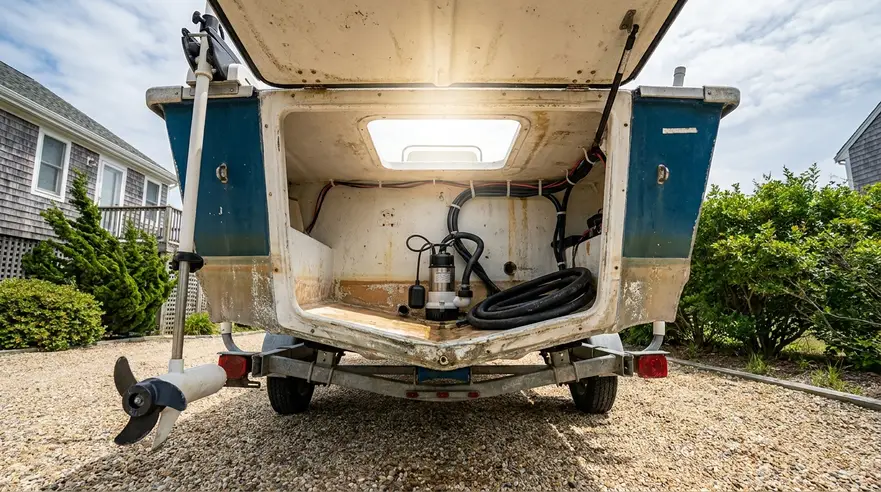
Automatic, Manual, Smart Marine Bilge Pumps: What Fits Best
Each pump type has its strengths. The best choice usually depends on risk level, budget, and how the boat is used every day. Pretty simple, really.
Automatic bilge pumps
These are probably the most common choice on recreational boats. They switch on when water reaches a trigger point, usually through a float switch or a built-in sensor, which is really handy. They matter most for boats kept in the water. The main downside is pretty simple too: automatic systems rely on batteries, wiring, and switch parts that can fail, and that does happen.
Manual bilge pumps
Manual pumps are simple and dependable when the power’s out, and that does happen sometimes. They still matter as backup, even if electric pumps are already onboard. In some offshore safety categories, U.S. Sailing safety rules require a 10 GPM minimum manual pump capacity. Some boats also need a second permanently installed manual pump at that same minimum rate, which can mean two manual pumps.
Smart and sensor-driven marine bilge pumps
Newer systems use built-in water sensing, low-current automatic cycles, and sometimes remote bilge monitoring. On modern boats, that often works especially well for owners who want alerts about bilge water level, pump activity, and battery condition, which can be very useful in day-to-day use. That change was covered here in this look at The Rise of Smart Bilge Pumps: Trends to Watch in 2026.
For many boat owners, a simple real-world setup looks like this: one automatic electric pump low in the bilge, a higher-capacity backup pump mounted slightly above it, plus a manual backup option. In most cases, that setup helps handle everyday water, sudden inflow, and electrical failure, so there is still coverage if power cuts out. I think that is solid coverage.
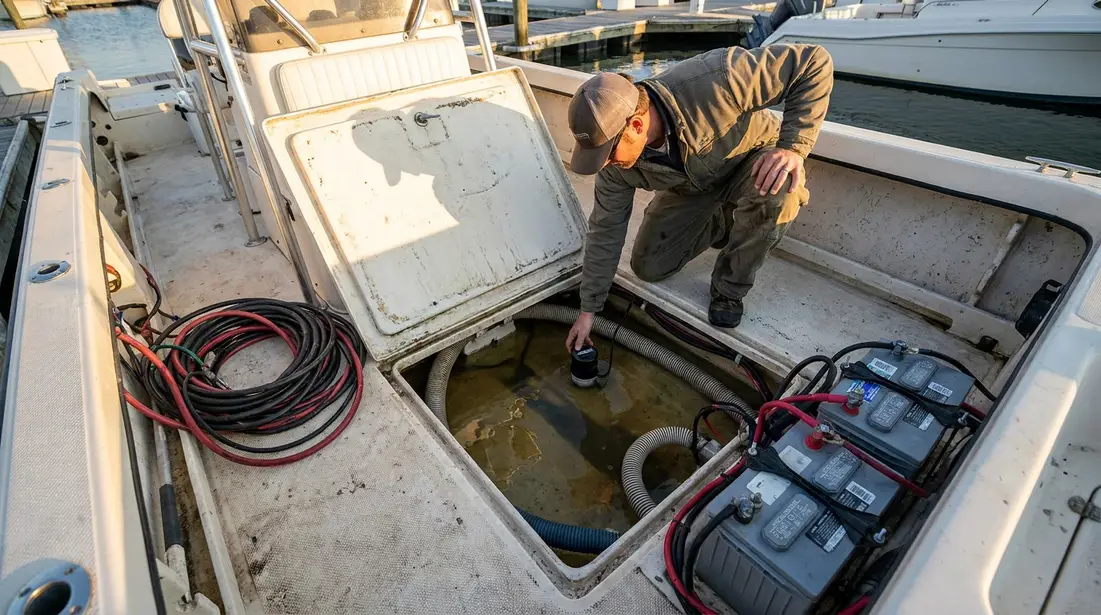
Maintenance Steps That Prevent Most Marine Bilge Pumps Failures
A bilge pump system is usually only as reliable as its weakest part. And very often, the thing that fails is not the pump motor. It is a blocked intake, a corroded wire, a loose clamp, or a hidden split hose, which is honestly easy to miss. Sometimes it is just a stuck float switch.
A good maintenance routine is usually simple.
Test automatic mode
Add clean water to the bilge and watch if the pump switches on. It should start at the correct bilge level, not too early, then shut off properly once the water drops.
Test manual override
Use the helm switch. If the pump still doesn’t run on manual, check the fuse, switch wiring, and battery voltage, since that’s often the problem.
Inspect hoses and clamps
Watch for soft spots, cracks, kinks, rusted clamps, and hose runs that sag, especially where water can collect, since those spots are often easy to miss. Hidden discharge lines also need extra attention.
Clean the strainer and bilge area
Zip ties, fish scales, leaves, or sludge can clog the flow, it happens. Sometimes they’ll even jam a float. Small stuff, but often a big problem.
Check wiring
Marine wiring should usually stay clean, dry, fused, and properly supported, since it helps. Small details often matter here. Corrosion at connectors can also reduce performance, even if the pump still runs and the drop is easy to miss.
Verify discharge flow
Don’t just listen for the motor. Also watch the water leave the hull, because that part is easy to miss. A pump can keep spinning and still put out weak discharge, which usually means it’s starting to fail.
A lot of boaters save money this way by catching issues early. When replacement parts are needed, stores like First Choice Marine can help with pumps, switches, hose, clamps, fuses, and other marine maintenance parts in one place. Owners looking for more routine care details can also review Bilge Pumps Maintenance Checklist for Boat Safety.
Start pumping the bilge as soon as possible.
The advice may sound obvious, but it’s still a helpful reminder. Maintenance often helps the system respond fast, and if it isn’t ready before an emergency, it probably won’t be ready when one happens.
Common Selection and Installation Mistakes to Avoid With Marine Bilge Pumps
Some bilge pump problems begin on the day the system is installed. A few issues come up again and again, and they get frustrating fast.
One common mistake is choosing a pump only by the advertised GPH rating. That number does not account for lift, elbows, hose length, or voltage drop, so it often looks better on paper than it does in the boat. Some owners also install wire that is too small. The pump may still run, but it will not deliver full power. Check valves get added often too, sometimes without much thought about flow loss or service access, and that usually matters more than people expect. In some setups, they reduce output and add another possible failure point.
Pump placement can cause trouble too. A pump can be installed, turned on, and still leave the bilge badly drained. Bilges are not all shaped the same, and water may collect away from the pump in a low corner or separate pocket. Sometimes a second pump fixes it. In other cases, better hose routing is probably enough.
Commercial operators and serious offshore boaters should also watch capacity benchmarks. For certain U.S. commercial fishing vessels, regulations require a minimum powered bilge pump capacity of 50 GPM. Recreational boats are different, of course, but that number still gives useful perspective. Good bilge design usually is not just about convenience.
Building a Better Marine Bilge Pumps System Over Time
There is no need to redesign everything at once. A lot of owners improve marine bilge pumps step by step, which is usually the more realistic way to handle it. Start by making the system already on board dependable. Replacing old hose clamps, cleaning the bilge, and upgrading corroded connectors are good first steps. You will also want to test the switch and the discharge. Small fixes often make the biggest difference in this kind of setup. After that, it makes sense to think about redundancy. A higher-mounted backup pump can help, and a bilge alarm is useful too, especially when problems are not noticed right away. If the boat stays in the water, smart monitoring is also worth thinking about.
Recent market data helps explain why this category keeps growing. The global bilge pumps market was valued at USD 3.67 billion in 2024 and is forecast to reach USD 5.33 billion by 2030, with a 6.27% CAGR. That growth often comes from demand for safer, smarter systems that are easier to monitor. In the marine segment alone, one market estimate puts 2024 value at USD 0.8 billion, rising to USD 1.5 billion by 2034.
For DIY boat owners, the practical takeaway is straightforward: better sensors, standards that match more closely, and easier monitoring are making pump systems more capable. Even so, regular inspection still matters most in this view. 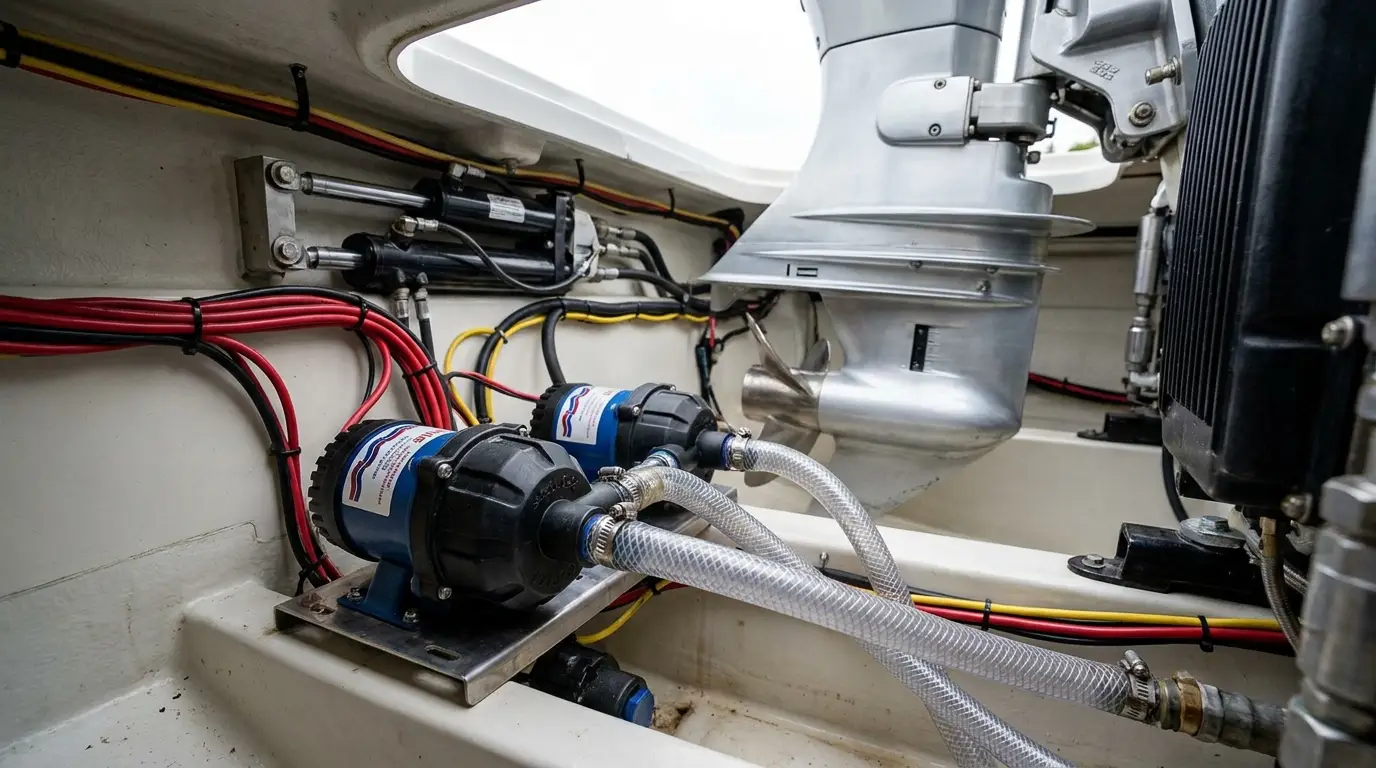
Frequently Asked Questions
What size marine bilge pump do I need?
Start with your boat size, bilge shape, hose run, and storage method. A pump’s rated output is often much higher than real installed flow, so many boaters are better served by two pumps at different heights instead of one single unit.
Are automatic bilge pumps better than manual pumps?
Automatic pumps are better for daily protection because they can respond without waiting for a person to act. Manual pumps still matter as backup, especially if battery power is lost or the electric system fails.
How often should I test my bilge pump?
Test it at least once a month during the boating season and before long trips. Also test after heavy rain, after trailering on rough roads, or anytime debris may have entered the bilge.
Why does my bilge pump run but not move much water?
Common causes include clogged strainers, weak battery voltage, corroded wiring, kinked hose, too much lift, or a failing impeller or motor. Watch the discharge outlet, not just the sound of the pump, to confirm real performance.
Should I install a second bilge pump?
If your boat stays in the water, runs offshore, or carries passengers far from help, a second pump is usually a smart upgrade. First Choice Marine is one example of a place where boat owners can compare replacement and backup system parts as they build a more reliable setup.
Where can I find parts for bilge pump maintenance?
Look for marine-specific pumps, switches, hose, clamps, wiring supplies, and fuse protection from a specialized marine parts retailer. A dedicated marine parts retailer can make it easier to match pump accessories and maintenance parts to your boat’s system.
Keep Your Marine Bilge Pumps System Ready
The best marine bilge pumps usually are not the biggest ones on the shelf. They are the ones that fit the boat, handle real conditions, and keep working through a storm, a leak, or a rough day on the water. That means looking past the number on the box, planning for hose lift and voltage drop, and treating maintenance as part of basic safety instead of just another chore that keeps getting put off.
If only a few points stick, these are the ones to remember: rated GPH is really just a starting point, and one pump is often not enough. Automatic operation also depends on healthy wiring and strong batteries, which sounds simple but really matters. Routine testing will often catch problems before they become serious. A clean bilge and a tested pump system can save time, money, and a lot of stress.
This week, take a fresh look at the boat. You will want to test the pump and watch the discharge at the outlet. What about the clamps, hose, fuse, and switch? Give them a careful look too. If anything seems weak, fix it now instead of waiting for the next storm, leak, or rough water. A little attention often goes a long way, especially when bilge safety is what the whole system depends on.
