


Marine grease can save boat owners from big trouble. A noisy trailer hub, stiff steering, rusty fittings or a seized winch can start with poor lubrication. Plenty of owners know grease matters but aren’t always sure where it should go, how much to use or when it needs replacing. That’s where problems begin.
Good marine grease does more than reduce friction. It helps keep water out, slows corrosion and protects moving parts from salt, spray and repeated washdown. It’s simple, but important. Weekend anglers, trailer boat owners and commercial crews all rely on that protection. It matters even more now because many boaters are keeping older boats longer and doing more of the maintenance themselves.
This guide explains how to choose the right marine grease for each job, how to apply it properly and which common mistakes to avoid. It covers bearings, steering parts, winches, electrical connections and seasonal storage. If someone is new to the topic, this quick look at Marine Grease vs. Regular Grease: Key Differences is a good place to start. Then come back here for the hands-on best practices.
Why Marine Grease Matters More on a Boat
Boats face rough conditions. Water gets into everything, salt speeds up corrosion, and heat, heavy loads, and long idle periods make lubrication harder than it looks. Marine grease isn’t just a nice extra. It’s basic protection.
Market estimates show just how important marine lubrication has become. Grand View Research estimates the global marine lubricants market will reach USD 8,368.1 million in 2025, while Market.us puts the marine grease market alone at USD 422.7 million in 2025, growing to USD 582.1 million by 2035. Different firms use different methods. Even so, the point is clear: boat owners and marine operators spend on protection products because rough conditions can get expensive fast.
| Market Metric | Value | Year |
|---|---|---|
| Global marine lubricants market | USD 8,368.1 million | 2025 |
| Asia Pacific share of marine lubricants market | 41.1% | 2025 |
| Engine oil segment share | 49.6% | 2025 |
| Global marine grease market | USD 422.7 million | 2025 |
| Projected marine grease market | USD 582.1 million | 2035 |
Corrosion is a major reason. Commercial marine sources estimate it costs the maritime industry USD 50 billion to USD 80 billion annually, and that’s before indirect losses are included. Boat owners don’t need a commercial vessel to feel that kind of pain. A failed bearing, a stuck cable end, or a rusted fitting can ruin a trip fast.
Most corrosion in a marine environment is the result of dissimilar metals in the presence of an electrolyte.
Marine grease belongs in a bigger corrosion-control plan. It’s more than just a slippery coating.
Match the Grease to the Part, Not Just the Brand
A good marine grease habit is simple: don’t use one product for every job. Different parts need different protection. That matters most.
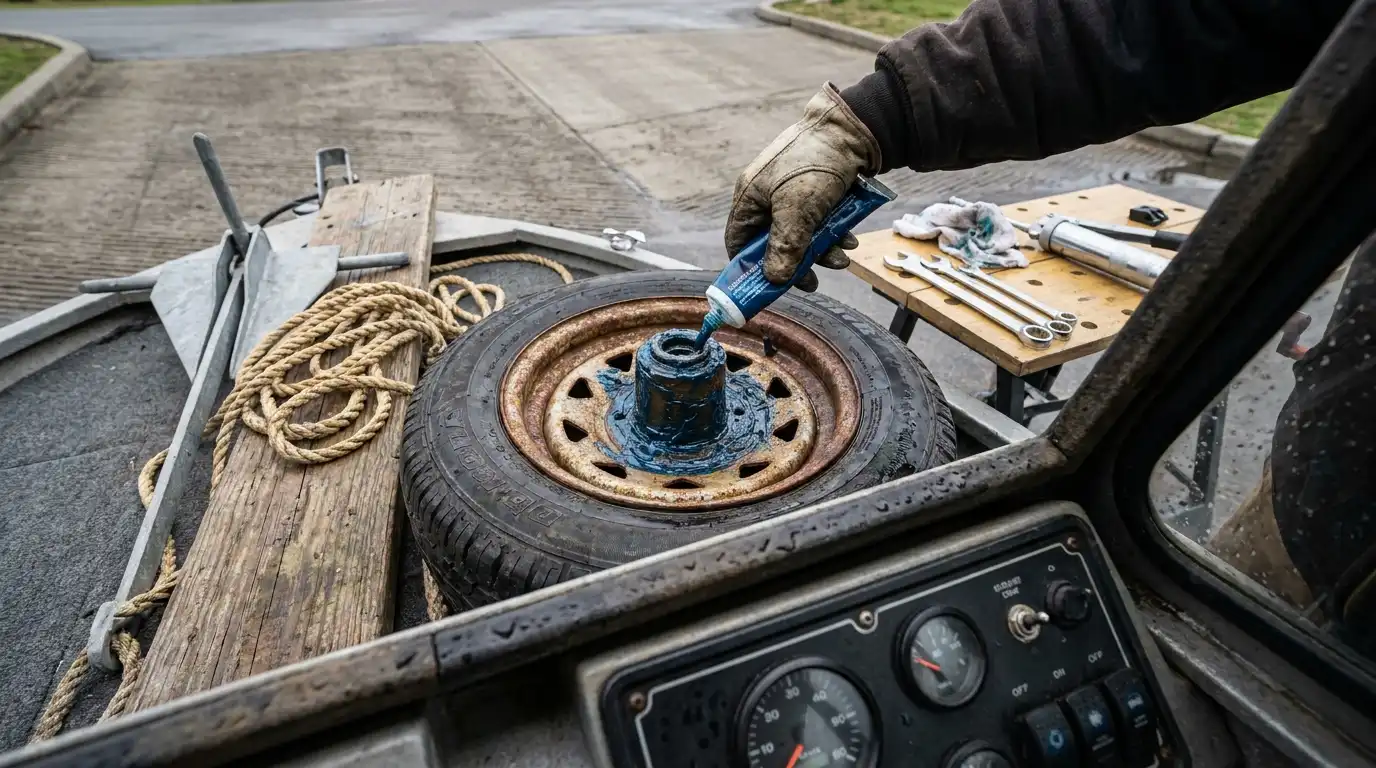
Trailer wheel bearings
Wheel bearings handle load, heat, and sudden water exposure, especially after towing. Marine-grade bearing grease helps resist water and keeps hubs turning well, even in rough conditions.
If the trailer sees saltwater, it also helps protect metal surfaces from rust. Trailer hubs are one of the key places to use the right product.
Steering and control points
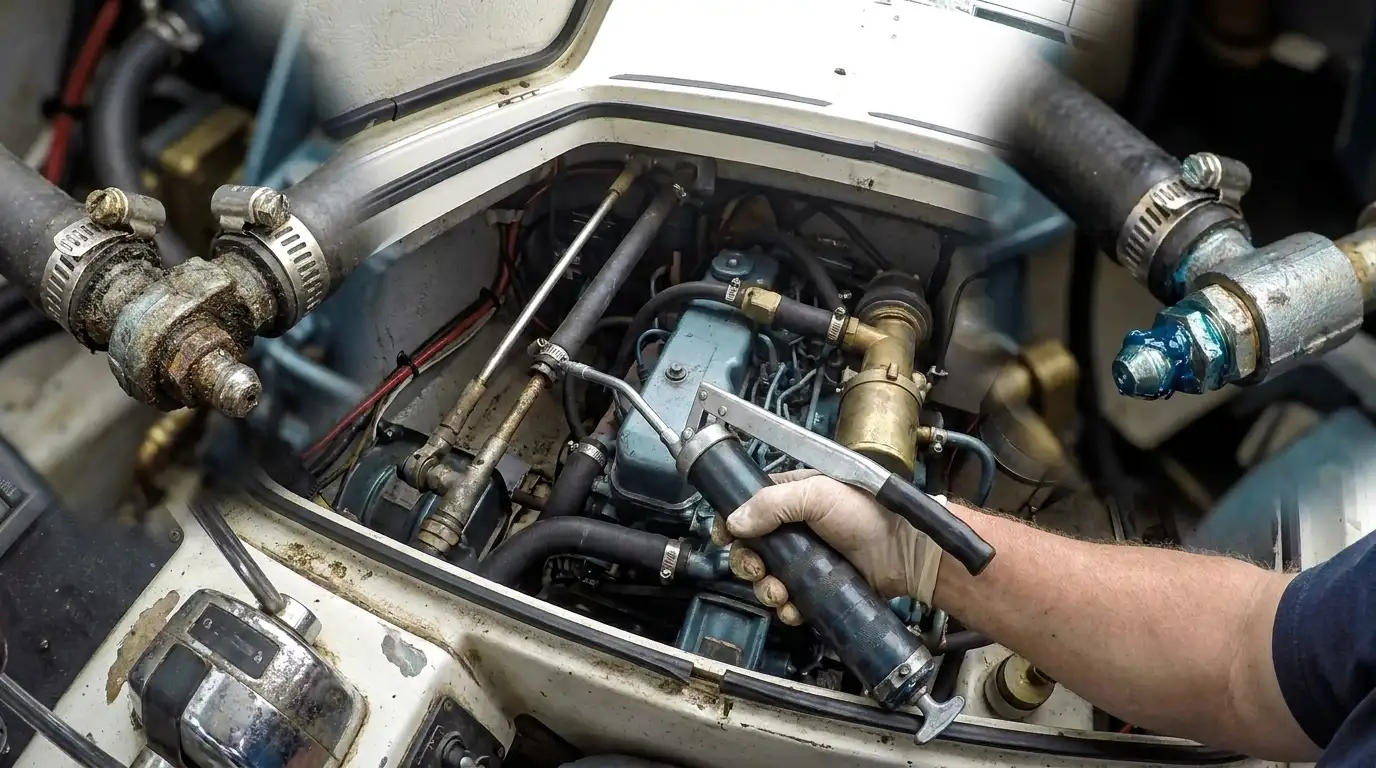
Steering pivots, tilt tubes, and grease fittings need a product that stays put and resists washout. Don’t use too much. Apply only what each fitting needs, and if grease pushes out old material or dirt, wipe the area clean.
Winches, windlasses, and small mechanisms
These parts need a lighter, more careful touch. In Practical Sailor testing, grease helped keep moving parts apart and reduced metal-on-metal contact, but too much can add drag and collect grime.
Electrical connections
Don’t use bearing grease on electrical terminals unless the maker says it’s okay. These connections may need dielectric grease instead, and Practical Sailor notes that when it’s used properly on the right kind of connection, it helps keep out water and oxygen.
For more on trailer and hub protection, this Marine-Grade Bearing Grease Guide for Performance & Longevity is a helpful next read.
How to Apply Marine Grease the Right Way
Even the right grease can fail if you put it on badly. Clean surfaces, the right amount, and regular checks. That’s what gives good results.
Step 1: Clean out the old grease
Don’t just keep piling on fresh grease forever. Old grease can trap water, grit, metal dust, and salt, so clear out as much as you can, inspect the part, and check for rust, pitting, or damaged seals. Dirty grease can wear parts down instead of protecting them.
Step 2: Check compatibility
Mixing greases can cause problems. Some thickener systems just do not work well together. If the product is changing and compatibility is unknown, clean the part fully first. Then add fresh grease.
Step 3: Apply the right amount
More isn’t always better. Too much grease can trap heat, create drag, attract dirt, and even push it past seals, so bearings and precision parts are especially sensitive. Use enough to coat and protect the part. Then stop before it begins overflowing.
Step 4: Work the part after application
Turn the wheel, move the steering, or work the mechanism by hand if possible. This helps the grease spread where the part needs it. It also lets you feel if the part is still rough, tight, or noisy.
Step 5: Wipe away extra grease
Grease on the outside of fittings can catch dust and sand. It can also hide leaks or cracks that would be easy to spot in a quick check. A clean finish shows careful work.
Common Marine Grease Mistakes That Cause Expensive Problems
Most grease failures come from maintenance mistakes. People may blame the product, but the real problem is how it was used.
One common mistake is using the wrong lubricant for the wrong part. Heavy grease may work well in bearings, but cause trouble on pawls or electrical connectors. That difference matters. Another mistake is skipping cleanup. Smearing fresh grease over dirty grease does not remove contamination. Boat owners also run into trouble when they ignore reapplication after water exposure. A trailer hub dunked at the ramp, for example, needs far more attention than a machine part that stays dry on land.
Storage neglect is another problem. Boats can sit for weeks, sometimes months. During that time, grease can settle, moisture may stay trapped in one spot, and exposed metal can start to corrode. Damage can build quietly.
The lightest oils evaporate within a year and provide poor wash off and corrosion resistance.
That quote is a good reminder that marine environments need products that stay in place. Practical Sailor has also reported that owners can help keep grease spread more evenly by rotating stored mechanisms from time to time. It is a simple habit. It makes sense for winches, windlasses, and other moving hardware.
For boat owners dealing with mixed-metal parts and heavy saltwater use, grease also needs to fit into a broader corrosion plan. This article on Advanced Techniques for Marine Corrosion Prevention: Protecting Your Investment adds helpful detail without repeating the basics here.
Saltwater, Freshwater, and Storage: Change Your Schedule
Not every boat needs the same grease routine. How it’s used matters.
Saltwater boats need more frequent checks because salt spray, dockside moisture, and repeated washdowns wear away protection faster than many owners expect. Freshwater is easier on parts, but repeated trailer immersion can still put hubs and seals at risk.
Storage changes the schedule too. If a boat sits for long periods, check grease points before storage, then check again when that time ends. Re-grease exposed fittings when needed. If practical, rotate moving parts by hand. That helps keep lubricant spread across the working surfaces.
There’s also a broader move toward biodegradable and lower-impact marine lubricants. Boaters who care about cleaner maintenance habits may want to keep an eye on that space, but any product still needs to match the part, the load, and the level of exposure.
Building a Simple Marine Grease Routine That You Will Actually Follow
The best plan is the one you’ll actually stick with, so keep it simple.
Before each trip, give the grease points a quick visual check. Look for rusty color, milky residue, leaking seals, or dry metal that looks like it has been exposed too long. During the season, check high-exposure parts more regularly, especially trailer hubs, steering fittings, and deck hardware that gets hit with spray.
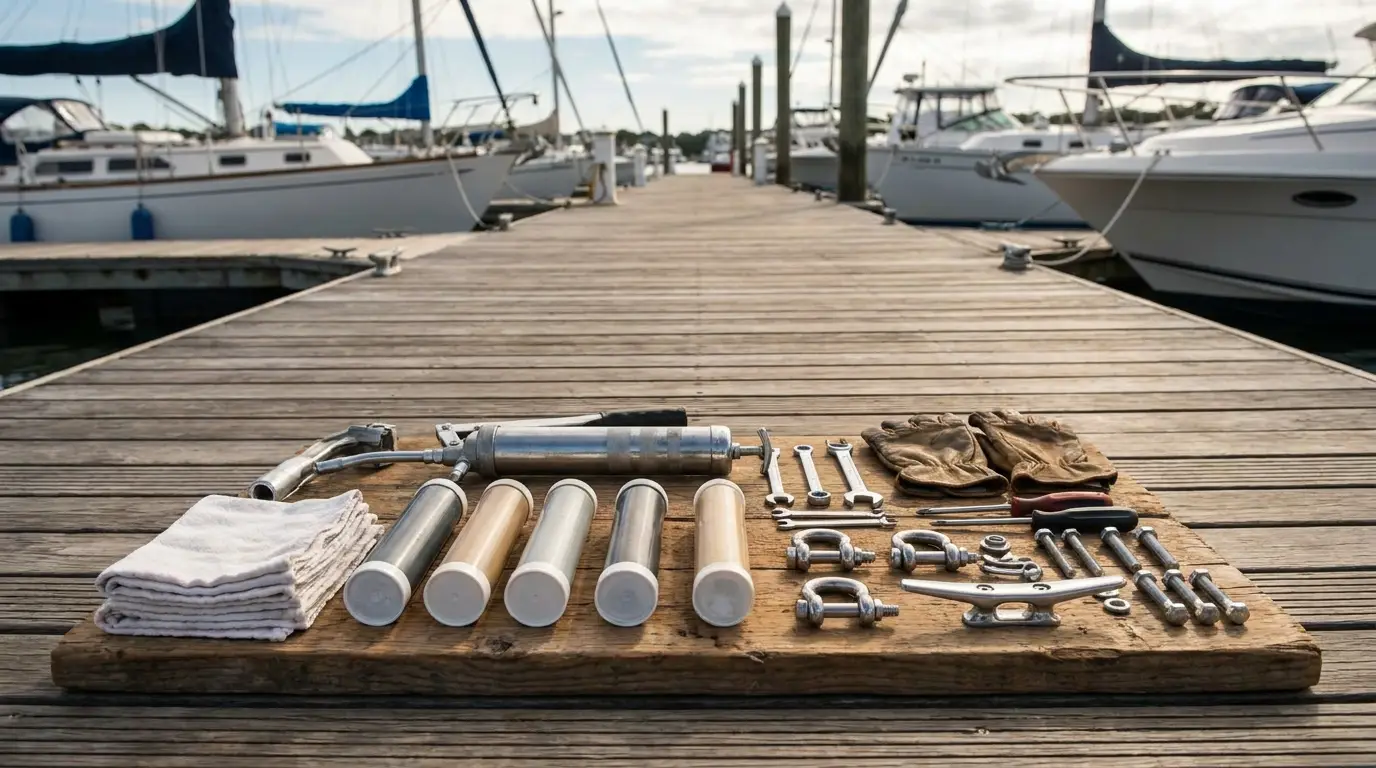
It also helps to keep a small kit nearby: a grease gun, clean rags, gloves, the right marine grease, dielectric grease for approved electrical use, and spare seals when needed. If owners buy parts and maintenance items online, resources like First Choice Marine can help them find products for engine care, boating accessories, and routine upkeep in one place.
For DIY owners, a checklist often works better than memory. Write down what was greased, which product was used, and when it was last serviced, because those details are easy to lose track of. That matters even more with an older boat or trailer. Right now, U.S. new powerboat retail unit sales are estimated to fall 8% to 10% in 2025 to about 215,000 to 225,000 units, so many boaters are keeping what they already own longer. Preventive care matters more when replacing a boat feels less likely.
Boat owners handling several maintenance tasks at once may also benefit from reviewing Best Practices for Marine Electrical System Maintenance, especially when electrical connections and corrosion control overlap with regular grease inspections.
Frequently Asked Questions
How often should I apply marine grease?
It depends on the part and how you use the boat. Trailer bearings, steering points, and hardware exposed to saltwater need more frequent checks than protected parts. A good rule is to inspect often and reapply after heavy water exposure, seasonal layup, or when grease looks contaminated.
Can I use marine grease on electrical connections?
Usually, no. Electrical connections often need dielectric grease, not bearing grease. Use only the type recommended for that connection so you do not interfere with contact or trap the wrong material in the fitting.
What happens if I use too much marine grease?
Over-greasing can force grease past seals, trap heat, increase drag, and attract dirt. In bearings and small mechanisms, too much grease can be just as harmful as too little. Apply enough to protect the part, then wipe away extra material.
Is marine grease only for saltwater boats?
No. Freshwater boaters still deal with moisture, trailer immersion, and rust risk. Marine grease is useful anywhere parts face water, load, and long storage periods.
What should I look for when buying marine grease?
Look for water resistance, corrosion protection, and suitability for the exact component you are servicing. For example, trailer bearings need a different focus than electrical terminals or winches. First Choice Marine is one example of an online marine parts retailer where boat owners can compare maintenance products for different onboard systems and care routines.
Should I remove old grease before adding new grease?
Yes, whenever practical. Old grease may hold grit, water, and metal particles, and some grease types do not mix well. Cleaning first gives you a better chance to inspect the part and helps the new grease do its job.
Keep Your Boat Moving Smoothly
Marine grease works best as part of a full maintenance routine, not as a quick fix. Choose the right type for each part. Clean out dirty or contaminated grease first. Don’t pack in too much. After salt exposure, trailer launches, or storage, check those high-risk areas again. Grease is also only one part of protecting a boat from wear and corrosion.
For DIY boaters, small habits can make a big difference. A few minutes with the right grease can help prevent seized parts, bearing problems, and costly downtime later. Anyone building a maintenance kit or replacing worn hardware can begin with a practical source for boating parts and upkeep needs at First Choice Marine.
Use marine grease with purpose. Match it to the job. Apply it carefully. Keep to a routine. That helps protect the boat and trailer and makes time on the water feel smoother.
