


A good boat maintenance schedule helps you catch small problems before they turn into lost weekends, expensive repairs or unsafe trips. Simple but important. This guide is for recreational boaters, fishing families, workboat operators and DIY owners who want a system they can really stick with. By the end, you’ll have a practical monthly and seasonal boat maintenance routine that covers the engine area, hull, safety gear, bilge, battery and onboard systems.
It doesn’t focus on only one system. It works as a real-world marine maintenance checklist you can use year-round. Official safety data still shows breakdowns and preventable issues happen frequently. In 2024, the U.S. Coast Guard recorded 3,887 recreational boating incidents, 556 deaths, 2,170 injuries and about $88 million in property damage. Boat owners manage maintenance for more than just performance, and it remains a basic part of safe boating.
Before You Start
Get a few basics together before you begin:
- Your owner’s manuals for the boat, engine, trailer, and electronics
- A notebook, phone notes app, or printed maintenance log
- Basic hand tools: screwdrivers, socket set, pliers, flashlight
- Clean rags, absorbent pads, gloves, and a trash bag
- Mild boat soap and a proper bottom or hull cleaner for stains and marine growth
- Marine-safe lubricant, corrosion inhibitor, and replacement fuses
- Battery charger or maintainer
- Access to spare parts and maintenance supplies from First Choice Marine or your preferred marine retailer
Tip: Choose the same day each month for these checks. It helps. A recurring calendar reminder works better than trying to remember them on your own.
Step 1: Build Your Maintenance Calendar
Group your boat by how it’s actually used: year-round use, warm-season use, or seasonal storage. Then set up checklist groups for before each trip, monthly tasks, and seasonal work. Keep the list short so you’ll really use it.
Transport Canada guidance supports that kind of routine. At the start of the season, it recommends regular checks for fluid levels, leaks, hoses, belts, bilge pumps, and safety equipment. Many owners learn the same lesson the hard way. Most breakdowns show warning signs first.
Boating safety starts with preparation and prevention.
That schedule gives those warning signs a place to appear before they turn into bigger problems.
| Metric | 2024 Value | Why It Matters |
|---|---|---|
| U.S. boating incidents | 3,887 | Problems on the water are still common |
| U.S. boating deaths | 556 | Safety habits and readiness matter |
| U.S. injuries | 2,170 | Small failures can become emergencies |
| Property damage | $88 million | Preventive care protects your budget |
| Maintenance-related occurrences | 106 | Routine checks can reduce avoidable issues |
Let that information shape the habit. Your calendar should include a monthly inspection day, a spring recommissioning day, a mid-season review, and an end-of-season layup day.
Common mistake: Doing everything at launch time. Spread the work through the season.
Step 2: Do These Monthly Boat Maintenance Tasks
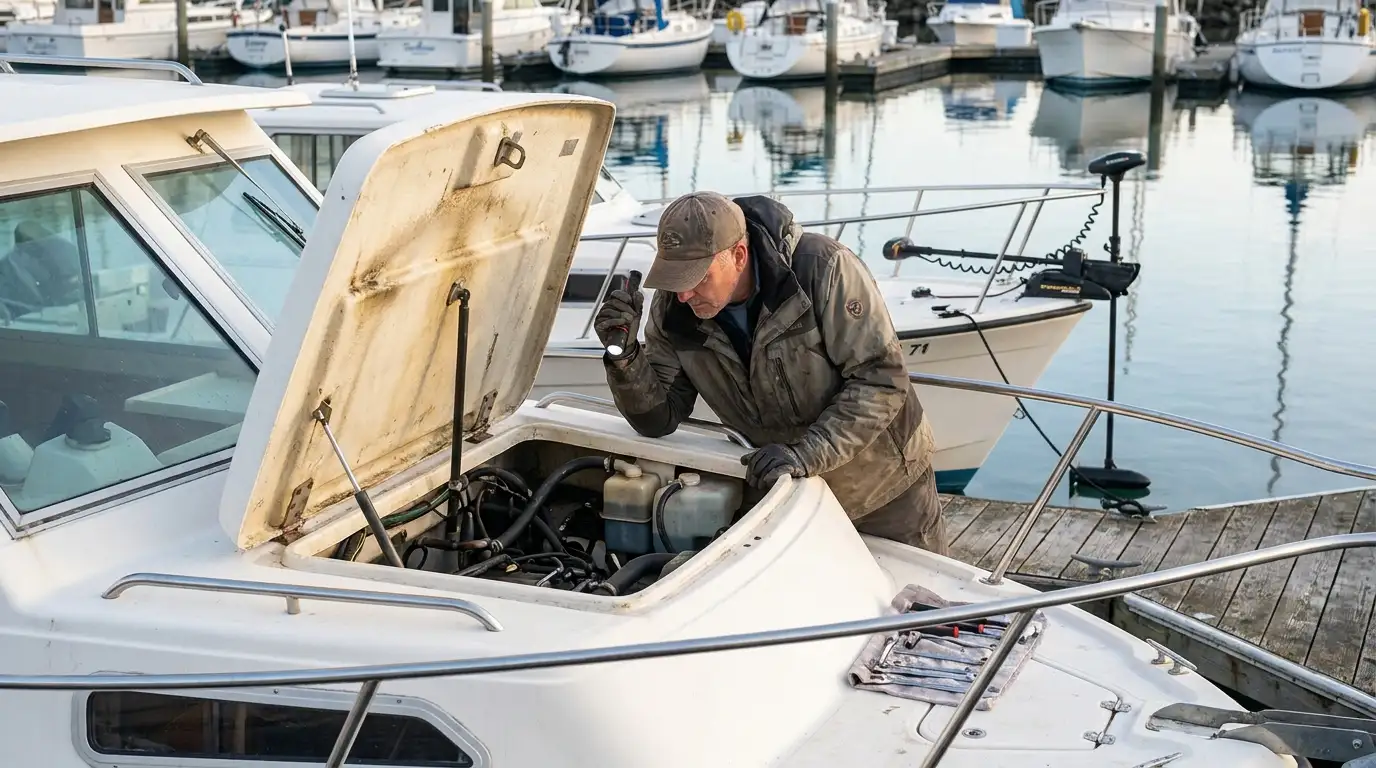
Focus your monthly boat maintenance routine on things that wear out slowly: leaks, corrosion, loose clamps, dead batteries, dirty bilges, and worn safety gear. Keep it simple. Pick one day each month, then use the same order every time.
Monthly checklist order
- Open the engine area and check for fuel smell, oil sheen, coolant loss, or damp spots.
- Check fluid levels exactly the way your engine manual says.
- Squeeze hoses. If they feel brittle, cracked, swollen, or soft, note them for replacement.
- Inspect belts for glazing, fraying, or cracks.
- Test the bilge pump and float switch with water or the built-in test function.
- Check battery terminals for white or green corrosion and make sure the hold-downs are tight.
- Turn on navigation lights, bilge blower, horn, electronics, and pumps.
- Inspect extinguishers, life jackets, throwables, and first aid kit dates and condition.
- Check hatches, latches, seals, and port lights for leaks or weak closure.
- Wash the hull and waterline so growth and stains don’t build up.
Monthly cleaning matters more than a lot of owners think. Marine growth, algae, rust streaks, and waterline stains do more than make a boat look bad. They can also slow it down, raise fuel use, and make early problems harder to see. It’s not just cosmetic. A clean hull makes it easier to spot blisters, chips, and cracked sealant early, before small issues turn into bigger repairs.
If you want a closer look at battery care, read Marine Batteries: Essential Maintenance Guide 2025.
Troubleshooting note: If your bilge pump runs but moves very little water, check the strainer for debris, look for a kinked hose, or test the battery strength.
Step 3: Handle In-Season Checks Before Problems Get Bigger
Seasonal boating usually means heavy use through spring and summer, followed by long stretches sitting still. That’s why mid-season checks matter. By this point, your marine maintenance checklist should go past a basic inspection and include light service. It’s only a small step up, but it still matters.
The AMSA 2024 marine incident report recorded 141 power, propulsion and steering failures. Of those, 70 were linked to main engine or gearing failures, making up 49.6% of that category. That’s a clear reminder that engine neglect can show up fast once you’re out on the water.
Mid-season, do these exact actions:
- Replace any hose clamps with rust or stripped screws
- Re-torque loose battery connections and coat them with terminal protectant
- Inspect steering movement lock-to-lock for stiffness or grinding
- Check propeller blades for fishing line, dings, bends or missing hardware
- Flush saltwater systems after use if your setup allows it
- Inspect sacrificial anodes and replace badly wasted ones
- Clean battery tops so they don’t self-discharge through grime
- Confirm spare fuses, bulbs and emergency tools are onboard
It’s also a good time to check below the waterline. If a boat stays in the water, it needs a monthly bottom inspection, or a professional check when needed. A clean bottom reduces drag and may help fuel efficiency. It also gives owners a chance to spot fresh marine growth before it hardens, since removal gets harder and takes more effort once it does.
For additional wiring and corrosion checks, review Marine Electrical System Maintenance: 2025 Boater Guide.
Common mistake: Owners may brush off slight steering stiffness until it turns into a real safety problem. Don’t wait. If the steering feels different, act on it.
Step 4: Complete Your Spring Start-Up Checklist
Spring is when seasonal boat maintenance matters most. If your boat’s been sitting for months, treat launch prep like a real restart, not just a quick wipe-down.
Start with a full visual inspection. Look for rodent damage, cracked hoses, old sealant, moisture, and corrosion. Before reinstalling the batteries, charge and test them. Then check the pumps, alarms, lights, radio, and electronics. Don’t skip the safety basics. Refill and restock the first aid kit, check the fire extinguishers, and inspect smoke or fire detection devices if equipped. If you carry an emergency beacon, verify the battery dates.
For gasoline-powered boats, spring is also a good time for a yearly tune-up. This isn’t a full guide. Still, it’s the right time to replace clearly worn ignition parts or take care of other service items based on your engine schedule. Fuel-system inspections also help prevent avoidable launch-day problems. You can compare your routine with Marine Fuel System Maintenance Strategies for 2025.
The Coast Guard’s broader safety message fits here.
The most important thing you can do is wear your life jacket.
That quote focuses on safety gear, but it points to something bigger: spring prep isn’t finished until the boat is ready and the people on board are ready too.
For a closer look at pump reliability, see Bilge Pumps Maintenance Checklist for Boat Safety.
Tip: Do your spring checklist at least one week before launch instead of waiting until the night before.
Step 5: Finish the Season the Right Way
End-of-season work helps protect next year. Even if your boat never sees freezing weather, layup jobs still matter. Stale fuel, trapped moisture, corrosion, and weak batteries can get worse while the boat sits in storage.
Use this shutdown order:
- Remove gear, trash, damp fabric, and food.
- Clean and dry the bilge completely.
- Wash the hull, including the waterline and bottom stains.
- Flush cooling passages if your engine setup requires it.
- Stabilize fuel if the boat will sit.
- Charge batteries fully, then disconnect them or keep them on maintenance charging.
- Spray corrosion protection on exposed metal where appropriate.
- Cover the boat so water can run off while air still circulates.
River Canal Rescue reported 3,485 call-outs in 2024, up 4% from 3,335 in 2023. Owners also booked 592 engine inspections, almost 15% more than the year before. More owners seem to be taking preventive checks seriously, and that trend looks good. Your fall routine should match that.
If your boat sits on a trailer, add tire pressure, bearing, brake, and light checks before storage or before the next tow. This guide stays focused on the boat itself, but trailer neglect ruins plenty of plans as well. That can be easy to miss. You can review that separately in Boat Trailer Maintenance: Bearing, Brake, and Light Failures.
Common mistake: Covering a dirty, wet boat traps moisture and leads to mildew.
Frequently Asked Questions
How often should you do boat care?
You should do a quick safety and condition check before every trip, a fuller inspection every month, and larger service tasks at the start and end of each season. Boats used in saltwater or very often may need checks more often.
What is the most important monthly inspection task?
If you have to choose one, test the bilge pump and inspect the engine area for leaks every month. Water intrusion, fuel leaks, and electrical issues can become major problems fast.
What should be on a basic marine maintenance checklist?
A solid checklist should include fluids, leaks, hoses, belts, bilge pump operation, battery condition, lights, safety gear, hull condition, and watertight seals. Add propeller, steering, and trailer items if they apply to your setup.
Do you need different maintenance for freshwater and saltwater boats?
Yes. Saltwater boats usually need more frequent flushing, corrosion checks, connector cleaning, and metal protection. Freshwater boats still need routine care, but salt exposure speeds up wear on many systems.
Where can you get parts and supplies for routine marine upkeep?
You can source filters, cleaners, electrical items, pump parts, corrosion products, and other service supplies from marine retailers like First Choice Marine. It helps to keep common wear items on hand so a small issue does not cancel your next trip.
Is it worth making your own maintenance calendar instead of using memory?
Yes. A calendar keeps you consistent and makes it easier to track repeat problems, replacement dates, and seasonal work. Many boat owners use a simple note on their phone, while others build a supply list through First Choice Marine so they can reorder common items on schedule.
Keep Your Boat Ready All Year
The best boat maintenance plan is the one you’ll actually stick with, so keep it simple. Check the same systems in the same order every month, then set aside a little extra time in spring and fall when added attention can help. Clean the hull regularly so stains, growth, and damage don’t get too far ahead, and small issues stay small. Treat leaks, weak pumps, battery corrosion, and cracked hoses as early warning signs, not small annoyances.
You’ll notice the results in clear, practical ways. Your boat should start more reliably, smell clean and dry, steer the way it should, pump water correctly, and catch you off guard less at launch. Pretty simple. Your maintenance log should show dates, parts used, and any upcoming service items. That record helps whether someone runs one fishing boat or manages a small fleet.
Make a one-page marine maintenance checklist from the steps above and save it on your phone. If you need cleaners, engine-care products, onboard accessories, or other basics, an online marine parts retailer like marine parts and maintenance solutions can help you keep your routine stocked without guesswork. The real benefit is simple: less downtime, fewer emergencies, and more time on the water.
