


Running a boat puts real strain on an outboard motor every time it leaves the dock. Even short trips move salt, sand, and grit through the cooling system, and that stuff doesn’t take long to cause problems. The buildup happens slowly, is easy to miss, and can shorten engine life if it’s ignored. That’s exactly why motor flushers exist.
Flushing an outboard is one of the easiest maintenance jobs you can do. It often takes less than ten minutes and costs very little, especially compared to the price of an outboard motor. Even so, many boat owners skip it, rush through it, or keep putting it off because they’re not sure they’re doing it right. That doubt is common, but it’s easy to fix with clear guidance.
This guide walks through the full flushing process step by step, without unnecessary detail. It explains when flushing actually helps, how to use motor flushers safely, and where mistakes usually happen. It also covers newer flushing systems found on modern engines, along with simple habits that help motors stay reliable longer. Regular flushing after use cuts down on wear, helps avoid repair bills, and keeps boats running season after season. If a motor runs in saltwater offshore or muddy freshwater rivers, steady care of the cooling system shows in how long it lasts and how smoothly it runs.
Why Motor Flushers Matter More Than You Think
Salt, sand, and silt don’t just wash away on their own. After time in saltwater or cloudy conditions, that mix sticks around inside the cooling passages, slowly tightening the space water needs to move through. As flow drops, cooling suffers, heat builds, and corrosion starts eating at metal parts you can’t see but rely on every time you run the engine. Clean water keeps an outboard cool, but only when those passages stay clear.
The lifespan numbers tell the story. Most outboard motors last around 1,500 to 3,000 operating hours, while engines that get regular care can reach 4,000 hours or more. Flushing on a regular basis helps get you there. It’s a small habit, and the benefit shows up years later rather than right away.
| Maintenance Habit | Typical Lifespan Impact | Risk Level |
|---|---|---|
| Flushed after every saltwater use | 4,000+ hours possible | Low |
| Flushed occasionally | 2,500, 3,000 hours | Medium |
| Rarely or never flushed | Under 2,000 hours | High |
Manufacturers aren’t guessing. Yamaha says flushing clears out sand and salt that block cooling passages and cause corrosion over time. It’s basic upkeep doing exactly what it should.
Freshwater flushing with clean water will dislodge most contaminants (sand, silt, mud, etc.) and force them out of the passages in the cooling system. Perhaps even more importantly, flushing removes salt buildup, which can lead to poor cooling as well as corrosion of the engine block and midsection.
If you boat along the coast, flushing after every trip is standard saltwater care. Freshwater boaters benefit too, especially after running through muddy water or thick weeds.
Choosing the Right Motor Flusher for Your Engine
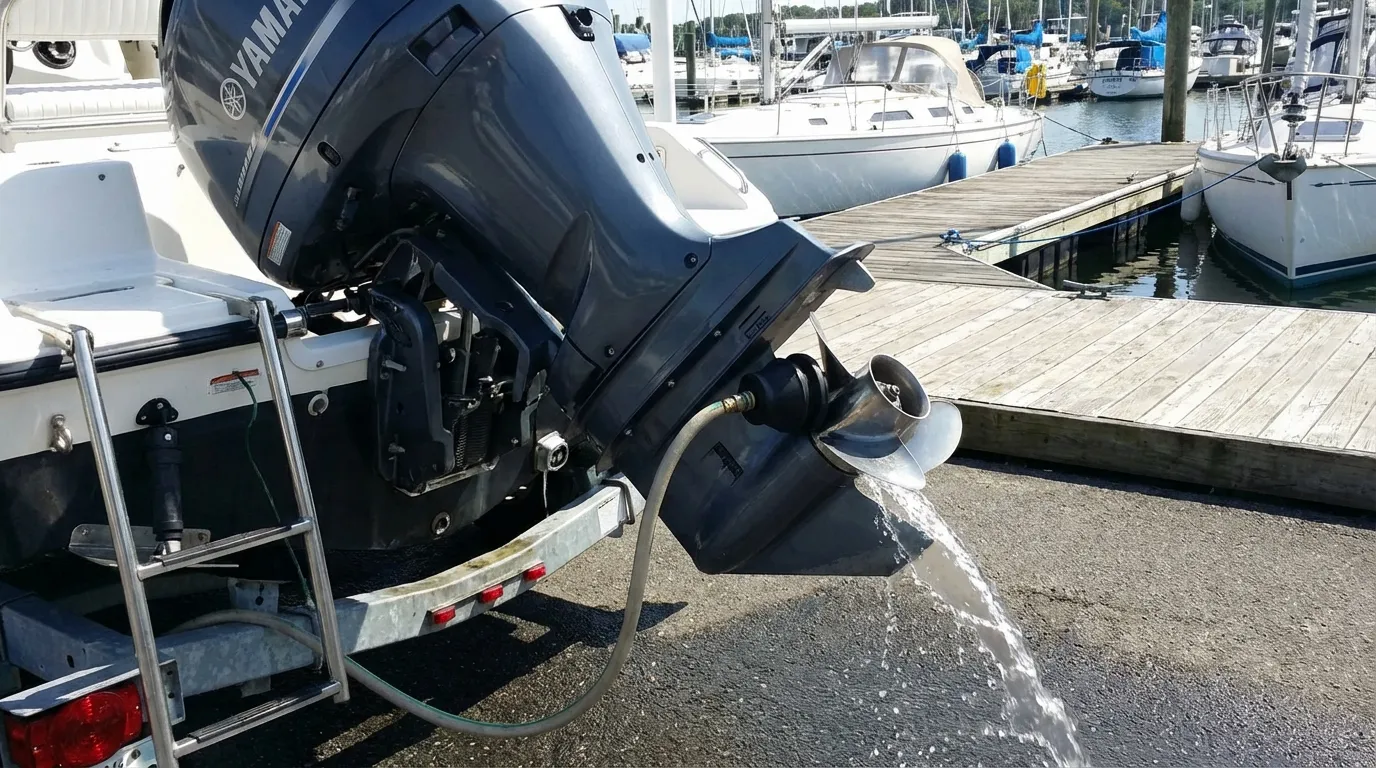
Choosing a motor flusher isn’t hard, but it’s not something to pick at random. The type you use affects how well water moves through the engine. Flush muffs are the style most people know. They’re small, easy to find, and popular for a reason. The rubber cups fit over the lower unit’s water intake ports, and a regular garden hose hooks up on top. Setup is fast, and there’s nothing confusing about using them.
Built-in flush ports work a little differently. Many newer outboards have one, especially modern four-stroke engines. You connect a hose straight to the engine, and flushing doesn’t require starting it. That helps on busy days and reduces bending and fiddling during regular upkeep.
For bigger motors, some boaters go with quick-connect adapters or dual-feed flush muffs. These move water more evenly, which helps when steady flow matters. You can tell the engine is getting enough water instead of guessing.
No matter which option you choose, clean freshwater still needs to flow through the whole cooling system at safe pressure. Flushers that don’t seal well are best avoided, since weak flow can leave salt and debris behind.
Retailers like https://www.firstchoicemarine.com/ carry engine care tools for both at-home maintenance and heavier shop-style work. Additionally, you can learn more about cooling system care in the Engine Cooling Systems: Diagnosing Overheating at Idle or Cruise guide.
Step-by-Step: How to Flush an Outboard Motor Using Motor Flushers
Most flushing mistakes happen when steps get skipped, even though it’s easy if you follow them all. Skipping steps can cause real damage.
Step 1: Flush Right After Use
Warm engines keep the thermostat open, so water can reach all cooling passages. That’s why you should flush right away (don’t wait). If you wait until the next day (easy to forget), salt crystals can set up inside, bad news.
Step 2: Attach the Motor Flusher Securely
Start by placing the flush muffs snugly over the water intake ports and check for any gaps. A standard garden hose connects here. Water flow is important: turn it fully on before the engine starts, don’t skip this step.
Some engines have a built‑in flush port. If so, follow the manufacturer instructions. These ports flush without running the engine, which keeps things easy.
Step 3: Start the Engine at Idle Only
Once water is flowing, start the engine and let it idle. Hose pressure won’t cool the engine at higher RPMs, so idle only. Why risk it? During flushing, keep the throttle untouched, no revving.
That small stream should keep flowing; that’s how you know water is moving through the cooling system (watch it closely). If it stops, shut things down and fix the problem first (don’t force it).
Step 5: Run Freshwater for 5 to 10 Minutes
That flush time clears salt and debris from the system, the gritty stuff no one wants left behind. Most experts suggest running freshwater for 5 to 10 minutes after saltwater use, and you’ll notice the difference fast.
Regularly flushing after saltwater use helps prevent salt buildup and corrosion by removing salt from the cooling system and extending engine life.
Done flushing? Turn the engine off first. Then shut off the water, so you don’t mix up the order.
For further comparison of flushing and maintenance methods, see Engine Flush vs Cooling Service: When a Flush Isn’t Enough.
Common Motor Flusher Mistakes to Avoid
A lot of engine problems start with habits that seem harmless at first. Revving the engine during a flush is a common one. BoatUS technical advisors warn that flush muffs can’t deliver enough water once RPMs rise. Even if water looks like it’s flowing, the engine can heat up fast and cause internal damage. When flushing, idle speed is the safe limit, always stick to it.
Poorly aligned flushers cause trouble too. If the cups aren’t sitting evenly over the intake ports, water flow drops quickly and protection disappears. It’s easy to miss, and just as easy to fix. A quick check before starting can save plenty of frustration later.
Skipping a flush after short trips is another frequent mistake. Even a quick run in saltwater leaves corrosive residue inside the engine, including spots you can’t see. Every saltwater or dirty-water trip needs a full flush, no matter how short.
Additives also confuse many owners. Unless the engine maker approves a flushing product, clean freshwater is the safer option. Unapproved chemicals can damage seals and internal parts, and that risk is very real.
We’ve also covered cases where flushing alone won’t fix the problem in Engine Flush vs Cooling Service: When a Flush Isn’t Enough, which explains when professional service is the better call.
Advanced Tips for Long-Term Engine Cooling System Care
Flushing only handles part of proper cooling system care. The real clues show up in small signs, like weak telltale flow or slightly higher running temperatures. These issues often link back to clogged passages or an impeller that’s starting to wear out. If you ignore them, they usually get worse, and waiting often leads to more work later.
Many newer engines include built-in flush ports that work without running the motor, which saves some setup time. The downside is that results depend on steady water pressure and letting the flush run long enough. Cutting it short rarely removes buildup as well as you’d hope.
Eco-friendly corrosion inhibitors are getting more popular with charter operators. When the manufacturer approves them, these products help reduce salt residue left behind after running in harsh, salty water.
A dependable preventive routine mixes flushing with regular checks and seasonal service, without skipping steps. This approach is covered in the Ultimate Guide to Outboard Motor Preventive Maintenance 2025, which lays out a clear schedule that fits well with consistent flushing habits and stays easy to follow.
Making Motor Flushers Part of Your Routine
Flushing works best when you do it the same day the boat comes out of the water. Set up motor flushers and a hose at home, or keep them ready at the marina, so skipping it takes more effort than doing it. When the setup is easy, the habit usually sticks.
Commercial operators already treat flushing as the last step after every trip. Recreational boaters can pick up that routine without much hassle. After a few outings, it feels automatic instead of like another chore, and that’s when it stops feeling optional.
Education helps. New owners often learn the basics from short videos, quick checklists, or tips shared on the dock, but the real difference comes from actually following through.
As one Sportsman Boats tech host put it:
This is the easiest and most effective way to prolong the life of your motor.
Pairing regular flushing with quality parts and maintenance supplies from trusted retailers like https://www.firstchoicemarine.com/ helps keep things reliable in a clear, simple way.
Questions People Often Ask
How often should I flush my outboard motor?
Any saltwater or dirty-water run, even a short one, needs a flush. Freshwater use still needs it after muddy or weedy trips, because buildup slowly adds up.
Can I flush my outboard without starting it?
Many newer outboards have built-in flush ports, so you can flush without starting the engine. Manufacturer instructions still matter. Older models are different and need to run at idle.
How long should I run the water when flushing?
Experts say there’s a simple range: run freshwater for 5 to 10 minutes. No guessing needed; that time clears salt buildup and washes debris out of the cooling system, so you’re good.
Is it safe to rev the engine while flushing?
Overheating is the main risk during a flush. Revving the engine feels tempting, but a garden hose can’t feed enough water at higher RPMs, and that’s the issue.
Do freshwater boats really need motor flushers?
Sometimes, yes, mainly after muddy rivers, silty water, or lakes with thick growth. Flushing washes out debris from cooling passages (the parts you can’t see), cutting buildup over time and helping avoid problems later.
Protect Your Engine Every Time You Dock
Outboard motors handle rough conditions, but neglect catches up faster than most owners expect. Salt and debris start working inside long before anything shows on the dash, and the damage stays quiet at first. Motor flushers help push back, giving owners a simple way to protect what’s inside.
The payoff shows up when flushing happens right after use. Done right, it helps protect the cooling system that keeps the engine running. Results get even better when flushing goes along with routine checks and preventive maintenance.
Engines flushed on a regular basis tend to run cooler, last longer, and deliver reliable power season after season. Making flushing a habit turns it from a chore into something that pays off every time you dock.
