


Changing oil on a boat shouldn’t feel risky or messy, but for many owners it still does. Lots of people keep putting it off. Hot oil, awkward angles, and tight engine spaces all add up, and spills tend to find their way into the bilge. There’s also that familiar worry that something will go wrong, which most boat owners have felt at least once. Put it all together, and it becomes a hassle. That’s a big reason marine oil change kits are now popular DIY boat maintenance tools. This marine oil change kit review helps boaters see what really works for cleaner and safer service.
A good kit saves money in a very real way, and it often cuts down the time more than expected. Oil stays where it belongs instead of dripping below or moving toward the water. Over time, engines usually get steadier protection, and routine marine engine oil changes start to feel simpler and far less stressful, which matters when maintenance comes around. Still, not every kit works the same. Some make the job clean and smooth, while others end up making it harder than it should be.
This marine oil change kit review looks at what actually helps. It skips marketing talk and sticks to real features that keep engine service cleaner, faster, safer, and easier to handle. Both outboard and inboard setups are included, along with diesel engines. It also covers common mistakes, realistic costs, and how the right tools support long-term DIY boat maintenance without extra frustration.
If you own a fishing boat, cruiser, work boat, or charter vessel, this guide applies directly to your setup.
Why Oil Change Kits Matter More Than Ever
Owning a boat keeps getting more expensive, and most boaters notice it every season. Labor rates continue to rise, and many people are holding onto their boats longer than they planned, which changes how they approach maintenance. More seasons on the same boat means more hours on the water, added stress on engines, and usually quicker wear on key parts. Because of that, simple jobs like oil changes matter more than they used to, and the costs can pile up faster than many expect.
Industry data often estimates yearly boat maintenance at 10 to 20 percent of the original purchase price. When oil changes are done at a shop, the bill can easily reach hundreds of dollars per engine. Using the right oil change kit at home can cut that by 50 to 70 percent, which becomes noticeable for most owners within a season or two.
| Service Type | Typical Cost | DIY Savings |
|---|---|---|
| Outboard oil change | $160 to $190 | Up to 70% |
| Inboard engine oil | $300 labor | Up to 60% |
| Marine diesel service | $300 to $800 | Up to 50% |
Money isn’t the only concern. Safety is often what tips the scale. Oil spills in the bilge can cause fines or environmental harm, and burns from hot oil happen more often than people realize, especially in tight engine areas. A good marine oil change kit helps lower those risks and usually makes the process smoother. The goal is less mess and fewer headaches.
As marine consultant Steve D’Antonio explains:
Preventing the once-inevitable mechanical failures is relatively straightforward; it’s a case of knowing your enemy.
Oil is a common place for problems to hide. Doing regular, clean oil changes helps spot issues early, and that’s often the biggest benefit.
What Actually Makes a Marine Oil Change Cleaner
What usually decides how clean an oil change feels is how the oil comes out to begin with. Most modern boat oil change kits use vacuum pumps instead of drain plugs, and that detail often matters more than people expect. Many marine engines sit below the waterline, which can be awkward. When oil is drained the old way, it often runs straight into the bilge and spreads fast. Once that starts, cleanup is rarely quick or enjoyable.
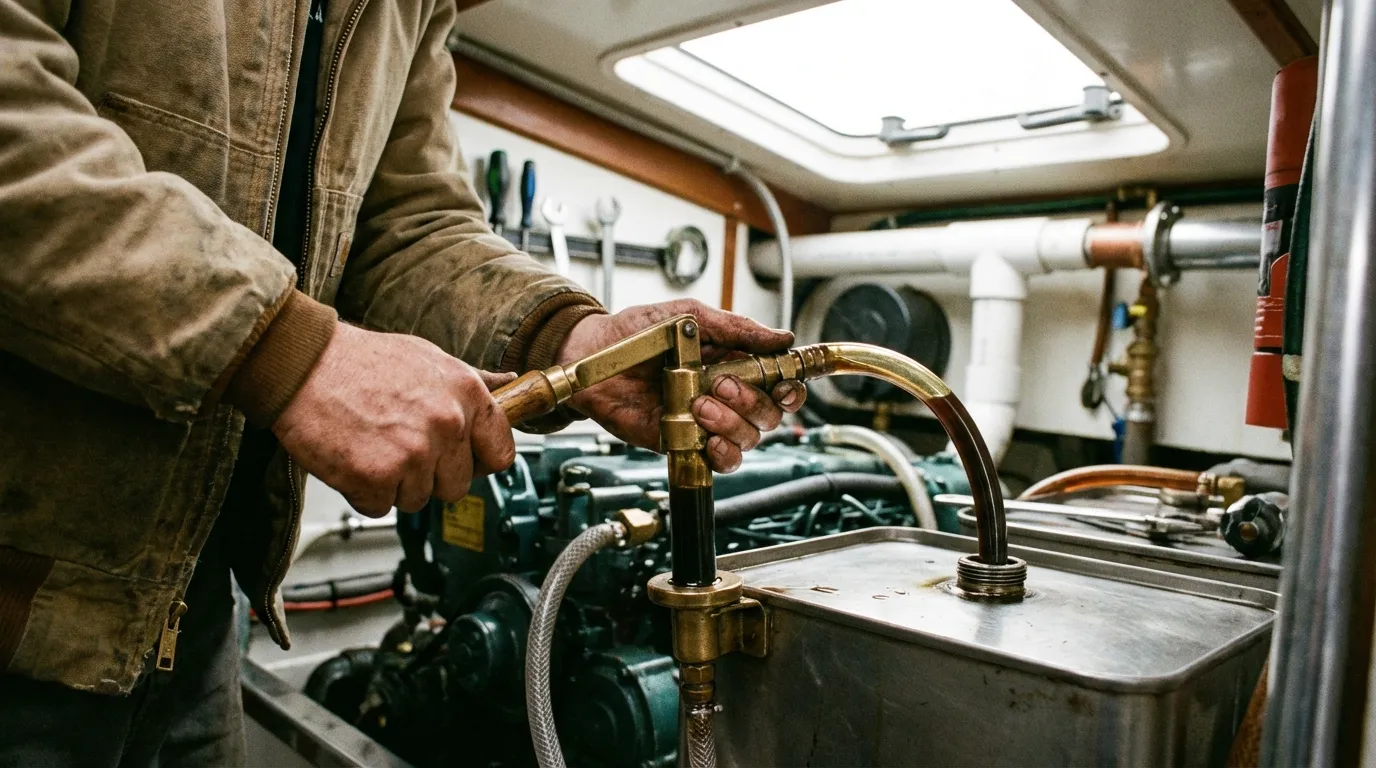
A good outboard oil change kit usually includes a strong pump, snug hose fittings that stay in place, a sealed container, and hoses sized to fit correctly. You feed the hose down the dipstick tube and pull oil from the top, so nothing under the engine gets opened. That setup usually stops the mess before it starts, saving time later.
Cleaner kits also often include absorbent pads and small drip trays. These can catch small leaks early, before they move through the engine space. Clear, reusable containers help prevent overfilling and messy transfers as well. Small details like these tend to make a real difference.
| Clean Feature | Why It Matters | Common Issue Avoided |
|---|---|---|
| Vacuum extraction | No drain plug removal | Bilge spills |
| Sealed container | No open pouring | Oil splatter |
| Absorbent pads | Catch drips early | Slippery surfaces |
The BoatUS Foundation Clean Boating Program, often cited for practical guidance, notes that proper extraction tools and absorbent pads help prevent bilge contamination. That focus helps keep routine maintenance cleaner overall. For readers who want a deeper dive, the Marine Oil Change Kit Guide: Clean, Easy Engine Servicing expands on these points.
Speed Comes From Engine-Specific Design
The real reason oil changes feel faster usually isn’t raw speed. It’s fit. When a kit is made for a specific engine, the job tends to move along with fewer hiccups than most people expect. Generic setups often add extra steps, awkward fittings, or seals that almost work. Those small, familiar frustrations stack up and end up slowing the whole process.
Engine‑specific boat oil change kits usually show up with the right amount of oil, the correct filter, and O‑rings that actually match. That removes much of the guesswork, at least in my view. It also cuts down on last‑minute trips for parts when something doesn’t line up. Fewer obstacles mean smoother progress from start to finish.
What actually makes the biggest difference across engine types? With outboards, speed often comes from easy access and less disassembly. Inboards and diesels benefit from hoses that reach tight spots without kinking. Manual pumps work well for smaller engines, while electric pumps are often more useful on larger engines and generators where volume and reach matter.
Most manufacturers suggest oil changes every 100 engine hours for outboards, and about 200 to 250 hours for many diesels. When servicing takes less time, owners are more likely to keep up with that schedule.
Curious how different kits change the process? A Marine Oil Change Kit: Faster, Cleaner Engine Servicing article walks through the steps with clear examples.
Safety Is About More Than Gloves
DIY boat maintenance often pushes safety to the back of the mind, usually because the job feels familiar. Oil changes still involve hot surfaces and sharp edges, and those surprises can show up fast (I’ve seen it happen), especially on the water where keeping your balance already takes effort.
Around docks, footing is often slick, so spill‑proof containers and stable pump bases matter more than people think. They help reduce slips and tip‑overs. Long extraction hoses add another layer of control by keeping hands away from hot engine parts when space is tight. That extra distance usually makes the whole job feel steadier.
Marine diesel specialists often say preventive maintenance costs far less than later repairs. In real life, that’s usually true, which is why early attention helps. As Diesel Services of America puts it:
The math strongly favors preventive marine engine maintenance over reactive repairs.
Fear or hassle can lead people to skip oil changes, turning small issues into big ones. Using safe, purpose‑built tools often removes that hesitation. Common mistakes, like using automotive tools or open drain pans on docks, are easy to avoid. A complete marine engine oil change kit is designed to prevent exactly those problems.
Choosing the Right Kit for Your Engine
The biggest mistake usually happens right at the start: thinking one kit works for every engine. Outboard oil change kits are small and easy to handle, which is great when space is limited. Inboard and diesel kits are another matter, they’re bigger and made for tougher jobs. Different jobs need different tools, and in my view, trying to force the wrong fit rarely ends well.
Before you do anything else, match the kit to your engine type and oil capacity instead of guessing. You’ll often find hose length matters more than you expect, especially if the drain point is in an awkward spot. OEM‑quality filters also make a real difference here; kits that feel flimsy or strangely light usually cut corners. No shortcuts, probably ever.
Running more than one system, like generators alongside main engines? A modular kit with swap‑out hoses can help keep costs in check. Electric pumps cost more upfront, but they’re faster and much less tiring, especially on larger engines. Worth it, I think.
Over time, oil changes work best when they’re part of a regular routine. That’s where the Ultimate Guide to Outboard Motor Preventive Maintenance 2025 helps owners build habits that protect engines year after year. Good habits, honestly.
Tools That Work Better Together
Oil change kits tend to work best when they’re used with other boat maintenance tools. When engine flush systems, oil absorbents, and storage containers are close by, the job usually feels smoother and much less messy. Keeping everything stored together under the console or in a dock box helps you finish sooner. It’s a straightforward setup, but in real use it often saves time.
Cleanup still matters after service, even when you’re worn out (we’ve all been there). Leftover oil attracts dirt and can hide small leaks, often near hoses or fittings. Cleaning gear keeps the engine area safer and easier to inspect, which we covered in a Boat Cleaning Tools Reviewed: What Actually Saves Time, Protects Gelcoat, and Delivers Pro-Level Results. It fits right after an oil change, one system that’s easier to manage.
Common Questions Folks Ask
What is the best marine oil change kit for outboards?
It mostly comes down to fit: the kit should match the engine’s brand and size. When it fits, you get a setup, with vacuum extraction, the right filter, and the correct oil volume.
Can I use an automotive oil extractor on my boat?
Car extractors often don’t have marine-rated hoses or sealed containers (usually). Marine kits feel safer and help avoid bilge spills during use.
Outboard motors usually need oil changes every 100 hours. Marine diesel engines often go 200, 250 hours, or once a year, which is pretty standard, I think.
Are electric oil change pumps worth it?
With bigger engines, electric pumps can save time, but on small outboards, manual pumps are still enough for most people.
Is a DIY marine oil change safe for beginners?
Yes, it’s usually safe with the right kit. Engine-specific boat oil change kits help avoid mistakes, so the job stays simple and safe.
The Bottom Line for Cleaner Engine Service
Doing your own marine engine oil change saves money, that part is obvious, but it often does more than that. It builds confidence and keeps you connected to your boat in a hands-on way, because you tend to spot small issues you might miss otherwise. With the right tools close by, DIY maintenance usually starts to feel normal, not like a stressful task you keep avoiding. It simply becomes part of boating.
Marine oil change kits aren’t all the same. The better ones focus on clean oil removal and secure containment, which really matters in tight engine spaces. Those engine-specific details help keep service cleaner, safer, and quicker, often without spills on the deck or in the bilge. That means less mess, less cleanup, and less frustration.
Ready to handle engine care yourself? Starting with a kit made for your engine and space helps avoid messy service days and gets you back on the water sooner, sometimes right after you finish. Your boat. Your terms. This marine oil change kit review shows how small changes lead to better maintenance results.
