


Engine hesitation or that sharp fuel smell while you’re on the water often comes back to a part most people miss: the fuel tank vent. Boat fuel tank venting is one of those systems you rarely think about until something feels wrong, or smells off. Even so, it quietly affects how the engine runs and how safe the fuel system stays over time, in my view. When venting is set up right, fuel flows from tank to engine smoothly, pressure stays even, and problems usually don’t show up. When it’s not, fuel delivery can turn inconsistent, repair costs often rise, and safety risks can appear quickly, sometimes without any early warning, which is what makes it unsettling.
What’s interesting is how small venting problems can spread through the whole system. This guide looks at marine fuel tank venting in plain language, without jargon or overthinking. You’ll see why vent design matters and how it shows up during normal runs, not just worst‑case moments. It also explains how poor venting can slowly strain tanks and other parts over time. Along the way, you’ll learn the warning signs that often point straight to vent trouble, like ongoing fuel smells at idle or uneven engine response during a calm cruise.
What Boat Fuel Tank Venting Actually Does
A fuel tank vent has a simple job, but problems can snowball fast when it isn’t working right. It lets air move in and out of the tank as fuel gets used. When fuel flows to the engine, air has to take its place. If that doesn’t happen, the system starts to misbehave. A blocked vent often leads to a vacuum inside the tank. Out on the water, that vacuum can slow fuel flow, and the engine may sputter or even shut off, usually when you least want it to.
Temperature changes add another factor. As things heat up, fuel expands. Without a clear vent, pressure can build inside the tank and push fuel into hoses or fittings where it shouldn’t go. That’s how spills or leaks usually start, and dealing with that on a boat is never fun.
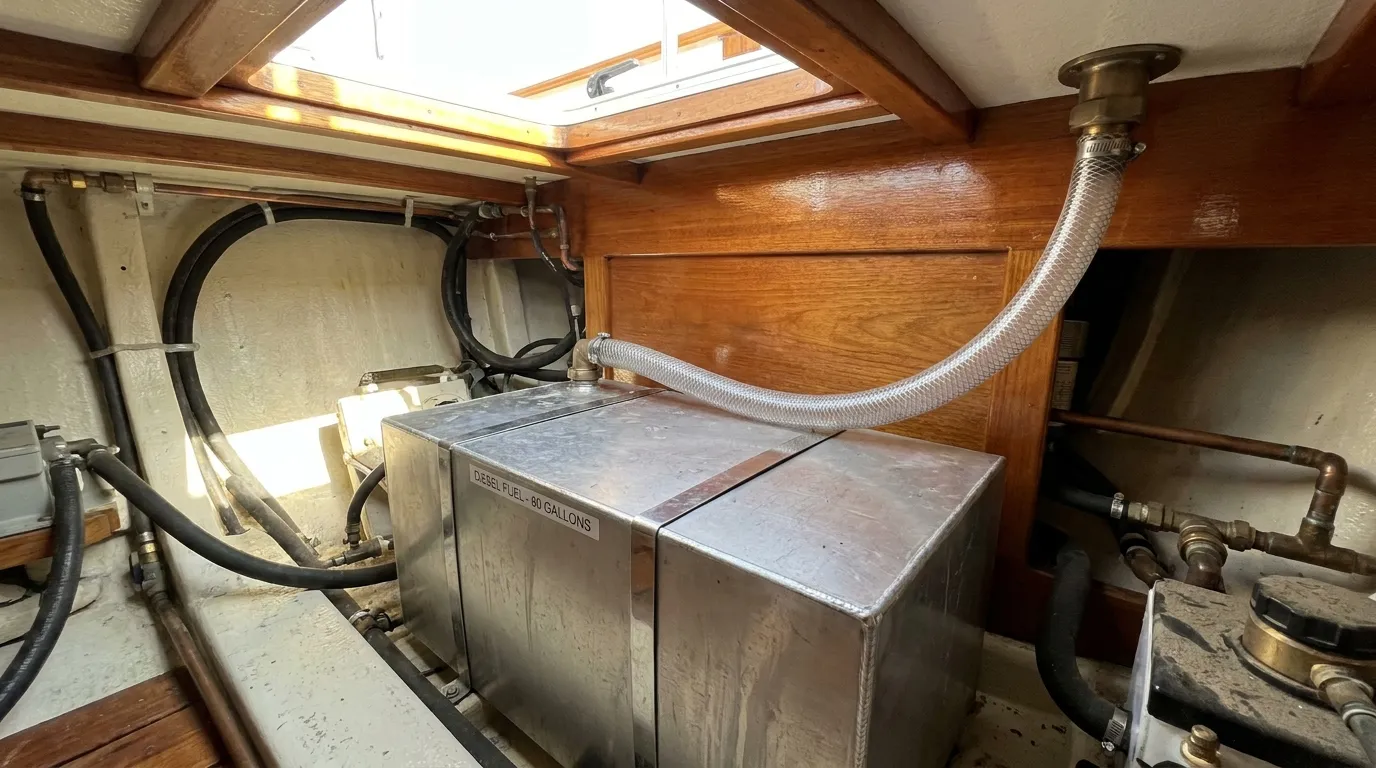
Boat fuel tank venting also isn’t the same as what you’ll find in cars. Marine fuel tanks aren’t designed to hold pressure, even for a short time. They depend on open venting while still keeping water out. U.S. Coast Guard guidance and ABYC standards say vent lines should run uphill from the tank and end at fittings made to block water. Small details, like how a hose is routed or the angle of the vent, often decide whether fuel flows smoothly, and those details are easy to miss.
Fuel system trouble shows up more often than many boaters expect. Recent reports link hundreds of recreational boating incidents to machinery failure. A large portion involves fuel delivery, and blocked vents are a common reason. The table below shows how machinery-related failures affect safety on the water.
| Metric | Value | Year |
|---|---|---|
| Recreational boating incidents | 3,887 | 2024 |
| Incidents involving machinery failure | 289 | 2024 |
| Injuries from machinery failure | 94 | 2024 |
How Poor Boat Fuel Tank Venting Design Causes Problems
Many common boat fuel problems often come down to something basic: blocked airflow. When a vent screen gets clogged, or the vent hose has a kink or a low spot where fuel can collect, air can’t move the way it should. Since these parts are usually hidden, the problem often goes unnoticed. With limited airflow, the engine has a harder time pulling fuel from the tank, which is a normal reaction in fuel systems. At higher speeds, this often shows up as power loss or an engine that shuts down after running for a bit. Those signs are easy to blame on bad fuel or a failing fuel pump. That makes sense early on, but it often sends troubleshooting in the wrong direction while the real issue stays out of sight longer than it should.
Pressure issues add to the problem. As the tank heats up from sun exposure or engine heat, the fuel inside expands, especially after long runs. If the vent can’t release that pressure, it has nowhere to go. Fuel may get pushed past seals or into the carburetor or injectors. This usually shows up as flooding, strong fuel odors, or trouble restarting a warm engine. In more serious cases, fuel tanks can swell or change shape. Plastic tanks are more likely to do this since they flex more easily.
Water getting in through the vent is another issue that’s easy to overlook. Vents mounted too low or missing proper loops can allow spray or washdown water to enter the tank. That water can cause corrosion, clogged filters, and rough running that’s hard to track down. When ethanol problems are already in the mix, poor venting tends to make everything worse at the same time.
The link between vent issues and engine behavior is looked at more closely in Boat Motors and Fuel Tank Vent Problems Explained, where these symptoms are connected to real situations many boaters recognize.
Proper Marine Vent Design and Installation Basics
Good vent design usually isn’t complicated, but a few basic rules matter more than people expect. A smart place to start is the vent hose. Problems often show up when the hose doesn’t run upward the entire way from the tank to the vent fitting. It works best when it’s routed along the hull side or tucked under the gunwale. Even a small low spot can trap fuel and block airflow, which often leads to frustrating and easily avoided problems. Gentle curves tend to work better than sharp bends because they lower the risk of kinks and pressure points. Using marine‑grade hose rated for fuel vapor is also key, since regular hose can break down fast in a salty, fuel‑heavy setting.
The vent fitting itself often doesn’t get enough attention. This small part can make a real difference. Many newer fittings include splash guards or internal baffles that help keep water out while still letting air move freely. Placement matters just as much. Putting it where spray or washdowns can hit it invites trouble. Mounting the fitting high on the hull and away from enclosed areas helps stop fumes from building up, which usually improves safety and cabin comfort.
Maintenance brings everything together. Vent screens can slowly clog with salt or dirt, and hoses may soften or crack over time. Ethanol‑blended fuels often speed up this wear. During regular marine fuel system maintenance, it’s smart to check vents along with filters and fuel lines. A hose that feels soft or brittle is often a clear sign it should be replaced.
Many boaters focus first on tanks and engines. Venting is simpler and easier to inspect, making it one of the most practical systems to improve during routine checks. And for a wider view, Marine Fuel System Maintenance Strategies for 2025 explains how venting fits into overall fuel care.
Modern Boat Fuel Tank Venting Trends and Smarter Solutions
Fuel venting has changed a lot in recent years, and the biggest shift is how low‑key it has become. Low‑profile and flush‑mount vents are now common on newer boats, usually placed just above the rub rail along the hull sides. Since they sit closer to the hull, they’re less likely to hit the dock and they give the boat a cleaner look. It’s a small change, but over time it tends to make a difference. Many newer vents also come with built‑in water separation features that older designs didn’t have, which is a very practical update. This setup helps keep water out of the fuel system without blocking airflow, which is still the vent’s main job.
Regulations also play a part. Better compatibility with EPA‑certified fuel systems allows for more controlled venting, lower vapor emissions, and improved tank protection. This matters more now as fuel blends keep changing. Ethanol‑blended fuels often increase vapor pressure, so proper venting is more important than it was years ago.
DIY awareness is growing too. Many fuel problems aren’t engine failures at all. They’re airflow issues. A quick vent check can often save hours of troubleshooting and stop you from replacing parts that were never the problem. For more insights, see Marine Fuel System Optimization Techniques for 2025, which connects these trends to real-world examples.
Practical Inspection and Maintenance Tips You Can Use
The good news is that checking a vent system usually doesn’t require special tools. There’s no fancy gear involved, which makes it easy to check on a regular basis. A helpful way to start is at the vent fitting and hose, then follow the entire run using both your eyes and hands. This hands-on check often helps spot small issues before they turn into bigger ones. The hose should run uphill without sagging, since gravity tends to reveal weak areas over time. You’ll often find problems by feeling for cracks, soft spots, or loose clamps that could cause issues later. When it’s time to clean, gently rinse the vent opening with fresh water and use a soft brush. Take your time and don’t cover the vent with paint or sealant.
Next, check airflow. A vent can become restricted without it being obvious. Remove the fuel cap and gently blow through the hose from the tank side. Air should move easily and feel clear. If there’s resistance, that usually means a blockage that won’t fix itself. If fuel smells stick around even after cleaning, replacing the vent parts is often the safer option. They’re inexpensive compared to the problems they help avoid.
Vent care also works best when done alongside other fuel system tasks. Tank cleaning, filter changes, and additives work better when venting is in good shape. This link is explained more in Fuel Additives for Boats: Ethanol Problems and Prevention, especially for boats already dealing with contamination risks.
Frequently Asked Questions
What happens if a boat fuel tank vent is blocked?
A blocked vent can cause vacuum buildup in the tank. This restricts fuel flow and may lead to engine stalling or loss of power. Over time, pressure issues can also damage the tank or hoses.
Can bad venting really cause engine problems?
Yes. Poor venting can mimic fuel pump or injector failure. Many boat fuel problems traced to engines are actually airflow issues at the tank vent.
How often should I inspect my fuel tank vent?
Check it at least once a season and anytime fuel issues appear. Vent inspection should be part of regular marine fuel system maintenance, just like filter changes.
Are modern vent fittings better than older ones?
In most cases, yes. Newer designs resist water intrusion and damage better while maintaining airflow. Upgrading can improve reliability and safety.
Does ethanol fuel make venting more important?
Absolutely. Ethanol increases vapor pressure and can degrade hoses faster. Proper venting helps manage pressure and reduce related fuel system stress.
The Bottom Line for Reliable Fuel Performance
Boat fuel tank venting may be small, but it often makes a clear difference. A solid vent setup helps keep pressure in check, supports steady fuel flow, and helps stop water from getting inside, which can sound minor until it causes real headaches. Small part, big impact often applies here, especially when bad venting leads to fuel problems that leave boaters stuck at the dock or just annoyed. When you understand how venting works and give it some attention, even a quick look now and then, you help protect the engine and the tank, along with the time you’d rather spend out on the water.
So what happens when venting gets ignored? Issues tend to show up at the worst times. A simple fix is adding vent checks to regular maintenance and swapping out worn parts before they cause trouble. It usually takes five minutes. Using marine-rated parts made for today’s fuels also helps everything run better. For solid advice and quality marine parts, resources from First Choice Marine fit naturally into smarter upkeep and safer boating, like spotting a clogged vent before the engine sputters on launch day.
