


Saltwater, humidity, heat and long idle stretches can all wear down a boat engine. Marine lubricants also play an important role in slowing corrosion before it spreads. Corrosion can start small: a little white powder on aluminum, rust creeping onto a clamp, green buildup near a wire. Left alone, it can spread into cooling passages, fasteners, fuel parts and electrical connections. That can mean weaker performance, higher repair bills and more downtime when the boat should be out on the water.
The good news is that corrosion protection does not have to be complicated. A steady routine helps. Good cleaning habits, smart storage, regular checks and quality marine lubricants can protect recreational and commercial boats alike. This guide explains what causes corrosion, where it may show up first, how to catch it early and which maintenance habits matter most. It also covers simple product choices, common mistakes and practical ways boat owners can put together a plan that fits real-world use.
Why Marine Engines Corrode So Fast
Marine engines face some of the hardest conditions around. Saltwater is the main reason. It speeds up the chemical reactions that wear down metal surfaces, and even freshwater boats aren’t fully safe because moisture, mud, pollution, and trapped water can still start corrosion. Heat from normal engine use makes the problem worse. That creates the right conditions for damage.
Based on manufacturer guidance from Caterpillar, galvanic corrosion gets worse when different metals touch in a wet environment. Aluminum parts, stainless hardware, copper-based fittings, and electrical components all need extra attention, because when unlike metals connect and water provides the path, one of them can start losing material faster than expected. It’s a simple reaction, but the damage can grow fast.
| Common Corrosion Type | Where It Appears | Typical Cause |
|---|---|---|
| Galvanic corrosion | Aluminum housings, brackets, lower units | Dissimilar metals in contact with water |
| Surface rust | Steel fasteners, clamps, exposed brackets | Moisture and oxygen on unprotected metal |
| Crevice corrosion | Under gaskets, clamps, and fittings | Trapped salt and low airflow |
| Electrical corrosion | Battery terminals, wiring ends, connectors | Moisture, current leaks, and poor sealing |
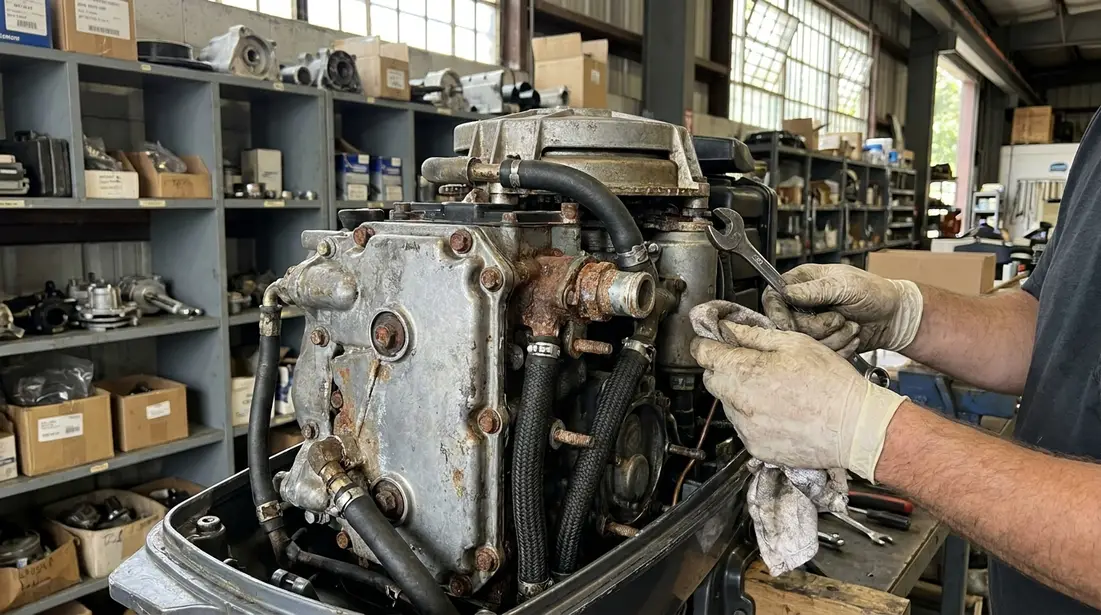
The table shows why corrosion can look different from one area to another. It does not always seem serious at first. Early signs can show up as dull metal, flaky deposits, swelling around connectors, and paint that starts to lift, and catching those signs early makes repairs simpler and cheaper. Noticing it early helps.
Start With a Simple Inspection Routine
The best corrosion protection plan starts with regular checks. A lot of boat owners wait until something fails. By then, the damage has had time to spread. A quick inspection after each outing, especially after saltwater use, helps catch small issues before they turn into bigger ones.
Check the outside of the engine first. Look for bubbling paint, rust streaks, white chalky residue on aluminum, and cracked protective coatings. Then check the hose clamps, bolts, brackets, and electrical points. Pay extra attention to those spots. Battery terminals and ground connections matter because corrosion there can lead to hard starting, charging issues, or weak system performance.
Next, inspect the places that are easy to miss. Lift covers. Check under cowlings. Look around steering pivots, trim and tilt hardware, and cooling hose connections, where salt and moisture can get trapped. If you trailer your boat, inspect the engine after road travel too. Vibration can shake protective grease loose or leave bare metal exposed.
It also helps to keep a short checklist on your phone or in your boat box. Include the engine exterior, lower unit, sacrificial anodes, clamps, battery posts, and exposed fittings. Want a broader care routine too? This guide on Best Practices for Maintaining Marine Propulsion Systems can help tie corrosion checks to overall engine health.
For busy owners, consistency matters more than perfection. A perfect inspection every time matters less than building a habit that actually sticks. Five focused minutes after a trip does more good than one rushed look at the end of the season.
Fresh Water Flushing, Cleaning, and Marine Lubricants
A lot of corrosion problems start when salt and grime stay on the engine too long. Flushing is one of the simplest ways to lower that risk. After running in saltwater, flush the engine with fresh water as soon as you can. Don’t guess. Follow the engine maker’s procedure for flush time, because a quick rinse can leave salt behind, while waiting too long without the right cooling steps can cause a different kind of problem.
The outside needs attention too. Salt spray lands on cowls, brackets and electrical surfaces, then stays there. Give it a little time and it sticks. A gentle rinse with mild marine-safe soap and a soft cloth helps remove that buildup before it hardens and gets tougher to clean off. Skip harsh household cleaners. They can strip wax, damage finishes and react badly with rubber or plastic parts.
Marine lubricants matter here too. Once everything is clean and dry, use the right marine-grade lubricant or corrosion inhibitor on linkages, pivot points, exposed metal fittings and approved moving parts. Use the correct product for the job. Marine products tend to resist wash-off better than many general-purpose sprays, and they leave a thin barrier between moisture and metal.
A common mistake is soaking everything with one product. Too much can attract dirt, soften certain materials and still miss the spots that really need a true corrosion inhibitor. Match the product to the area. For a closer look, read The Ultimate Guide to Marine Lubricants. It explains why marine-specific formulas are worth using on a boat engine.
Protect Metal Parts, Electrical Points, and Fuel System Areas
Once the engine is clean, protect it. Corrosion prevention creates a barrier between vulnerable parts and the marine environment. That barrier might be paint, grease, anti-corrosion spray, dielectric protection on electrical points, or proper fuel treatment where it makes sense.
Start with sacrificial anodes. They take the damage first so more important metal parts don’t have to. When anodes are badly worn, painted over, or the wrong type for your water, they stop doing their job well. Replace them when needed and make sure they have solid contact.
Use marine-safe anti-corrosion products on fasteners and exposed hardware. For electrical terminals, use products made specifically for electrical protection. Keep those connections tight and dry. If green or white buildup shows up, clean it off before it spreads farther into the wire itself. Small corrosion issues cause many starting and charging problems long before a part fully fails. If your boat has several onboard systems, this article on Best Practices for Marine Electrical System Maintenance is a good next step.
Fuel system areas need the same care. Water in fuel can lead to internal corrosion in tanks and components, and that damage can start quietly. Use clean fuel, keep water out, and avoid long storage with partially filled tanks when condensation is likely. For owners who fish a lot or leave boats sitting between trips, that choice can mean the difference between smooth starts and a frustrating off-season.
Common mistakes are easy to miss: painting over corrosion, ignoring wiring ends, mixing incompatible metals during repairs, and waiting too long to replace cheap clamps. In marine use, small hardware choices matter more than many boaters realize.
Storage Habits That Reduce Corrosion Between Trips
Corrosion doesn’t stop just because the engine is off. During storage, trapped moisture has time to settle in and cause real damage. If a boat stays outside, use a cover setup that still lets air move through while blocking direct rain and heavy spray from the engine. A sealed cover may seem helpful, but it can trap damp air and make corrosion worse.
Store the engine in the right position so water can drain out, then wipe down wet areas after use. If the boat is going to sit for several weeks, check the cowl area, battery space, and bilge for moisture. Damp compartments can raise humidity around nearby systems, so these simple steps can help.
For seasonal storage, look beyond fuel and fogging. Reapply corrosion protection to approved metal surfaces, check the anodes, and inspect marine lubricants on moving points before storage and again before launch. Winterization and steady storage routines can make the difference between an engine that ages well and one that starts looking worn too early.
When shopping for supplies, many boat owners use First Choice Marine as a practical source for engine care items, maintenance products, and boating accessories that support these routine steps. Choose the right products and use them on schedule.
Choosing Marine Lubricants and Corrosion Products Wisely
Lubricants protect against corrosion in different ways. Some mainly reduce friction. Others focus more on water resistance, salt spray protection, or a longer-lasting shield on the surface. For marine engine care, boat owners may need a mix of products instead of relying on one do-it-all can.
Read labels carefully. Look for clear mentions of marine use, corrosion inhibition, water resistance, and compatibility with the materials on the boat. Use marine grease on fittings that need load protection and moisture resistance. For exposed metal surfaces, apply a corrosion inhibitor when a protective film makes sense. On electrical contacts, use dielectric or terminal-safe products that protect without causing a poor connection.
If sustainability matters, product choice can also support cleaner boating habits. Newer marine lubricants may offer better performance with less mess and fewer repeat applications. That’s a nice bonus. Over time, that can mean less runoff and less waste. More details are available in Marine Lubricants: Embracing a Sustainable Future.
A practical buying rule is simple: match the product to the part, read the label, and avoid random swaps from the garage shelf. Marine engines need marine-grade protection, and the wrong substitute can leave parts exposed earlier than expected. Boat owners comparing products can also review Marine Lubricants: Choosing the Right Products for Your Boat for more guidance.
Frequently Asked Questions
What causes marine engine corrosion the fastest?
Saltwater is usually the biggest cause because it speeds up corrosion on metal parts and electrical connections. Poor rinsing, trapped moisture, damaged coatings, and contact between dissimilar metals can make the problem happen even faster.
How often should I inspect my boat engine for corrosion?
A quick visual check after every trip is ideal, especially for saltwater boats. A more detailed inspection every month during the season helps catch hidden buildup under the cowl, around clamps, and at battery connections.
Are marine lubricants really better than regular lubricants for boats?
Yes. Marine lubricants are made to handle water exposure, salt, and wash-off better than many general-purpose products. They also tend to protect moving parts and metal surfaces longer in wet conditions, which helps reduce corrosion risk.
Can corrosion happen on freshwater boats too?
Yes, it can. Freshwater is usually less aggressive than saltwater, but moisture, dirt, pollution, and long storage periods can still damage metal parts, wiring, and fittings over time.
What should I buy first if I am building a corrosion prevention kit?
Start with fresh water flushing equipment if needed, a marine-safe cleaner, a corrosion inhibitor, marine grease, and products for battery terminal protection. Many boat owners use First Choice Marine to compare maintenance items for engine care, electrical protection, and seasonal upkeep in one place.
Where can I find parts and maintenance supplies for corrosion control?
It helps to use a marine-focused retailer that carries engine care products, hardware, lubricants, and accessories suited for boat use. An online marine parts and maintenance store like online marine parts retailer can make it easier to build a routine around the right products instead of guessing with non-marine substitutes.
Keep Corrosion From Stealing Your Time on the Water
Corrosion protection works best as a habit, not a last-minute fix. Check things regularly. Flush after saltwater use. Clean surfaces before buildup gets hard to remove. Protect metal, wiring, and fittings with the right products. Replace worn anodes and low-grade hardware before they turn into bigger problems. Most of all, use marine lubricants and corrosion inhibitors where they belong.
You don’t need a complicated shop routine. You do need a plan you can repeat. Five minutes after each trip, a more careful monthly check, and smart storage habits can save a lot of money and frustration. Keep it simple. That applies whether someone runs a fishing skiff, a family cruiser, or a commercial work boat.
For longer engine life, better reliability, and fewer surprise repairs, start with the basics in this guide and build from there over time. Regular, simple upkeep does the best job of protecting a marine engine. Consistency matters when the boat is on the water.
