


Choosing the right marine propulsion setup can make boating easier, safer, and less expensive over time. It affects speed, fuel use, handling, noise, shallow-water access, and the amount of maintenance waiting each season, which can get expensive fast. Those differences matter for weekend anglers, family boaters, charter operators, and commercial crews alike.
At the most basic level, a propulsion system turns engine or motor power into the thrust that moves a boat forward. There is more than one way to do that, and each setup fits a different kind of job. Outboards, inboards, sterndrives, jet drives, saildrives, pod systems, and electric motors all serve different needs, and the differences are worth noticing. Some are simple and easy to service, while others offer better maneuvering, more interior space, or quieter operation. This guide explains how the main systems work, which boats they usually fit best, and the common pros and cons of each. It also covers maintenance habits that help prevent breakdowns, along with fuel care, corrosion prevention, electrical checks, and the growing role of electric and smart marine propulsion systems.
How Marine Propulsion Systems Work
Every propulsion setup does the same basic job: creating thrust by pushing water backward. In traditional systems, that job is done by a propeller. In jet systems, a pump moves water through a nozzle instead. It’s a simple difference, but it changes how a boat handles in tight marinas, shallow flats, rough water, and heavy-duty commercial use.
Comparing systems usually comes down to steering control, draft, maintenance, and efficiency. Outboards stay popular because the engine, gearcase, and propeller are built into one unit. Inboards keep the engine inside the hull and connect it to a shaft and propeller. Sterndrives combine features from both setups. Jet drives remove the exposed propeller, which can help in some shallow areas or in places where swimmers are common. Electric marine propulsion is growing too, mostly because it runs quietly and cleanly for certain boating styles, especially if a calmer ride is part of the appeal.
| System | Best Use | Main Tradeoff |
|---|---|---|
| Outboard | Fishing boats, skiffs, pontoons | Exposed lower unit and prop can be damaged |
| Inboard shaft drive | Larger cruisers and workboats | More complex access and installation |
| Sterndrive | Runabouts and family sport boats | Higher maintenance than many outboards |
| Jet drive | Shallow water and fast maneuvering | Can be less efficient at some speeds |
| Electric/trolling motor | Quiet low-speed control | Limited range depending on battery capacity |
That comparison shows there isn’t one right answer for every boat owner. The best choice depends on where the boat is used, how often it goes out, the kind of load it carries, and how much service work the owner feels okay handling. That balance is what really shapes the decision.
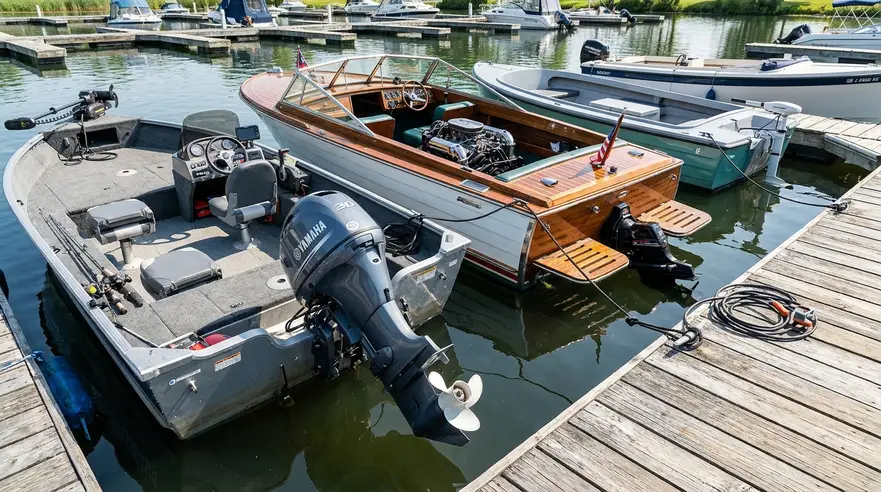
Outboards, Inboards, Sterndrives, and Jets
For many recreational boaters, the first big decision is choosing between an outboard and some kind of inboard setup. Outboards are easy to understand and usually easier to repower, which is especially helpful for owners who keep a boat for years. They also trim up for trailering or for running in shallow water, and service access is often easier. That helps explain why they are so common on center consoles, bay boats, aluminum fishing boats, and pontoons.
On larger cruisers, trawlers, and many commercial boats, inboards are often the preferred choice. Since the engine sits inside the hull, the weight stays lower and closer to the center, which can help with balance and ride quality on bigger boats. Straight-shaft inboards also have a long-running reputation for durability in heavy-duty use. The tradeoff is that repairs can take more time, and shaft alignment, seals, and cooling system parts all need regular attention.
Sterndrives, also called inboard/outboards, give sport boats strong performance and a clean transom look. They can work well as flexible all-around systems, but they also have more moving parts exposed near the stern. Bellows, gimbal bearings, trim systems, and u-joints all need inspection. Leave those items unchecked, and even small issues can become expensive quickly.
Jet drives are common on personal watercraft and some river boats. Because there is no exposed propeller, they can be a practical option in shallow water or areas with debris, which is a big reason some owners choose them. Even so, weeds, sand, and small stones can clog parts or cause wear over time. Owners also need to get used to a different feel when handling them at low speed.
We covered more detailed service methods for maintaining marine propulsion systems here, and it fits well into a regular maintenance plan.
Choosing the Right Marine Propulsion for Your Boat
The right propulsion system depends on how you actually use the boat, not the top speed listed in a brochure. Your day-to-day boating habits are the real test.
For fishing in skinny water, an outboard or jet may fit the boat better than a fixed inboard shaft. For offshore runs and heavier loads, durability, torque, and a long service life usually matter more than easy trailering, and that tradeoff is worth thinking through carefully.
Before you decide, think through these questions:
What water do you run in?
Shallow bays, stump-filled lakes, tidal creeks, and rocky rivers are hard on props and lower units, so trim capability matters a lot there. For deep coastal cruising, though, the bigger priorities may be efficiency, comfort, and reliability on long runs instead, that’s the tradeoff.
How important is maneuverability?
Single outboards are simple and easy to live with. But twin engines, joystick pod drives, or bow thruster setups make docking easier, especially in tight spaces. That can save time and reduce stress, which really helps when moving in close quarters.
What is your maintenance comfort level?
DIY owners usually like systems with easy access to filters, gear oil, props, and electrical connections. If simple upkeep matters, don’t buy more complexity than you need.
What powers your onboard systems?
Electric propulsion and trolling motors really rely on battery quality, proper charging, and solid wiring. A weak battery bank can turn a quiet day on the water into a frustrating one at the worst time.
If the setup includes electric power, A Beginner’s Guide to Marine Batteries: Selection and Maintenance is worth a look. It helps keep the system behind the motor as reliable as the motor itself and may save a few headaches along the way.
The Maintenance Basics That Prevent Big Marine Propulsion Repairs
Most marine propulsion failures start with small maintenance issues that slip by. A nicked prop blade can cause vibration. Old gear lube may hide water intrusion. A clogged fuel filter might make an engine run lean. Corrosion can build quietly under a loose connection. None of these problems seems major at first, but they can add up fast, and they cost much less to fix early.
Start with the propeller and take it off on schedule. Check for fishing line wrapped around the shaft, bent blades, cracked hubs, and uneven wear. Even minor prop damage can cut acceleration and hurt fuel economy. While you are there, inspect the lower unit or drive for leaks, impact marks, and damaged seals. Change gear oil at the recommended interval, and watch for milky fluid, which can be a sign of water intrusion.
Cooling needs close attention too. After saltwater use, flush the system if your setup allows it. Keep up with the water pump service interval and replace worn impellers before they fail. Fuel issues are another common source of trouble. Ethanol blends, water contamination, and long storage periods can lead to varnish, corrosion, and hard starting. The right fuel treatment, along with proper tank management during storage, can help reduce those issues. We covered this here: Fuel Additives: Prevent Marine Fuel System Contamination.
Other common mistakes include over-tightening battery terminals, skipping anodes, ignoring vibration, and waiting too long to winterize. These are easy to miss, but they still matter. A quick pre-trip inspection can help you avoid a much bigger repair bill later. Keeping up with the basics saves time, money, and frustration.
Electrical, Corrosion, and Smart Marine Propulsion System Checks
Marine propulsion is not just about mechanical parts anymore. Even a basic outboard depends on sensors, charging output, control modules, trim systems, and good battery health. Electric trolling motors and hybrid-ready setups also add extra wiring and greater battery demands, and that can build up fast. Because of that, electrical inspection is an important part of propulsion care.
Battery voltage, charging performance, fuse protection, and cable condition all need attention. You should also watch for green corrosion, heat discoloration, loose grounds, and stiff wire insulation. These may seem like small warning signs, but they can point to bigger problems. In saltwater, corrosion control needs as much attention as lubrication, so inspect sacrificial anodes, bonding connections, and metal surfaces around the drive or motor mount. Corrosion that gets ignored can damage expensive parts that still look fine at a glance.
Smart features are showing up more often too. Digital throttles, integrated displays, GPS-linked trolling functions, and remote diagnostics are now common in many propulsion categories. Owners who know the basics of wiring and software alerts usually have an easier time spotting small issues before a trip gets cut short. Early signs are easier to handle than a full failure on the water.
Seasonal Care and Marine Propulsion Storage Planning
Propulsion maintenance should change with the season. During the busiest boating months, a simple routine usually does the job: quick visual checks, fluid levels, prop condition, and fuel quality without going too far into it. Before long storage, though, there is more to take care of. Fuel may need stabilizer, engines may need fogging where recommended, cooling passages should be serviced, batteries protected, fittings greased, and the boat stored in a way that helps reduce water intrusion or corrosion.
For outboards, storing them in the down position helps drainage and lowers the risk of lower-unit trouble. Inboards and sterndrives need more winterization work, including cooling-system protection, fluid changes, and a careful check of hoses and clamps. Electric systems need a battery storage plan, and gas engines need fuel planning too, which is easy to overlook.
If the boat is getting a more modern setup, it also makes sense to keep an eye on newer changes in controls, efficiency, hybrid power, and related systems. We covered that in our overview of Marine Propulsion and Smart Technologies for Boaters in 2026. It gives a clearer view of where the market is headed and which features may be worth watching for a specific boat.
Frequently Asked Questions
What is the most common marine propulsion system for small boats?
Outboards are the most common choice for small recreational boats. They are compact, easy to trim up, and usually simpler to service than many inboard systems. That makes them popular for fishing boats, pontoons, and family runabouts.
How often should I inspect my propeller?
A quick visual check before each trip is smart, especially if you boat in shallow or rocky water. Remove the prop at regular service intervals to inspect for fishing line, seal damage, and hidden wear behind the hub.
Is electric marine propulsion practical for everyday boaters?
It can be, depending on range needs and boat size. Electric propulsion works well for low-speed cruising, small craft, and precise fishing control, but battery capacity, charging access, and weight still matter a lot.
What are the warning signs of propulsion trouble?
Watch for vibration, hard starting, weak acceleration, overheating, strange noise, poor fuel economy, or trouble getting on plane. These signs often point to prop damage, fuel issues, cooling problems, or electrical faults that should be checked early.
Where can I find parts and maintenance supplies for marine propulsion systems?
A trusted marine parts retailer is often the easiest place to start, especially if you need propeller hardware, engine care products, lubricants, fuel treatments, or trolling motor parts. Many boat owners use First Choice Marine as a helpful source for marine maintenance items and boating equipment that support reliable propulsion performance.
What should I buy first for a basic DIY propulsion maintenance kit?
Start with marine grease, the correct gear lube or engine oil, spare fuel filters, basic hand tools, a prop wrench, dielectric grease, and cleaning supplies. If your boat uses electric propulsion or a trolling motor, First Choice Marine is also a practical example of where owners look for battery-related accessories, motor care products, and other routine service items.
Keep Your Boat Moving With Confidence
The right marine propulsion setup is not always the biggest or newest. It is the one that fits your boat, your water, and the way maintenance is handled (that’s what really matters). Outboards give you easy access and flexibility. Inboards bring strength and better balance. Sterndrives mix performance with a compact setup. Jet systems can be a good fit in shallow water (a nice plus in the right places). Electric options add quiet control and also point to what’s ahead.
No matter which system is on board, regular care does more than waiting for an emergency repair. Check the prop. Keep the fuel system protected, watch cooling, and check batteries and wiring. It also helps to stay ahead of corrosion. During storage season, those jobs matter just as much as the checks done while the boat is in use. Building these habits early can lead to better performance, safer trips, and fewer expensive surprises.
This guide can be a starting point. After that, make a simple checklist for your own boat. A few minutes before and after each trip can help protect the engine, the budget, and your time on the water (and save trouble later).
