


Cold weather is hard on boats. Water stuck in the wrong place can freeze, expand, and crack parts quickly, and that can get expensive fast. Fuel that sits too long starts to break down, and batteries slowly lose charge. On top of that, damp air can lead to mold, rust, wiring problems, and other small issues that are easy to miss at first. Winterization helps with all of it, whether the boat is used on weekends or by a busy commercial crew.
When it is done right, winterization makes spring startup easier, helps lower repair costs, and protects important systems like the engine, fuel lines, bilge pumps, batteries, and onboard plumbing. It is also a good time to inspect the boat before minor wear turns into a bigger repair. Worn parts are much easier to handle now than in the middle of next season. For people who do their own marine maintenance, a clear plan also makes the whole job feel less stressful.
This guide covers the main steps in simple language. It explains when to start, how to protect the engine, what to do with fuel and batteries, how to choose storage, and a few mistakes to avoid. Short, practical, and easy to follow. For more seasonal reading, we covered that here in this winter boat storage guide.
Why Winterization Should Happen Early
Many owners put winterization off too long, even though that delay leads to some of the biggest issues. Starting early gives you more time to work carefully and order parts before local service shops get backed up for the season. It also cuts the risk that an early hard freeze leaves water sitting in the engine or plumbing, which can become a nasty surprise.
The boating market is still large, and that means a lot of boats need off-season care every year. In 2024, NMMA reported that pre-owned boat sales were nearly 860,000 units, and new powerboat retail sales in 2025 were estimated at 215,000 to 225,000 units. That adds up to a lot of engines, tanks, pumps, and batteries that need winter protection.
<DataTable
headers={[“Market metric”, “Value”, “Why it matters for owners”]}
rows={[[“Pre-owned boat sales, 2024”,“Nearly 860,000”,“Large installed base still needs annual winterization”],[“New powerboat retail sales, 2025”,“215,000 to 225,000”,“More owners entering seasonal maintenance cycles”],[“U.S. boating expenditures, 2025”,“3% to 5% above 2024’s $55 billion”,“Owners are still investing in upkeep and protection”]]}
caption=“Current boating market figures that show why winterization remains important”
/>
Winterization is part of normal upkeep that helps protect a major investment. Service guidance from Mercury Marine and BoatUS points to early prep as a way to avoid freeze damage, fuel issues, and the delays that can show up when spring launch gets closer.
With Americans continuing to hit the water in record numbers since 2020, U.S. boating expenditures in 2025 are expected to sustain those record highs and come in as much as 3-5% above 2024’s anticipated final tally of $55 billion.
People are clearly still spending money on boating, so protecting the boat already in the driveway, storage yard, or slip just makes sense.
Protecting the Engine, Cooling System, and Lower Unit
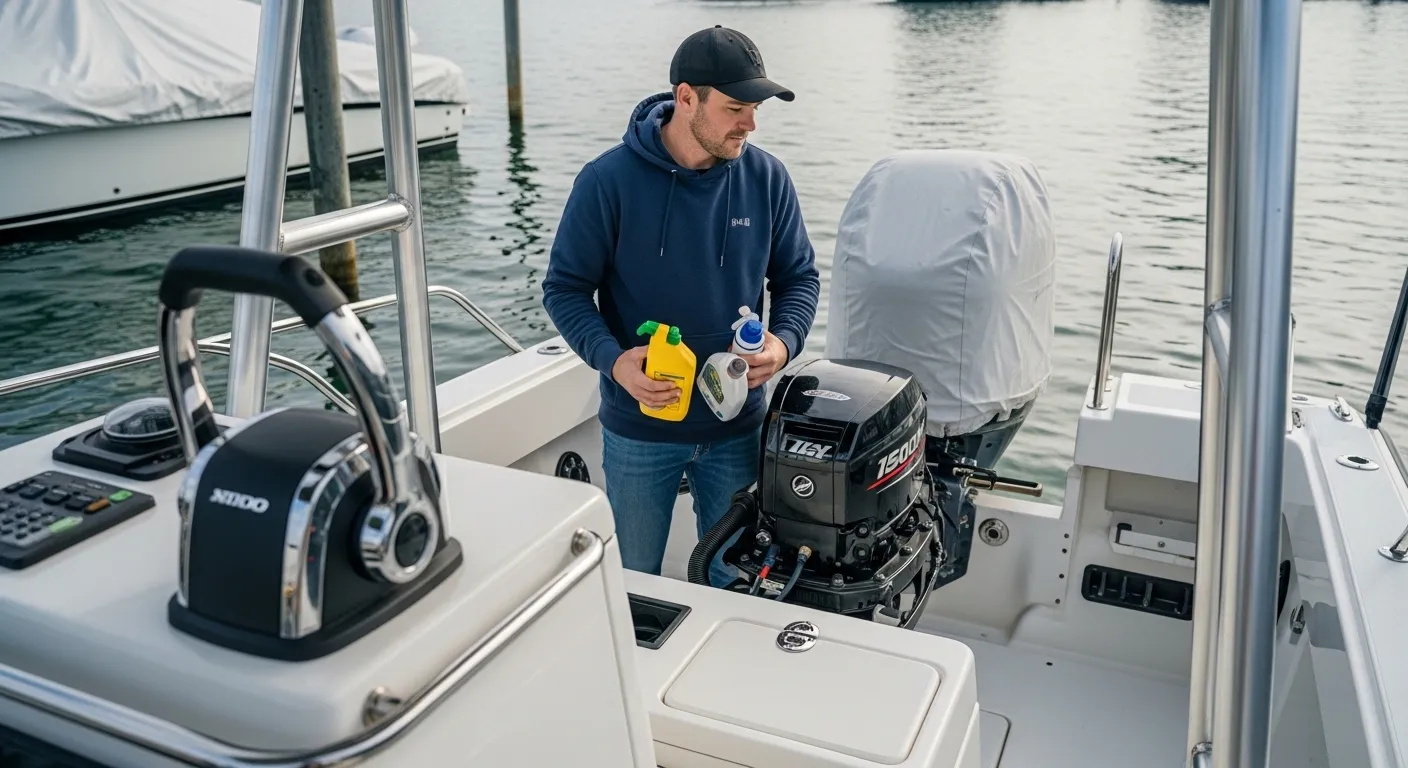
For most boats, winterizing the engine is the biggest job. If engine care gets skipped, repairs can get expensive fast. The exact steps depend on whether the boat has an outboard, sterndrive, inboard, or diesel setup, but the main priorities stay the same: remove or protect water, keep internal parts lubricated, prevent corrosion, and avoid damage while the boat sits in storage.
The owner’s manual should be your starting point, since engine-specific instructions matter here. From there, go through the basic process: flush the engine if needed, drain water where required, and add the right marine antifreeze to any systems that need it. Change the engine oil and filters if that matches your service schedule, and replace the fuel-water separator too. You will also want to check the gear lube in the lower unit or drive. If it looks milky, water may have gotten inside, and that problem should be fixed before storage.
Outboards often need a few extra checks. Many owners fog the engine if the manufacturer recommends it. The propellers need attention too, remove any fishing line from the prop shaft and look for seal damage. Since that area is already being checked, it also makes sense to inspect the trim and tilt systems, steering, and engine mounting hardware.
Mercury Marine warns that wrong or incomplete winterization can lead to costly freeze damage, so a generic checklist will not cover every motor.
If a broader seasonal checklist would help, we covered how to protect your boat from seasonal damage here in this Winterization: Protecting Your Boat from Seasonal Damage, and it works well alongside engine prep.
Fuel, Batteries, and Onboard Systems Need Attention Too
A lot of winter damage does not start in the engine block. Fuel can go bad, moisture can build up in tanks, and batteries can slowly lose charge and sulfate while the boat sits. Plumbing, livewells, washdown pumps, and bilge areas can also hold enough water to crack fittings once temperatures drop, and that kind of damage can get expensive fast.
Start with the fuel system. Add a good fuel stabilizer in the correct ratio, then run the engine long enough to move treated fuel through the whole system. That matters even more for fishing boats, workboats, or any boat that may sit for months at a time. Diesel setups need care too, so use fuel additives that match both the climate and the engine.
Next, check the batteries. Clean the terminals and check the charge level before deciding whether to remove the battery or keep it on a marine-safe maintenance charger. Boats with multiple marine batteries for trolling motors, electronics, or starting power should label the cables before disconnecting anything. It is a small job now, but it makes spring setup much easier.
Pumps and plumbing need the same care. Drain freshwater systems, heads, sinks, livewell lines, and washdown circuits, then use marine antifreeze where needed. Bilge pumps and float switches are worth checking too. A bilge pump that fails during storage can turn a small leak into a much bigger mess.
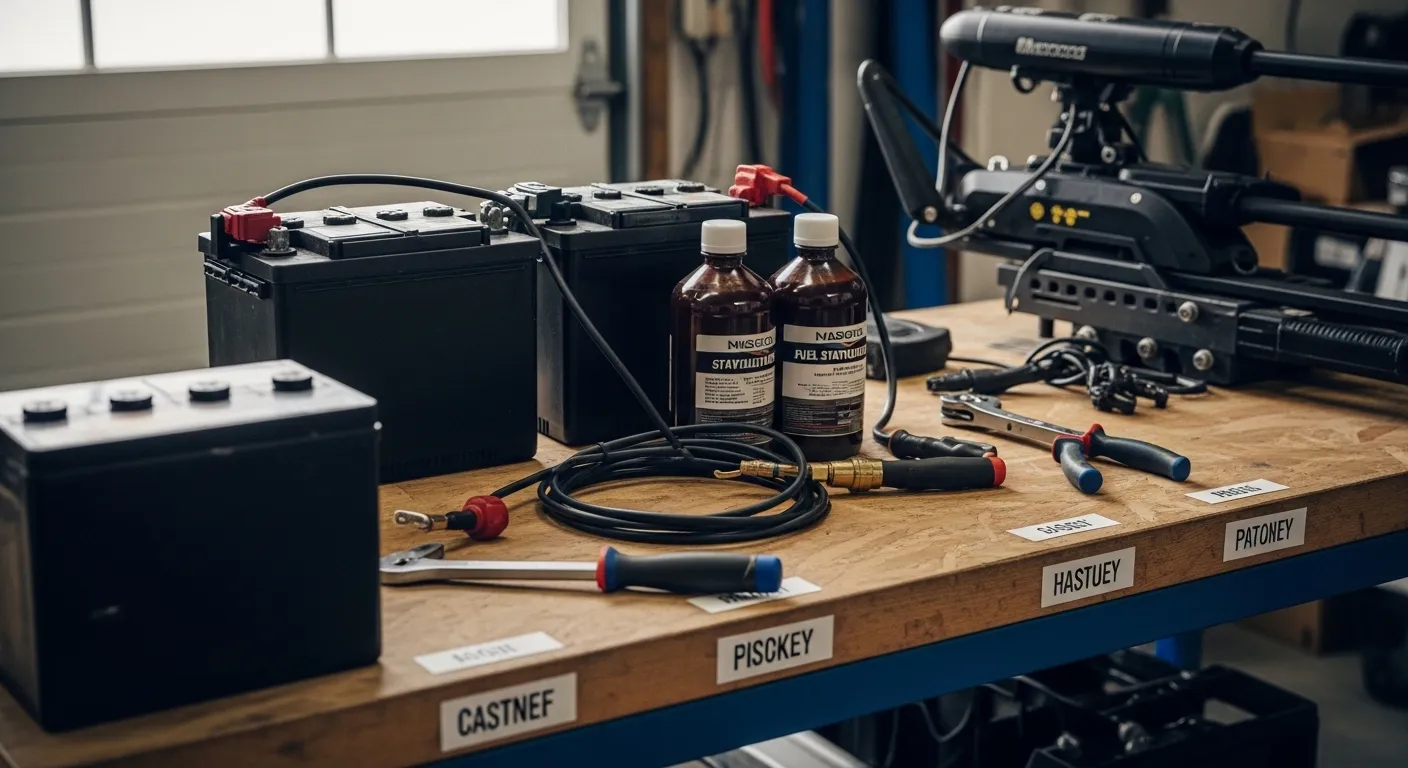
First Choice Marine is a good source for many of these seasonal basics, including engine care items, fuel system products, trolling motor parts, and battery-related accessories. Having the right supplies ready before cold weather makes the whole job easier.
Storage Choices, Costs, and Common Mistakes
Storage now matters much more in winterization. A lot of marinas and yards bundle winter prep with indoor storage, outdoor storage, shrink wrapping, and battery service, which can reduce extra calls. The best choice usually comes down to your budget, your boat’s size, and the kind of weather you deal with where you live.
Current pricing also shows how wide the range can be. One provider listed indoor winter storage at $18 per square foot. Others showed outdoor storage at around $42 per foot or $37 per foot. That’s a clear gap. Winterization labor can vary too. One provider listed $145 per engine, while another showed $175 plus materials for a single stern drive or outboard. Add twin engines, and the total goes up fast.
Our boat winterization labor is $350 per engine plus the cost of parts, which depend on your make/model and what your engine requires, e.g., oil & filter, fuel/water separator, marine antifreeze.
It helps to compare exactly what each quote includes. Some shops bill by engine, some by running foot, and others base pricing on storage size. Is oil service included? What about antifreeze, shrink wrap, or battery maintenance? Those details can change the real cost quite a bit when you compare estimates.
Common mistakes are easy to avoid:
Leaving water in hidden places
Livewells, raw-water lines, pumps, and even low spots in hoses can freeze, yes, even there, and crack.
Covering the boat badly
A bad cover traps moisture, which is hard on the boat, and can cause mildew. Under snow load, it may even collapse.
Ignoring corrosion points
Over winter, salt, grime, and trapped moisture can slowly wear down terminals, connectors, and metal fittings bit by bit.
Forgetting the trailer
Before storing it for long, check wheel bearings, tire pressure, lights, winch straps, and trailer wiring. It’s pretty easy, really.
A Simple DIY Winterization Workflow
If you do your own maintenance, following a clear order makes the whole job easier and helps keep easy-to-miss items from getting overlooked.
Start by cleaning the boat inside and out. Dirt, fish residue, and leaves can trap moisture and cause stains over time. Remove gear, food, and fabrics that could mildew, including small things tucked away in lockers. Then move on to the engine and fuel system. Depending on what’s needed, flush and drain parts, stabilize the fuel, change fluids, and check the filters. Then go through the batteries, pumps, plumbing, and electronics.
Storage prep comes last. Dry the lockers well, and if it’s safe, leave compartments slightly open so air can move through. Use moisture control products where needed, and put on a secure cover or shrink wrap with proper support poles. For boats stored outside, make sure rain and melting snow can drain away instead of pooling.
If seasonal parts and care items are on your shopping list, First Choice Marine carries a wide range of marine maintenance products that fit well with this kind of DIY process.
Spring Problems That Start in Winter
A lot of spring breakdowns actually start with winterization problems. Hard starting can come from untreated fuel, weak batteries, old filters, or, pretty often, a mix of all three. Overheating may trace back to cooling system damage or blocked passages. Electrical issues can start with corroded terminals or damp connections. Soft floors and cabin odors deserve attention too, since they can point to moisture trapped under a bad cover all winter.
That makes winterization feel a lot less optional and a lot more about prevention. Service guides now frame it as a way to avoid repair bills, not just another seasonal task. That shift makes sense. Spending a bit of time and money in fall is usually cheaper than replacing cracked housings, ruined pumps, damaged fuel parts, or dealing with interiors affected by mold once spring comes back.
Fishing boat owners should watch trolling motors, fish finders, wiring, and battery banks closely. Commercial operators, though, may need a more detailed checklist that covers safety gear, lighting, steering, and the systems they rely on every day. The more complex the boat, the more useful a written checklist becomes. Once more systems are onboard, memory alone usually is not enough.
Frequently Asked Questions
When should I start boat winterization?
Start before the first hard freeze in your area. Early fall is ideal because you have time to inspect parts, buy supplies, and avoid service delays. Waiting until temperatures drop can leave water trapped in places you forgot to check.
What is the most important part of winterization?
Engine and water system protection are usually the most critical steps. Any trapped water can freeze, expand, and crack parts. Fuel treatment and battery care are also very important because they affect spring starting and long-term reliability.
Can I do winterization myself?
Yes, many owners can handle basic winterization if they follow the engine manual and use the right supplies. DIY works best for simple setups and owners comfortable with fluid changes, fuel stabilizer use, and basic inspections. Complex diesel, twin-engine, or inboard systems may be better left to a pro.
How much does professional winterization usually cost?
It depends on engine type, boat size, and what is included. Current service examples range from around $145 per engine to $350 per engine plus parts, with some shops pricing by foot instead. Storage adds another layer of cost, so always ask for a line-by-line breakdown.
What products do I need for winterization?
Most boats need fuel stabilizer, marine antifreeze, the right oil and filters, lower unit lube if applicable, battery care supplies, cleaning products, and a proper cover. First Choice Marine can be a practical source for many of these engine care and maintenance items, especially if you want to get everything in one order before cold weather hits.
Should I remove my batteries for winter storage?
In many cases, yes, especially in very cold climates or if the boat will sit unplugged for months. Store them in a dry place and keep them on a maintenance charger if recommended. If you keep them in the boat, clean the terminals and make sure charging is safe and consistent.
Get Your Boat Ready for the Off-Season
Good winterization brings real peace of mind. It helps protect the engine, fuel, batteries, pumps, wiring, and interior from the kind of damage that often shows up at the worst possible time, right when launch season comes back around. It can also spread maintenance over time, so a big repair bill is less likely to catch you by surprise later.
Starting early makes the whole process easier. Follow the engine manual, treat the fuel, protect the water systems, take care of the batteries, clean the boat well, and choose a storage method that fits the local climate. Using a checklist also helps you catch easy-to-miss trouble spots, including livewells, lower units, trailer parts, and bilge pump circuits.
Careful winterization helps whether the boat is a small fishing setup, a family cruiser, or a commercial rig. Build a fall routine that covers the basics and get the right supplies ready before the weather turns. A little prep now means the boat stays better protected through the off-season, and spring can start with fewer surprises.
