


Changing your boat engine oil shouldn’t be stressful, yet it often turns into exactly that. Many boat owners put it off because they worry about spills, cramped engine spaces, or messing something up, which is understandable. It can feel like a mess waiting to happen. From our perspective, this is usually where a marine oil change kit helps the most. Instead of digging around for tools or making things up as you go, it pulls together what you actually need for a cleaner oil change, even if you’re new to DIY boat care and still figuring out your engine layout (we’ve all been there). With fewer surprises, the job often feels easier, and that alone can ease a lot of stress.
A proper marine engine oil change protects your motor and can save money over time. It also helps cut down on surprise breakdowns when you’re out on the water, like halfway through a fishing trip or during a calm afternoon cruise, which is never ideal. Whether you own a fishing boat or a pontoon, clean oil matters, especially since salt air and moisture are hard on engines. When boats sit unused for long periods, those conditions are even tougher on internal parts. Fresh oil helps clear out acids and moisture that slowly cause wear and shorten engine life, and that’s enough reason for most owners.
So in this guide, we keep things simple. We explain what a marine oil change kit is, how to choose one that fits your specific engine setup (less guesswork is always better), and how to do a mess-free oil change step by step. Along the way, we share practical expert tips and point out common mistakes, all to help you finish faster, with fewer spills and a lot less frustration, and probably fewer paper towels too.
What Is a Marine Oil Change Kit and Why It Matters
A marine oil change kit is a small set of tools made for boat engines, and it makes a dirty job much easier. The biggest plus is removing old oil and adding new oil without spills, something most owners appreciate right away. Most kits include an oil extractor pump, hoses, absorbent pads, and sometimes a filter wrench for parts that won’t budge. Everything is sized to fit tight engine spaces, where draining oil the usual way often becomes a hassle or just can’t be done.
Boat engines run in conditions that are tough on oil. They deal with moisture, heat builds up fast, and salt causes parts to wear faster over time. Because of this, oil breaks down sooner than it does in a car. Timing matters. Many experts recommend changing oil every 50 to 100 hours for most gas engines, plus another change before winter storage. Skip this, and engine problems often show up.
| Engine Type | Oil Change Interval | Risk of Skipping |
|---|---|---|
| Gasoline marine engines | 50, 100 hours or yearly | Internal corrosion |
| Diesel marine engines | 250, 500 hours | Severe wear |
| Seasonal storage engines | Before layup | Acid damage |
Those risks add up fast. Regular marine diesel oil changes can cost a few hundred dollars. An engine rebuild, though, can reach tens of thousands with little warning. To me, a boat oil change kit is simple insurance that most owners can use on their own. For more background, see Marine Oil Change Kit: Faster, Cleaner Engine Servicing for additional insights.
That annual change is non-negotiable, especially if you're putting the boat away for the winter. You absolutely must change the oil before storage. This gets rid of all the moisture and acidic gunk that would otherwise spend the offseason eating away at your engine's internals.
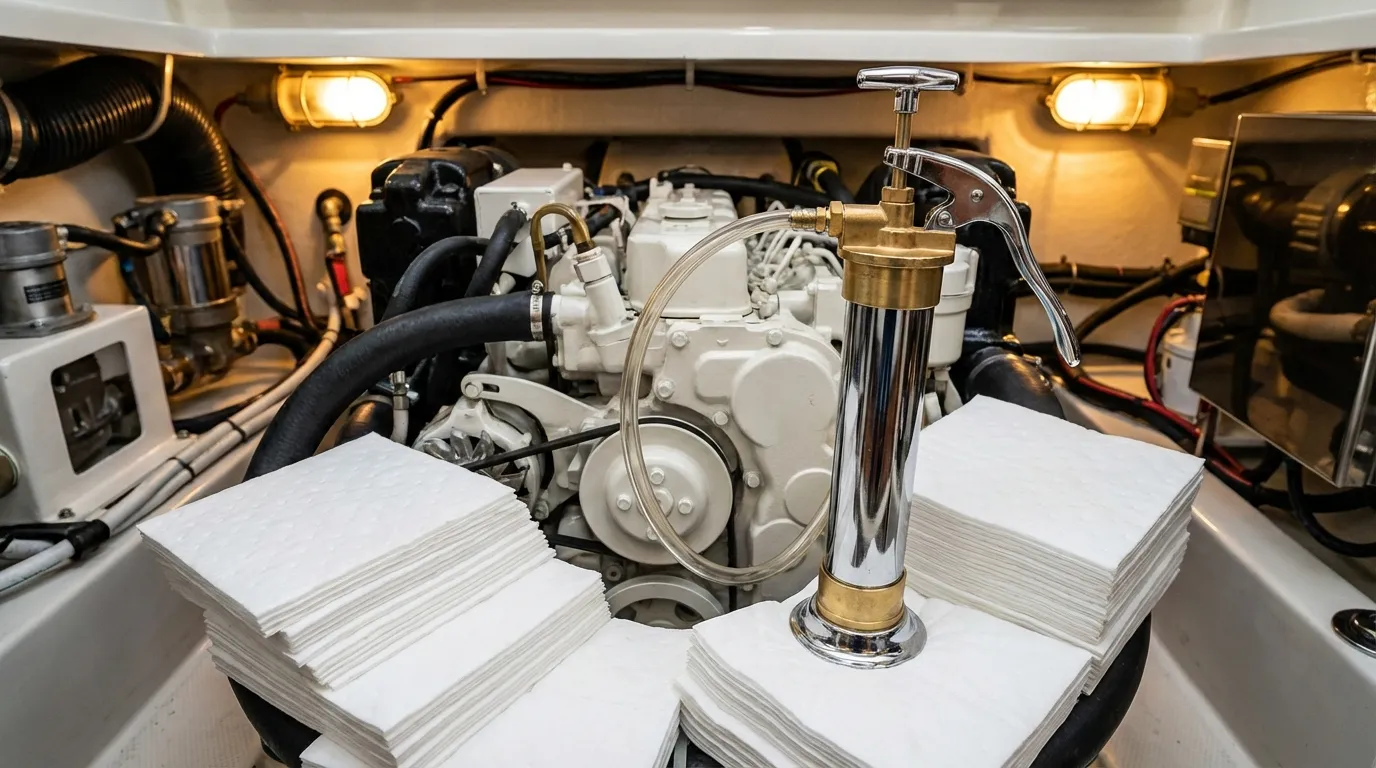
Choosing the Right Marine Oil Change Kit for Your Boat
Not every kit works the same, and that’s often what surprises people. Choosing the right marine oil change kit usually comes down to your engine type and how you use the boat day to day. It’s pretty straightforward. Outboard engines have different oil change needs than inboard setups, and diesel engines bring their own details into the mix. Each engine type has its own expectations, and that’s usually where the decision starts.
The pump is the key part, since that’s where oil changes either go smoothly or turn into a headache. For smaller engines, manual pumps are often enough and usually cost less, which makes sense if you only change oil now and then. They’re also easier to store, which matters on most boats. For larger engines, a 12‑volt pump that connects to the battery can pull warm oil fast, sometimes finishing in just a couple of minutes. That speed helps when you’re doing regular service or working in a tight marina slip. Less waiting often means less mess.
Hose details matter more than most people expect. A longer, flexible hose makes it easier to reach the bottom of the oil pan through the dipstick tube. When the fit is off, oil removal can slow down or stop too soon, leaving old oil behind, which happens more often than you’d think.
Before you decide, look at the extras. Kits with absorbent pads and a proper oil container make cleanup simpler and help avoid spills, which keeps marina staff happy, always a plus in my view.
Different kit styles and why all‑in‑one options are becoming more common are covered in this guide on a marine oil change kit.
How to Change Oil on a Boat Engine Without the Mess
Warm oil makes this task much easier than many people think, and a little prep goes a long way. Run the engine for a few minutes before you start. Slightly warm oil flows more easily and tends to carry more built-up dirt with it, which often leads to less mess later. It’s a small step, but it usually helps.
Once the engine is off, place absorbent pads under the engine area, right below the block and filter. This is where drips usually show up. Feed the extractor hose all the way down the dipstick tube until it reaches the bottom. Begin pumping or turn on the extractor and watch the oil move into the container. There’s no need to hurry.
When the flow slows down, gently move the hose around. This can pull oil from low spots that didn’t drain at first. Take your time. After that, remove the old filter slowly and keep the pads nearby, since small spills can happen.
Lubricate the gasket of the new filter with clean oil. If the filter installs vertically, opening side up that is, then pre-charge the filter with clean oil.
Install the new filter hand-tight. Refill with the correct marine-rated oil, check the level, run the engine briefly, then check it again. That last check really matters.
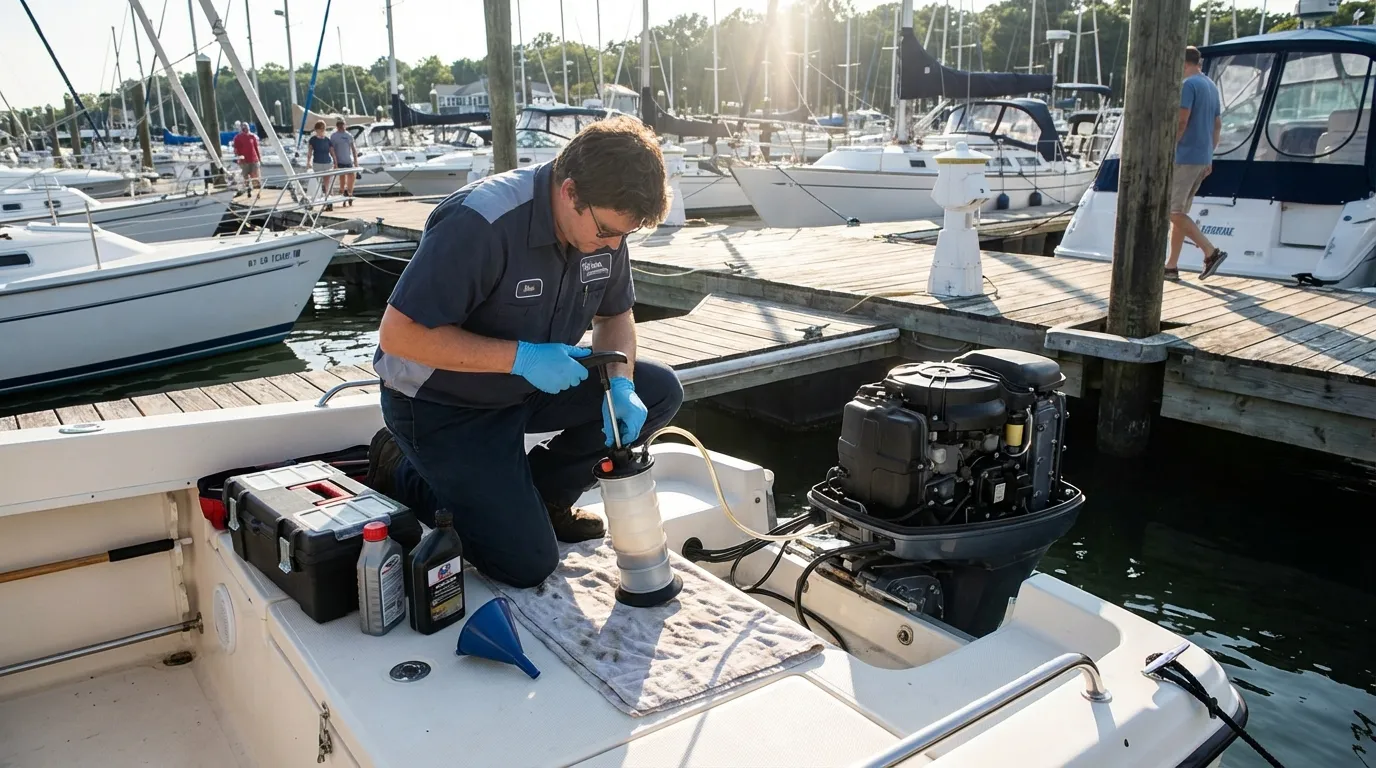
Common Mistakes That Lead to Spills and Engine Trouble
Even with a good kit, mistakes happen (it’s pretty common). One issue I see a lot happens when oil gets changed on a cold engine. It sounds harmless, but it isn’t. Cold oil tends to stick to internal surfaces and can leave sludge behind instead of draining fully into the pan. Warming the engine first usually helps oil flow out through the drain point and off the engine walls (small effort, honestly). It’s one of those details that often makes a bigger difference than expected, I think.
Another mistake that happens often is using automotive oil instead of marine oil. Marine engines run under different loads and speeds, often for long, steady stretches. Marine oil has additives that handle moisture and slow corrosion over time (that’s a big deal on the water). Different job, different oil, usually not something to compromise on.
Overfilling causes trouble too. Too much oil can foam and create pressure issues that hurt performance. The engine manual exists for a reason, and guessing rarely ends well, you’ll thank yourself later (seriously).
Forgetting related maintenance can undo your work. Electrical problems and corrosion from poor grounding affect engine health more than people expect, in most cases. That’s why many DIY boaters pair oil changes with regular inspections, like those in this Marine Electrical System Maintenance: Complete Boater Guide. It’s a practical way to stop small issues from stacking up (worth the habit).
Advanced Tips for Faster, Cleaner Oil Changes
Boat owners are taking on more of their own maintenance these days, and oil change tools have gotten better right along with that shift, which is honestly a relief. One big change is how vacuum extraction is now the usual choice for many engines. It often keeps the bilge cleaner and usually cuts down cleanup time, which makes the whole job feel less annoying. There are fewer oily rags, less wiping, and no scrubbing the bilge afterward, which is almost always a win.
Running more than one engine? Labeling hoses can help avoid mix-ups later, something that happens more often than people expect. It also helps to keep the full kit in a sealed container so oil smells don’t drift into the cabin. Keeping spare absorbent pads onboard is smart too. They’re useful for small messes, especially on longer trips.
For outboards, it often makes sense to group oil changes with other preventive tasks to save time. Spark plug checks, gear oil, and a quick look at the cooling system can all be done at once, so you’re not opening things up twice. That full routine is covered in the Ultimate Guide to Outboard Motor Preventive Maintenance 2025.
Common Questions, Made Simple
How often should I do a marine engine oil change?
Before storing your boat for the long term, changing the oil is usually the safer choice. For gas engines, a common guideline is every 50 to 100 hours, or about once a year. Diesel engines can run longer between changes, but they still need routine checks.
Yes. With a boat oil change kit, it’s usually easy to handle. Why rush? You’ll find that following the engine manual and taking your time (it helps) means working slowly.
Are marine oil change kits worth the cost?
Yes, I think they’re worth it. They cut down on mess (you’ll notice) and save time, which can help protect the engine during routine oil changes. And yes, less mess.
What makes a mess-free oil change possible?
Warm oil and vacuum extraction usually keep things clean.
Quality hoses and absorbent pads help, but good prep beats rushing, which makes spills less likely.
Where do I dispose of used marine oil?
You can usually take it to an approved recycling center or a marina collection spot, and keep it sealed in a container.
Keep Your Engine Ready for Every Trip
A marine oil change kit gives boat owners hands-on control over an important part of ownership, even if it can feel like a big step at first. Clean oil helps the engine run smoothly and use fuel better, with fewer surprises offshore. When you handle it yourself, the job often ends up being easier than expected, especially after the first time. That confidence can really help when you’re planning a long day on the water.
So what matters most? Picking a kit that fits your engine. Taking your time and keeping things clean helps, even when you’re tempted to rush. Pairing oil changes with quick checks of filters and belts also makes sense. Over time, this habit helps avoid costly repairs.
For DIY maintenance, tools, oils, and accessories are available from retailers like https://www.firstchoicemarine.com/. They’re reliable and handy when you need the right part fast, like grabbing oil before a weekend trip.
