


Boat electrical problems are stressful, and they can ruin a trip faster than almost anything. They usually show up at the worst possible time, sometimes all within one afternoon. In more serious situations, electrical faults can become fire risks or lead to dangerous shock hazards. Many boat owners don’t give marine electrical protection much thought until something breaks, which happens a lot. By then, the damage is often already done, and it usually costs more than expected.
Marine electrical protection isn’t about ticking boxes or just passing inspections. It’s mainly about keeping people safe on the water. It also protects engines, trolling motors, batteries, and expensive electronics like chartplotters and radios. In 2026, boat electrical systems are more powerful than they used to be. Bigger battery banks, smart chargers, LED lights, and advanced navigation gear are now standard. More equipment means more electrical load, so proper protection matters more than ever.
Rather than a dry checklist, this guide explains things in plain language. You’ll look at how fuses, boat circuit breakers, and ELCI systems work on a real boat, where each one belongs, and how they work together. It also covers common mistakes, current standards, and practical DIY tips. Whether you run a weekend fishing boat or a work boat, the goal is safer choices without overthinking it.
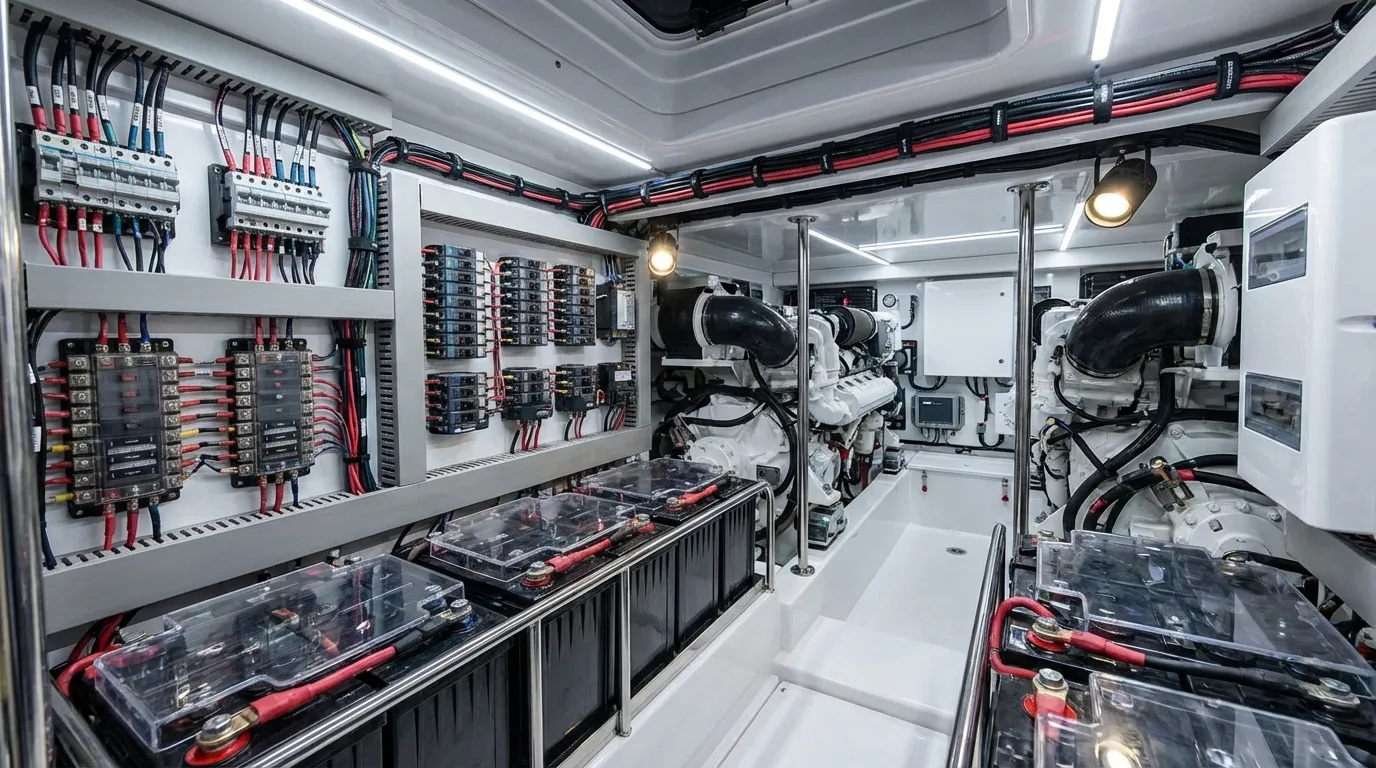
Why Marine Electrical Protection Matters More Than Ever
Boat electrical systems work in a tough setting. Salt air, vibration, moisture, and heat usually hit all at once, not separately, and they wear equipment down fast. That steady strain makes small issues feel much bigger. A slightly loose wire or a minor DC short can turn into a fire in seconds, often before anyone notices. Marine safety educators often say that unprotected DC shorts remain one of the top causes of onboard fires, and that’s unsettling for a clear reason. This risk is hard to ignore. It explains why electrical protection isn’t optional and why skipping it, especially with people onboard, often ends badly.
This concern shows up in the marine circuit breaker market. In 2024, the global market reached US$652 million, and it’s still growing. Aging vessels matter here too. With over 38% of ships worldwide more than 15 years old, parts get replaced more often, and more wear usually means a higher chance of failure.
| Metric | Value | Year |
|---|---|---|
| Global marine circuit breaker market | US$652 million | 2024 |
| Annual breaker unit supply | 11.66 million units | 2024 |
| Average breaker replacement cycle | 8, 12 years | 2024 |
| Ships older than 15 years | 38% of global fleet | 2024 |
As Brian Goodwin from the American Boat and Yacht Council explains:
The newest revisions touch just about every corner of the boat: electrical, fuel, water systems, and even seat structures.
Electrical protection has moved from a nice upgrade to a core safety system. It affects insurance approvals and, more importantly, the safety of everyone onboard, including you. And honestly, that’s becoming harder to ignore.
Fuses Explained: Simple Marine Electrical Protection with a Purpose
Fuses are the most basic type of marine electrical protection, and that simplicity is often why they work so well on real boats. They’re designed to fail first. When current rises too high, the fuse melts and breaks the circuit, stopping trouble early, often before wires heat up enough to cause real damage. In my view, that’s exactly the kind of quiet failure you want when you’re out on the water.
Fuses work best with steady, predictable electrical loads. Bilge pumps, navigation lights, fish finders, and radios all fit this group, the equipment you expect to act the same way day after day. When sized correctly, fuses are small, affordable, and reliable. Marine‑rated fuses also deal with vibration and corrosion much better, which really matters on a boat. Automotive fuses usually aren’t made for those conditions and often fail earlier than you’d expect.
Oversizing a fuse is a common mistake. It can stop nuisance blowing, which feels handy, but it adds risk. The fuse protects the wire, not the device. If a wire is rated for 15 amps, the fuse should never be higher, no exceptions.
Blade fuses are common on smaller boats. ANL and Class T fuses are usually installed near batteries for high‑current systems like trolling motors and inverters. That’s serious power, and these fuses are built to fail safely during extreme faults.
For a closer look at wiring basics, the article Mastering Marine Electrical Wiring: DIY Guide 2025 explains this in more detail and is especially helpful for DIY upgrades.
Boat Circuit Breakers: Resettable and Reliable
The main reason boat circuit breakers appeal to so many owners is straightforward: they can be reset. That small feature makes tracking down electrical issues easier and usually cuts down on the number of spare parts you need to store onboard. It’s not flashy, but you tend to appreciate it the first time a breaker trips while you’re underway.
Breakers really earn their keep in systems where electrical demand changes a lot. They’re commonly used for windlasses, trim tabs, and accessory panels that get used all day. Since those loads go up and down so often, many newer boats now use breaker panels instead of traditional fuse blocks. This usually means less hands-on tinkering and more flexibility when something acts up at the worst time.
Marine-rated breakers aren’t the same as household ones. They’re built to handle vibration, constant movement, and repeated stress, and they can manage much higher fault levels. Marine Electric Systems reports that short-circuit currents on boats can reach 10 to 50 kA in some setups, far beyond what home equipment is designed for.
Some breakers also double as switches, which makes shutting off power faster during maintenance or emergencies. By 2026, combination breaker panels with clear labels and LED indicators are common on modern boats.
We also put together a guide on Marine Electrical System Maintenance: 2025 Boater Guide that looks at common warning signs and basic upkeep. I think it’s worth checking out.
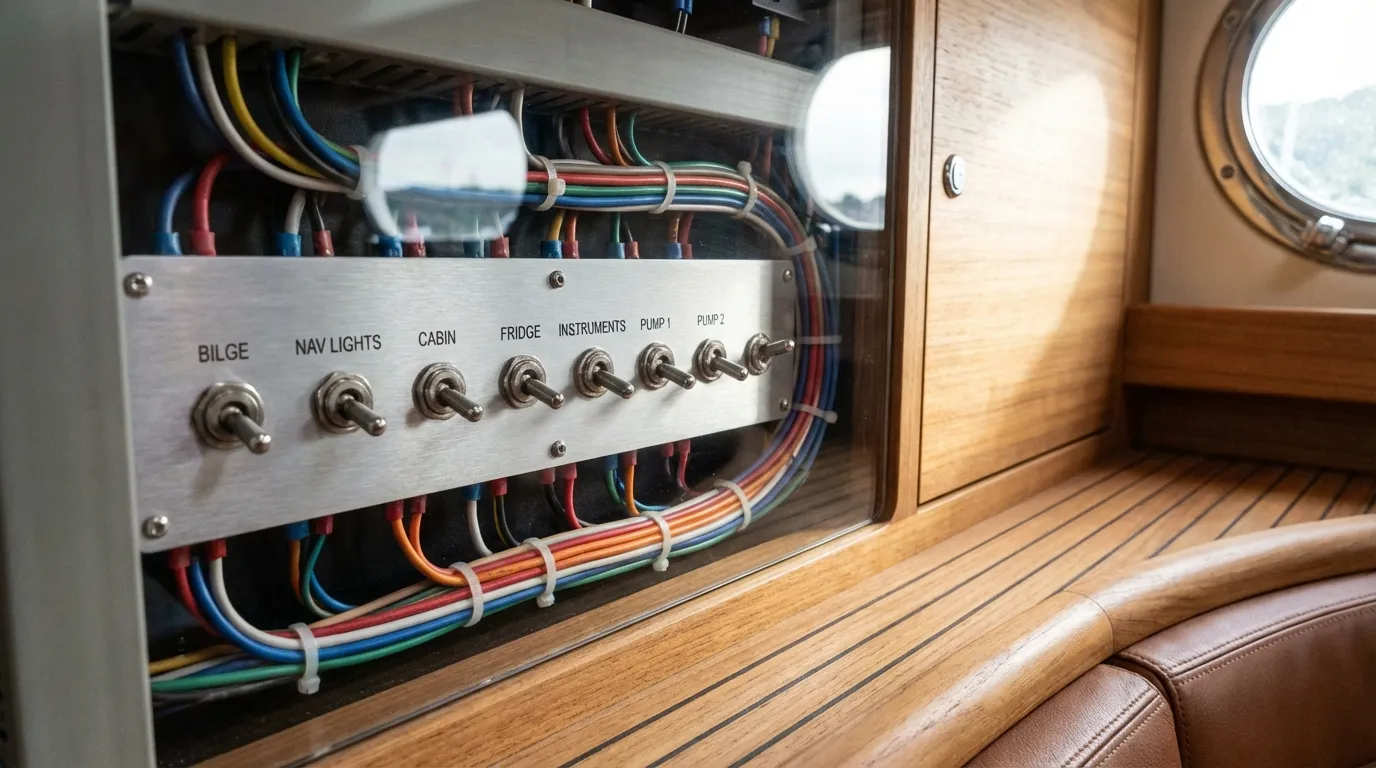
Understanding ELCI Systems and Why They Save Lives
The most important part of ELCI systems is usually the part people don’t see: they cut power before a small fault becomes dangerous. Safety comes first here, while protecting equipment is handled by other devices with a different job. An Equipment Leakage Circuit Interrupter watches AC shore power as soon as it enters the boat. When it detects current leaking into the water or wiring, it shuts everything down very fast, so problems usually stop before they get worse.
These details are strictly defined. ABYC standards require a trip at 30 milliamps within 100 milliseconds, and installation must be within 10 feet of the shore power inlet. There’s no flexibility because electric shock drowning and onboard fires are real risks people face every day.
Steve D’Antonio explains it clearly:
An equipment leakage circuit interrupter or ELCI, is capable of sensing faults in a vessel’s AC electrical system, whereupon it will turn off power in the blink of an eye, ideally before an injury or fire can occur. With few exceptions, ABYC and CE-compliant vessels must be equipped with this component.
ELCIs don’t replace GFCIs, and that difference matters. You’ll often see both on the same boat, each covering a different layer of safety. The ELCI protects the full system, including the main feed, while GFCIs protect outlets and wet areas. By 2026, combo ELCI and main breaker units are a common choice for refits and upgrades, especially when simplifying older panels.
Choosing the Right Marine Electrical Protection for Your Boat
Every boat is a bit different, and that usually shows up quickly in the electrical system. A small fishing boat doesn’t need the same setup as a cruiser running shore power and air conditioning, and that difference matters because the risks aren’t the same. A helpful first step is to write down your systems. It really helps to list everything, batteries, chargers, trolling motors, pumps, lights, electronics, since it’s easy to forget something when planning.
So what comes first: wire size or load? In most cases, you match fuses and breakers to the wire size first, then check them against the actual load. It sounds basic, but people often do it the other way around. On boats with shore power, an ELCI is required, and many insurance companies now ask for ABYC‑compliant systems before offering coverage.
If you’re doing the work yourself, marine‑rated parts usually last longer. Automotive or home parts might fit, but salt, moisture, heat, and vibration tend to wear them out fast.
When adding batteries or upgrading charging systems, we covered Dual Battery Systems for Boats: Install, Configure & Care in an overview that helps avoid common protection mistakes. Probably worth a look.
Looking Ahead: Marine Electrical Protection Trends for 2026
Marine electrical protection is moving toward systems that are smarter and smaller, and that change is usually a good thing. Breakers are getting more compact while diagnostics improve at the same time, which matters when panel space is still tight. In many setups, limited space can matter just as much as performance. Instead of a basic trip, some systems now point to the exact fault type, which often helps crews fix problems faster in real situations.
Electric and hybrid propulsion is also changing protection needs. Higher voltage systems often need closer coordination between overcurrent hardware and monitoring tools, with little room for shortcuts. It’s now common to see integrated panels that combine DC and AC protection with battery management.
Education is another clear trend. Boat owners are more informed and expect clearer labels and documentation. Retailers like https://www.firstchoicemarine.com/ support this by pairing products with learning resources, which usually makes choices easier in practice.
For readers interested in deeper system-level insights, see Marine Electrical Systems 2026: Adopting Next-Gen Power Innovations for Small Boats.
Questions people often ask
Commonly Asked Questions
What is the difference between a fuse and a circuit breaker on a boat?
The difference shows up during a fault. A circuit breaker trips and you can reset it (helpful). A fuse melts when current gets too high, so you must replace it (annoying, I think). Both protect wiring, but breakers are often easier for trip‑prone circuits.
Do all boats need ELCI systems?
So, I generally think boats with AC shore power need ELCI systems now. Boats without shore power usually don’t need them, so you likely don’t either.
Can I use automotive fuses or breakers on my boat?
No. Car parts aren’t made for wet, vibrating environments like spray or the higher fault currents found on boats, so marine‑rated parts are a safer option.
Where should an ELCI go?
I’d usually put it within 10 feet of the shore power inlet, because that generally meets ABYC safety current standards guidelines. That’s it.
How often should electrical protection be inspected?
Yearly inspections are a good starting point.
Another check helps after adding new gear.
On older boats, checks often happen more often as corrosion and wear become visible.
Putting Safety First on the Water
The quiet safety net matters most when something goes wrong, and marine electrical protection usually proves that point. It isn’t exciting or glamorous (no one really brags about it), but it’s important, at least to me. Fuses protect wires, circuit breakers give control and day‑to‑day convenience at the helm, and ELCI systems often step in fast to protect lives when a fault shows up. You’ll find these parts working together behind the scenes throughout the boat’s electrical system.
What’s already installed deserves a closer look. When was the last time you checked it? One helpful approach is replacing outdated or mismatched parts a bit at a time, while planning upgrades with future systems in mind, often before adding new gear. If uncertainty is appearing, getting help or checking trusted guides usually saves trouble. Smart protection choices today often mean fewer problems tomorrow, like more time fishing or cruising (which is kind of the point).
