


Moisture is one of those issues many boat owners don’t think about until it’s hard to miss. You open the cabin, notice that musty smell, and realize the cushions feel damp when you sit down, which is never pleasant. Metal fittings may also start to show early corrosion. It’s uncomfortable, and in many cases it can damage the boat and even affect health. The good news is that stopping mold on boats today is usually easier than it once was. With the right boat dehumidifier, along with modern marine ventilation systems made to fit today’s cabins, even smaller or tighter ones, cabin moisture can stay under control all year. That means fewer things to stress about.
This guide begins with what usually matters most: why mold forms, which humidity levels actually matter, and which ones don’t. It then looks at how dehumidification and ventilation work together day to day. It also covers 2026 trends that help make moisture control smarter and more efficient without adding hassle. Whether it’s a fishing boat, a cruiser, or a small commercial vessel, the goal is to protect what’s already there and keep the cabin feeling fresh. Simple enough.
Why Mold and Moisture Are Such Big Problems on Boats
Boats live in a wet environment, and there’s usually no real way around that. Even on dry days, humidity tends to hang around, especially near the water. Warm air holds moisture, and when that air cools inside a cabin, it often turns into condensation on walls, cushions, and almost every surface. Over time, that steady dampness creates the right conditions for mold. Research shows mold growth slows when humidity stays under 60 percent, though in my view a safer goal is often lower, closer to 40 to 50 percent. Many boats stay well above that range for long periods, sometimes with very little relief.
| Condition | Relative Humidity | Risk Level |
|---|---|---|
| Dry and safe | 40, 50% | Very low mold risk |
| Moderate humidity | 50, 60% | Mold may start |
| High humidity | 60%+ | Active mold growth |
What often makes things worse is timing. Summer air usually averages above 60 percent humidity, and winter can be even harder once cabins are closed up, which most owners do without much thought. With nowhere for air to move, moisture builds quietly. Mold often shows up during storage, not while you’re actively boating, because those still months give it time to take hold.
Mold needs moisture to survive. Reduce the moisture, eliminate the mold. It’s that easy.
Moisture doesn’t just lead to bad smells or stains. It can affect wiring, electronics, and wood throughout the boat. If soft floors or damaged trim are already showing up, we’ve covered wood rot repair and prevention elsewhere, with real-world examples that make the risks easier to spot. You can read more in Wood Rot Repair on Boats: Identify, Fix & Prevent Damage.
Choosing the Right Boat Dehumidifier for Your Cabin
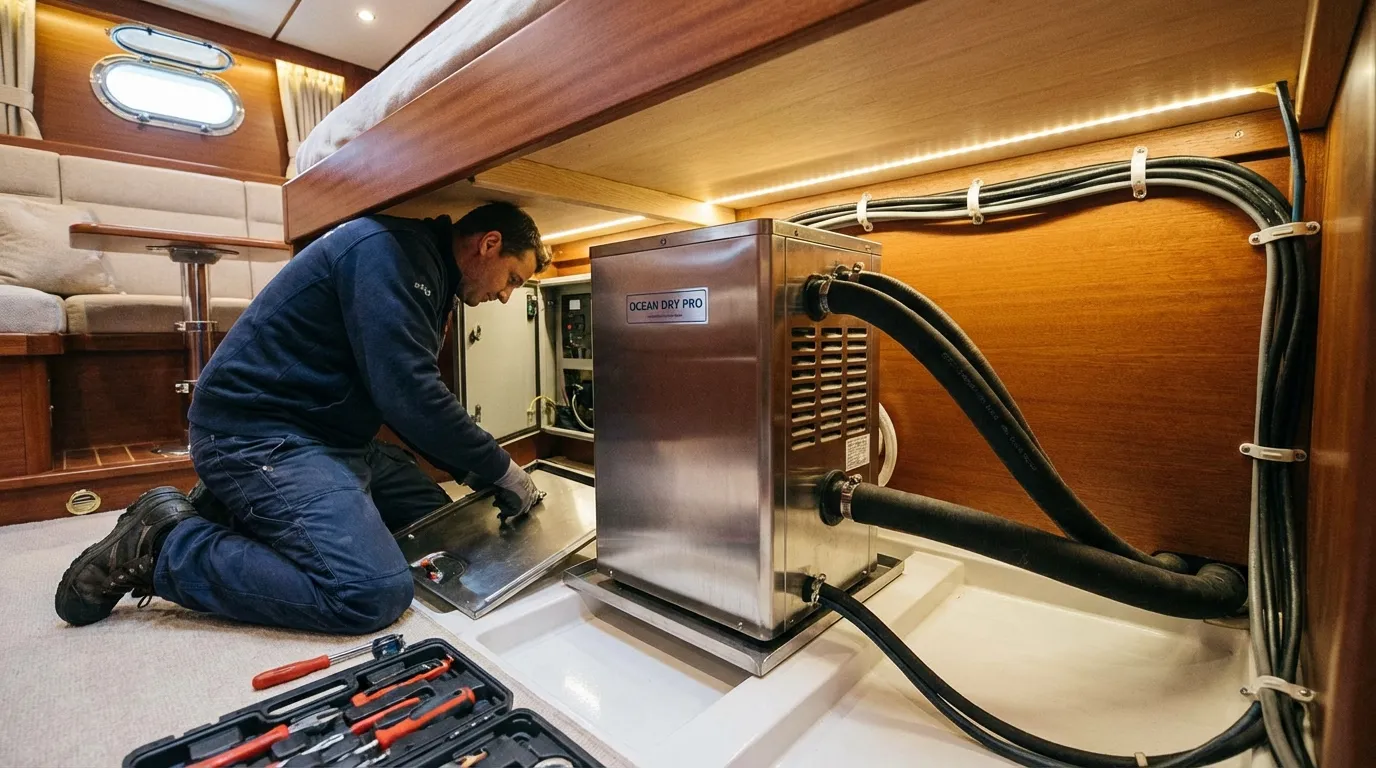
A boat dehumidifier usually isn’t the same as one you’d use at home. They’re built differently for a reason. Marine units are made to handle vibration, salt air, long run times, and the constant movement that comes with being on the water, things a living room never sees. You’ll usually run into two main types. Compressor models work best in warmer conditions and remove moisture steadily over time. Desiccant models use a drying material instead, and they tend to work better as temperatures drop. That’s why many owners use them during winter storage, when cabins stay cold and moisture problems can show up without warning.
Testing teams at Practical Sailor, often viewed as a trusted source for hands-on marine gear reviews, report that active dehumidifiers work far better than passive moisture tubs. The difference is easy to notice in real cabins. Passive products can help in small lockers or tight spots, but they rarely handle an entire space. In day-to-day use, active systems cut musty smells, help fabrics last longer, lower corrosion risk, and reduce moisture-related damage to onboard electronics, which usually matters more than comfort.
Capacity is where many decisions go right or wrong. A small fishing boat needs far less output than a liveaboard cruiser running systems all the time. It also helps to look at ignition protection, auto-drain options, low amp draw, and clear safety ratings. This comes up often because when a unit runs on shore power, the electrical load adds up. One clear example is how newer setups handle that demand, something covered in Marine Electrical Systems 2026: Adopting Next-Gen Power Innovations for Small Boats.
Marine Ventilation Systems That Actually Work
The tricky part is that ventilation usually can’t stop mold on its own, but it can make a real difference when it’s done right, and that part often gets missed. On boats, marine ventilation systems push stale, damp air out and pull fresh air in through vents or fans placed in cabins, heads, and storage areas. Opening hatches sounds easy, but it’s not always practical or safe, especially at night. Rain, insects, and security issues often get in the way, so leaving hatches open all the time doesn’t really work.
What tends to work better are modern setups, from solar deck vents to quiet inline fans tucked behind panels, you might not even notice them. Many run all the time at low power, and humidity-based controls usually manage on-and-off cycles well. This helps cut down moisture pockets behind cabinets and headliners. Market data also shows strong growth in marine ventilation systems, with more people adopting them through 2026.
| Vent Type | Power Source | Best Use |
|---|---|---|
| Solar vent | Sunlight | Daytime airflow |
| Inline fan | 12V battery | Continuous ventilation |
| Smart vent | Hybrid | Humidity controlled cabins |
Often, the best results come from using ventilation together with dehumidification. Ventilation moves trapped air, while a boat dehumidifier lowers overall moisture in cabins and enclosed storage areas, which works especially well in this situation.
Real-World Results and Common Mistakes to Avoid with Boat Dehumidifiers
One marina study shared by maintenance professionals drew a lot of interest for a simple reason: it matched what owners already see. Boats kept near 45 percent humidity showed almost no visible mildew after a full season. In contrast, boats without active systems often needed deep cleaning about twice as often, which usually means higher costs and more frustration.
This fits everyday experience. Owners who keep humidity under control often notice changes within weeks, not months. Cabins tend to smell fresher, cushions dry faster, and rust spots slow down, making routine upkeep feel easier. Fishing charter operators report fewer complaints, and crews spend less time on constant cleaning during the season.
| Setup | Mildew Odor | Maintenance Time |
|---|---|---|
| Ventilation only | Moderate | High |
| Passive absorbers | High | Very high |
| Vent + dehumidifier | Low | Low |
Mistakes still happen. Common ones include choosing a unit that’s too small, relying on cheap household devices, or turning systems off during winter. Power health is another missed issue; a weak battery or charger can quietly shut systems down. That’s why Battery Chargers for Boats: How to Size and Install for Long Life covers examples of how to avoid that exact problem.
Moisture control is the cornerstone of mold prevention.
Trends Shaping Cabin Moisture Control in 2026
One of the first things people notice heading into 2026 is how connected these systems have become. Many boat owners now prefer setups where smart sensors and phone apps watch humidity in real time and send alerts when levels start rising, often before you can feel it in the cabin. That ease of use is hard to pass up. Solar power combined with shore power also helps systems keep running smoothly, which matters most when a boat is left alone for long stretches.
Colder regions are also shaping desiccant technology. Hybrid systems that change how they work based on temperature usually handle storage and in-between seasons like spring and fall better. Health awareness fits into this shift too. Damp air and mold spores can bother breathing and allergies, so cleaner air is now expected, not a nice extra.
Noise levels matter more as well. Quieter units make overnight trips and full-time living more comfortable. Plug-and-play options are showing up more often, and on smaller boats, DIY installs are simpler than before, with less wiring and fewer hassles.
Practical Setup Tips for Boat Owners
Simple wins usually come first. A basic hygrometer gives you real numbers, without it, managing moisture is mostly guesswork. It works best when placed mid‑cabin instead of tucked into a locker, since location changes the readings. From there, a marine‑rated boat dehumidifier set where air can move freely makes sense, with drainage arranged so it won’t cause issues later. For most boats, this kind of setup does the job.
Why do damp smells stick around in certain spots? Ventilation often makes the biggest difference in closed areas like heads and forward berths, where even a small fan can help more than you’d expect. Don’t overthink it. If the boat sits unused for days or weeks, leave doors open so cushions can breathe, and check seals and windows, small leaks can undo progress quickly.
When upgrading systems, it’s a good time to check wiring and corrosion protection. Moisture and electricity don’t mix, and finding problems early usually costs less than fixing damage after it spreads.
Questions People Often Ask
What humidity level should I aim for inside my boat cabin?
Aim for 40, 50 percent relative humidity inside your boat cabin. I see that as a sweet spot. It helps limit mold, keep things drier, protect wood, and is gentler on fabrics, a simple, practical balance.
Can I just use passive moisture absorbers instead of a dehumidifier?
Passive absorbers can help in very small areas, like a locker, but they don’t do much beyond that. They can’t manage humidity through a whole cabin, so you’ll need an active dehumidifier (on boats) to prevent mold.
Are household dehumidifiers safe to use on boats?
On boats, salty air is tough, and household dehumidifiers often corrode and lack ignition protection, so they’re a poor fit. Marine-rated models are safer for this setting and usually last longer.
Do I need ventilation if I already have a boat dehumidifier?
Yes, you usually do. Ventilation helps move stuck air, letting the boat dehumidifier cover more areas and work more evenly across the boat in most cases.
Is winter storage the riskiest time for mold?
Yes, I think so. Closed cabins trap air, and temperature swings, humidity, and limited control often turn winter into a high-risk time for mold during winter storage.
Keeping Your Boat Dry and Ready for the Next Season
Mold problems rarely fix themselves. They often start quietly, the sneaky kind, but they tend to spread and keep going until the damage is easy to see and smell. Paying attention to cabin humidity early often helps protect comfort and health, which, in my view, also helps resale value over time and avoids a few headaches. That’s why a good boat dehumidifier, paired with smart marine ventilation systems, has become a must-have for serious boat owners heading into 2026.
So what’s a practical first step? Measuring humidity gives you a clear starting point. Taking small steps can help, since upgrading one system at a time often works better than trying to do everything at once. Marine-rated gear matters. First Choice Marine carries solutions made for real boating conditions, not just dry garages, think steady protection during a damp winter layup.
