


Marine impellers are small rubber parts, but they can decide whether a day on the water goes well or ends with an overheated engine. Many boat owners hardly think about an impeller until a cooling problem shows up, an alarm sounds, or the telltale starts putting out weak water flow. By then, engine damage may already be starting.
Marine impellers may be simple, but the job they do is important. They move cooling water through the engine so heat does not build up. Once an impeller gets hard, cracked, or torn, water flow can drop quickly. Then trouble follows. Poor performance, extra engine wear, and expensive repairs can all result. Recreational boaters, fishing crews, and commercial operators all have a reason to keep up with this small maintenance job.
Here, the focus is on what marine impellers do, the main types you are likely to see, how to spot trouble early, how to maintain them, and how replacement works. It also covers common mistakes, storage tips, and simple buying advice, so choosing the right part feels a lot more straightforward.
What Impellers Do and Why They Matter
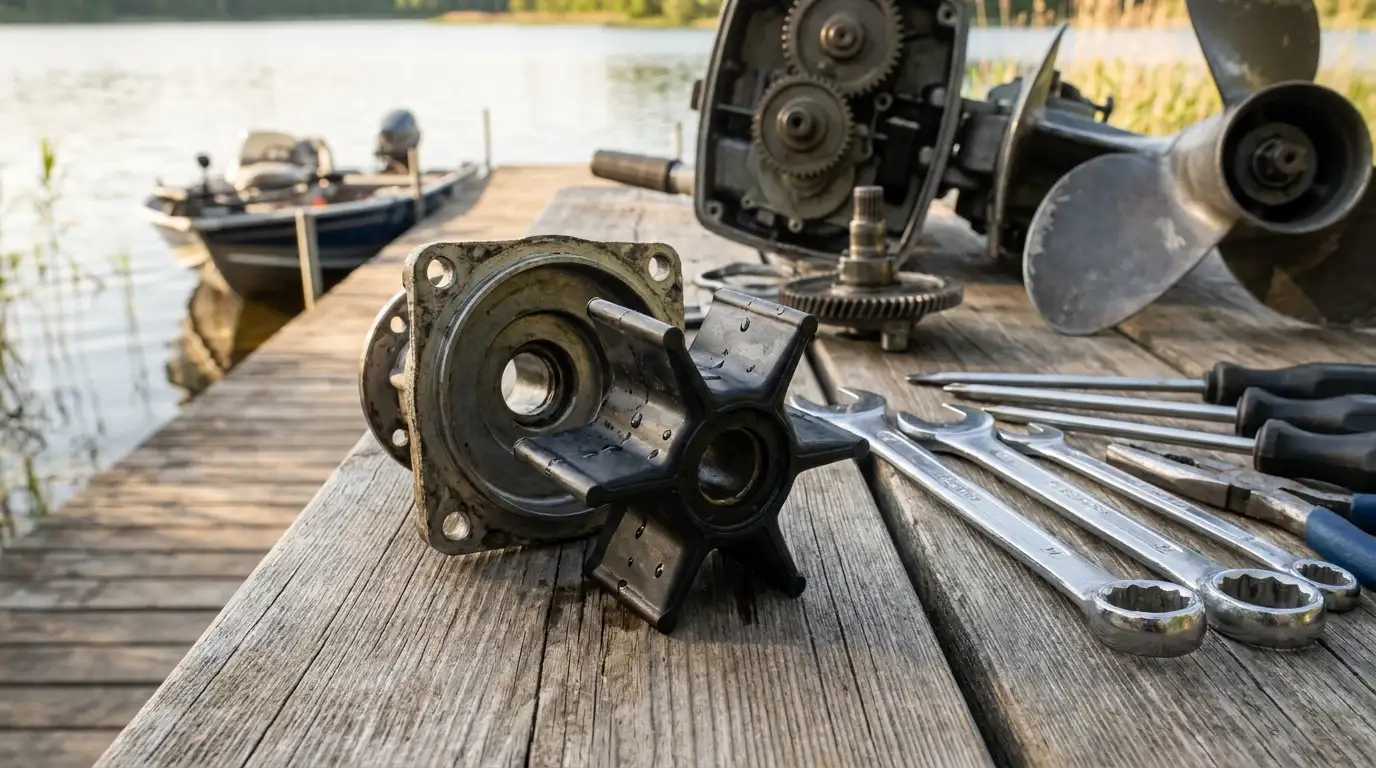
Marine impellers are flexible pump wheels, often made of rubber or a similar material. They sit inside a water pump housing and turn with the engine. As the blades flex and spring back, they pull water in and push it through the cooling system. It’s a simple job, but that steady flow keeps engine temperature under control.
On many outboards and sterndrives, the impeller sits in the raw-water pump. In some inboard setups, it sits in an engine-driven pump instead. The layout can vary quite a bit, but the job stays the same: move enough water at the right pressure to help the engine stay cool.
Because of that role, marine impellers are treated as preventive maintenance parts, not lifetime parts. Heat, dry starts, sand, silt, salt, and long storage periods can all shorten their lifespan. Some boats run fine one weekend, then lose an impeller the next. Brittle blades can be the reason.
A weak impeller does not always fail all at once, and the early signs are easy to miss. You might notice less water from the indicator stream, a rising engine temperature, steam, or a warning horn. If pieces of a blade break off, they can travel into the cooling passages and cause clogs later. That means impeller service is about more than changing a single part.
If you want a bigger-picture view of how cooling and drive components fit together, this guide on Best Practices for Maintaining Marine Propulsion Systems is a helpful companion.
Common Types of Marine Impellers
Marine impellers vary quite a bit. The right one depends on your engine, the pump design, and how the boat actually runs day to day. Most people first think of the flexible rubber vane impeller for good reason. Its soft blades flex inside the pump housing and create the flow that keeps the engine cooling system working properly. Boat builders use this type in many outboards, sterndrives, and inboards.
Another common option is neoprene. It is widely used for general raw-water cooling because it holds up well in normal water service over time. In boats that run mostly in fresh water or salt water and stay within normal temperature ranges, neoprene is a standard choice. It is simple and common.
You may also come across nitrile impellers. Mechanics and boat owners choose them when the pump needs better resistance to oil or fuel exposure, especially in setups where that matters more than basic water service alone. Still, they are not some universal upgrade. The material still has to match the pump maker’s specs.
Some pumps use bronze or composite rigid impellers, but those are different from the flexible cooling impellers most small-boat owners replace during regular service. You will see them more in other onboard systems. They are not the usual wear item. They also are not normally what people mean when they search for marine impellers.
When choosing a replacement, match more than the engine brand. Check the shaft style, diameter, width, vane count, and hub type before buying anything. A part can look almost right and still fit badly or fail early. Many boaters also replace the wear plate, gaskets, O-rings, and key at the same time, since those parts affect pump efficiency too.
Signs Your Impeller Needs Attention
A failing impeller usually gives a few hints before it stops working completely, if you know what to watch for. The clearest sign is reduced cooling water flow. On many outboards, that shows up as a weak telltale stream. On other setups, you might notice the engine running hotter than normal or hear an alarm instead.
Warning signs that need quick attention include:
- Weak or uneven water discharge
- Engine temperature running higher than normal
- Overheat alarm or warning light
- Steam around the exhaust outlet
- Loss of pump prime after launch
- Long periods of storage before the season starts
- Sand, mud or shell debris in the cooling system
Lots of people assume the thermostat is always the problem. Sometimes it is. But marine impellers are wear parts, so they’re often the first thing to check when cooling flow starts to drop.
Storage gets missed too. If the boat sat for months, the impeller blades may have stayed bent in the same position the whole time. Over time, those blades can take a set, crack or lose flexibility. That change happens slowly. So spring startup checks matter a lot for seasonal boaters.
Saltwater adds another issue. Salt crystals, corrosion and scale can make the pump and housing work less efficiently. That slowly reduces cooling performance, even when the rest of the system seems fine at first. Regular cooling-system inspections, along with impeller checks, can help keep the same problem from returning. For related protection habits, see Advanced Techniques for Marine Corrosion Prevention: Protecting Your Investment.
How to Maintain Marine Impellers the Smart Way
Impeller maintenance is simple when it’s done regularly. First rule: never run the pump dry. Even a short dry start can burn the rubber and damage the blades, so make sure the lower unit is in water or hooked up to proper flush muffs with a strong water supply before starting the engine.
Then stick to a service interval that fits your engine maker’s guidance, the water conditions, and how much you use the boat. Many owners inspect or replace marine impellers once a year or after a few hundred hours, especially in shallow, sandy, or salty water. Commercial boats that see heavy use need checks more regularly.
A practical maintenance routine looks like this:
Before each trip
After startup, make sure the water flow is normal. Check the gauges and alarms. If the flow seems weak, shut it down, then inspect it.
During the season
Check for overheating history, sand intake, and signs of pump noise or weak cooling. If the engine ran aground or pulled in debris, the impeller needs attention.
During layup or spring commissioning
If the service interval is close, replace it before the next heavy-use period. That’s often easier than gambling on one more season and means less stress.
When servicing the pump, use the correct lubricant for installation if your manual calls for it. Don’t use random grease or sealants unless the manual specifies them. While you’re there, inspect the cup, cam, wear plate, and housing for grooves, because a new impeller in a worn housing can still give poor flow.
Electrical health matters too, especially during long storage and preseason prep. If your boat sits for months, battery condition can affect startup routines and maintenance timing, and A Beginner’s Guide to Marine Batteries: Selection and Maintenance can help complete your checklist.
Replacement Basics: What the Job Usually Involves
Replacing marine impellers is something a careful DIY boater can handle, though the exact steps depend on the engine. On many outboards, the job starts with removing the lower unit so the water pump is easy to reach. On many inboards, access comes through the front-mounted raw-water pump. Either way, clean work matters, and putting everything back together correctly matters too.
The process includes removing the pump cover, pulling out the old impeller, checking for missing blade pieces, and inspecting the wear surfaces. If a vane is missing, don’t stop with the replacement. Keep going. Track down those pieces if possible, because they can get lodged farther into the cooling system.
Then install the new impeller with the blades bent the right way, replace seals or gaskets from the kit, torque the hardware properly, and test water flow after reassembly. A service manual helps a lot.
It also makes sense to order a full pump kit instead of just the rubber wheel when the pump shows visible wear. For many boat owners, First Choice Marine is one place to compare engine care parts and replacement items without guessing from generic descriptions.
Buying Tips, Storage Habits, and Future-Proofing Your Cooling System
The right impeller is not simply the cheapest one on the shelf. It needs to fit your engine and suit how you really use the boat. Start with the engine make, horsepower, year range, and serial number if you have it. Then check the pump dimensions and see what is included in the kit. Taking an extra minute here helps. It can save you from a full teardown later.
Keep a spare onboard if you run long distances, fish remote waters, or depend on your boat for work. A spare impeller kit, a few basic tools, and the correct manual can turn a major trip problem into a repair you can manage at the dock.
Heat, ozone, and long idle periods can harden rubber over time, so boat owners who leave boats sitting should inspect cooling parts before the next launch instead of finding out once the engine starts running hot. Flushing salt from the system after use helps as well. Keeping the engine’s maintenance schedule organized makes the next inspection easier.
For boat owners building a reliable parts and care routine, First Choice Marine offers a practical place to shop for engine care products, onboard maintenance supplies, and other boating essentials in one stop.
Boat owners also tend to focus heavily on engines while overlooking visibility and onboard safety equipment. Reading about 2025 Marine Lighting Trends: How LED Technology is Transforming Boating Safety can help round out a broader maintenance and upgrade plan.
Frequently Asked Questions
How often should marine impellers be replaced?
It depends on the engine, use, and water conditions, but many boat owners replace them every 1 to 2 years or based on engine-hour guidance from the manufacturer. Boats used in sand, silt, salt, or commercial service often need shorter intervals.
Can a marine impeller fail without warning?
Yes. Some marine impellers show warning signs like weak water flow or rising temperature, but others can break suddenly. That is why preventive replacement is so important.
Is it okay to replace only the impeller and not the whole kit?
Sometimes, yes, if the housing, wear plate, and seals are in very good condition. But if there is scoring, corrosion, or age-related wear, a full kit is usually the better value and gives more reliable cooling performance.
What happens if pieces of the old impeller are missing?
Do not ignore that. Broken vane pieces can move into cooling passages and block water flow later. The system may need to be flushed or partially disassembled to remove debris.
Where can I find the right marine impellers for my boat?
The safest approach is to shop by engine details and pump specifications, not by looks alone. First Choice Marine can be a useful option for comparing marine impellers and related engine care parts when you want a more organized online selection.
Should I keep a spare impeller on the boat?
Yes, especially for offshore runs, remote fishing trips, or commercial work. A spare kit from an online marine parts retailer like First Choice Marine can save time and stress when cooling problems show up far from home.
Keep Your Engine Cool and Your Trips on Track
Marine impellers may be small, but they handle an important job. They keep cooling water moving, help manage engine temperature, and can prevent some of the most expensive failures a boat owner might face. The good news is that impellers are also one of the easier preventive maintenance items to keep up with before trouble starts.
Stick with the basics and you’ll be in good shape: know your impeller type, watch for weak water flow, avoid dry starts, inspect related pump parts, and replace worn components before they fail on the water. Pretty straightforward. Seasonal storage, salt exposure, and debris all raise the risk, so your actual boating conditions should help decide when service makes the most sense.
For many owners, the smartest habit is simple: treat impellers like routine insurance, not emergency repairs. Keep a spare. Use the right kit and check the fit before installation, because that small step helps protect your engine, your schedule, and your peace of mind every time you leave the dock.
