


Table of Contents
- What a Jack Plate Is and How It Works
- Key Benefits of Installing a Jack Plate on Your Outboard
- Outboard Jack Plate Sizing Based on Engine Specs
- Manual vs. Hydraulic Jack Plate: Which Type Is Right for You
- Jack Plate Setback for Outboard Engines: Finding the Right Distance
- Bob's Machine and TH Marine Jack Plates: Top Options Compared
- Installation, Setup, and Troubleshooting Basics
- Frequently Asked Questions
Last Updated: October 11, 2026
What a Jack Plate Is and How It Works
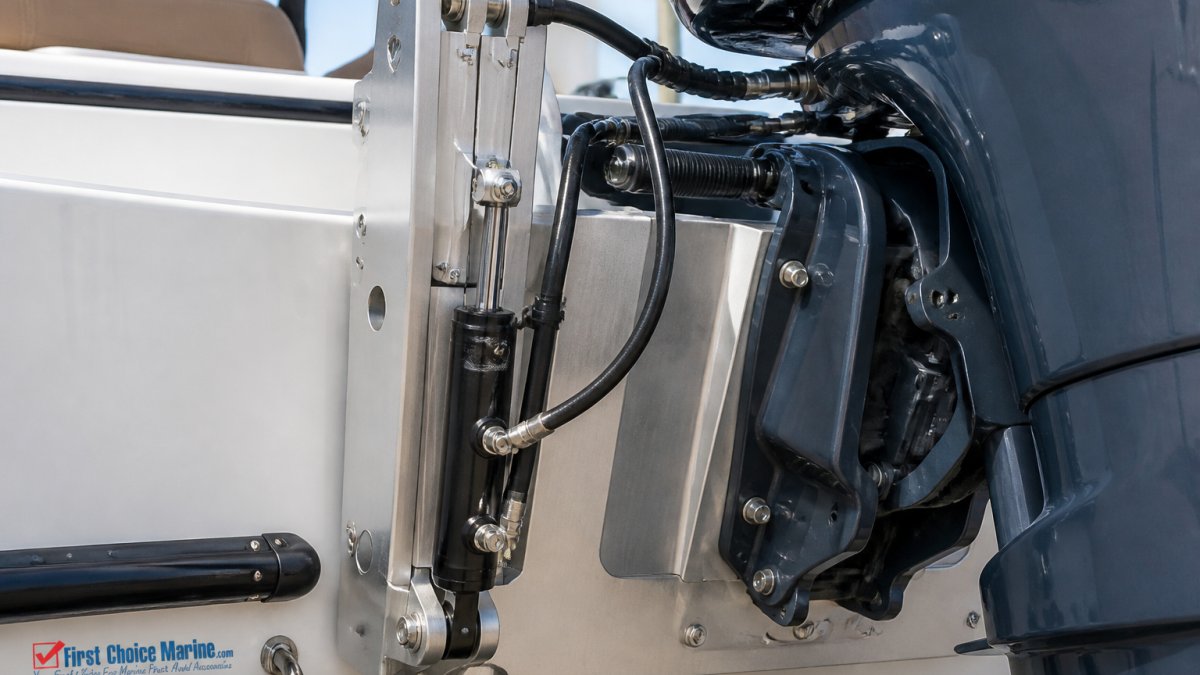
A jack plate is a hydraulic or manual device that allows you to raise and lower your outboard motor vertically on the transom. It sits between your boat's transom and the engine, giving you precise control over engine height without having to physically move the motor up and down by hand.

The basic mechanism is straightforward. The plate mounts to your transom with bolts. Your outboard bolts to the plate. When you activate the jack plate (hydraulically or manually), it extends or retracts, moving the engine up or down. This changes how deep the propeller sits in the water.
Why does this matter? Engine height affects everything: how your boat sits in the water, how fast it goes, fuel efficiency, steering response, and whether you can run in shallow water without hitting bottom.
The two main types are manual and hydraulic. Manual plates require you to physically pump a handle to raise or lower the engine. Hydraulic plates use an electric actuator controlled from your helm, so you adjust engine height with a button while running.
Key Benefits of Installing a Jack Plate on Your Outboard
A jack plate solves real problems that standard engine mounts can't address. Here's what you actually gain.

Better holeshot and acceleration. When you lower the engine slightly at launch, the propeller grabs water more aggressively. Your boat jumps forward faster.
Improved fuel efficiency. Raising the engine slightly reduces drag and allows the propeller to bite cleaner water.
Shallow water capability. Raise the engine and you reduce draft. This lets you run in skinnier water without risking prop strike or cavitation.
Trim and tilt control. A jack plate gives you additional vertical adjustment beyond what your engine's built-in trim and tilt system offers.
Top speed gains. Proper engine height reduces bow rise and improves planing efficiency. Some boats see measurable speed improvements simply from dialing in the right height.
At First Choice Marine, we see customers choose jack plates because they want to extract every bit of performance from their setup. A jack plate isn't mandatory for every boat, but for serious anglers and performance-minded boaters, it's one of the highest-impact upgrades available.
Outboard Jack Plate Sizing Based on Engine Specs
Your engine's specifications determine which jack plate you can safely use. Ignore these numbers and you risk equipment failure or damage.

Engine Horsepower and Weight Compatibility
Jack plates are rated by maximum engine horsepower and weight capacity. A plate rated for 300 hp won't safely support a 400 hp engine. Check your engine's specs first.
Most modern outboards fall into these ranges:
- Small outboards (25-75 hp): weigh 300-500 pounds
- Mid-range outboards (100-150 hp): weigh 500-700 pounds
- Large outboards (200-300 hp): weigh 700-900 pounds
- Heavy outboards (350-400 hp): weigh 900-1,100 pounds
The plate's capacity rating must exceed your engine's weight by a safety margin. If your engine weighs 850 pounds, don't buy a plate rated for exactly 850 pounds. Choose one rated for 1,000 pounds or more.
Horsepower and weight don't always match. A 250 hp engine might weigh less than a 225 hp model from a different manufacturer. Always verify both specs before ordering.
Transom Strength and Boat Hull Type
Your boat's transom must be strong enough to handle the additional stress a jack plate creates. The jack plate concentrates engine weight and forces into a smaller area than a standard engine mount.
Check your boat's documentation for transom rating. Most fiberglass boats have a transom rated for specific horsepower. If your transom is rated for 250 hp, don't install a 300 hp engine on a jack plate, the extra use and weight will eventually crack the transom.
Hull type matters too. Center consoles, bay boats, and offshore boats handle jack plates well because they have strong transoms. Smaller runabouts and some pontoons may have weaker transoms that limit your options.
If you're unsure about your transom, have a marine surveyor inspect it before installing a jack plate. A damaged transom is expensive to repair.
| Hull Type | Typical Transom Rating | Jack Plate Suitable? |
|---|---|---|
| Center Console | 250-400 hp | Yes, excellent |
| Bay Boat | 200-350 hp | Yes, usually |
| Offshore Boat | 300-500 hp | Yes, excellent |
| Runabout | 150-250 hp | Check specs first |
| Pontoon | 100-200 hp | Check specs first |
Manual vs. Hydraulic Jack Plate: Which Type Is Right for You
The choice between manual and hydraulic comes down to convenience, cost, and how often you adjust engine height.
Manual jack plates require you to pump a handle or crank to raise or lower the engine. You do this while the boat is stopped.
The downside: you can't adjust on the fly. If conditions change mid-day, you have to kill the engine, climb to the transom, and manually adjust.
Hydraulic jack plates use an electric actuator and pump system. You adjust engine height from the helm with a button or switch. This takes seconds and you can do it while running.
Hydraulic plates cost more and have more components, but the convenience factor is huge for serious boaters.
TH Marine Atlas 12" Jack Plate HD Hydraulic Polished #AHJ-12VHD-DP →
First Choice Marine carries both types. The TH Marine Atlas line offers hydraulic options in multiple setback sizes. If you want simplicity and low maintenance, manual plates are available through our catalog. Choose based on how you actually use your boat.
Jack Plate Setback for Outboard Engines: Finding the Right Distance
Setback is the horizontal distance from the transom to where your engine mounts on the jack plate. A 4-inch setback means the engine sits 4 inches further back than it would on a standard mount. A 12-inch setback moves it 12 inches back.
Setback affects how your boat handles and performs. More setback moves weight toward the stern, changing weight distribution and trim characteristics. Less setback keeps the engine closer to the transom.
General guidelines:
- Small boats (under 20 feet): 0-4 inch setback. Larger setback can make the boat sit too stern-heavy.
- Medium boats (20-25 feet): 4-8 inch setback. Balances weight distribution and improves trim.
- Large boats (25+ feet): 8-12 inch setback. Helps manage weight on bigger hulls.
These are starting points, not rules. Your specific boat, engine, and how you load it will determine the ideal setback. If you run solo, a smaller setback might feel better. If you always run with a full load, more setback helps keep the bow up.
The most popular setback distances are 4, 6, 8, and 12 inches. The TH Marine Atlas hydraulic jack plates come in these standard sizes, making it easy to find the right fit for your boat.
Bob's Machine and TH Marine Jack Plates: Top Options Compared
Two brands dominate the jack plate market: Bob's Machine and TH Marine. Both offer quality products with different strengths.
TH Marine Atlas Hydraulic Jack Plates lead the market for good reason. The hydraulic actuator sits inside the plate itself, reducing the external components you have to maintain.
At First Choice Marine, we stock the TH Marine Atlas line in multiple setback sizes and configurations. The TH Marine Atlas 4" Jack Plate HD Hydraulic Polished works well for boats that need minimal setback. The TH Marine Atlas 8" Jack Plate HD Hydraulic Polished suits most medium-sized boats. For larger engines and bigger boats, the TH Marine Atlas 12" Jack Plate HD Hydraulic Polished provides strong support rated for engines up to 400 hp.
Bob's Machine plates offer competitive options, particularly for boaters seeking manual or hybrid systems. Bob's plates are known for solid construction and value pricing. They're a legitimate alternative if you want to minimize cost or prefer a manual adjustment system.
The key difference: TH Marine focuses on hydraulic innovation and features. Bob's Machine emphasizes durability and straightforward design. For most boaters, the TH Marine hydraulic advantage justifies the investment because you get on-the-fly adjustment and integrated safety features.
| Feature | TH Marine Atlas | Bob's Machine |
|---|---|---|
| Hydraulic Option | Yes, standard | Limited |
| Setback Sizes | 4, 6, 8, 12 inches | Varies |
| Safety Cable | Yes, integrated | Optional |
| Maintenance | Minimal, no grease | Regular service needed |
| Price Range | Premium | Mid-range |
Installation, Setup, and Troubleshooting Basics
Installing a jack plate is a multi-step process that requires careful attention to detail. If you're not comfortable with marine electrical work or transom mounting, hire a professional. A botched installation can damage your boat or create safety hazards.
Basic installation steps:
-
Remove your engine from the transom. You'll need a hoist or engine lift for this. Support the engine securely so it doesn't drop.
-
Prepare the transom. Clean the mounting surface and inspect for damage. If you see cracks or soft spots, address them before proceeding.
-
Mount the jack plate. Align the plate carefully and bolt it to the transom using the hardware provided. Use a torque wrench to tighten bolts to specification, don't over-tighten.
-
Install the engine. Carefully lower the engine onto the jack plate using your hoist. Align the engine's mounting holes with the plate's bolt holes.
-
Connect the hydraulic lines (hydraulic plates only). Route hoses away from moving parts and secure them with clamps. Check for leaks before operating.
-
Wire the actuator. Connect the electrical wires to your boat's power system and helm controls. Use marine-grade wire and waterproof connectors.
-
Test the system. Raise and lower the engine several times to verify smooth operation. Check for leaks or unusual sounds.
Common troubleshooting issues:
- Slow or weak hydraulic response: Check fluid level. Low fluid reduces pressure. Top up if needed and inspect for leaks.
- Engine won't raise or lower: Verify electrical power at the actuator. Check that wires are connected properly. A blown fuse or loose connection is often the culprit.
- Hydraulic fluid leak: Tighten hose connections first. If leaking persists, a seal or hose may need replacement. Don't operate until the leak is fixed.
- Grinding or unusual noise: This usually means air is in the hydraulic system. Bleed the system by cycling the jack plate up and down several times slowly.
- Engine sits crooked on the plate: Verify the transom is straight and the mounting bolts are equally tight. Uneven bolt tension causes tilting.
Most issues are simple fixes. Maintenance matters: check fluid levels monthly, inspect hoses and connections before each trip, and keep electrical connectors clean and dry.
Learning how to choose the proper jack plate for your outboard engine means matching your engine's specifications to a quality plate, understanding the difference between manual and hydraulic systems, and getting the setback distance appropriate for your boat.
Frequently Asked Questions
How do I know what jack plate I need for my outboard engine?
Start with your engine's horsepower and weight, then check your boat's transom rating and hull type. A jack plate must support your engine without exceeding the transom's weight capacity. Match the plate's setback distance to your boat length and intended use, shorter boats typically need less setback, while larger vessels benefit from 4 to 12 inches. Verify compatibility with your specific outboard model before purchasing.
What setback should I choose for my outboard jack plate?
Setback distance depends on boat length and hull design. Center consoles and bay boats typically use 4 to 8 inches, while larger offshore boats may need 8 to 12 inches. Greater setback improves holeshot and shallow-water handling but can affect top speed and fuel efficiency. Test different setback positions or consult your boat manufacturer's recommendations to find the sweet spot for your specific vessel.
How much performance improvement can a jack plate deliver?
A properly installed jack plate can improve holeshot, reduce draft in shallow water, and optimize engine height for better handling and stability. Performance gains vary by boat design, engine size, and setback configuration. While not every boat benefits equally, jack plates are particularly effective for fishing boats, shallow-draft vessels, and performance-focused applications where engine positioning directly impacts speed and maneuverability.
