


Water in the bilge is easy to ignore until it becomes a real problem. A little water may seem normal on many boats, but extra water can turn into a serious safety issue quickly, so marine bilge pumps matter. They’re more than just another onboard part. Marine bilge pumps are one of the main systems that help buy time when water ends up where it shouldn’t.
Recreational boaters, fishing crews and commercial operators can all benefit from knowing how this system works. It helps prevent damage, protect equipment and support safer choices on the water. In simple terms, a bilge pump removes unwanted water from the lowest part of the boat. But that’s just the start. Pump size, switch function, hose routing, battery condition and backup planning all affect how well the system works.
This guide covers the safety role of marine bilge pumps, why inspectors take them seriously, what real incident data shows and how modern boaters can put together a smarter bilge setup. For a closer look at buying options, this marine bilge pumps guide is a helpful companion.
Why Marine Bilge Pumps Are a First Line of Safety
A lot of boat owners see bilge pumps as cleanup tools. But they’re really part of a boat’s first line of defense against flooding. The risk is still very real, and U.S. Coast Guard numbers make that plain. In 2024, there were 3,887 recreational boating incidents, 556 deaths, 2,170 injuries, and about $88 million in property damage. Those are serious numbers. Among those events, 767 flooding or swamping incidents led to $26,484,046 in property damage.
| Safety Metric | Figure | Year |
|---|---|---|
| Recreational boating incidents | 3,887 | 2024 |
| Deaths | 556 | 2024 |
| Injuries | 2,170 | 2024 |
| Property damage | $88 million | 2024 |
| Flooding/swamping incidents | 767 | 2024 |
| Flooding/swamping property damage | $26,484,046 | 2024 |
That doesn’t mean a bilge pump can stop every emergency. It does show that water getting in is still a common issue, and a good pump can slow the situation, help keep the boat stable, protect wiring and machinery, and give the crew time to find the source of the leak or call for help.
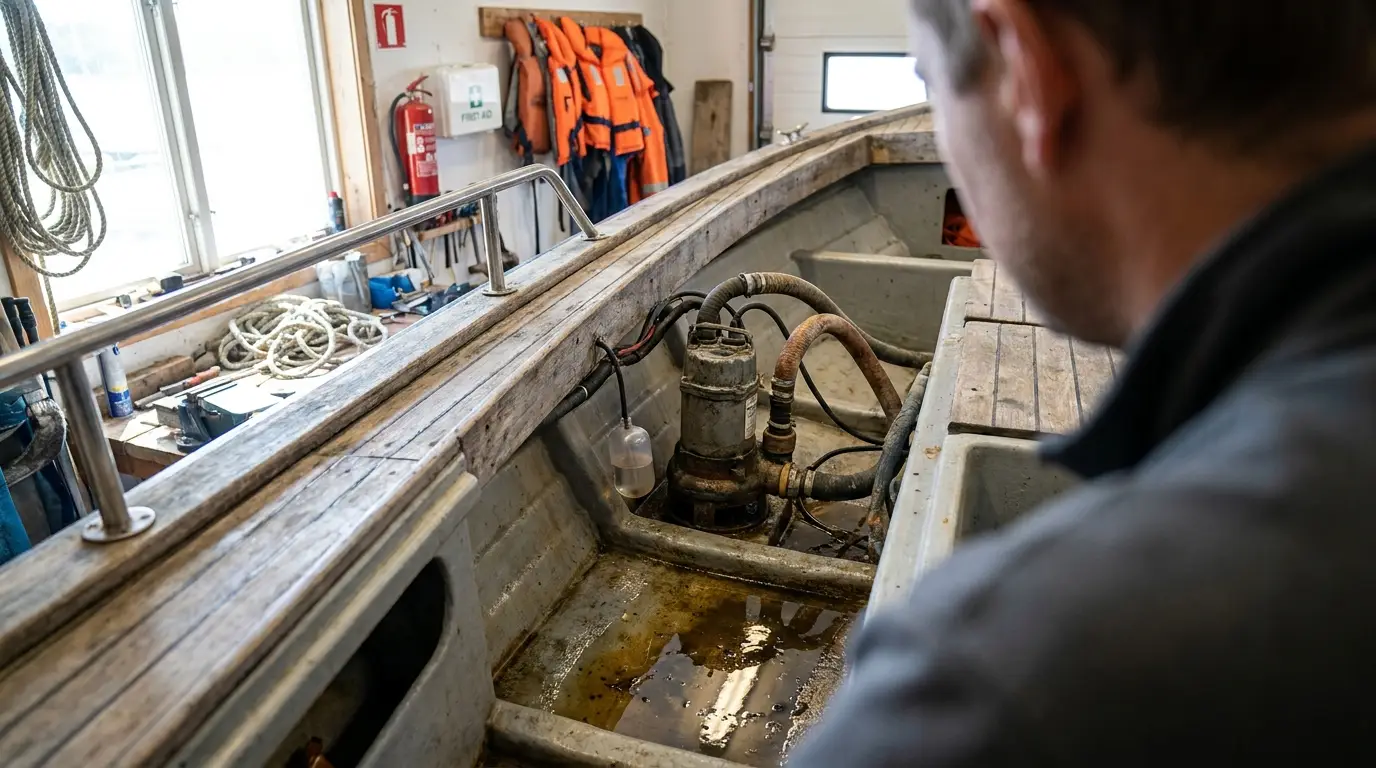
Marine surveyors treat bilge pumps as a basic safety item, not an optional extra.
Bilge pumps will be checked w/float switches and/or manually.
That short quote carries a lot of weight. During an inspection, they check whether the pump works automatically and by hand, because in a real emergency, either mode can suddenly become very important. There’s no room for guessing.
What Marine Bilge Pumps Can and Cannot Do
A bilge pump matters, but it isn’t magic. It clears out water that’s already collected. However, it won’t seal a cracked hose, close a failed through-hull, or stop a stuffing box leak. Good boat safety starts with realistic expectations, not wishful thinking about what the pump can handle.
Marine bilge pumps work best as damage control tools. They deal with the symptom, rising bilge water, while the operator works on the actual cause. On a small center console, that might be a leaking livewell hose. On a cruiser, it could mean a failed clamp, a shaft seal problem, or rainwater sneaking in through a bad hatch seal. On a workboat, it may point to a bigger systems issue. Fast action matters.
A one-line summary of bilge pump care doesn’t really cover it. The pump needs power. The float switch needs room to rise without getting hung up. The discharge hose has to push water out without much resistance, and the outlet should stop water from flowing back in. Just as important, the pump has to keep up with the water coming aboard, at least long enough to buy time.
Real-world testing backs that up. Practical Sailor found strong performers at 13.6V with a 5-foot lift, including the Lovett, Whale Supersub 360, and Whale Supersub 500. That detail matters because the rated output printed on the box is sometimes higher than the flow a boat owner will actually see once lift height and plumbing resistance start cutting into performance.
For a closer look at failure points after installation, Marine Bilge Pumps: Troubleshooting Common Problems is worth reviewing before the season begins.
Lessons From Real Flooding Incidents
The clearest reason to respect bilge systems shows up when flooding rises faster than expected. Casualty reports keep pointing to the same pattern: water gets in, nobody finds the source quickly enough, pumps struggle or quit, and the situation gets worse minute by minute.
One 2025 NTSB memo involving the vessel TNT described a costly flooding event with 32 people aboard and damage estimated at more than $500,000. The report stated:
The engine room was the only space affected by the flooding, but the owner and operator could not determine the source of the water ingress.
That’s the main danger. The crew may not know right away where the water is coming from, and in that moment the bilge system gives them time.
In another investigation, the Sea Ranger was noted for a bilge pump failed, a firefighting pump that clogged, and a crew forced to use a portable pump while flooding kept going. It was a rough chain of events. It points to a hard truth: one pump is not a full plan. Backup pumping, clean strainers, and manual dewatering tools can all matter when conditions get messy.
A common mistake is assuming a pump that worked last month will work today. Another is trusting rated gallons per hour without allowing for battery voltage, hose bends, lift, debris, or backflow. On paper, a strong pump can look like enough. In rough, real conditions, it may not be. That’s why redundancy matters, especially on offshore boats, larger cruisers, and commercial vessels.
Installation Details That Directly Affect Safety
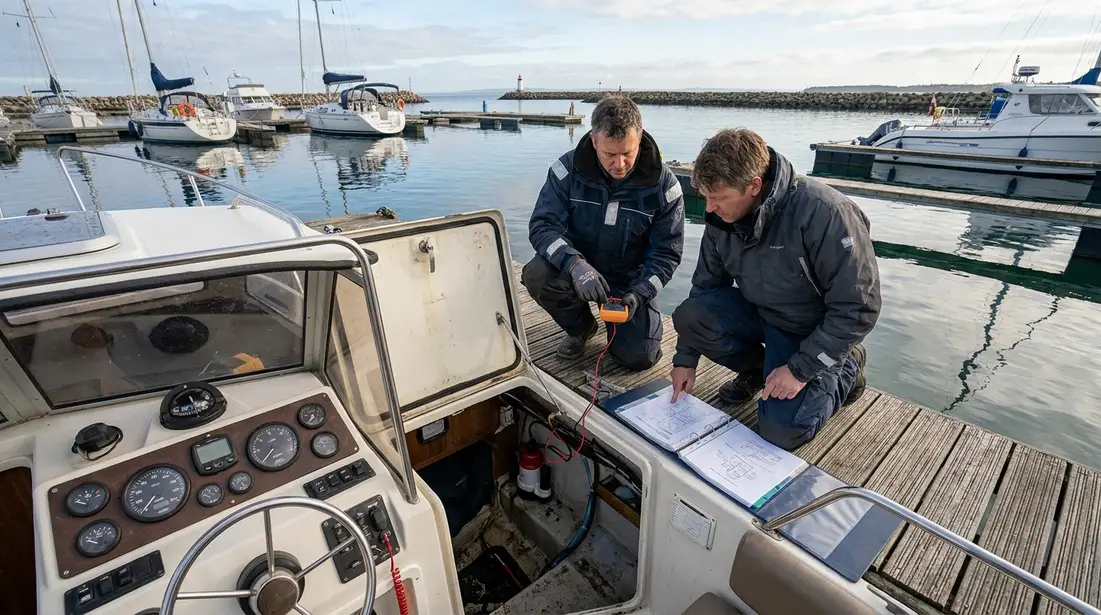
When people talk about bilge pump safety, they focus on the pump itself. But installation details shape a big part of the outcome. Maritime inspection frameworks look at pump number, type, capacity, piping, hose routing and back-flood prevention for a reason.
A safe setup puts the pump in the lowest practical part of the bilge, where water naturally collects. The discharge run should stay as short and smooth as possible. Long hose runs, sharp bends and badly placed loops reduce flow. Poor discharge placement can also let water siphon back in, which can cause trouble quickly.
Automatic switching is another big safety factor. Manual pumps still help, but many flooding events start when nobody is watching the bilge. An automatic float switch or built-in sensor lets the system respond earlier. That matters even more on boats left moored for long periods, where even a small delay can become a much bigger problem.
On larger or more complex vessels, these details matter even more. Survey requirements may include strainers, mud boxes and manifolds with non-return valves. Different gear, same principle. A much smaller boat still follows the same rule. Water needs to leave well and stay out after discharge, or the system cannot do its job when it counts.
If you are comparing manual and automatic setups for safety planning, Automatic Bilge Pumps vs Manual: Real Failure Scenarios & Redundant Design adds useful context.
The Shift Toward Smarter Bilge Protection
Bilge systems are changing. More boaters want an early warning, not just an emergency pump that turns on after the water is already high and the issue has had time to get worse. Recent market summaries point to growing demand for sensor-based pumps, remote monitoring, auto-activation, energy efficiency, and corrosion-resistant designs.
That change makes sense. Modern boats carry more electronics and more batteries, and many sit unattended for long periods, leaving less room for small issues to stay contained. A smarter bilge system can alert the owner to repeated pump cycles, rising water, or battery drain before it becomes a haul-out or an insurance claim.
For recreational owners, that might mean adding a high-water alarm or a monitor linked to a phone app. For commercial operators, it may mean recording pump activity as part of routine checks and keeping a closer eye on the system over time. Different uses, same goal: catch trouble early and deal with it before it gets bigger.
An established marine parts source like First Choice Marine can help when boaters compare pumps, switches, alarms, wiring supplies, and other onboard system parts in one place. Additionally, The Rise of Smart Bilge Pumps: Trends to Watch in 2026 covers newer monitoring and automation ideas in more detail. The best setup is not always the most expensive. It is the one that fits the boat, the level of risk, and the way the vessel is actually used.
Building a Better Bilge Safety Plan
Good bilge safety depends on layers. The pump is one. The switch is another. The wiring has to be solid, and the battery needs to stay healthy enough to do its job. Cleanliness matters too. Oil sludge, zip ties, bits of line, and fishing debris can jam a float or block an intake.
A practical bilge safety plan comes down to a few simple habits. Before trips, test both auto and manual modes, check how fast the pump clears water, and listen for changes in sound, because that can point to blockage or wear. Then look around. Know where the through-hulls, clamps, and hoses are, since the pump may only be buying time while a leak is found and dealt with. Keep a manual backup pump or even a bucket aboard, especially on older boats and boats used offshore.
For DIY owners, bilge safety also ties into smarter marine electrical care. A pump with weak power, corroded connectors, or undersized wiring may not deliver the output expected. One example is First Choice Marine, a marine retailer where owners can find replacement parts and compare system components while planning preventive upgrades instead of waiting for something to fail. Meanwhile, Bilge Pumps Maintenance Checklist for Boat Safety can help owners organize routine inspections.
Frequently Asked Questions
How important are marine bilge pumps for small boats?
They are very important, even on small boats. A small hull can lose freeboard quickly when water builds up, and wet wiring or batteries can create new problems fast. A compact boat may need less pumping volume than a cruiser, but it still needs reliable water removal.
Can a bilge pump keep a boat from sinking?
Sometimes it can help prevent sinking, but not always. A bilge pump buys time by removing water that has already entered the boat, yet it cannot repair the leak itself. If water is coming in faster than the pump can remove it, the emergency can still grow.
How many bilge pumps should a boat have?
That depends on boat size, layout, and use. Many owners use at least one main pump, while larger boats often use multiple pumps in different areas or at different heights. Redundancy is smart because one failed pump should not leave you with no protection.
What is the difference between a bilge pump and a high-water alarm?
A bilge pump removes water. A high-water alarm warns you that water has reached a dangerous level or that pumping may not be keeping up. Used together, they create a much stronger safety system than either one alone.
Where can boat owners find bilge pump parts and related system gear?
Many owners look for a marine-focused parts retailer that carries pumps, float switches, hose, wiring items, and maintenance supplies together. First Choice Marine is one practical option for comparing bilge-related parts alongside other boat system products, which helps when planning a more complete safety setup.
Should I upgrade to a smart bilge pump system?
If your boat sits in the water often, stays unattended, or carries expensive electronics, a smart setup can be worth it. Features like remote alerts, cycle tracking, and better sensing can warn you earlier than a standard pump alone. The upgrade is most useful when it matches your real boating habits and electrical system.
The Bottom Line for Safer Boating
Marine bilge pumps handle a simple but serious part of boat safety. They help manage one of the most common problems on the water: unwanted water inside the hull. Recent safety data, survey habits, and casualty reports all point to the same thing. Flooding is still a major risk, so bilge systems need proper attention.
A bilge pump should be part of the overall safety plan. Choose the right setup for the boat, and make sure the installation provides real flow instead of just looking good on paper. Add backup measures too, like alarms, spare dewatering tools, and dependable power. Then test the system before an emergency makes that decision for you.
When bilge protection is treated as a core onboard system, the crew gets more time, more control, and a better chance of getting everyone home safely. That is what good boat safety really comes down to.
