


Boating should feel fun, calm, and free. But conditions on the water can change fast (really fast sometimes). A quick trip can turn serious if the weather shifts, someone goes overboard, or water starts rising in the bilge. In 2026, safety gear matters for more than just following the law. It gives boaters extra time, more choices, and a better chance of getting home safely. For owners of fishing boats, having the right safety setup from the start is essential.
The latest numbers show how real that risk is. In 2024, the U.S. reported 3,887 recreational boating accidents, 556 deaths, 2,170 injuries, and roughly $88 million in property damage. Many of those losses were linked to basic prep gaps (the kind that are easy to miss). For owners of fishing boats, family runabouts, work skiffs, and trailerable boats, a good setup starts with life jackets. Radios, lights, first aid supplies, and reliable bilge pumps should be part of it too.
This guide covers the important gear every boater should review now. It explains what the law requires, what careful boaters add beyond the minimum, and how to check that equipment. It also looks at the 2026 trends worth watching, helping keep the boat more prepared.
Start With the Gear That Saves the Most Lives on Fishing Boats
If there’s one thing to keep from this article, it’s this: wear the life jacket. The numbers keep showing the same pattern. In 2024, 76% of boating deaths with a known cause of death were from drowning. Of those drowning victims, 87% were not wearing a life jacket. The most basic piece of gear on the boat is also the one that does the most to keep people alive.
Wear a life jacket. Each year, approximately 75 percent of boating deaths are due to drowning and 87 percent of those weren’t wearing life jackets.
| Safety metric | Value | Year |
|---|---|---|
| Recreational boating accidents in the U.S. | 3,887 | 2024 |
| Boating deaths | 556 | 2024 |
| Drowning share of fatalities | 76% | 2024 |
| Drowning victims not wearing life jackets | 87% | 2024 |
Federal rules say there must be one wearable life jacket for every person aboard on federally controlled waters. On boats 16 feet and longer, at least one throwable flotation device is also required. Children under 13 have to wear a life jacket while the boat is moving, unless they are below deck or inside an enclosed cabin.
On many fishing boats, comfort matters a lot because people are much more likely to wear gear that fits well. Pick the right size and read the label. Replace straps that are worn out and buckles that are broken. Throwable devices should stay where they are easy to grab, not buried under tackle or dock lines when every second matters.
Required Gear Keeps You Legal, Practical Gear Keeps Fishing Boats Ready
Most boaters know they need life jackets, but far fewer spend time really checking everything else on board. In 2026, a good safety kit should include a sound-making device like a whistle or horn, working navigation lights, visual distress signals, a fire extinguisher when required, and a first aid kit. A VHF marine radio is also one of the smartest things to bring, especially if you fish early, late, offshore, or in low-traffic areas.
Fire risk still gets overlooked. Boats with enclosed engine spaces, fuel tanks, closed living areas, or stored fuel need fire extinguisher coverage wherever required. When checking one, pay attention to the gauge, the mounting bracket, and the manufacture date. Those small checks matter even more now because compliance and expiration rules are being watched more closely, and inspectors do notice.
Visual distress gear is changing too. Traditional flares still have an important place, but many boaters now add electronic visual distress signaling devices as well. They are easier to store, safer to handle, and useful as a backup to pyrotechnics. For offshore trips or other higher-risk runs, emergency locator beacons add more protection when time matters. Some EPIRBs can help rescue teams pinpoint a position within 50 meters.
Modern equipment changes were covered in 2026 Fishing Boats: The Latest Innovations Redefining Angling. Improved layouts now make it easier to mount radios, battery systems, and backup lighting without crowding the cockpit, and that makes a real difference when space is tight.
Why Bilge Pumps Deserve More Attention in 2026
A lot of accidents do not start with one major event. They start with water showing up where it should not be. Rain gets in through a bad cover. Spray comes over the bow. A hose comes loose. A livewell starts leaking. A hull fitting drips. Then the bilge fills little by little, and that is where trouble begins. These are small issues, but on smaller and mid-size fishing boats that work hard and carry a lot of gear, they can build up fast.
The first line of defense in the case of an emergency is having the tools aboard to keep the boat afloat.
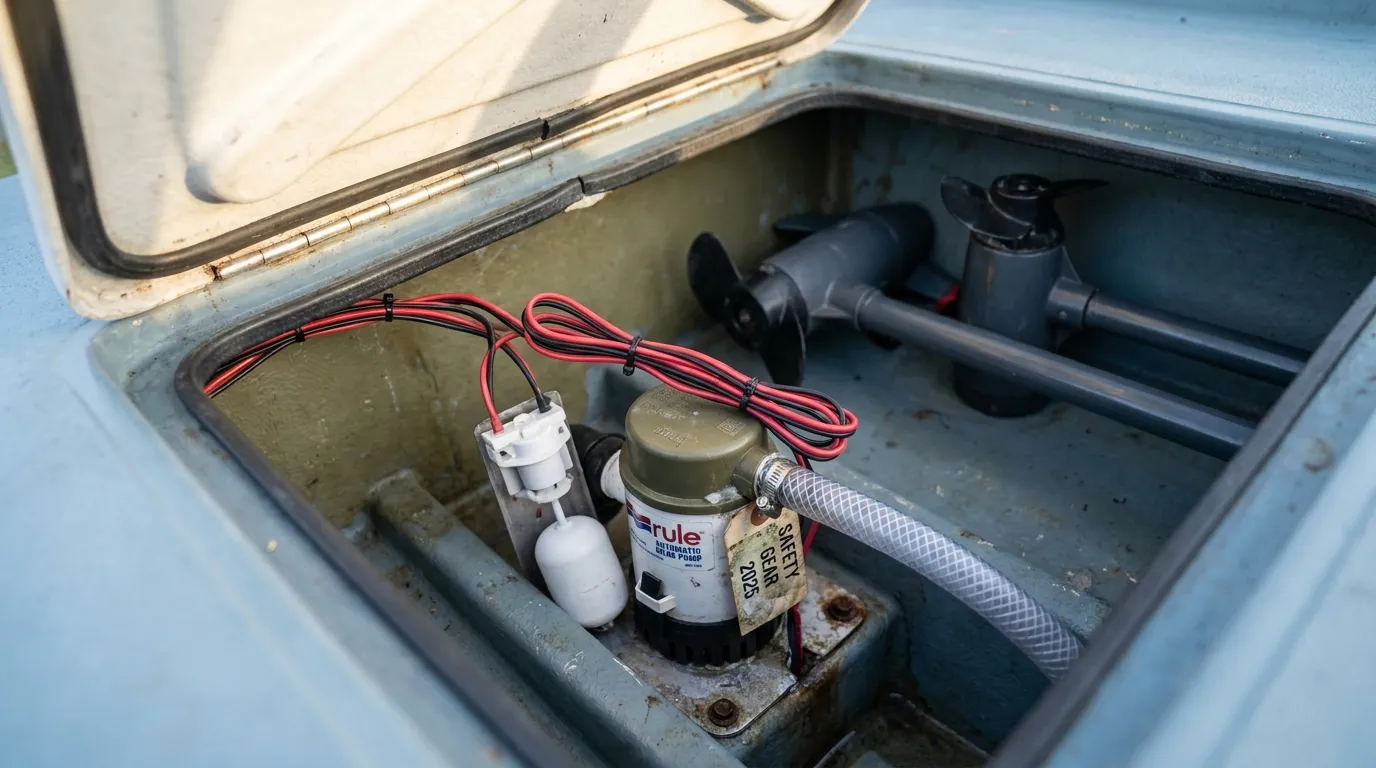
The right setup depends first on proper pump size, but that is only one part of it. It also needs a working float switch, clean wiring, an intact fuse, a discharge hose with no blockage, and a battery system strong enough for emergency pumping. It sounds simple, yet many owners trust a pump just because it worked last season, even though that can be a serious mistake.
Common bilge pump problems include clogged strainers, kinked hoses, corroded terminals, weak batteries, and switches that stick. For DIY owners, a quick monthly check will catch most of these issues before they turn into something worse:
A simple bilge pump inspection routine
- Lift the float switch by hand.
- Make sure the pump starts right away.
- Check the discharge stream overboard.
- Inspect hose clamps and routing.
- Look for cracked insulation or green corrosion on the wiring.
- Test the manual override at the helm.
- Keep a backup bailing method onboard.
On fishing boats, this routine matters even more for clear reasons. Wet decks, livewells, bait systems, and rough day-to-day use can all add extra water stress to the boat. That makes bilge pump checks something to take seriously. For more on the basics, see Bilge Pumps: Choosing and Maintaining the Right One for Boats. Owners comparing different setups may also want Automatic Bilge Pumps vs Manual: Real Failure Scenarios & Redundant Design, which covers system design questions many people run into.
Safety Training, Communication, and Mistakes That Cost Time
Good gear only helps if the crew knows how to use it. Boating education and a little simple planning can make a real difference. Recent safety data shows that 69% of deaths happened on boats where the operator had not received boating safety instruction. Only 19% happened on vessels run by someone with a nationally approved boating safety education certificate.
Those numbers make training pretty hard to ignore. Before the season starts, walk passengers through where life jackets are kept, where the fire extinguisher is, how to use the radio, and what to do if the engine stops or the bilge alarm goes off. It is basic information, but it helps if something goes wrong. On commercial or work boats, that same talk should become a checklist the crew can use every time, which cuts down on second-guessing later.
One more big risk is alcohol.
Alcohol continued to be the leading known contributing factor in fatal boating accidents in 2024, accounting for 92 deaths, or 20% of total fatalities.
Common mistakes include leaving the radio uncharged, storing flares where they can get wet, blocking access to throwables, and skipping a navigation light test before a pre-dawn launch. At the dock, these issues may seem small. Out on the water, they can turn into serious problems fast, and there is rarely much time to fix them.
A simple pre-departure routine helps. Check the lights, horn, radio, bilge pump, battery charge, weather, and fuel. First aid gear should also stay somewhere dry and easy to grab, not buried under other equipment.
Smart Safety Trends Boaters Should Watch in 2026
Boaters in 2026 have more smart safety gear to choose from, and a lot of it is becoming more common out on the water. Electronic distress signaling devices are getting more attention because they reduce the risks that come with handling flares and, if they’re maintained properly, they can stay ready to use for longer. Offshore anglers are also paying closer attention to AIS man-overboard beacons, along with devices that combine AIS and DSC features so rescuers can respond more quickly.
Recreational boaters and commercial crews are both watching these changes. They also match the way modern fishing boats are rigged now. Many boats carry more electronics, extra battery capacity, and connected systems that older rigs just didn’t have. You can see the shift in the way people are outfitting their boats and picking safety gear.
Still, smart equipment works best as a backup to the basics, not a replacement. New technology won’t make an old life jacket safer, and it won’t fix wiring that’s been ignored. The best setup still starts with core gear that works every time.
Build a Practical Safety Kit for Your Fishing Boats Type
Your safety setup should match how the boat is really used. A small inland fishing boat does not need the same gear as a charter vessel going offshore, but both still need a real safety plan. Start with the legal requirements, then add what makes sense for your usual trips: distance from shore, crew size, weather exposure, and the systems on board.
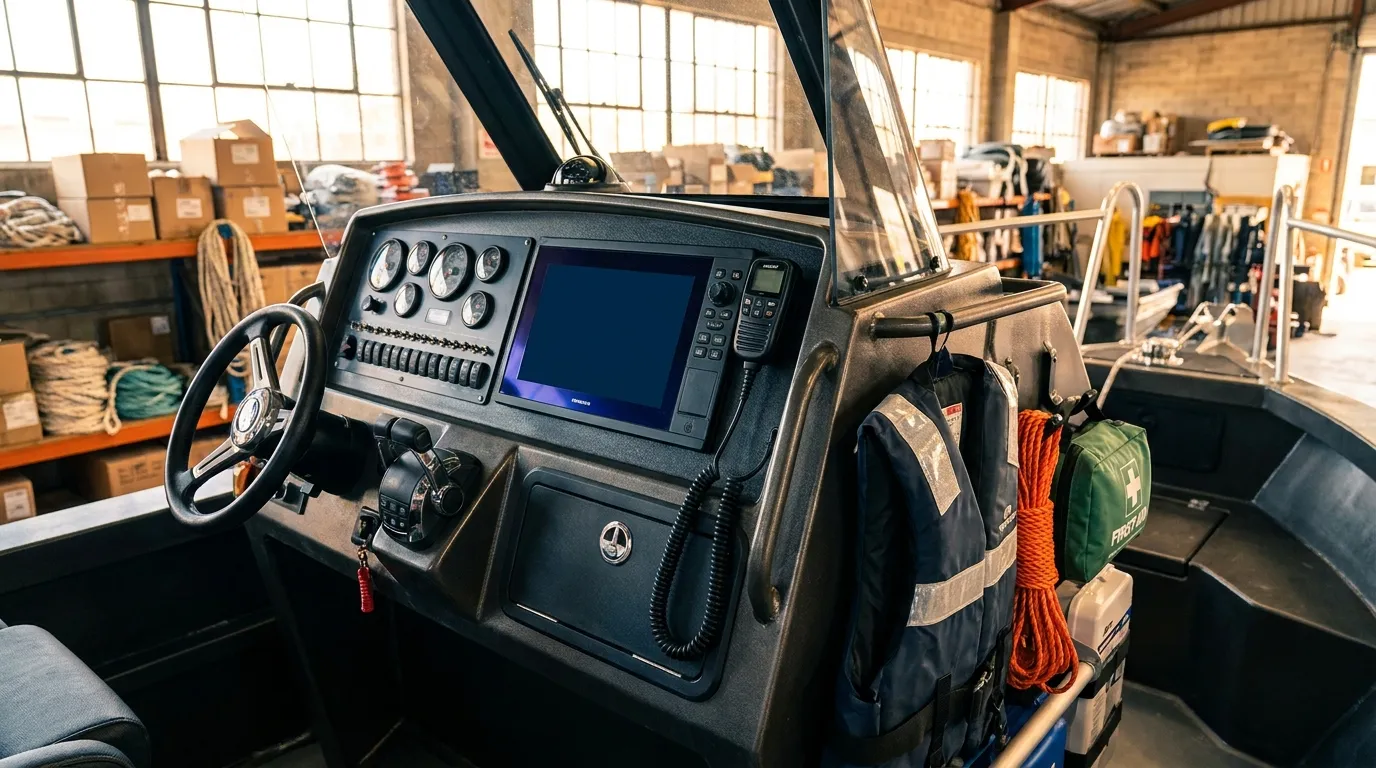
For many owners, that means a VHF radio, a dry first aid kit, a spare flashlight or other backup light, a tool kit, extra fuses, and a manual bailer or another way to remove water. If the boat has enclosed fuel or engine spaces, fire protection needs extra attention. Running in darkness, fog, or on longer trips also means communication and signaling should move higher on the list, especially as visibility gets worse.
For parts, maintenance items, and system upgrades, boaters often use retailers like First Choice Marine to compare marine gear categories such as pumps, engine care items, and onboard accessories. Marine-rated equipment is usually the safer choice. It also needs regular inspection, so it is ready to work when it matters.
Frequently Asked Questions
What safety gear is required on most recreational boats?
Most boats need one wearable life jacket per person. Boats 16 feet and longer also need a throwable flotation device. Depending on the boat, you may also need fire extinguishers, navigation lights, sound devices, and visual distress signals.
Are bilge pumps legally required on all boats?
Not always. But bilge pumps are one of the most important practical safety tools you can have, especially on fishing boats and smaller trailers that can take on water from rain, spray, plumbing leaks, or rough conditions. Even when not required by law, they are strongly recommended.
How often should I test my bilge pump?
Test it before the season starts and then regularly during the season, ideally once a month or before long trips. Check both automatic and manual modes, inspect the float switch, and make sure water discharges properly. A pump that has power but cannot move water is still a failure.
What is better for 2026, flares or electronic distress signals?
Many boaters now carry both. Traditional flares are still common and may still be required in some situations, while electronic distress signals offer longer service life and easier handling. Think of electronic signaling as a smart upgrade, not always a full replacement.
Where can I find parts for bilge pump maintenance and other marine safety systems?
Many boat owners start with marine parts specialists that cover pumps, wiring-related items, engine care, and accessories in one place. First Choice Marine is one example of a retailer that fits that need for DIY maintenance research and product comparison.
What should I keep on fishing boats beyond the legal minimum?
Add a VHF radio, first aid kit, backup lighting, spare fuses, emergency beacon for higher-risk trips, and a backup dewatering method. Fishing boats often operate farther from fast help and deal with more water exposure, so practical gear matters as much as required gear. If you are shopping or upgrading, First Choice Marine can also help you compare common onboard system categories before the season starts.
Make Your Boat Safer Before the Next Launch
Boating safety starts well before anything goes wrong. It starts at home, at the dock, and during regular maintenance, not in the middle of an emergency. Begin with the basics: life jackets that fit, a throwable device if required, fire protection, lights, signaling gear, and a first aid kit. Then check the equipment that helps keep a small problem from turning into a bigger one, like bilge pumps, radios, backup dewatering tools, and other basic gear.
For owners of fishing boats, the risk can be even higher. These boats get used hard, stay wet, and face changing conditions, which most owners already know firsthand. A quick pump test, battery check, or short gear review can mean the difference between getting back to shore as usual and having your whole day fall apart. Maybe more than that.
Before the next trip, do a full safety walk-through. Test the bilge pump, check every life jacket, and make sure the lights and horn work. Restock medical supplies and replace worn parts now instead of later. Safe boating in 2026 means having the right gear, keeping it ready, and knowing how to use it when it matters.
