


Owning a boat is exciting, but it also takes real work. Small problems on the water can become serious fast. A soft spot in the deck, a weak battery, a clogged bilge pump, or a cracked gelcoat patch can turn into a much bigger repair that costs far more to fix. Every owner should understand the basics of boat repair, even if they still plan to call a pro for the bigger jobs.
Good repair habits save money, protect the engine, and help keep everyone onboard safe. They also help owners get more life out of the boat, trailer, and gear. A lot of people are keeping boats longer and putting more into maintenance instead of replacing them. Basic repair knowledge helps owners catch trouble early, handle reasonable DIY fixes, and know when it’s time for a marine technician to step in.
This guide covers the main parts of boat repair, shows where fiberglass repair fits in, explains which tools are worth having on hand, points out the systems that need regular checks, and helps owners avoid mistakes that can lead to expensive breakdowns. It stays focused on useful, practical information. Anyone looking for advice they can really use will find a solid starting point here.
Why Basic Boat Repair Matters More Than Ever
Owning a boat is a big part of life for many families, anglers and commercial crews. The National Marine Manufacturers Association says recreational boating supports more than 812,000 jobs, includes over 36,000 businesses and creates $230 billion in annual economic impact. Those are big numbers. Repair and upkeep have become part of modern boat ownership.
| Metric | Value | Year |
|---|---|---|
| U.S. boat repairing market | $8.11 billion | 2025 |
| U.S. boat repairing market | $8.79 billion | 2026 |
| Recreational boating economic impact | $230 billion | Current |
| Jobs supported by boating | 812,000+ | Current |
That change is affecting how owners take care of their boats. Instead of buying new ones, many are putting money into repairing what they already have, especially since the U.S. boat repair market is expected to grow from $8.11 billion in 2025 to $8.79 billion in 2026, with more growth still ahead. Owners are focusing more on the basics: engines, steering, fuel systems, hull damage and onboard electrical parts.
Year-to-date through mid-2025, new powerboat sales were down roughly 10% compared to last year, reflecting a broader trend across other discretionary sectors, like RVs and home improvement.
For the average owner, learning a few repair basics is no longer optional. It can help control costs, protect resale value and keep a boat from sitting unused at the dock. It’s simple, but it matters more than ever.
Start With the Hull, Deck, and Fiberglass Boat Repair
If you’re new to boat repair, start with what you can actually see. Walk around the hull and deck. Check for cracks, chips, blisters, fading, soft spots, and loose hardware. On many boats, fiberglass repair ends up being one of the most common jobs because the hull and deck take constant abuse from sun, water, impact, vibration, and bad docking.
Small gelcoat cracks are sometimes just cosmetic, but they can still let water in over time. Deeper damage is more serious, especially when fiberglass is broken through, feels soft, or shows signs of water intrusion, because that kind of repair needs extra care. A basic repair usually means cleaning the area, grinding or sanding away weak material, drying it fully, applying resin and fiberglass cloth if needed, fairing the surface, and then sealing it with gelcoat or marine paint.
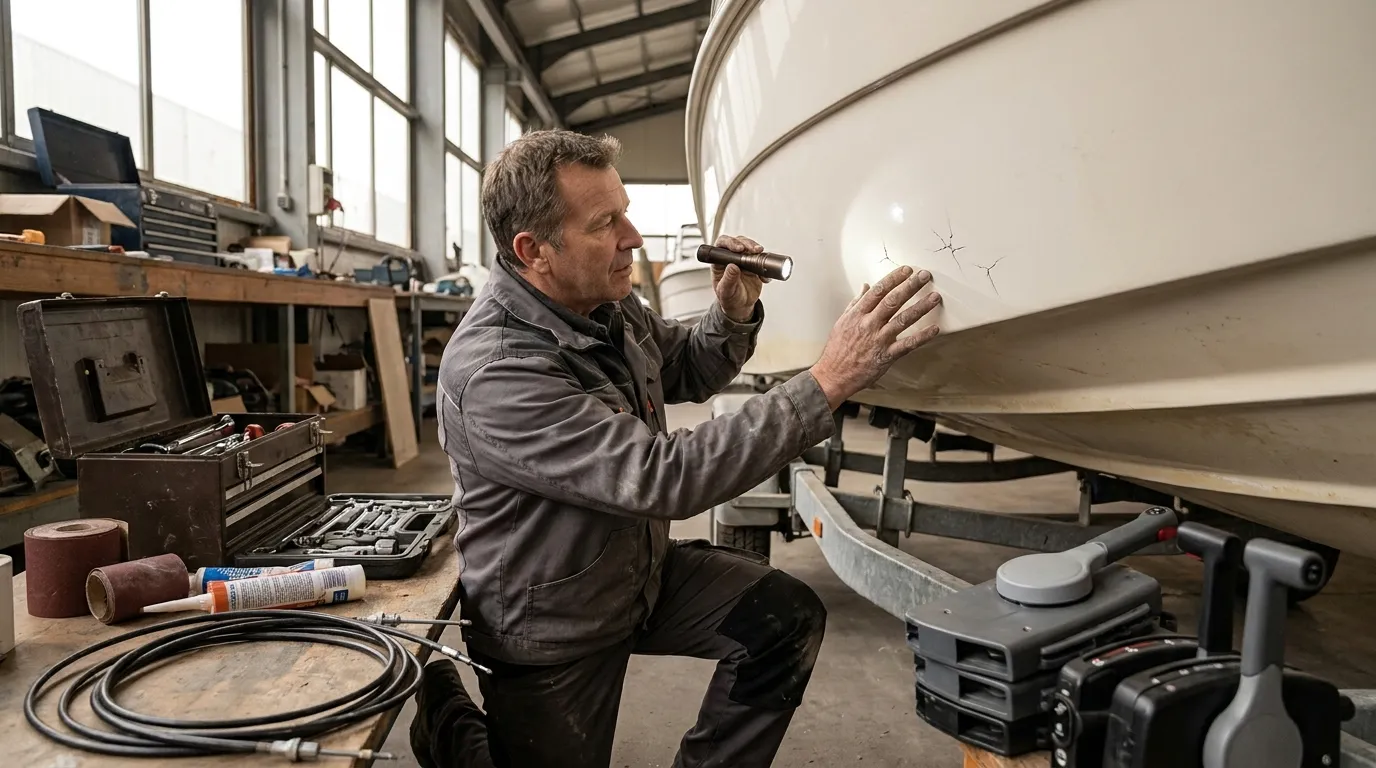
One common mistake is patching over fiberglass that’s wet or dirty. Another is using the wrong filler for structural damage. Cosmetic scratches and structural cracks are not the same. If a deeper breakdown would help, read this guide to Fiberglass Boat Hull Repair: Step-by-Step Restoration for Structural Integrity and these Fiberglass Repair Kits That Work for Boat Hulls & Decks. They can help you figure out whether the damage is only on the surface or something more serious.
Check the Systems That Fail Most Often in Boat Repair
A boat can look great on the outside and still hide big problems below deck. Smart boat repair means checking the systems that fail most, not just the parts that are easy to see. Start with the battery, bilge pump, fuel lines, hoses, clamps, steering and lights. These parts affect safety and reliability every time the boat is used.
Battery problems are common on boats that sit for long periods.
Consistently charge your batteries, especially if you are seasonal and the boat has an extended layup period. Dead batteries are one of the most common repair issues we see.
Weak batteries can lead to hard starts, dead pumps and electronics that suddenly quit. Test the battery voltage, clean the terminals and inspect the cable ends for corrosion before small issues get worse. Then check the bilge pump. Lift the float switch and see if the pump runs. Plenty of boat owners ignore it until water starts collecting where it should not, and by then the problem is much bigger.
Fuel systems need attention too. Old fuel, dirty filters, bad primer bulbs and ethanol-related issues can all cause poor performance or even engine damage if left alone. Hoses should feel firm, not cracked. Clamps should stay tight. When the engine runs rough, stalls or struggles under load, do not just assume it is electrical. Fuel problems are frequently the real reason.
Know What You Can Fix Yourself and What You Should Not in Boat Repair
DIY boat repair can save time and money, but only when the job fits your skill level. Good starter jobs include replacing clamps, changing filters, resealing deck hardware, cleaning electrical connections, swapping out a bilge pump, fixing small gelcoat chips and doing light fiberglass repair in non-structural areas. Nothing too serious. For this kind of work, patience matters more than advanced training.
Bigger repairs need extra caution. Structural hull damage, major transom cracks, internal engine repairs, steering cable failure and full electrical rewiring can all get out of hand quickly if something goes wrong. Bad work in those areas creates real safety risks once you’re out on the water. In many cases, the smartest move is to figure out the problem yourself, then have a technician handle the repair.
Propeller damage is a good example. A small ding might not seem like much, but over time it can cause vibration that damages seals, bearings and shaft alignment. The same applies to steering issues. If the wheel feels stiff, loose or uneven, stop using the boat before it gets worse. Then check the warning signs in this article on Boat Steering Systems: Signs You Need Repairs.
Another common mistake is using household products instead of marine-grade sealants, adhesives, lubricants or cleaners. Boats deal with a much harsher environment than cars or equipment around the house, and that changes what works. Salt, vibration, UV exposure, constant moisture. Different conditions.
Build a Simple Repair and Inspection Routine
Many expensive repairs start with small warning signs that owners miss. A simple routine before and after each trip is an easy way to catch problems early. Before launch, check the hull, propeller, battery charge, steering feel, fuel level, oil level, and safety gear. Make sure the lights, horn, bilge pump, and navigation electronics are working too.
After each trip, rinse the boat, flush the engine if your setup needs it, wipe down the hardware, and check for leaks or new damage. Pay extra attention after a rough day. Give the boat a closer look after running in shallow water, hitting debris, or trailering a long distance.
The Boat House engineer shared a clear reminder many owners should follow:
Religiously flush your boat after each use to prevent riser and manifold corrosion on sterndrive boats. This simple step can eliminate a major source of structural damage.
That same preventive mindset also applies to fuel stabilizer use, engine flush products, marine batteries, and corrosion protection sprays. These simple habits can help stop the biggest repair bills from showing up later.
Keep the Right Tools and Supplies Onboard and at Home
You don’t need a full shop for basic boat repair, but you do need the right essentials. A good starter kit includes screwdrivers, socket sets, marine grease, spare hose clamps, electrical tape, heat-shrink connectors, a multimeter, a utility knife, sandpaper, sealant, spare fuses, zip ties, fuel treatment and cleaning supplies. Then there’s the fiberglass side. Keep gloves, mixing cups, sanding blocks, filler, resin and patch material made for marine use.
| Tool or Supply | Best Use | Why It Matters |
|---|---|---|
| Multimeter | Battery and wiring checks | Helps find low voltage and bad connections |
| Marine sealant | Deck hardware and leaks | Keeps water out of core materials |
| Spare fuses | Electrical failures | Fast fix for common problems |
| Fiberglass patch kit | Hull and deck damage | Useful for small emergency or planned repairs |
If you’re building your supplies, First Choice Marine is a useful source for marine maintenance items like engine care products, accessories and repair basics. Keep the main items that help you inspect, maintain and deal with minor issues right away instead of trying to stock everything at once.
Smart owners also label spare parts, store chemicals the right way and replace worn tools before they fail when they’re needed most.
Frequently Asked Questions
What is the most common type of boat repair?
Battery trouble, fuel system problems, bilge pump issues, and fiberglass damage are all very common. For many owners, small boat repair jobs start with poor storage habits, skipped inspections, or water getting into places it should not.
Can I do fiberglass repair myself?
Yes, many small fiberglass repair jobs can be DIY projects if the damage is cosmetic or limited to the surface. If the area feels soft, spreads over a large section, or affects the hull structure, it is safer to get professional help.
How often should I inspect my boat for damage?
A quick inspection should happen before and after every trip. A more detailed check should be done monthly during the season and again before storage, especially around the hull, steering, fuel system, battery, and bilge.
What supplies should every boat owner keep for basic boat repair?
At minimum, keep spare fuses, hose clamps, a multimeter, marine sealant, basic hand tools, cleaning products, and battery care items. Many owners also keep fuel treatment and an emergency fiberglass repair kit for small damage.
Where can I find the right products for routine marine maintenance?
A marine-focused supplier is usually the best choice because boats need products made for wet, corrosive conditions. First Choice Marine is a relevant example for owners looking for engine care items, maintenance products, and everyday boating accessories.
When should I stop DIY repair and call a marine technician?
Stop when the repair involves structural fiberglass, engine internals, major fuel leaks, steering failure, or complex wiring. If you are unsure about the cause of the issue, that alone is a good reason to get expert help before the problem gets worse.
The Best Repair Habit Is Catching Problems Early
Good boat repair starts long before anything really breaks. When boat owners inspect regularly, clean up after every trip, protect the fuel system, take care of batteries, and deal with fiberglass repair early, they spend less and avoid a lot of stress. The boat stays safer, too. More dependable.
Boat repair works best as a routine, not a one-time job. Small cracks, weak pumps, dirty fuel, or corroded terminals might not seem urgent today, but any one of them can ruin a trip tomorrow. Start with the basics. Write down what you find. Then build confidence one task at a time, and those small checks can spot trouble before it has a chance to grow.
If the starting point feels unclear, pick a few steps for this week: inspect the hull, test the battery, and check the bilge pump. A habit that small can prevent a long list of problems later. When a job calls for better materials or regular maintenance supplies, trusted marine-specific options help each repair last longer and work the way it should on the water.
