


The fish finder market has moved fast this year, and 2026 is shaping up to be a real turning point for anglers and boat owners, at least from this point of view. Big changes, honestly. Over the past few months, manufacturers have released new fish finders that care less about huge screens and focus more on clean, easy‑to‑read sonar data that helps while you’re actually fishing, not just sitting at the dock. The latest MEGA Side Imaging and CHIRP sonar systems now show structure and bait activity with a level of detail that felt out of reach just a few seasons ago, even for people who’ve used this equipment for years. The clearer views are obvious right away, and that difference really starts to matter once the boat is moving.
That shift matters because recreational and commercial boaters want tools that save time, reduce guesswork, and connect smoothly with the trolling motors and onboard electronics they already use every day. And for anyone who fishes lakes and rivers but also heads offshore, today’s fish finders help them see more on the water and react faster when conditions change, which is usually the whole point.
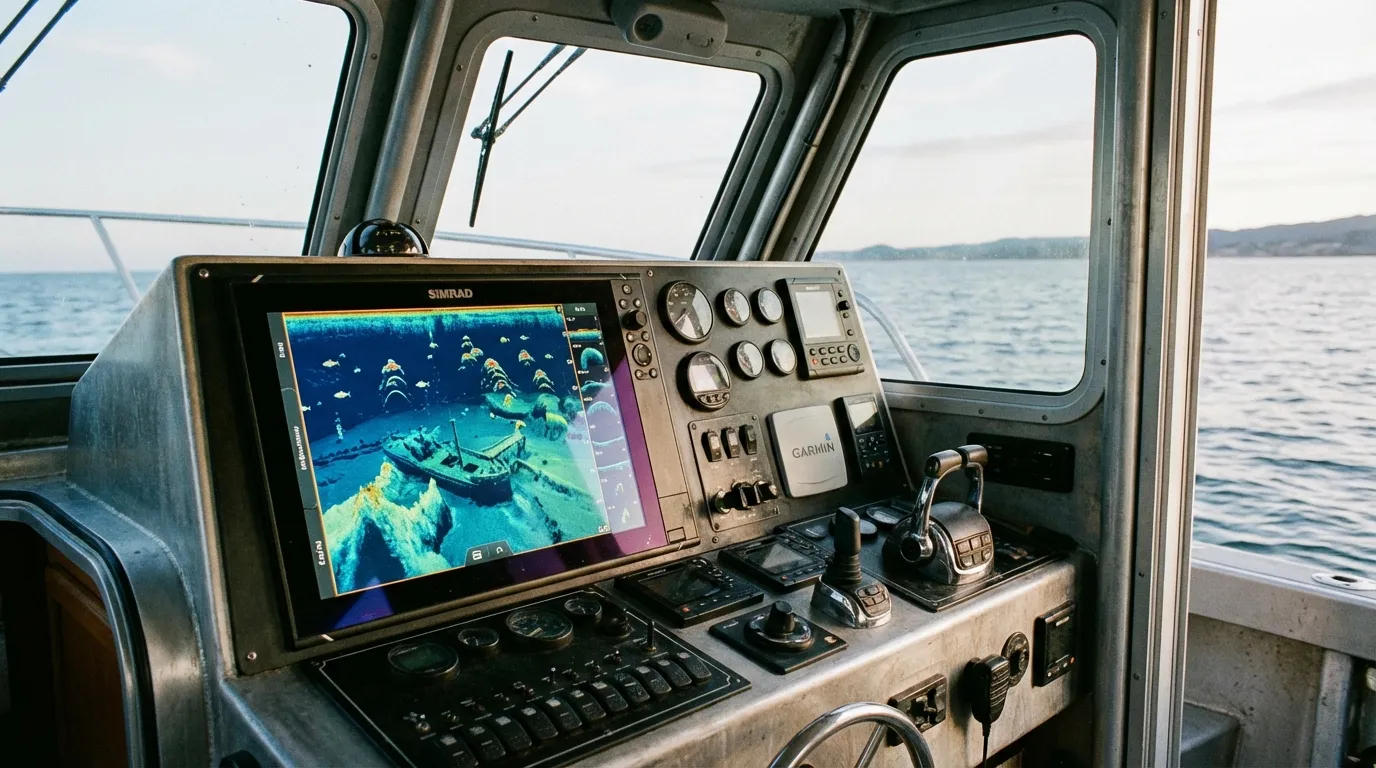
Why MEGA Side Imaging Fish Finders Are the Big Story This Year
MEGA Side Imaging has become one of the most talked-about fish finder features of 2026, and that kind of attention usually builds for a reason. By using higher sonar frequencies, this tech gives much sharper views of what’s sitting to the left and right of the boat, often the exact places where fish-holding structure stays out of sight. Instead of blurry shapes, anglers see clearer images that are easier to trust on the water. That clarity lets you scan a wider area without driving right over fish or structure every time, which often helps on heavily fished lakes. Reviews from Outdoor Life and Cybernews often point to MEGA Side Imaging+ showing cleaner target separation than older versions, especially around brush, rocks, and other clutter. In many situations, those improvements still show up in deeper water. With clearer pictures, there’s usually less second-guessing. Better visuals tend to follow. That’s likely why so many anglers are paying attention.
A lot of this year’s standout gear comes from Humminbird, with the XPLORE and HELIX G4N lines getting most of the buzz. These units are clearly aimed at anglers who want fine detail and don’t mind paying more for high-end sonar. That choice often pays off, but it’s not for everyone. Based on 2026 comparison reviews, side imaging ranges of about 200 feet per side are now common. Just as important, the image quality usually stays steady instead of fading near the edges, which matters more than raw distance for most people.
| Feature | Earlier Models | 2026 MEGA Side Imaging+ |
|---|---|---|
| Side range | 120, 150 ft | Up to 200 ft |
| Target separation | Moderate | High |
| Real-time response | Limited | Near real-time |
For many boat owners, this shift means fewer repeat passes and more confidence when picking spots before the first cast. That’s also why setup matters more than it used to. We covered that earlier when breaking down common fish finder installation mistakes in Fish Finders: Installation Mistakes That Kill Performance.
CHIRP Sonar Fish Finders Get Smarter and More Accessible
MEGA Side Imaging still pulls in attention at the high end, and that makes sense. But in 2026, CHIRP sonar continues to be the everyday workhorse in most fish finders because it gets the job done without much hassle. Instead of sending a single ping, CHIRP uses a spread of frequencies. That usually means clearer fish arches and steadier depth readings, which helps a lot when water conditions change throughout the day. The big change this year isn’t how CHIRP functions, but who gets access to it. Multi‑spectrum and CHIRP+ features now appear on many mid‑range units instead of being limited to expensive models, and that wider availability feels like a smart shift.
This is easy to see in how major brands are shaping their lineups. Garmin and Lowrance both focus heavily on CHIRP, but they take different approaches. The Garmin ECHOMAP UHD series keeps showing up in 2026 gear lists because it usually strikes a comfortable balance between cost and performance. Its CHIRP sonar covers what most weekend anglers need, and the straightforward setup, with less cable routing, fits well on smaller boats. Lowrance, on the other hand, combines CHIRP with live sonar tools. That appeals to anglers who like watching fish move in real time instead of only reading past returns. Same goal, different approach.
Anglers who fish light aren’t left out. Portable CHIRP units keep getting better. Kayak anglers and shore fishermen benefit from compact systems with fewer cables, and newer castable sonar models released this spring focus on cleaner signals and steadier phone connections. That often helps when you’re moving around.
| User type | CHIRP benefit | Typical setup |
|---|---|---|
| Recreational boater | Clear depth and fish arches | Fixed transducer |
| Kayak angler | Portable clarity | Castable sonar |
| Commercial user | Reliable depth reading | Through-hull transducer |
As marine electronics become more connected, it’s worth thinking about how a new fish finder will work with a new motor. Planning how CHIRP sonar links to a trolling motor can help prevent compatibility problems later, which many anglers only notice after everything is installed. For more insight, check Choosing the Right Trolling Motor: Essential Considerations for Boat Owners.
Standout Fish Finder Models Boaters Are Choosing in 2026
In 2026 buying guides and dockside conversations, a few fish finders keep getting mentioned over and over. The Humminbird XPLORE series sits near the middle of that buzz, mainly because MEGA Side Imaging+ and live sonar can really help when scanning both sides of the boat in real time. These features tend to work even better when paired with advanced chartplotters and fully networked displays. This kind of setup is often seen at the helm and bow, where quick looks matter, and it helps explain why tournament anglers and offshore boaters keep choosing systems where maps, sonar, and waypoints stay connected.
Another model that comes up often is the Humminbird HELIX 12 CHIRP MEGA SI G4N. It brings side imaging, down imaging, and CHIRP sonar together in one unit that many professionals already use, especially on inland lakes and coastal trips. It’s straightforward but usually strong enough to count. Outdoor Life reviews, which focus on real-world use, note that it performs well without making daily operation feel complicated, which is helpful on long days on the water.
Garmin’s ECHOMAP UHD models continue to attract recreational boaters. The clean layout and steady CHIRP sonar often make them easier to learn, especially for people newer to fish finders. Lowrance HDS PRO units, on the other hand, appeal to a different group. Boaters who care most about advanced live sonar support and serious offshore use often choose these, especially in deeper water and at faster speeds.
| Model | Best for | Key technology |
|---|---|---|
| Humminbird XPLORE | Tournament anglers | MEGA Side Imaging+ |
| HELIX 12 G4N | Serious recreational | MEGA SI + CHIRP |
| Garmin ECHOMAP UHD | Everyday boaters | CHIRP + UHD sonar |
| Lowrance HDS PRO | Advanced users | CHIRP + live sonar |
Integration Is the Quiet Trend Changing Everything
The most interesting change heading into 2026 is how fish finders are starting to blend into the rest of the boat. Marine electronics tend to work better when they’re not treated as stand‑alone gadgets, and that’s becoming clear fast. In many cases, new trolling motors now come with built‑in transducers that plug straight into MEGA and CHIRP systems. The result is a cleaner setup with less clutter and fewer headaches. That matters because installation takes less time, and sonar readings often stay more steady when there aren’t extra cables or awkward bolt‑ons in the way.
Trade coverage from Woods & Waters Magazine shows that integrated setups are quickly becoming the norm. Instead of juggling separate features, boaters expect displays to talk to each other, share waypoints across the network, and even control the motor right from the fish finder screen, usually where their eyes already are. For DIY boat owners, this pushes planning toward full systems instead of one‑off parts, and that way of thinking often sticks once they try it.
There’s also an environmental angle. Better motor control and more accurate sonar can cut down on unnecessary idling and fuel use over a season. If you’re curious how modern motors fit into this shift, we covered that change in our article on Electric Trolling Motors: Eco-Friendly Fishing 2026.
Practical Setup Tips for Better Results on the Water
What trips people up most is that even high‑end fish finders can work poorly because of basic setup problems. It happens more often than you’d think (I’ve seen it plenty of times). Even in 2026, many complaints still come down to simple issues like transducer placement or settings that don’t match how someone fishes. Sonar choice often matters more than brand extras, especially since most anglers switch between a few styles without realizing how much their needs change day to day. Choosing the right mode for that makes a big difference. CHIRP works well for general searching, while MEGA Side Imaging is better when scanning shoreline structure or checking deeper water at slower speeds.
Power and software cause trouble too. Wiring quality and steady voltage can affect image clarity more than people expect, especially with high‑frequency imaging. That’s why installers often recommend a dedicated battery setup just for electronics. Keeping software updated also helps improve processing and compatibility over time.
| Setup step | Common mistake | Better approach |
|---|---|---|
| Transducer mount | Too high or angled | Level with hull |
| Power source | Shared noisy circuit | Dedicated electronics feed |
| Software | Outdated firmware | Regular updates |
There’s also a guide on common fish finder installation mistakes, and it’s worth a look, you might spot something you’ve already run into.
Frequently Asked Questions
What is the main difference between MEGA Side Imaging and CHIRP sonar?
MEGA Side Imaging shows detailed structure and fish to the sides of your boat, using high frequencies (that’s likely why it looks so crisp). You get clear, wide views. CHIRP sonar, in my view, is better for depth and fish straight below (right under you). It sends a range of frequencies that give clearer returns.
Are MEGA Side Imaging fish finders only for professional anglers?
No. Pros use them a lot, which isn’t surprising. What stands out is how many recreational anglers use them today, mainly because prices are lower and setup is usually easier than it used to be. Easier for everyday anglers.
Do I need a large screen to benefit from these technologies?
Bigger screens can help, maybe. But modern processing often lets mid-size displays show crisp detail. Most of the time, tuning the settings matters more than raw screen size, especially when you make a few small tweaks.
Yes, it usually works. 2026 fish finders fit older boats. What matters first? Check the power setup and mounting options, and you’ll be fine.
How often should I update my fish finder software?
Updates are useful because they often improve sonar, fix bugs, and add support for new accessories. You’ll usually find it easy to check a few times a year, and it’s often worth doing (I think).
The Bottom Line for Boaters and Anglers
Long days on the water make efficiency matter, and in 2026 that’s where modern fish finders usually prove their value. They’re no longer just about spotting fish. These units help users read depth changes, structure, and bottom hardness faster, which often cuts down on second‑guessing and keeps trips moving. With MEGA Side Imaging and advanced CHIRP sonar, left‑to‑right and down views are clearer, so fewer passes get wasted and frustration drops. That difference shows up pretty quickly for many recreational anglers, who often feel more confident about where to stop and cast. For commercial and serious users, this tech matters even more during long runs, when fuel use, daylight, and timing can make or break a trip.
Planning an upgrade raises a practical question: how well does the fish finder work with the rest of the boat? A helpful way to think about it is to look at trolling motor controls, battery capacity, and whether displays actually share data smoothly. A future‑ready setup fits today’s fishing style and still leaves room to add another screen or sensor later, like the systems available through First Choice Marine.
