


Boat owners often wince at the word “rot.” It sounds costly and final, and nobody wants that call. Many people assume that once rot shows up in a transom or stringer, the only fix is full replacement, lots of money and weeks stuck on land. Often, though, it’s not that bad. Modern marine wood rot repair can restore real strength without ripping the boat apart. It’s not wishful thinking, and it’s usually not a short-term fix either.
This guide explains how boat transom rot repair and stringer repair actually work, using clear language and real-world examples. There’s no fluff. You’ll learn when epoxy wood restoration makes sense, when it doesn’t, and how rot can usually be stopped from coming back. That kind of context helps owners make better decisions. Costs are covered too, along with common mistakes that surprise people more often than you’d think.
Whether it’s a weekend fishing boat or a work vessel, understanding marine structural repair helps protect both your investment and your time on the water. Plain and simple. These methods are widely used today by pros and careful DIY owners, and that knowledge often pays off.
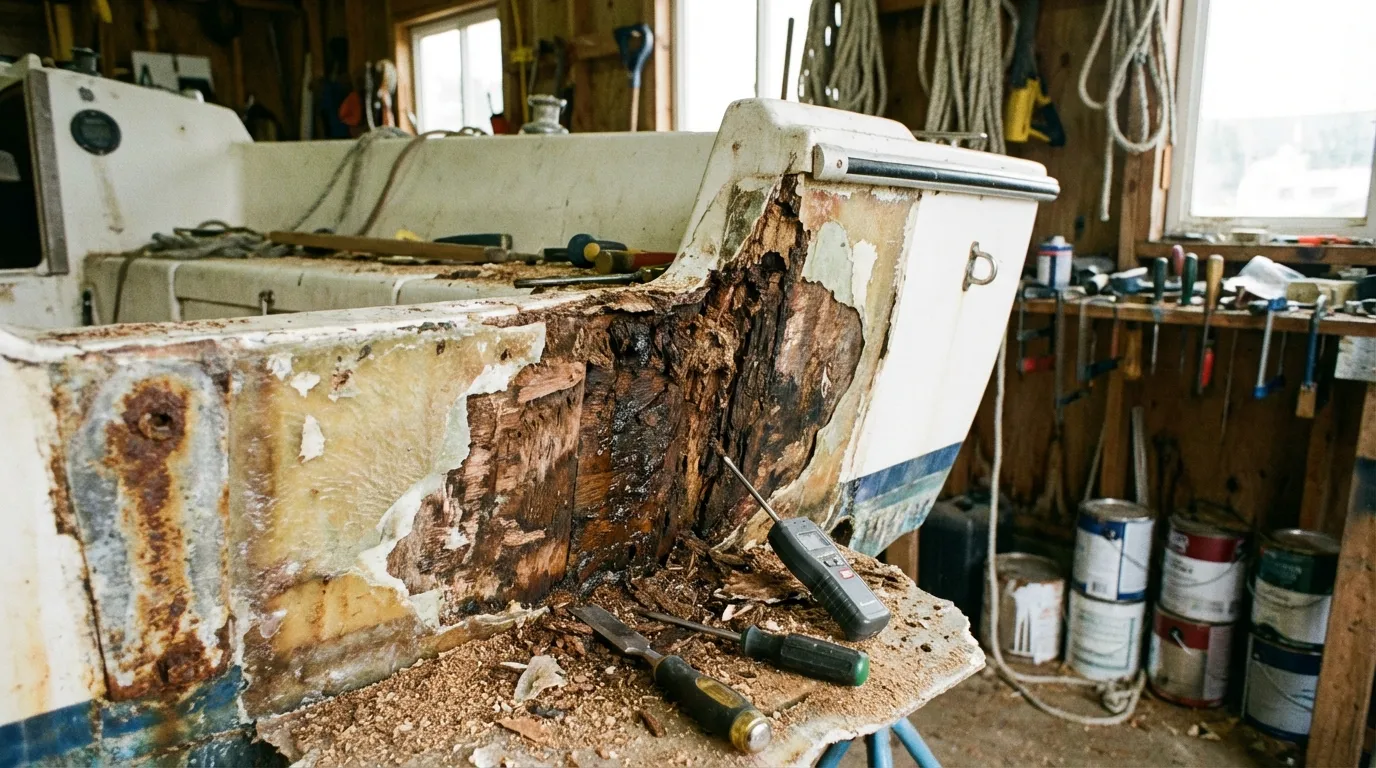
Understanding Marine Wood Rot and Why It Happens
On boats, wood rot almost always starts with water. In my experience, that’s usually the root of the problem. Moisture sneaks in through screw holes, tiny cracks, or sealant that has quietly failed and isn’t sealing anymore (which happens more often than most people expect). Sometimes it’s just a slow leak that goes unnoticed for a long time. When water gets trapped, fungi begin breaking down the wood fibers from the inside. The wood slowly loses strength. What makes this hard to catch is that the surface can still look solid and clean, even while damage is spreading underneath. Many owners don’t realize there’s an issue until it’s already well along.
The highest risk areas are usually transoms, decks, and stringers. These parts handle engine weight, regular foot traffic, and constant hull stress at the same time, which puts them under a lot of strain. That’s why marine structural repair often starts there. Rot is often limited to a smaller section instead of the entire structure. When moisture is managed, it usually spreads slowly, giving owners a chance to fix the issue before it becomes serious.
Epoxy-based repair systems have changed how many owners deal with wood rot, often in a positive way. The wood repair epoxy market keeps growing because these products work well in real situations. Structural epoxies now make up about 60% of repair use. Many owners choose epoxy repairs because they’re usually quicker, less disruptive, and cheaper than full replacement, which can be especially helpful during the off-season.
| Metric | Value | Year |
|---|---|---|
| Global wood repair epoxy market | USD 494.6 million | 2025 |
| Projected market size | USD 531.1 million | 2030 |
| Structural epoxy market share | About 60% | 2023 |
Experts agree epoxy repairs only last when moisture is completely removed first. Drew Frye from Practical Sailor explains that stopping water intrusion and letting the wood dry fully is what makes repairs last. Skipping or rushing this step often leads to failure once the boat goes back into regular use.
Boat Transom Rot Repair Without Full Replacement
The transom takes a lot of abuse on almost every boat. Each time the outboard throttles up or the hull meets a wave head-on, pressure gathers around the engine mounting area, especially near the bolt pattern. So when rot shows up there, owners often worry right away, and that reaction makes sense. Full replacement is one option, but many boats don’t actually need something that extreme. When damage stays limited and the outer fiberglass skin is still intact, and that outer shell often carries more load than people expect, targeted boat transom rot repair can work very well.
What’s the first thing that usually shows a problem? During inspection, soft spots or darkened wood around mounting bolts tend to stand out. You’ll often find that small drilled holes help confirm moisture levels and let air move through the core. Any wet wood needs time to dry completely. Rushing things with high heat can cause more harm than good, so steady airflow and patience usually give better results here.
After the wood is fully dry, low-viscosity epoxy is injected into the damaged areas. It flows into weakened fibers and hardens inside them, which is why this step often matters most. In some repairs, fiberglass cloth is added over the area to help spread engine loads and stiffen the transom where the motor pushes hardest.
A dry rot repair made with epoxy can genuinely be ‘better than new’.
The real strength comes from how everything bonds together. Epoxy fills gaps and ties the old wood to the existing fiberglass so the structure works as a single unit again. Industry cost data suggests epoxy-based repairs often come in about 30% to 60% less than full replacement when damage stays localized, which can make a noticeable difference.
If fiberglass skin work is part of the repair, a basic grasp of laminate techniques usually helps. That’s why having a simple reference matters, like the Fiberglass Boat Hull Repair: Step-by-Step Restoration for Structural Integrity guide we already covered.
Fixing Boat Deck Wood Rot and Soft Spots
Soft spots underfoot are often the first sign that wood rot is starting in a boat deck. The deck may feel spongy, and over time screws can start to loosen, which is rarely a good sign. This usually means water has gotten in, most often around deck hardware like rails or hatches. Finding exactly where that water entered matters more than anything else. If that spot isn’t sealed first, repairs usually don’t last, and the same problems come back.
When damage is limited and found early, deck repairs often use epoxy injection with compression. I’ve found this method works well in those cases. Small holes are drilled, spaced to match how far the soft area spreads. Penetrating epoxy is added so it can soak into the core and bind the weakened fibers. Weight or a vacuum helps move it through the area. After it cures, the holes are filled and the surface is resealed. It sounds simple, but precision really matters.
Penetrating epoxies do not cure rot or dry wet wood, but they can consolidate degraded fibers once moisture intrusion has been stopped.
This step often matters more than people expect. Many repairs fail because things move too fast. A damp deck core won’t let epoxy bond properly, so drying can take days or even weeks, depending on airflow and climate. Patience usually pays off.
Common issues include using too little epoxy, drilling holes too far apart, or skipping proper surface sealing. When done right, repairs bring back stiffness and help stop further damage. Leaks tied to corroded deck hardware are common, and knowing how to prevent marine corrosion can help avoid repeat problems later. A related resource is Advanced Techniques for Marine Corrosion Prevention: Protecting Your Investment.
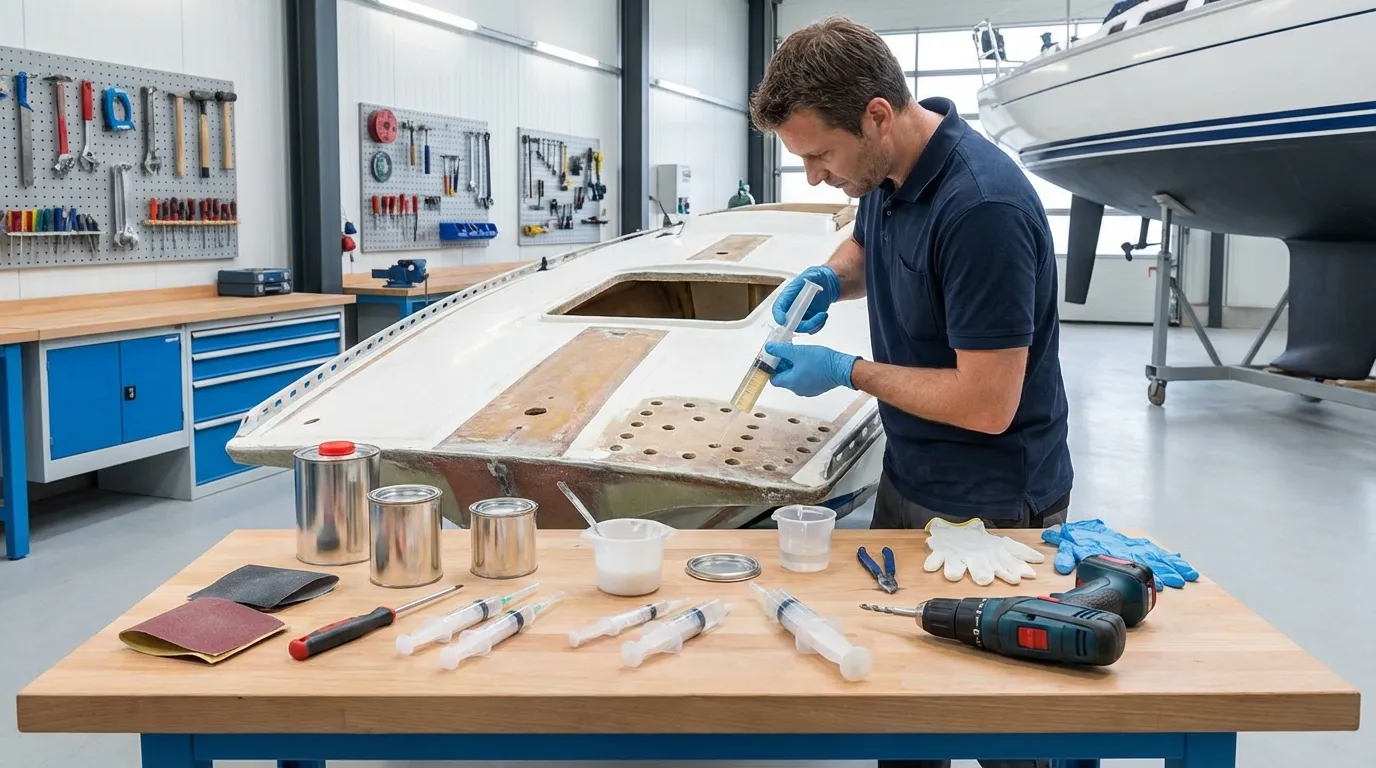
Stringer Repair Techniques That Restore Strength
What often surprises people is that rot in a stringer doesn’t automatically mean a boat is beyond saving. Stringers handle the heavy work, supporting the hull, carrying engine loads, and dealing with the steady push of waves, so damage here matters. Even so, repairs usually come down to a practical mix of epoxy and added fiberglass. The goal is straightforward: bring stiffness back and make sure loads travel where they should, through the stringers and into the hull sides. Nothing fancy, in my view.
The process is about being careful, not aggressive. Only the fiberglass that truly needs removal is taken out, exposing damaged wood without going overboard with the grinder. Rotten areas are trimmed back to solid material and allowed to dry fully. Epoxy is then used to bond in new wood or strengthen what’s left, and fiberglass layers are rebuilt to tie everything back into the hull. That connection often matters more than people expect.
The WEST SYSTEM technical team points out this approach works when the surrounding laminate is still in good shape, a source many builders trust. In most cases, the repair ends up working like part of the original structure.
Rushing or skipping steps rarely pays off. Missed fiberglass or poor alignment often leads to early failure, like a crooked stringer putting stress where it doesn’t belong.
Tools, Materials, and When to DIY or Call a Pro
Many marine wood rot repairs can be good DIY jobs, especially when the damage is small. Some clearly aren’t, and those are better left to a pro (no shame there). Knowing where that line is can save money and lower stress, which makes the project feel easier overall. Small deck soft spots and early transom problems are often manageable for careful owners who take their time and stay patient, since rushing usually makes things worse. Bigger structural issues, like damaged stringers or large transom failures, usually need a professional shop. There are no real shortcuts.
Basic tools include drills, mixing cups, spreaders, and protective gear (gloves matter). Common materials are penetrating epoxy, thickened epoxy, fiberglass cloth, and marine sealant. Temperature matters more than many expect. Most epoxies cure best between 50 and 70 degrees Fahrenheit, so timing counts.
| Repair Type | DIY Friendly | Skill Level |
|---|---|---|
| Deck soft spots | Yes | Medium |
| Localized transom rot | Yes | Medium |
| Full stringer rebuild | No | High |
If the work is near wiring or electrical runs, take extra care to follow proper practices so nothing gets damaged or mislabeled. There’s also related guidance on Marine Electrical Systems 2026: Adopting Next-Gen Power Innovations for Small Boats that’s worth skimming before you start.
Preventing Marine Wood Rot Repair Issues on Boats for the Long Term
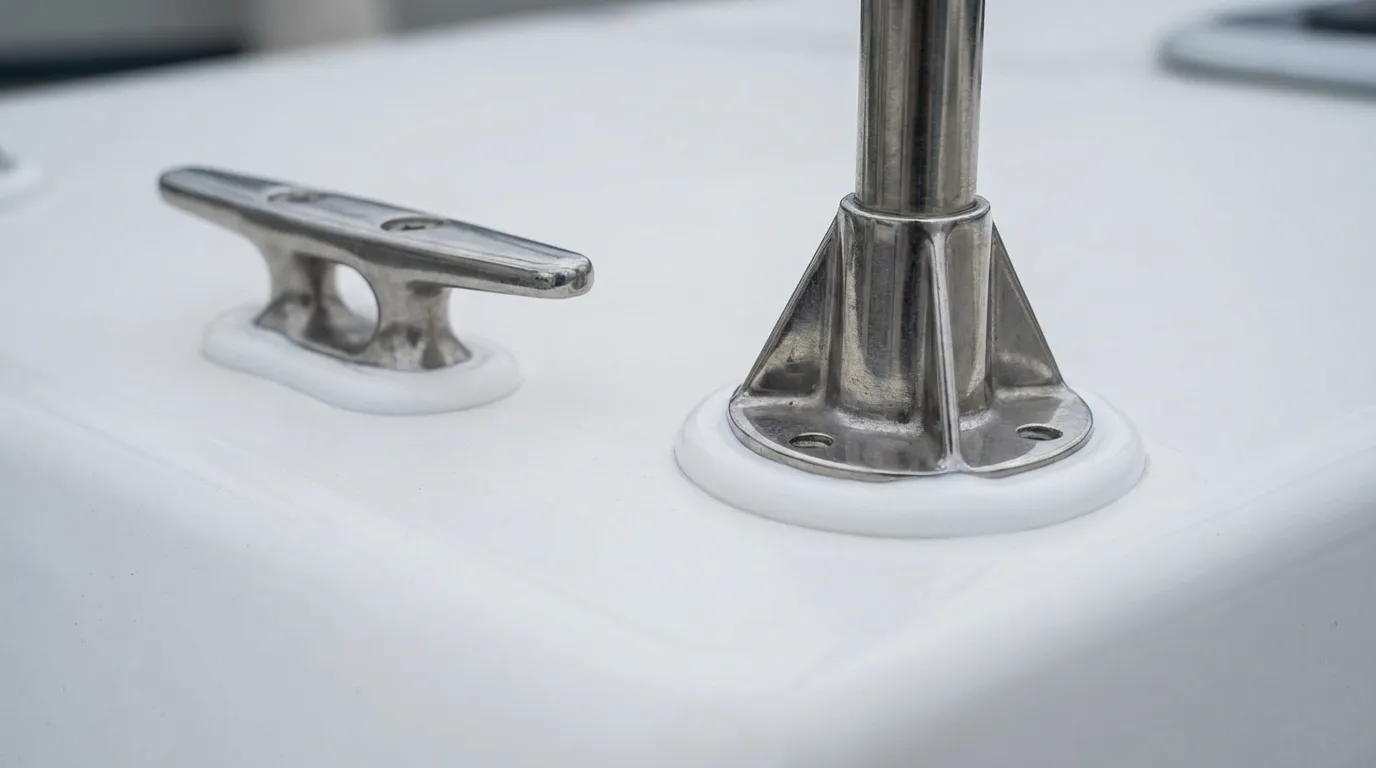
I usually believe the best repair is the one you don’t have to do twice, and on boats that often comes down to controlling moisture. It’s not exciting, but it does the job. Sealing fastener holes and rebedding hardware when sealant wears out can stop small issues from sticking around and turning into bigger ones.
So why does ventilation matter so much? Often more than people expect. Trapped moisture speeds up rot and spreads damage faster than you might think, which is why keeping bilges dry really helps. Good marine sealants usually last longer, while cheaper options often give up early.
Modern materials help too, more than they once did. Many owners update bedding and coatings during regular maintenance, sometimes bit by bit. Over time, those small steps add up, like a rebedded fitting that stays dry year after year.
Common Questions People Ask
Can marine wood rot really be repaired without replacement?
Replacement isn’t always needed. When damage is limited, which is common, and the moisture problem is fixed, epoxy wood repair can bring back strength, stop rot, and avoid cutting out sections.
How do I know if my transom rot is too severe to repair?
But if the outer fiberglass skin is cracked, or the core feels soft over a large area, it often means replacement. A professional inspection can clear this up early, which is why checking sooner makes sense.
How long do epoxy-based rot repairs last?
When done well and kept dry, which usually makes the difference, epoxy repairs can last for decades, probably longer than untreated wood, so there’s usually little to worry about.
Is penetrating epoxy enough for deck repairs?
Penetrating epoxy often works for early rot (in my experience), keeping repairs simple. For heavier damage, strength usually comes from thickened epoxy combined with fiberglass.
What is the biggest mistake boat owners make with rot repair?
Problems show up when repairs are rushed. If the wood isn’t dry or sealing is skipped, the damage usually comes back.
Putting These Repairs Into Practice
The good news is that marine wood rot repair often doesn’t mean losing the season or draining your savings. With today’s materials and proven methods, many transoms and decks can often be repaired safely without full replacement. In my view, the process is pretty simple when it stays realistic: first find the damage, then stop moisture from getting in, and only after that pick a repair approach that fits the issue before buying materials or cutting into anything. Guessing usually causes more problems.
An honest inspection matters, even when the results feel uncomfortable. You’ll often find more issues once you slow down and take a close look. New to repairs? A helpful way to start is by tackling small jobs and building confidence step by step, which is how most people really learn. Quality marine products made for structural work tend to last longer than quick fixes, and asking for help early often keeps small problems from turning into major repairs.
At First Choice Marine, the focus is on clear guidance and realistic options, like understanding timelines, repair choices, and when a professional makes sense. This helps boat owners protect both their boat and their time on the water, whether sealing a small deck section or handling a larger transom repair.
