


Table of Contents
- Quick Picks: Essential Boat Repair Tools at a Glance
- Marine Electrical Repair Tools Every Boat Needs
- Preventing Rust on Marine Tools: Storage and Care
- Your DIY Boat Maintenance Checklist
- Fiberglass Repair Tools and Materials
- How to Build a Boat Repair Tools Kit by Boat Type
- Conclusion
- Frequently Asked Questions
Last Updated: September 25, 2026
Quick Picks: Essential Boat Repair Tools at a Glance
The global boat repairing market is valued at USD 8.79 billion in 2026 and is projected to grow at a 9.6% compound annual growth rate through 2030, according to Research and Markets Boat Repairing Market Report 2026. That growth reflects what every boat owner already knows: keeping a vessel on the water takes the right tools, not just any tools.
This guide from First Choice Marine breaks down the essential boat repair tools list, organized by system and use case. Below, we'll show you exactly which tools handle electrical faults, fiberglass damage, and routine maintenance, plus what most generic lists get wrong about corrosion and storage.
Quick Picks:
- Best for electrical troubleshooting: A digital multimeter with a voltage tester
- Best for emergency repairs: A waterproof kit with self-fusing silicone tape and duct tape
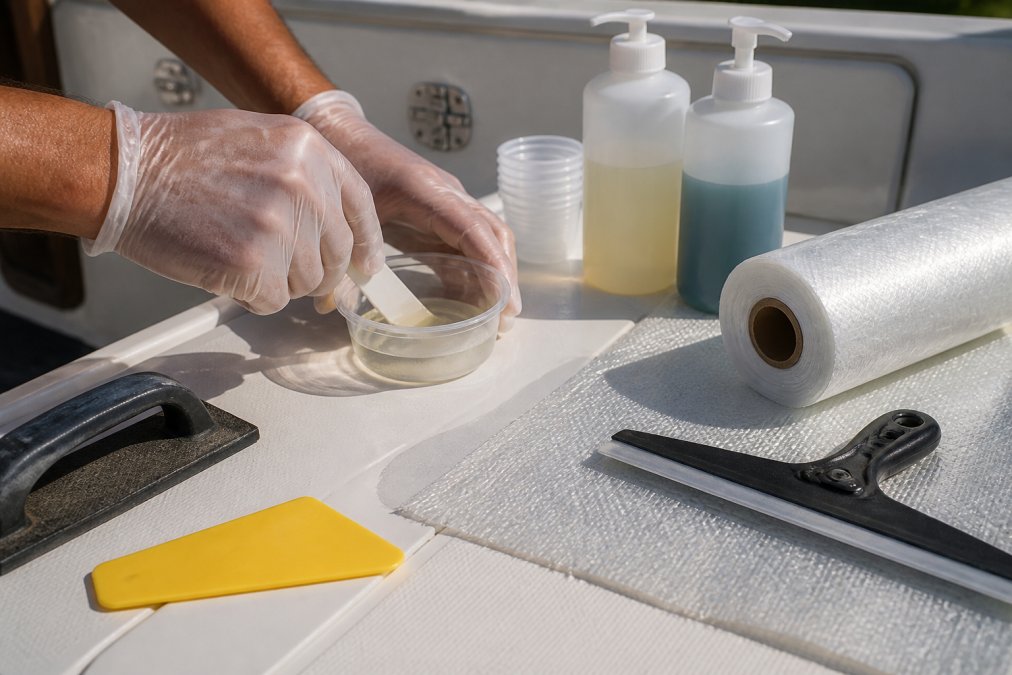
- Best for fiberglass work: A complete epoxy repair kit with spreaders and gloves
- Best for corrosion prevention: Dielectric grease and a waterproof tool bag
| Tool Category | Must-Have Item | Core Job |
|---|---|---|
| Electrical | Digital multimeter | Trace faults and check voltage |
| Emergency | Self-fusing silicone tape | Seal leaks fast |
| Fiberglass | Epoxy repair kit | Fix cracks and blisters |
| Corrosion care | Dielectric grease | Protect terminals and connections |
Marine Electrical Repair Tools Every Boat Needs
A digital multimeter is the single most important electrical tool on any boat. It measures voltage, resistance, and continuity, which lets you trace a fault before it strands you offshore. But most guides stop at "buy a multimeter" and never explain how to use one, which is why so many boat owners end up replacing parts that were never broken.

The Core Electrical Kit
- Digital multimeter with a DC voltage range, continuity beeper, and clamp or inline ammeter capability
- Wire crimper for secure, corrosion-resistant connections
- Voltage tester for quick checks at the panel
- Terminal puller to remove stubborn battery connections
- Needle-nose pliers for tight spaces behind the dash
- Jumper cables for emergency starts
- Dielectric grease to seal every connection against moisture
- Heat-shrink tubing and a heat gun or lighter for waterproof splices
- Spare ATC/ATO blade fuses in the ratings your panel actually uses
How to Actually Use a Multimeter on a Boat
A marine electrical fault usually shows up as one of three symptoms: nothing works, something works intermittently, or a breaker keeps tripping. Each points to a different multimeter test.
Dead circuit (nothing works). Set the meter to DC volts. Put the black probe on a known good ground (the engine block or a clean battery negative) and the red probe on the positive terminal of the dead device.
Why Marine Electrical Is Different
Automotive wiring assumes a dry, vibration-damped environment. A boat gives you salt spray, constant flex, and a grounded hull or bonded system that can turn a stray positive lead into a corrosion engine. That's why marine-grade wire is tinned copper (not bare copper), why crimps should be adhesive-lined heat-shrink rather than plain vinyl, and why every ground connection deserves the same attention as the positive side.
Preventing Rust on Marine Tools: Storage and Care
Preventing rust on marine tools comes down to three habits: dry them, coat them, and store them sealed. Salt air attacks steel fast, and a rusty wrench is a liability when you need it most. But the reason most tool kits fail isn't the tools you use often, it's the ones you don't.
Why Marine Corrosion Is Different
Salt doesn't just sit on steel; it pulls moisture out of the air and holds it against the surface in a microscopic brine film. That film is an electrolyte, and once it bridges two dissimilar metals, a stainless fastener threaded into an aluminum housing, a chrome-plated wrench resting against a carbon-steel socket, you've built a galvanic cell. The less noble metal gives up electrons and pits.
The Three Habits, Done Properly
Dry. Wipe every tool with a dry cloth after use, especially anything that touched saltwater. A microfiber towel lives in the tool bag for exactly this. Don't skip the handles and the joints, that's where saltwater hides.
The Tools That Rust First
The tools most at risk are the ones you overlook: hex keys, vice grips, spare fasteners sitting in an open tray, and anything with a chrome-vanadium finish that's been scratched. Chrome is a coating, not a material, once it's nicked, the carbon steel underneath is exposed and will pit. The same goes for any tool with a black oxide finish, which is porous by design.
What to Look For in Marine Tools
When you're buying replacements, prioritize:
- Stainless steel (316 where possible) for anything that will live in a wet locker
- Titanium-nitride or black-oxide-coated cutting edges, which resist pitting better than bare high-carbon steel
- Forged, not stamped, construction for wrenches and pliers, forged tools have fewer grain boundaries to start a corrosion pit
- Rubber or composite handles that won't absorb saltwater like wood or foam
A Maintenance Schedule That Actually Works
Tie tool care to a routine you already have. Wipe-down happens after every trip. Oil and inspection happen monthly, alongside the electrical checks. Desiccant refresh and a full kit audit happen at the start and end of the season. The point isn't perfection, it's catching the first bloom of rust before it becomes a seized fastener on a rough day.
WEST SYSTEM Fiberglass Boat Repair and →
Your DIY Boat Maintenance Checklist
A DIY boat maintenance checklist keeps small issues from becoming expensive ones. Run through it before every trip and again at the end of the season.
Before every trip:
- Check battery terminals for corrosion and tightness
- Test the bilge pump and float switch
- Inspect fuel lines and connections for cracks
- Confirm navigation lights and horn work
Monthly:
- Test the multimeter against a known voltage source
- Lubricate moving hardware and hinges
- Inspect the propeller and shaft for damage
Seasonal:
- Change the engine oil and filters
- Inspect the hull for blisters and cracks
- Re-grease all electrical connections
Fiberglass Repair Tools and Materials
Fiberglass damage is the most common structural repair a boat owner faces, and the right kit makes it manageable. Cracks, holes, gel coat blisters, and delaminated panels all follow similar repair steps.
How to Build a Boat Repair Tools Kit by Boat Type
The right boat repair tools kit depends on your vessel, not a universal list. A pontoon owner and an offshore center console owner face different failure points, and building around those differences saves space and weight.

Conclusion
Building the right essential boat repair tools list takes planning, but the payoff is fewer breakdowns and lower repair bills. Whether you are sealing a leak with self-fusing silicone tape or bonding a fitting with G/Flex epoxy, having the correct tools on board turns a potential disaster into a routine fix.
Frequently Asked Questions
What are the best tools for boat mechanics?
A core set includes a marine-grade adjustable wrench, socket set, needle-nose pliers, vice grips, hex keys, and a torque wrench for engine work. For electrical systems, add a multimeter, wire crimper, and voltage tester. Cordless power tools and a multimeter are among the most-used items. Specialized tools like a propeller wrench and spark plug socket make engine maintenance easier. First Choice Marine carries many of these essentials, and you can build your kit based on your boat's systems.
How do you prevent tools from rusting on a boat?
Preventing rust on marine tools starts with choosing corrosion-resistant materials like stainless steel where possible. After each use, wipe tools dry and apply a light coat of penetrating oil or dielectric grease to metal surfaces. Store tools in waterproof storage cases with silica gel packs to absorb moisture. Avoid leaving tools in open bilges or damp compartments. Regular inspection and re-oiling after exposure to saltwater will extend tool life significantly.
What basic tools should be in a marine emergency kit?
A marine emergency kit should include duct tape, self-fusing silicone tape, a utility knife, adjustable wrench, vice grips, screwdrivers, and a headlamp. For electrical emergencies, add a voltage tester and spare fuses. A tow line and flare gun are essential for signaling and towing. Keep the kit in a waterproof bag or box. This compact set handles common breakdowns like loose fittings, temporary hose repairs, and electrical faults until you can reach port.
Should you use stainless steel or chrome tools on a boat?
Stainless steel is generally preferred for marine environments because it resists corrosion better than chrome-plated tools, which can chip and rust underneath. However, not all stainless steel is equal; 316-grade offers superior saltwater resistance. For tools that will be exposed to moisture regularly, invest in marine-grade stainless steel. Chrome tools can work if kept dry and oiled, but they require more maintenance to prevent rust.
What electrical repair tools are essential for marine systems?
Essential marine electrical repair tools include a digital multimeter for testing voltage and continuity, a wire crimper for making secure connections, a voltage tester, and a terminal puller for battery work. Dielectric grease helps protect connections from corrosion. These tools let you troubleshoot common issues like corroded terminals, faulty wiring, and bilge pump failures. First Choice Marine offers a range of electrical solutions to support these repairs.
