


Table of Contents
- Why 2026 Is the Year to Upgrade Marine Electronics on Older Boats
- Quick Comparison: Best Marine Electronics for Older Boats
- NMEA 2000 Network Installation for Older Boats
- Best Fishfinder Electronics for 2026
- Upgrading Boat Electrical Systems for Modern Loads
- Installation Considerations for Older Hulls
- Frequently Asked Questions
Last Updated: September 25, 2026
Why 2026 Is the Year to Upgrade Marine Electronics on Older Boats
The global marine electronics market is projected to reach $7.4 billion in 2026, up from $7.0 billion in 2025, according to Grand View Research's marine electronics market analysis. That growth is being driven by boat owners doing exactly what you're considering: retrofitting older hulls with modern navigation and fishfinding gear rather than buying new.
Quick Comparison: Best Marine Electronics for Older Boats
The fastest way to narrow your options is to match the unit to your boat's existing network and available dash space. Here's how the leading 2026 units compare.
| Unit | Price | Network | Best For |
|---|---|---|---|
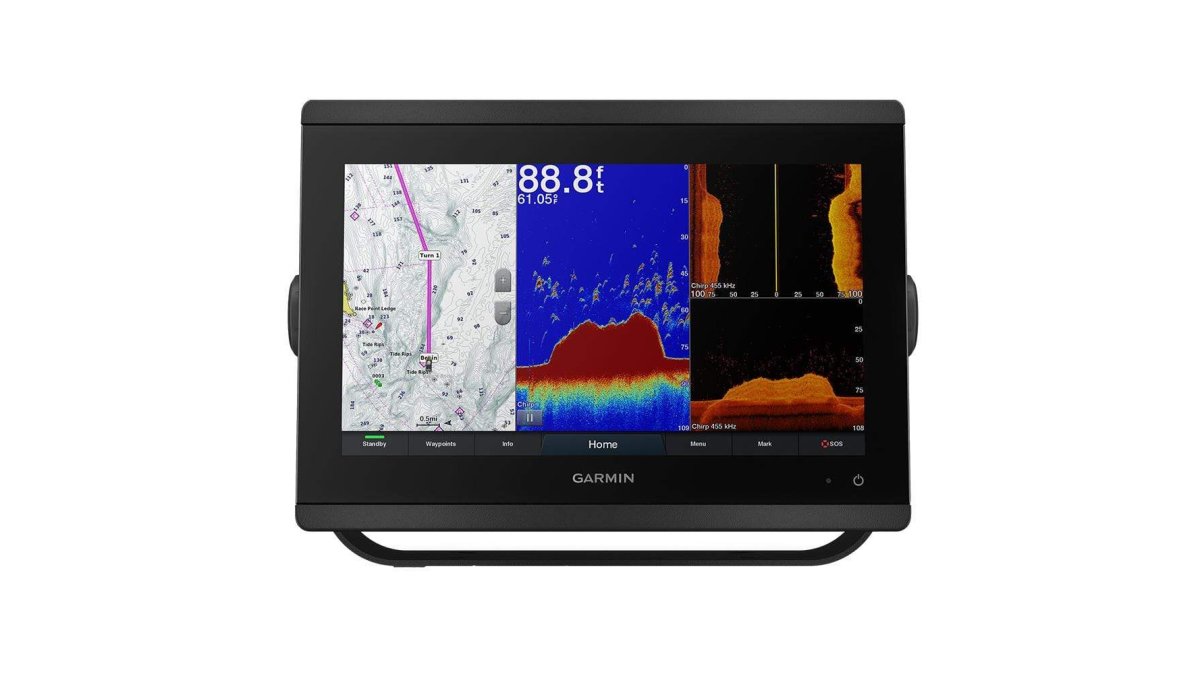
| Garmin GPSMAP8412xsv 12" | $3,359.99 | NMEA 2000, Garmin Marine Network | Full sonar suite on one screen |
| Simrad NSS12 EVO3S | $3,699.00 | NMEA 2000, Ethernet | Split-screen charting and radar |
| Veratron VMH-35 Gauge | $445.86 | NMEA 2000 gateway | Analog engine refits |
| Digital Yacht NavLink 2 | $296.15 | NMEA to Wi-Fi | Tablets as secondary displays |
NMEA 2000 Network Installation for Older Boats
NMEA 2000 is the backbone that lets a chartplotter, autopilot, engine gauge, and VHF radio share data over one cable. If your boat predates the standard, adding a backbone is the first job, not an afterthought.

Backbone Wiring and Power Drop Basics
Build the backbone as a straight line down the length of the boat, keeping drops under 6 meters each. Power the network at a single point, ideally near the helm, with a dedicated 3-amp fuse. A common mistake is powering the backbone at both ends, which corrupts data across the bus.
Best Fishfinder Electronics for 2026
The best fishfinder electronics for 2026 combine CHIRP, side-scanning, and live sonar in units that network cleanly with older systems.
CHIRP, SideVü, and Live Sonar Explained
CHIRP sends a swept range of frequencies instead of a single pulse, which sharpens target separation in deep water. SideVü scans outward to either side of the hull, useful for finding structure before you're on top of it. Live sonar shows fish movement in real time.
Upgrading Boat Electrical Systems for Modern Loads
Modern electronics draw more current than the systems they replace, and voltage stability is where retrofits succeed or fail. On a boat built before roughly 2005, the factory wiring was sized for a VHF, a depth sounder, and a few cabin lights, not for a 12-inch multifunction display, a solid-state radar, and a live-sonar module running at once. Before you order anything, treat the electrical system as the project, not the accessory.
Start With a Load Budget, Not a Shopping List
Add up the current draw of every device you plan to run simultaneously, then compare it to what your house bank and alternator can actually deliver. A typical 12-inch MFD pulls 2-4 amps, a solid-state radar 3-6 amps, a live-sonar module 1-2 amps, and an autopilot can spike well above 10 amps under load. Run those numbers against your alternator's rated output at cruise RPM, not at idle, and against your house bank's usable amp-hours.
Voltage Drop Is the Silent Killer of Retrofits
Voltage drop is the reason a new chartplotter browns out and reboots when you hit the trim tabs. Every foot of undersized wire, every corroded terminal, and every daisy-chained ground adds resistance, and resistance turns volts into heat instead of data. On a 20-year-old boat, the run from the battery to the helm can easily be 20-30 feet round trip.
Charging, Storage, and Monitoring
Once the wiring is right, the charging system has to keep up. A three-stage charger or a smart alternator regulator that moves through bulk, absorption, and float phases will recharge a house bank faster and more completely than a fixed-voltage alternator alone, which matters when you are running radar and sonar for hours. The Xantrex Freedom HF 1800 delivers 1800 watts of inverter output with three-stage charging and automatic transfer, so your batteries recharge safely while you run small appliances.
When to Bring In a Marine Electrician
Replacing a fuse holder or running a new drop cable is well within reach for a careful DIYer. Rewiring a main distribution panel, replacing a shore-power inlet, or diagnosing a persistent ground fault is not. The dividing line is simple: if the work involves the boat's primary DC distribution, shore power, or anything that could start a fire or sink the boat, hire an ABYC-certified technician.
Installation Considerations for Older Hulls
Space constraints and sensor compatibility decide more retrofits than budget does. No competitor guide walks you through this honestly, so here is the part most articles skip: on a boat older than about 20 years, the installation is the project, and the electronics are the easy part.
Measuring Console Space Before You Order
A 12-inch display needs roughly 13 inches of width and 9 inches of height of clear mounting surface, plus several inches behind the panel for cable bends and connector clearance. Older consoles were built around 7- to 9-inch screens, so the cutout you have is almost certainly too small and the dash depth almost certainly too shallow.
Three workable solutions, in order of cost:
- Flush-mount adapter plates. Most major manufacturers sell trim bezels and adapter plates that let a larger display cover an existing smaller cutout. This is the cleanest result and the least fabrication.
- Custom starboard or aluminum panels. A local plastics shop or a patient DIYer can cut a 1/2-inch King StarBoard panel to overlay the old dash, giving you a fresh surface sized for the new display. Seal every fastener and edge; starboard is not structural.
- RAM mounts and articulating arms. When there is simply no dash real estate, a heavy-duty RAM or similar mount on the console top or a helm pod keeps the display visible without cutting anything. This is the reversible option and the one to choose if you may sell the boat.
Can You Keep Your Old Transducer?
This is the question every legacy-boat owner asks, and the honest answer is: sometimes, but rarely without help.
Before buying a new transducer, check three things:
- Connector type and pin count. Photograph the plug and match it against the manufacturer's compatibility chart.
- Frequency and power rating. A modern 1 kW CHIRP display can usually drive an older 600 W transducer, but you will not get CHIRP performance, you will get conventional sonar.
- Hull condition at the existing through-hull. If the old transducer is bedded in cored hull material, removing it can expose wet core. This is the moment to involve a professional.
Legacy Sensors and NMEA 0183 Bridging
Older instruments, depth sounders, wind sensors, older GPS pucks, typically speak NMEA 0183, a one-way serial protocol, rather than NMEA 2000. You cannot simply splice the two together. You need a gateway or multiplexer that translates 0183 sentences into 2000 PGNs, and vice versa if you want old instruments to read new data.
DIY vs. Professional: Where the Line Actually Sits
Most retrofits split cleanly into two piles.
A careful DIYer can usually handle:
- Mounting a display on an adapter plate or RAM mount
- Running new drop cables to a properly installed NMEA 2000 backbone
- Installing a transom-mount transducer with a proper bracket and sealant
- Connecting a VHF radio to an existing antenna and power feed
Bring in a professional for:
- Any new through-hull penetration, especially in cored or foam-filled hulls
- Cutting a larger dash opening in a structural console or one with wiring and plumbing behind it
- Main DC distribution, shore power, and bonding system work
- Radar installation, which requires a stable, level mounting surface and careful cable routing through a mast or arch
Garmin OnBoard technology is now compatible with any vessel equipped with an engine cutoff switch and a compatible Garmin chartplotter, per The Fisherman's 2026 Marine Electronics Buyers' Guide, meeting current federal requirements for engine cutoff compliance.
Frequently Asked Questions
How do I determine if my older boat's electrical system can handle new marine electronics?
Start by checking your battery bank's age and amp-hour rating, then measure voltage at the helm with everything running. Modern chartplotters and sonar draw more current than legacy gear, so if voltage drops below 12.0V under load, add a dedicated house battery or upgrade your charger. The Xantrex Freedom HF 1800 inverter/charger includes three-stage charging and battery protection to stabilize power for sensitive electronics on older boats.
What are the compatibility challenges when upgrading older boat electronics?
Older boats often use NMEA 0183 or proprietary data buses, while new gear runs on NMEA 2000. You may need a gateway or multiplexer to bridge the two. The Digital Yacht NavLink 2 NMEA to Wi-Fi Gateway converts legacy NMEA data for tablets and phones.
Is it better to replace marine electronics one by one or as a full suite?
For older boats, a phased approach usually works better. Replace the chartplotter first if it is the weakest link, then add sonar, radar, and autopilot as budget allows. NMEA 2000 networking lets you mix brands and add components over time. The Garmin GPSMAP8412xsv supports multiple displays, so you can build a full suite gradually without ripping out working gear.
How do I integrate NMEA 2000 networks into an older vessel?
Run a single backbone cable from bow to helm with 3-foot drop cables to each device, terminating both ends with 120-ohm resistors. Power the backbone at one point only, ideally near the helm. The Veratron VMH-35 multifunction gauge has an embedded NMEA 2000 gateway that distributes fuel, trim, and tachometer data to your chartplotter, making it ideal for refitting older engines.
Who makes the best marine electronics for older boats?
Garmin, Simrad, and Raymarine all make gear that retrofits well onto legacy vessels.
What are the essential electronics for an older boat?
At minimum, you need a GPS chartplotter, a depth sounder or fishfinder, a VHF radio with DSC, and a reliable power source. Add AIS if you run in busy channels. A fixed-mount VHF like the Standard Horizon GX1410B gives you Class D DSC and NOAA weather alerts. Pair it with an AIS transceiver and a modern chartplotter, and you cover navigation, communication, and collision avoidance on most older hulls.
Will modern electronics work with my older engine and gauges?
Yes, with the right adapter. The Veratron VMH-35 has analog inputs plus an NMEA 2000 gateway, so it reads fuel, trim, and tachometer signals from older engines and shares them with modern chartplotters. That means you keep your existing senders and wiring while gaining digital display and networking. Check that your engine's sender outputs match the gauge's input range before ordering.
How much should I budget for a full marine electronics upgrade on an older boat?
A phased upgrade for a 20-30 foot older boat typically runs $2,000 to $8,000 depending on how much you replace. A Garmin GPSMAP8412xsv chartplotter/sonar combo is $3,359.99, the Simrad NSS12 EVO3S is $3,699.00, and a Standard Horizon VHF is $198.09. Add trim tabs at $1,006.98 and an autopilot at $4,399.99 if you want full automation. Start with the display and sonar, then expand.
Upgrading an older boat's electronics is a wiring and compatibility puzzle before it's a shopping decision. First Choice Marine stocks the chartplotters, NMEA 2000 components, and electrical solutions that fit legacy vessels, with free shipping and over a century of marine hardware experience behind every order. Sign in to your account and start with the network backbone, then build outward.
