


Boat stands do a simple job, but there’s real risk when owners choose the wrong ones or use them badly. Whether it’s a fishing boat, a family runabout or a sailboat, safe support matters during winter storage, bottom work and repairs. Get it wrong, and a loose stand, bad spacing or a weak support point can lead to hull damage, unstable storage or even a dangerous fall.
A careful boat stands review should look beyond price. The best boat stands support the hull properly, adjust to the boat’s shape and help keep everything stable while the main weight stays where it belongs, on the keel or on proper blocking. This guide explains what recreational and commercial boaters need to know about marine boat stands, boat storage stands, boat repair stands and boat stand safety. It covers how many stands boats may need, which types work with different hulls, the mistakes owners should avoid and the features that matter most before buying. For a stronger setup plan, see Boat Stands Explained: Safe Setup, Sizing, and Storage.
Why Proper Support Matters More Than Many Owners Think
Boat ownership is still huge, even in a softer market. In 2025, new U.S. powerboat sales were estimated at 215,000 to 225,000 units, while pre-owned boat sales in 2024 reached 858,798 units or 78.3% of all transactions. That’s a lot of boats.
Many owners are storing and fixing older boats, and those boats may need extra care at haul-out time. At the same time, the boat storage facility market is estimated at $7.4 billion in 2025 and projected to grow sharply over the next decade. That’s bigger than some people expect.
| Metric | Value | Why It Matters |
|---|---|---|
| New U.S. powerboat sales, 2025 | 215,000-225,000 | Large active owner base still needs storage gear |
| Pre-owned U.S. boat sales, 2024 | 858,798 | Older boats often need repair and support work |
| Share of used-boat transactions | 78.3% | Many owners need practical maintenance solutions |
| Boat storage market, 2025 | $7.4 billion | Off-water storage is a growing need |
Those numbers help explain why adjustable boat stands aren’t a niche product. They’re basic safety equipment. According to ABYC-related reporting, boats built to ABYC standards are 43% to 47% less likely to be involved in some accident categories. That doesn’t measure stand failures directly. Still, it points to the same idea: standard, purpose-built marine equipment generally beats improvised solutions when owners store or work on a boat.
The US recreational boating market enters 2026 in a relatively stable position, supported by steady boating activity and continued demand across more accessible segments.
Don’t use lumber piles, car jack stands, or random shop supports. They’re not made for this. Marine boat stands are designed for hull shape, adjustability, and corrosion resistance, and that’s a big reason they remain the safer choice.
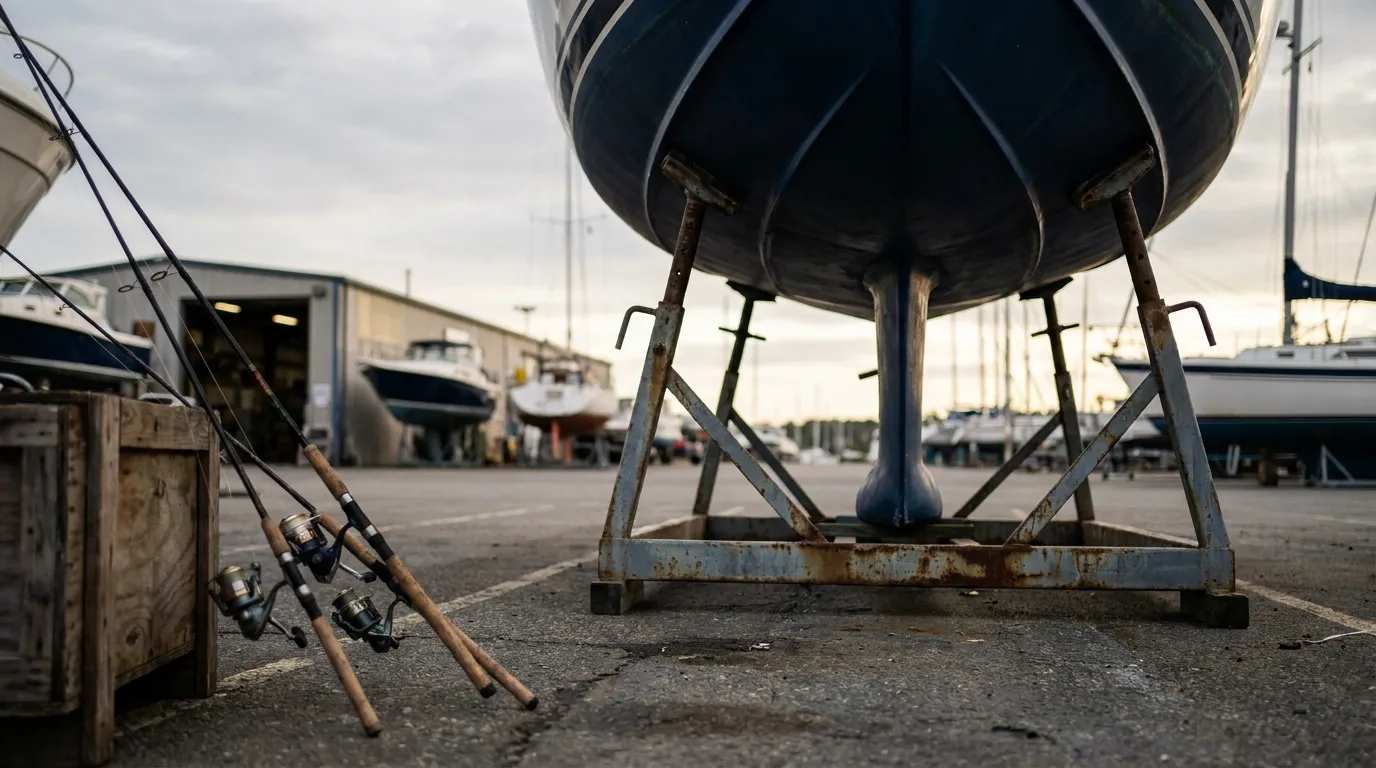
What to Look for in the Best Boat Stands
The best boat stands aren’t always the heaviest or most expensive. They need to fit the boat, the job, and where the boat will be stored. Start with the hull type. Powerboats, sailboats, and deep-V boats may need different support layouts. They’re not all built the same. Sailboat stands usually have taller geometry, and they may use a V-head at the bow. Some powerboats, though, can use standard side stands with strong keel support underneath.
Material matters too. Most quality boat storage stands are made from steel. Some manufacturers paint them, while others use hot-dipped galvanized finishes, which hold up better against corrosion in wet or salty yards. Pads should adjust smoothly and sit firmly against the hull without creating sharp pressure points. Swivel tops help the stand meet the hull at a better angle, which means less stress on that area.
A good buying checklist includes:
Adjustability
The screw mechanism should turn easily and give your hull and work area a nice height range.
Pad design
Wood or composite contact pads spread pressure more gently than bare metal points. They’re easier on surfaces.
Finish and durability
For long-term outdoor use, galvanized stands are a good pick.
Stackability and storage
If you manage several boats or work in a tight yard, stackable stands save space. Really handy.
Fit for the task
Boat repair stands may need better access under the hull. Winter boat storage stands, though, may care more about long-term stability. Different job, different focus.
A simple rule helps here: buy stands made for boats, not ones built for general lifting. For fiberglass work, bottom paint or through-hull service, the right support also makes the work easier and safer. Keep that in mind. If hull repair is part of the project, Marine Epoxy for Boat Repairs: When to Use It, Where It Fails, and How to Get Long-Lasting Results is a helpful next read.
Safe Setup Basics for Boat Stand Storage and Repair
Buying strong stands is only half the job. Placement matters just as much, because best-practice guidance says the boat’s main weight should rest on the keel, or another primary structural load path. Side stands are there to steady and balance the hull. That’s it. They should not support the whole boat on their own.
A few practical setup figures stand out. Boating guidance says to use at least two sets of keel support per boat, and it also says at least four boat stands should be used for powerboats. Another common rule is one pair of stands for every 8 to 10 feet of boat length overall. Short, helpful numbers. Practical Sailor also points to ABYC guidance saying stands should be spaced no more than 10 feet apart.
At least four boat stands should be used for powerboats.
Here is a simple setup process:
Step 1: Start with level ground
Hard, stable ground is key. Soft soil can make stands sink and move.
Step 2: Block the keel correctly
Put proper blocks under strong structural points. If the hull design allows, let the keel carry the main load.
Step 3: Place side stands at structural areas
Put them near bulkheads and the transom, not on random thin hull panels.
Step 4: Adjust evenly
Bring the pads into firm contact. Don’t tighten one stand too far or leave another loose.
Step 5: Recheck after weather changes
Freeze-thaw cycles, rain, wind, and snow can all change pressure and balance.
Never tie tarps or covers to the stands. Wind load can pull them out of place and throw the whole setup off. For more setup details and spacing tips, read Boat Stands Explained: Safe Hull Support and Setup Tips.
Review by Boat Type: Powerboats, Sailboats, and DIY Yard Use
Marine boat stands do not work the same for every kind of boat. Powerboats can do fine with standard side stands and solid keel blocking, but the exact setup still depends on size, shape, and how the load is supported. A 20-foot center console may use the common minimum of four stands. Longer boats need more. A 30-foot boat, for example, may need three pairs of side stands depending on hull shape and support design.
Sailboat stands need a more specific setup. Their hulls tend to be taller and sometimes narrower at the bottom, so they may also need different support at the bow. Some manufacturer guidance calls for at least five stands on certain sailboats, with four swivel-top stands and one V-head bow stand. Deep-V powerboats can also benefit from that setup, especially when the forward shape is steep.
For DIY owners, the safest move is to let a yard handle the first setup, then do maintenance only after the boat is already secure. That matters even more with used boats, where unknown hull repairs or wet core issues may already be hiding. One common mistake shows up fast: owners use too few stands to save money or space. Others place pads where they seem convenient instead of where the structure is strongest.
The warning is simple and worth repeating:
If they are not so placed, hull damage may result.
In real use, the best boat stands review comes down to fit, adjustment, and how the stand works as part of a full support system. The nicest finish does not matter much if the stand does not match the hull.
Trends Shaping Modern Boat Storage Stands
The market for boat storage stands is getting more specialized. Owners want adjustable designs, tougher coatings, and options built for specific hull types instead of one-size-fits-all support. It also reflects the broader storage market, which keeps growing as more owners pick off-water storage during winter or storm season.
Safety procedures are getting more attention too. With 3,887 boating incidents, 556 fatalities, and 2,170 injuries reported in 2024, boaters are hearing more about risk management across every part of ownership, not just what happens on the water. That includes yard safety, repair access, and proper seasonal layup as well.
Trusted marine retailers matter here too. A resource like First Choice Marine helps owners look past a single product and focus on the full maintenance picture. That includes repair supplies, engine care, and storage prep, which can happen at the same time.
Common Buying Mistakes and Smart Boat Stand Ownership Tips
A lot of stand problems start before setup day. Owners choose stands that are too small, buy too few, or pick generic options that don’t really fit the job. It’s an easy mistake. Some also miss finish quality, even though rust can cut stand life short in marine settings.
Then there’s the full job list. Easy to miss. If the plan includes bottom paint, lower-unit work, steering service, or cleaning, the stand layout has to leave enough access while still keeping good stability.
Keep those points in mind before you buy:
Match the stand to the hull
Don’t assume powerboat and sailboat stands are interchangeable. They’re made for different hulls.
Plan for weather
Outdoor storage needs more checks. It may need stronger coatings.
Budget for the whole support system
Keel blocks, pads, and proper spacing matter just as much as the stand itself.
Reinspect often
After storms, temperature swings, or any time the boat gets moved, check it again. Don’t skip that step.
If seasonal work also includes cosmetic upkeep, Marine Paint Supplies Reviewed: What You Actually Need can help with a smarter off-season plan.
Frequently Asked Questions
How many boat stands do I need for my boat?
A common guideline is at least four stands for many powerboats, with one pair of stands for every 8 to 10 feet of boat length overall. The exact number depends on hull shape, weight, and how the keel or blocking carries the load. Longer boats and sailboats often need more.
Are adjustable boat stands better than fixed supports?
Yes, in most cases. Adjustable boat stands are easier to fit to different hull shapes and heights, which helps create even contact and better balance. They are also more practical for repair work and seasonal storage changes.
Can boat stands hold the full weight of the boat?
Usually, no. Best practice is for the keel or other main structural support points to carry most of the load, while the stands stabilize the boat from the sides. Using stands as the only support can increase the risk of hull stress or tipping.
What is the difference between sailboat stands and powerboat stands?
Sailboat stands are often taller and may use different head styles, such as V-head bow supports, to fit deeper hull shapes. Powerboats often rely on standard side stands with proper keel blocking. Deep-V hulls can sometimes need sailboat-style support at the bow too.
Where can I find other marine maintenance gear that pairs well with boat storage prep?
Many owners handle storage and maintenance together, so it helps to shop from a marine-focused source with repair, engine care, and accessory products in one place. First Choice Marine is one example of a retailer that fits that broader maintenance approach.
Should DIY boat owners set up their own boat stands?
Some can, but many should be cautious. If you are new to haul-outs, working with a heavy boat, or unsure where the structural support points are, a professional yard setup is the safer choice. After that, DIY owners can often handle inspections, cleaning, and lighter repair tasks more confidently.
The Bottom Line on Safe Boat Stand Support
Any review of strong boat stands comes back to one thing: put safety ahead of saving money. The best boat stands are made for the job, adjustable, and matched to your hull type. Just as important, good marine boat stands should be part of a full support system, with proper keel blocking, correct spacing, and regular checks while the boat is in storage.
If only a few points stick, make them these: use enough stands, support the boat at structural points, never trust improvised gear, and inspect the setup after weather changes. For powerboats, four stands may be only the starting point, not the whole setup. Sailboats and deep-V hulls need more specialized support.
Boat storage stands and boat repair stands aren’t glamorous gear, but they protect your hull, your project, and the people working around the boat. Take time to size the system correctly. When needed, ask for professional help. Treat boat stand safety as a basic part of good boat ownership, and you can avoid damage, save money, and make repair season a lot less stressful.
