


A good anchor gets most of the attention, but anchor rodes do just as much work. If the rode is the wrong type, too short, or badly worn, even a strong anchor can let go once wind, current, or waves pick up, and that can happen fast. It matters just as much on a small fishing boat as it does on a family cruiser, a sailboat, or a hard-working commercial vessel.
The rode connects the boat to the anchor, and that link affects holding power, shock absorption, chafe resistance, storage, and even the way the boat sits in the water. That makes a real difference in actual use. The right rode helps make anchoring safer and easier, while the wrong one can lead to dragging, damaged gear, or a long, uneasy night at anchor.
This guide covers the main types of anchor rodes, where each one usually works best, how much scope to use, and mistakes worth avoiding. It also looks at newer lightweight materials, routine care, and setup tips that can help boat owners make better choices. If an anchoring setup is being built from scratch or updated, this article gives a practical place to start.
What Anchor Rodes Do and Why They Matter
An anchor rode is the full connection between the anchor and the boat. It may be all rope, all chain, or a mix of both. Its basic job is to hold the boat in place, but out on the water it also has to absorb shock, hold up against abrasion, and help keep the pull on the anchor at a useful angle, which many boaters underestimate.
For many boaters, scope is one of the main rules to get right. A common recommendation is a 7:1 scope. That means using 7 feet of rode for every 1 foot of water depth. That depth should include the distance from the waterline to the bow chock, not just the depth shown on the sounder. More scope usually gives the anchor a better chance of staying set, and it is easy to get that calculation wrong if you rush.
| Anchor Rode Factor | Guideline or Finding | Why It Matters |
|---|---|---|
| Scope | 7:1 in normal conditions | Helps improve holding power |
| Anchor-loss claims | 96 claims, 5.2% of all claims in one Skuld summary | Shows anchoring errors can be costly |
| Fortress chain guidance | 6 ft of chain for 25 ft of water or less | Adds chafe protection and better anchor angle |
That table gives a practical view of why rode choice deserves attention. Claims data summarized by BHHC Safety Center from Skuld reported 96 direct claims related to anchor loss and removal. That accounted for 5.2% of all claims in the period reviewed. For recreational boaters, that is a clear reminder to treat anchoring as part of the boat’s safety system, not just a handy way to stop. Line material was covered in this guide to Anchor Lines: How to Choose the Right One for Your Boat. It also connects directly to understanding the rode as a whole, since the parts work together.
Main Types of Anchor Rodes Compared
All-rope rode
An all-rope rode is light, easy to handle, and usually the cheapest option. It’s often used on small boats, skiffs, jon boats, and boats kept in calm, protected water, which is where it works best. It’s a practical choice for that kind of use.
Nylon is the most common rope material because it stretches under load. That stretch helps absorb shock from waves and wake, which is helpful when the water gets choppy.
The main drawback is chafe. Rope does not hold up well on rough bottoms, around rocks or coral, or after long periods of rubbing. In those conditions, rope alone can wear out fast. An all-rope rode works best for short stops, lunch anchoring, and fair-weather use.
Rope-and-chain rode
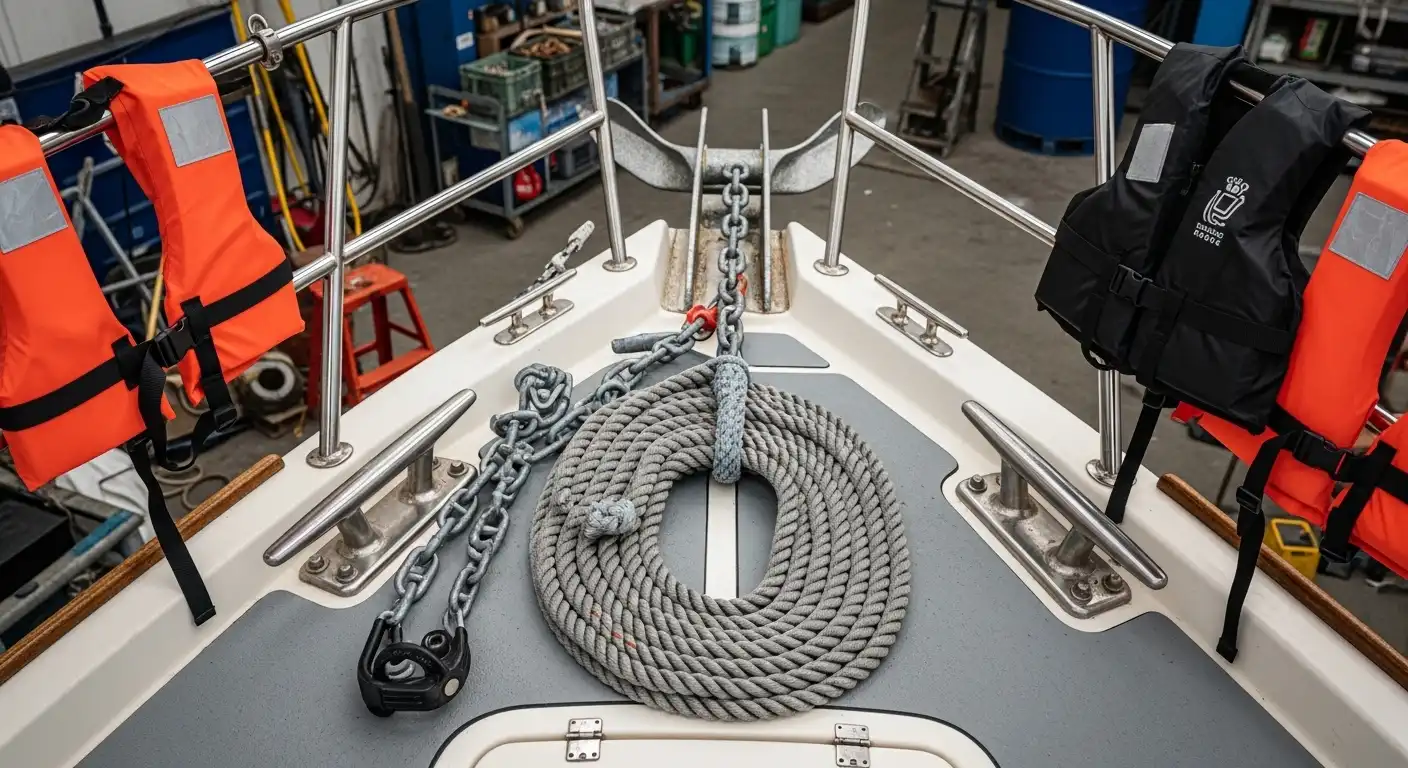
For many small and midsize recreational boats, this is a good all-around setup and a practical one. West Marine’s advisory guidance says a rope-and-chain rode gives a nice balance of weight, cost, and performance. The chain section helps the anchor pull low and flat, which helps holding. Behind it, the nylon rope adds stretch and helps soften shock loads, which is especially helpful in chop.
Fortress Anchors recommends three-strand nylon line with 6 feet of chain for anchoring in 25 feet of water or less, then 6 more feet of chain for every additional 25 feet of water depth. For a lot of boaters, that’s a sensible place to start and easy to handle.
All-chain rode
All-chain rode is heavier and tougher, and it works especially well where chafe becomes a real problem quickly. It’s a good choice, common on larger boats, boats with windlasses, and some commercial setups too. It handles abrasion well and helps keep a low pull angle on the anchor. The tradeoff is cost and weight, especially on the bow, which you’ll notice.
How to Choose the Right Rode for Your Boat
The best anchor rode depends on how you use your boat, where you anchor, and the deck gear already on board, since that can make a big difference. A small freshwater fishing boat needs something different than an offshore cruiser or a work boat. Start by asking a couple of simple questions.
Where do you anchor most?
If the bottom is mud or sand, which is pretty common, a rope-and-chain setup usually works for most needs, even in protected water. Around rock, shell, coral, or places with stronger current, using more chain can make more sense. For short stops in calm weather, with nothing rough, all-rope can still work too. Sometimes.
Do you have a windlass?
If the boat has a windlass, rode compatibility matters. Not every chain size or rope splice will move cleanly through the windlass gypsy, and that detail is easy to miss. On boats with a windlass, an all-chain rode often works well. Many rope-and-chain combo rodes work well too, as long as they’re sized correctly for the setup and matched to the gypsy. Still planning the system? We covered that here: Anchor Winches for Boats: How to Size, Wire, and Choose the Right System for Safer Anchoring in 2026.
How much bow weight can your boat handle?
On smaller boats, too much chain up front can throw off trim. Practical Sailor found that lighter rode setups can help performance. In one shoreside test using a Spade anchor, cutting rode diameter by a factor of 4 increased ultimate holding capacity by 25%. In on-the-water testing, reducing rode diameter by a factor of 5.5 boosted diving depth by 25%. That may seem a little surprising, but it shows that a big, heavy setup is not always the best choice. Lighter gear can help, though it is not always the right answer.
A good example is a 22-foot bay boat used for fishing in tidal inlets. An all-chain rode may seem reassuring, especially on paper. But it can put more weight in the bow than the boat really needs. For everyday use, a nylon-and-chain rode may offer better balance, easier storage, and enough protection without the extra bulk.
Safe Use: Scope, Deployment, and Common Mistakes
Even the best anchor rodes can fail if they’re used poorly. The setup matters just as much as the material, and that’s easy to overlook. Start by working out your total depth: take the water depth and add the distance from the waterline up to the bow where the rode exits. Then use that number to calculate your scope.
Next, lower the anchor with control instead of letting it drop too fast. Commercial guidance says it clearly:
The running-out speed should be limited to 5-6 metres/sec. and the brake force must be used to control the speed.
That guidance was written for larger vessels, but the same idea applies on smaller boats. Let the rode out at a steady pace, back down slowly, and make sure the anchor is really set before you count on it.
A few mistakes show up again and again: too little scope, skipped chafe checks, chain and rope that do not match in size, and old line that still looks fine at first glance. Bottom type gets missed too, even though it changes how the anchor and rode work together. Mud, sand, grass, and rock all act differently. If there is any doubt about which anchor style fits the setup, that was covered in Marine Anchors: Choosing the Right Guide.
New Materials and Trends in Anchor Rodes
Most boaters still choose nylon rope with some chain, and there are good reasons for that. It’s proven, affordable, and easy to work with, especially for people who handle their own gear. At the same time, newer materials are getting more attention. High-performance fibers like UHMWPE, often called Dyneema-style rope, weigh less than chain-heavy setups and can take some weight off the bow.
On some boats, that lighter rode can improve trim and handling. It also tends to be easier to pull by hand, which is a real plus for anyone doing the job solo. Still, it’s not a simple swap for every boat. These materials cost more, feel different in use, and need hardware that fits the setup. Some boaters also find themselves missing the built-in shock absorption nylon naturally gives, unless the whole system is designed around that tradeoff.
For most owners, newer materials are worth keeping an eye on, but rope and chain still make the most practical everyday setup. It stays popular for fishing, cruising, and family boating because it’s familiar, easy to service, and works well in regular use.
Inspection, Maintenance, and Storage Tips for Anchor Rodes
In heavy-use months, your rode needs regular checks, even if it’s just a quick look. Watch for fuzzy or flattened rope, hard spots caused by heat, rust on the chain, bent links, weak shackles, bad splices, and any buildup in the locker. Salt and mud left sitting there can shorten the life of both rope and chain, so it helps to rinse and dry the gear when you can.
The first few feet above the anchor usually wear out fastest, and the section that passes through chocks or rollers also takes a lot of abuse. Those are the spots worth the closest look. Marking the rode at intervals can also make scope control easier. Many boaters use color markers, stitched tags, or chain paint made for that job.
If replacement line, chain, shackles, or windlass-related parts are on the shopping list, First Choice Marine is one example of an online marine parts retailer where boat owners can compare anchoring and maintenance gear along with other onboard systems. For DIY owners, that kind of one-stop access can make seasonal checks easier and a little faster.
Frequently Asked Questions
What is the best material for anchor rodes?
For most boaters, nylon rope is the standard because it stretches and helps absorb shock. Many setups add chain at the anchor end for abrasion resistance and a better pull angle. The best choice depends on your boat size, anchoring spot, and whether you use a windlass.
Is all-chain better than rope-and-chain?
Not always. All-chain is excellent for abrasion resistance and heavy-duty use, but it is heavier and more expensive. A rope-and-chain rode is often the better all-around option for small and midsize recreational boats.
How much chain should I use on a rope-and-chain rode?
A common guide from Fortress Anchors is 6 feet of chain for water up to 25 feet deep, then 6 more feet for each additional 25 feet of depth. Your boat size, anchor size, and bottom conditions may change that. It is a good starting point, not a hard rule for every boat.
How often should I replace an anchor rode?
There is no single schedule because wear depends on use, sun, salt, and storage. Replace it when you see serious chafe, stiff or melted rope fibers, deep rust, damaged links, or weak splices. If you anchor often, inspect the rode several times each season.
Where can I find anchor rode parts and related boating gear?
Many boat owners look for marine retailers that carry rope, chain, shackles, windlass parts, and maintenance supplies in one place. First Choice Marine is one option boaters may check when comparing anchoring gear along with engine care and onboard accessories. The key is choosing hardware that matches your boat and anchoring setup.
Can I use the same rode for every kind of anchoring?
You can, but it may not be ideal. A setup that works for a short lunch stop in a calm cove may not be the best choice for overnight anchoring or rough bottoms. Many owners use one versatile main rode, then fine-tune scope and anchoring habits based on conditions.
The Bottom Line on Safer Anchoring
Anchor rodes are more than rope or chain tossed into a locker. They’re a real part of your boat’s safety setup, even if that’s easy to miss. All-rope rodes are lighter and easier to handle. Rope-and-chain setups work well for many boaters because they give you a good mix of flexibility and strength. All-chain rodes are often a better choice for rougher conditions, larger boats, and boats with a windlass. The best option depends on where you boat, the size of your boat, how much storage space you have, and how you usually anchor.
Using enough scope matters too. Regular checks of the rode and replacing worn parts before they fail can make a real difference in holding power and in how secure the boat feels at anchor. If the setup needs an upgrade or old gear needs to be replaced, a marine equipment source like online marine parts retailer can help you compare parts that fit the system. First Choice Marine also has useful boating product categories beyond anchoring.
A good rode setup does not need to be complicated, just practical. Match it to the boat, keep it in good shape, and follow good anchoring habits for rough weather or overnight stops.
