


If you tow a boat, trailer tires matter more for safety than many people realize. Most owners don’t think about them much. They sit under the boat for weeks, sometimes months, and because you don’t see them, they’re easy to forget. The problem is that issues usually don’t build up slowly. When a trailer tire fails, it often happens quickly and with no warning. Blowouts tend to happen on busy highways during hot summer drives, which is about the worst time it could happen. For a lot of boat owners, these ignored tires end up being the weak spot in an otherwise solid safety setup. It’s an easy thing to miss, and knowing a few boat maintenance tips early can prevent expensive problems later.
Trailer tire problems affect fishing boats and work boats alike, so no one is off the hook. In many cases, failure has little to do with worn tread. Age and heat building up over time are the more common causes, and those are easy to overlook because the tires can still look fine. That’s what makes it tricky. The good news is that most of these problems are preventable with some basic awareness and a few simple habits, especially before a long trip.
So what actually helps? This guide keeps things simple and clear. It looks at why trailer tires age out long before the tread is gone. It also explains how load ratings and heat affect real driving. You’ll find easy checks you can do at home, no special tools needed, just a few minutes before you hit the road.
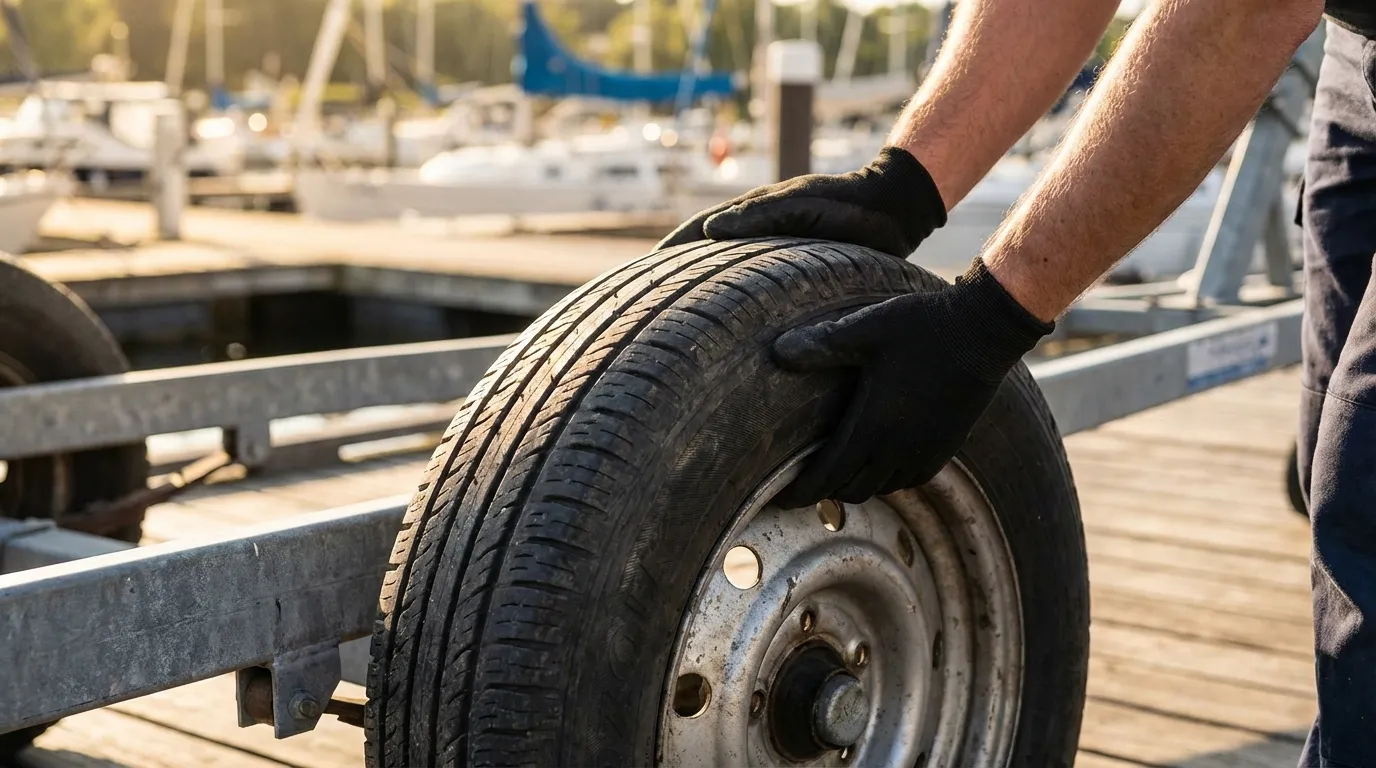
Why Load Ratings Matter More Than Tread in Boat Maintenance Tips
Load rating is one of the most confusing parts of trailer tires, especially for new owners. A lot of people focus on tread depth and assume the tire is in good shape, which is very common. In real use, trailer tires are built to carry weight first, while mileage comes second. When the load rating is too low, the tire has to work harder every mile. Over time, that extra work usually shortens how long the tire lasts. It’s an easy thing to overlook if no one explains it.
This gets harder because boat trailers carry more than just the boat itself. Fuel, batteries, coolers, fishing gear, and water all add weight, and it adds up faster than most people expect. Add a second axle or plan a long road trip, and the strain often goes up again. A tire that is rated too low flexes more as it rolls. That extra bending creates heat inside the tire, and heat is often what causes trouble.
Here is a simple look at common trailer tire load ranges used on fishing boats and utility trailers. Simple, on purpose.
| Load Range | Max Load Per Tire | Typical Use |
|---|---|---|
| C | 1,820 lbs | Small fishing boats |
| D | 2,540 lbs | Mid-size boats |
| E | 2,830 lbs | Heavier fishing boats |
| G | 4,400 lbs | Large or commercial trailers |
If your trailer tires are close to their maximum rating, some risk is likely already there. Many experts suggest leaving extra capacity instead of running right at the limit. This matters most on long summer highway drives, like towing for hours to the lake in high heat.
Dry Rot Happens Even When You Do Not Drive
Dry rot is one of the most missed reasons trailer tires fail, mostly because it doesn’t look serious at first. Many people think it only shows up on very old tires that have been driven hard for years, but that’s usually not the case. The damage often begins much sooner than people expect. Trailer tires keep aging even when a trailer sits in the driveway and never moves, which is easy to forget and often why the issue goes unnoticed.
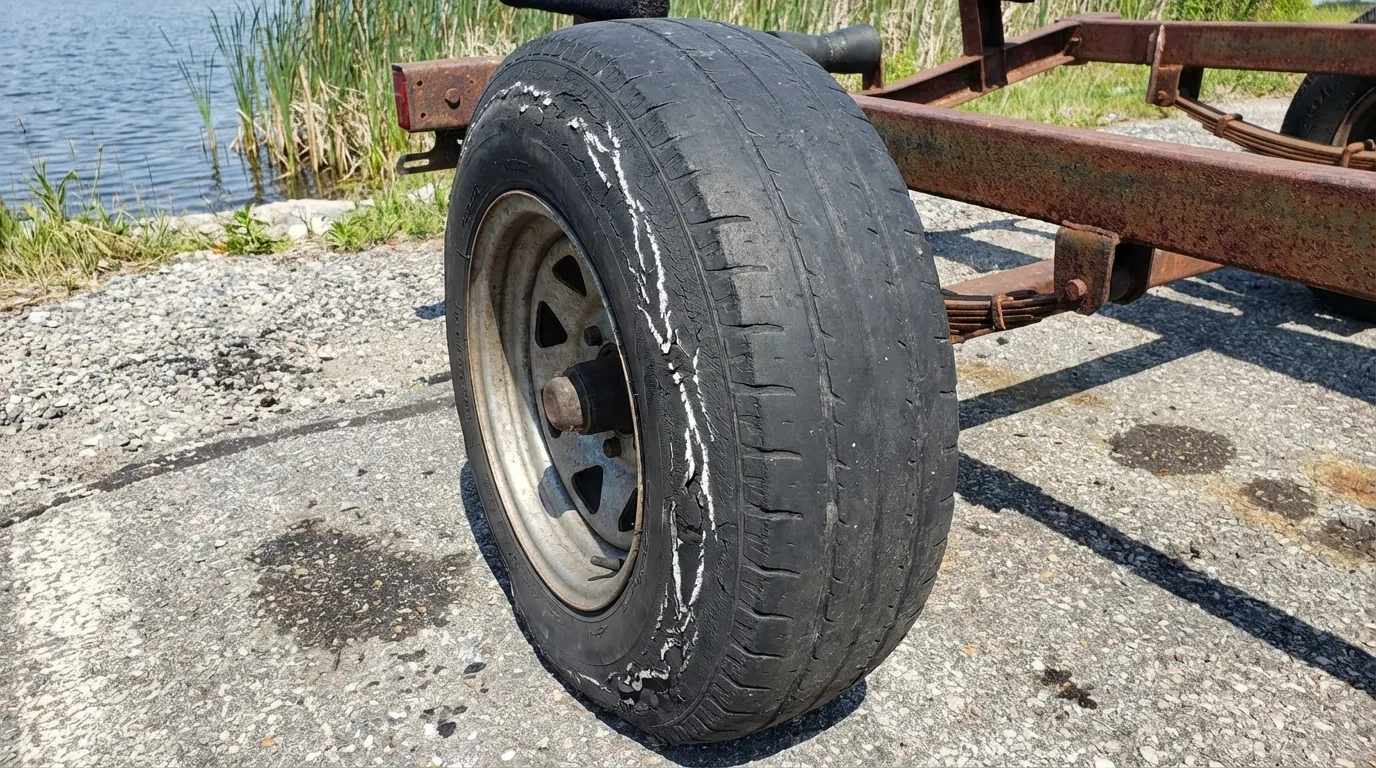
Sunlight and ozone slowly break down rubber over time, even when the trailer stays parked. Changes in temperature add more stress as tires warm up and cool down again and again, especially when stored outdoors. Small cracks often show up along the sidewalls and don’t seem like a big problem at first. Inside the tire, though, the inner layers may already be getting weaker. Some studies suggest trailer tires can lose up to one third of their strength after about three years, which matters for something that still looks fine on the outside.
This often happens with fishing boats that sit for months between trips. The tread usually looks good because the tires aren’t used much, and that’s what fools people. Aging from sun and air keeps going anyway. Many blowouts come from tires that looked fine right up until they failed.
Slowing dry rot doesn’t take much effort. Covering tires during storage really helps. Parking on wood or rubber instead of bare concrete can also help. As for cleaning, mild soap instead of harsh chemicals often makes a difference over time. Following consistent boat maintenance tips from reliable guides like Exploring Sustainable Boat Maintenance Practices for Eco-Friendly Boating also extends tire life.
Heat Build-Up: The Silent Tire Killer
Most trailer tire failures on the road come back to heat, and the tough part is that it often builds with no clear warning. Trailer tires have stiff sidewalls to carry heavy loads. That helps with stability, but it also means heat can get trapped inside. As miles add up, that hidden heat slowly weakens the tire’s internal bonds. There’s usually no noise or sign while this is happening, but once those bonds let go, a blowout can happen fast, and those are often the hardest ones to handle.
The two biggest causes are underinflation and overloading, with low tire pressure showing up more often from real-world experience. When there’s not enough air, the sidewall bends more with every rotation, creating a lot more heat than most people expect. Carrying too much weight has a similar effect. The tire has to work beyond what it was built for, and temperatures rise quickly.
Speed matters too. Many special trailer tires are rated for only 65 mph, which is easy to miss on the highway. Driving faster than that, especially in hot weather, pushes internal temperatures up fast, and tires don’t get much forgiveness there.
| Heat Cause | What Happens | Risk Level |
|---|---|---|
| Underinflation | Excess sidewall flex | High |
| Overloading | Structural stress | High |
| High speed | Rapid heat increase | Medium to High |
One simple habit that often makes the biggest difference is checking tire pressure before every trip. The correct maximum cold pressure is listed on the sidewall, unless the trailer manufacturer clearly says otherwise. Using that number each time usually pays off over long miles.
Speed Ratings and Modern Towing Reality in Boat Maintenance Tips
Speed ratings often get brushed aside because they feel outdated, and that reaction is pretty common. Many trailer tires are still stamped with a 65 mph limit, which doesn’t fit how traffic usually moves today, especially on wide-open highways. Ignoring that number can seem practical, but it doesn’t change what the tire can safely handle when you’re just trying to keep up with traffic.
So what really happens when you drive faster than the rating? Heat builds up inside the tire. Add a heavy fishing boat and hot summer pavement, and the risk can rise faster than most people expect. That’s why blowouts often happen early in a trip, sometimes before you’ve even settled into the drive.
Radial trailer tires can reduce some of that strain. They usually run cooler than older bias-ply designs, which helps in real-world towing. Many boat owners switch for that reason alone. Moving to a higher load range also helps, since the weight is spread out instead of stressing one spot.
Boats today carry more tech and batteries, which means more weight overall. Articles like Fishing Boats 2026: Smart Connectivity & Advanced Tech point out how modern fishing boats keep getting heavier as features add up, and that matches what people are seeing on the road.
Simple Inspection Steps Every Owner Can Do
Finding tire problems early usually doesn’t need special tools, which is good news for most owners. Taking a few minutes before each trip often pays off more than you’d expect. A helpful habit is checking tire pressure while the tires are still cold, since heat can throw off the numbers. A decent pressure gauge gives much better information than guessing by how the tire looks or feels, and honestly, it’s worth doing every time.
Take a moment to really look at the sidewalls, even though it’s easy to rush this step. Small cracks often point to aging, while bulges or rubber that looks faded or dried out suggest more serious trouble. Check the date code too. Once a tire is over five years old, planning a replacement is usually smart, even if it still looks fine, because older rubber can fail with little warning.
Try slowly spinning the tire. Any wobble or uneven wear can point to alignment issues or worn bearings, things you won’t notice while driving. These problems create heat and raise the risk of failure. This kind of tire care fits well with other routine checks, like bilge pumps mentioned in another guide that works well with a full trailer inspection. Keeping a simple log helps too: tire age, pressure checks, and replacements. Small notes now can save a lot of trouble later.
Questions People Often Ask About Boat Maintenance Tips
How often should boat trailer tires be replaced?
Even when parked, damage builds quietly and is easy to miss. Trailer tires should be replaced every three to five years, even if the tread looks fine, because age and sun slowly weaken them.
What PSI should my boat trailer tires have?
Most trailer tires are set to the maximum cold PSI shown on the sidewall (yeah). It’s a simple choice that cuts heat, limits sidewall flex, and usually leads to fewer problems.
Are radial trailer tires better for fishing boats?
Usually, yes, I think so. Radial trailer tires tend to run cooler and last longer, and most people notice the difference. To me, it’s a good upgrade, especially for heavier fishing boats on longer trips.
Can I tow over 65 mph on trailer tires?
Only if the tire’s speed rating says it’s okay. Many trailer tires are rated for 65 mph, and going faster, tempting, I know, usually raises the risk of a blowout, so there’s a safe way around it.
What causes most trailer tire blowouts?
I see heat buildup as the main cause, it creeps up. Underinflation, overloading, and high speeds add to it, making it a heat fight.
The Bottom Line for Safer Towing
Trailer tires are easy to forget (I’ve done it too), but they’re often where towing trouble quietly starts. A lot of roadside issues come from the same few causes: load ratings that don’t quite fit, old rubber, heat building up, or dry rot. These problems rarely show up all at once. They develop over time and usually give small warnings along the way, little signs that something is off if you’re watching for them.
You’ll usually feel the difference when tires match the load and get replaced before age turns into a risk. One helpful habit is keeping tire pressure where it belongs and checking it more than once during the season, especially after long trips. And when conditions change? Slowing down, even when you’re in a hurry, can stop bigger issues from showing up later. I think these simple habits help protect your boat, your trailer, your schedule, and other drivers too.
At https://www.firstchoicemarine.com/, many boat owners turn to trusted parts and practical advice to keep their setups safe and reliable. Trailer care belongs right there with engine care and onboard systems, often just as important, even if it’s easy to miss. For related reading, check Boating Safety Equipment Guide: What Every Boater Should Know and Boat Trailer Maintenance: Bearing, Brake, and Light Failures for additional boat maintenance tips that go hand in hand with safer towing.
