


Boat lighting problems can turn a calm day on the water stressful very quickly. One minute everything looks fine, then lights start to flicker, and navigation or deck lights go dim or stop working right when your attention is already split in five directions (usually at the worst time). That’s never fun. For many boat owners, marine LED troubleshooting feels confusing and expensive, so it’s easy to assume it’s a big job. The reality is simpler. Most lighting problems usually come down to a few common causes. Once you understand those, many fixes are pretty straightforward, budget‑friendly, and don’t require tearing out wiring (which is honestly a relief).
Instead of jumping straight into repairs, this guide starts with what usually causes the most trouble: voltage problems that lead to flickering LED lights, often mixed with marine electrical corrosion. That combination shows up on small fishing boats and larger commercial vessels alike. It’s also common when older boats switch to LED systems, since worn connections or barely adequate wiring finally get exposed (no surprise there, in my view).
Along the way, readers learn how marine LED systems work, why failures happen, and how to diagnose issues safely. The focus stays practical and clear, not overwhelming. Basic tools, easy warning signs, and smart upgrades are covered, all aimed at preventing the same problems from coming back later. Tips used by experienced marine technicians are included too, which helps make the whole process feel much more manageable.
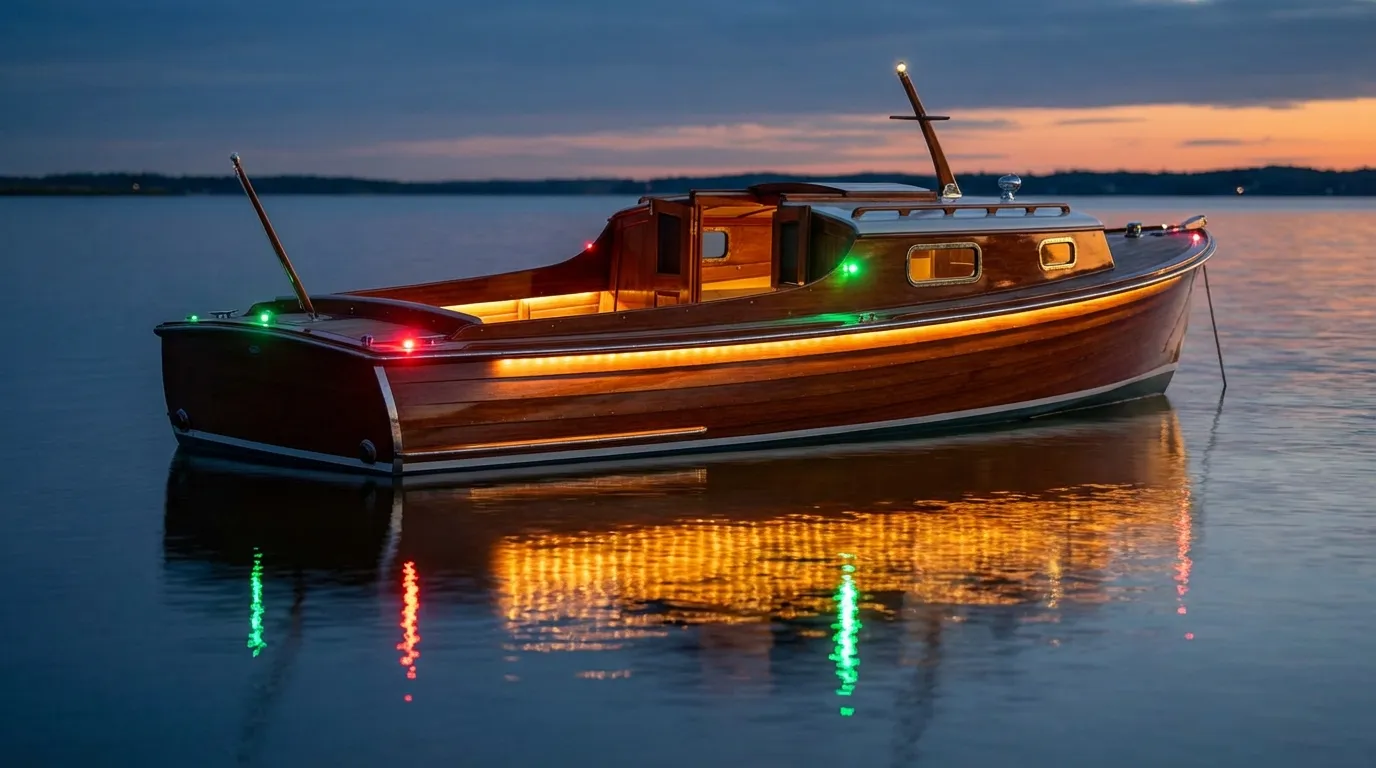
Understanding Why Marine LED Lights Are So Sensitive
Marine LED lights are efficient and bright, no question there. They also usually need clean, steady power to work properly, and they can be a bit picky about it. Compared to old halogen bulbs, LEDs react very quickly to voltage changes. Even a small dip can cause flicker or push the light toward early failure, which is frustrating when the goal was a quick, simple upgrade.
Modern marine LEDs can use up to 90% less energy than halogen lights and often last between 15,000 and 50,000 hours. That efficiency helps protect battery life over time, something most boat owners care about. But there’s a tradeoff. The downside often shows up in the wiring. LEDs don’t handle resistance well, so small issues matter more than they used to, small problems can lead to big effects.
Voltage drop happens when power has a hard time reaching the light. Long wire runs, undersized wires, corroded connectors, and poor grounds all add resistance. Many boats still use wiring meant for older lighting systems. When LEDs are added without updating those parts, problems often show up fast, sometimes right away.
Here is how LED sensitivity compares to older lighting:
| Lighting Type | Energy Use | Voltage Sensitivity |
|---|---|---|
| Halogen | High | Low |
| Incandescent | Very High | Low |
| Marine LED | Very Low | Very High |
Most electrical problems aren’t buried deep inside the wire. They usually appear at connection points. As Practical Sailor editors, often trusted for real-world marine testing, explain:
Most electrical failures on boats occur at terminations, not in the wire itself.
That’s why crimps, terminals, switches, and grounds are usually the first things to check when tracking down lighting issues. For a deeper dive into evolving technology, see 2025 Marine Lighting Trends: How LED Technology is Transforming Boating Safety.
Diagnosing Voltage Drop in Boat Lighting Circuits
Dim or flickering boat lights are usually caused by voltage drop. This happens when extra resistance builds up somewhere between the battery and the light fixture, often at a connection that’s hard to see. LEDs tend to show the problem fast. That can be annoying, but it also helps you spot the real issue earlier instead of guessing.
A good place to start is basic testing. A simple digital multimeter can tell you a lot when you use it in the right places. First, take a voltage reading at the battery with the lights turned off. Then switch the lights on and measure again at the fixture terminals. When lighting circuits lose more than about 3% voltage, problems usually start showing up soon after.
So why does this happen so often? Long wire runs that were never upsized are a common reason. Older copper wiring also breaks down faster than tinned marine wire. Corroded connectors and splices show up all the time on aging boats, and loose or poorly connected grounds make things worse.
ABYC guidelines recommend keeping voltage drop under 3% for navigation and other safety lighting. Many older boats go past that limit, especially after switching to LEDs without upgrading the wiring, which longtime owners see often.
To narrow it down, start by checking battery voltage under load, then work through both the positive side and the negative return. Feel for warm terminals, since heat often points to resistance. Then measure voltage step by step at each connection until you find where the loss is happening.
For a wider look at preventing problems like this, there’s also a Marine Electrical System Maintenance: 2025 Boater Guide that goes into inspection routines and prevention tips in more detail.
Tracking Down LED Flicker and Intermittent Lighting
LED flicker is annoying, and at night it can even feel a bit unsafe. It often shows up when the system is sitting idle and loads change, or right when nearby electronics switch on, like a pump or a radio. The hard part is that it doesn’t always happen on demand, which can make troubleshooting feel more frustrating than necessary. In most cases, flicker points back to unstable voltage or a grounding problem somewhere in the system, not the LED fixture itself.
A good place to start is usually the simple stuff. Isolating the circuit only takes a few minutes, and it often leads to quick answers. Turn off other accessories and see what changes. If the flicker stops, shared grounds or overloaded circuits are usually the cause. This shows up a lot on older installs. LEDs tend to work better on dedicated circuits with a clean return path straight to the battery, rather than sharing space with other loads.
Some common causes include:
- Shared grounds with pumps or motors, which is a common and sneaky issue on boats
- Switch contacts that look fine but are actually corroded
- Dimmer switches that don’t work properly with LEDs
- Loose crimp connectors that seem solid but aren’t, which happens more often than people expect
Many DIY installs reuse older switches that worked perfectly with halogen bulbs. LEDs draw much less current, so they often need switches rated for low loads. It’s a small detail, but an important one. Swapping a switch is usually easy and, in my experience, can clear up flicker almost right away.
Nigel Calder, a well-known marine electrical expert, often notes that LED flicker usually comes from voltage drop caused by undersized wiring or poor grounding, especially on 12‑volt systems. That fits with what technicians regularly see on fishing boats and cruisers.
If lighting issues seem to go beyond the boat itself, trailer wiring can cause some very odd behavior, even when you don’t expect it. That’s why it’s worth checking. Ground problems like these are covered in a guide on boat trailer electrical failures, since they’re easy to miss and often overlooked.
Fighting Marine Electrical Corrosion Before It Wins
Marine electrical corrosion is quiet but aggressive. It often increases resistance long before any wire looks damaged, which makes it easy to miss. Saltwater and humid air usually speed the process up, and stray current often pushes the damage even further. Quiet and costly fits well here, and it’s the kind of problem that keeps building while your attention is somewhere else.
Why is stray DC current such a risk? The PartsVu Marine Technical Team points it out clearly, based on what they see over and over:
The corrosion rate caused by stray DC current can be 100 times the rate of galvanic corrosion, and it can cause significant damage in days, or even hours.
Corrosion usually appears first at battery terminals, ground buses, light fixture connections, and deck penetrations. Fewer problems show up over time when marine‑grade tinned copper wire and sealed heat‑shrink connectors are used. After tightening terminals, adding dielectric grease often helps. Checking bonding systems and replacing sacrificial anodes at 50% wear helps too, simple habits that are often skipped.
David Pascoe, an accredited marine surveyor, explains where this really begins, in plain terms:
Stray current corrosion is caused by a power source such as your batteries or the shore power connection.
Those ideas carry into deeper protection strategies we covered elsewhere, like protecting lighting circuits that can fail quietly before anyone notices. For more corrosion protection insight, check out Advanced Techniques for Marine Corrosion Prevention: Protecting Your Investment.
Tools and Best Practices for Reliable Boat Lighting
You don’t need a full workshop to handle marine LED systems. Really, no fuss. What often helps more than you’d think is keeping a few basics close by:
- A digital multimeter for basic electrical checks
- Something to clean terminals, like a wire brush or terminal cleaner
- Heat‑shrink crimp connectors that seal when set
- Dielectric grease
You’ll usually find that labeling circuits as you go makes troubleshooting later much easier. A smart habit is swapping only one section at a time, since mix‑ups tend to happen otherwise. Ever notice where issues show up first? When upgrading lights, it often pays to check wiring about two feet past the fixture, where corrosion likes to creep in. Lighting trends point to smarter systems with better voltage regulation, but clean wiring and sealed connections are still what cut down flicker and power loss in real installs.
Commonly Asked Stuff
Why do my boat LED lights flicker only at low speed?
At low engine speeds, the charging voltage often drops, making wiring resistance easier to notice. LEDs react to that drop, so the lights can flicker when the engine is idling.
How do I know if corrosion is inside the wire?
Often, the color gives the first clue: black or green copper usually means corrosion inside. You can find it by peeling insulation near connectors, which is usually easy, and replacing that short section.
Can I mix old wiring with new LED lights?
Mixing old wiring with new LEDs often works, but problems can appear. Older runs can drop voltage, so upgrading key sections can help.
Are LED dimmers required for marine lighting?
Usually, it really depends on what you want. Marine LED dimmers can help, while older halogen dimmers often flicker.
How often should I check boat lighting wiring?
Most boats get checked yearly to avoid problems; you’ll notice if the lights start acting strange.
Keeping Your Boat Lighting Reliable and Safe
Flicker, dimming, and corrosion are usually the first signs that boat lighting needs attention, and they often appear sooner than people expect. These small issues are easy to ignore, but they often point to a deeper problem. When you deal with them early, a marine LED setup can give you years of safe, steady light on the water. Waiting usually gives problems more time to spread, and that rarely ends well.
So where should you start? Most of the time, the answer is the basics, like checking voltage and inspecting connections, even in the boring spots. A smart approach is to clean corrosion right away, replace wiring when needed, and use marine‑grade parts. These habits help protect the lights and the rest of the electrical system. Safer nights and easier docking are clear the next time you pull into a dark marina.
