


A steering problem on the water is more than annoying. It can turn dangerous fast. If the wheel feels stiff, the boat drifts before it responds, or you notice fluid where it should not be, the steering system may need attention. Steering systems are central to safe handling, so catching small issues early matters. A lot of boat owners put off small repairs because the boat still runs, which makes sense. But salt, vibration, and heat usually make steering issues worse as time goes on. Not a great mix.
Catching warning signs early helps. A quick check now can keep the boat from getting harder to control later. That goes for weekend anglers, family boaters, charter captains, and people who do basic maintenance themselves. It should also be part of a normal safety routine, right alongside checking fuel, batteries, bilge pumps, and boat lighting before each trip. Even a quick walk around the boat can help. Easy habit.
This guide explains how to spot common steering issues, what usually causes them, when a DIY repair may be enough, and when it makes more sense to stop and call a marine technician. It also looks at how newer steering systems are changing what repairs involve. Regular checks can make the boat safer and easier to handle.
Why steering systems trouble should never be ignored
Marine steering systems may be more advanced now, but they still rely on the same basics working properly: clean fluid, tight fittings, smooth cables, and solid helm response. The size of the market shows how much these systems matter. Marine steering systems are valued at USD 3.52 billion in 2025, and hydraulic actuation makes up 51.86% of the market. That means a lot of boats rely on hydraulic parts, and those parts need regular care.
| Metric | Value | Year |
|---|---|---|
| Marine steering systems market size | USD 3.52 billion | 2025 |
| Hydraulic actuation share | 51.86% | 2025 |
| North America market share | 45.98% | 2025 |
For many owners, the risk starts small. A little extra play in the wheel can turn into delayed steering response. A small leak may lead to low hydraulic pressure. A cable that feels rough can even seize after storage. According to marine steering maintenance expert Winget,
take a look once a year and you should be good to go.
A yearly check is a good minimum. If you run hard, fish often, or trailer your boat long distances, it makes sense to inspect the system more than once a year. While you are at it, check boat lighting and other safety systems too if you plan to run before sunrise or after dark, so you are not dealing with two problems at once. For more details on lighting systems, check 2026 Trends in Boat Lighting: Embracing Advanced LED Systems for Enhanced Visibility.
The most common signs your steering systems need repairs
Stiff steering is often one of the first signs that something is off. If the wheel suddenly takes more effort to turn, there’s probably a problem somewhere in the system. On a mechanical setup, that can point to cable corrosion, poor lubrication, internal wear, or something catching or binding along the way. On hydraulic steering, it often suggests fluid issues, air trapped in the system, or resistance at the cylinder.
Another issue that comes up a lot is extra play in the wheel. You turn the wheel, but the engine or rudder doesn’t respond right away. That loose, delayed feel can come from worn cables, loose connections, helm wear, or low fluid pressure. If the delay keeps getting worse, don’t ignore it.
Fluid leaks are another sign to watch for. A wet steering shaft, an oily film around fittings, or residue near the cylinder end cap can all point to leaking seals. In hydraulic systems, leaks are a serious issue because they slowly reduce steering force and can make handling less reliable.
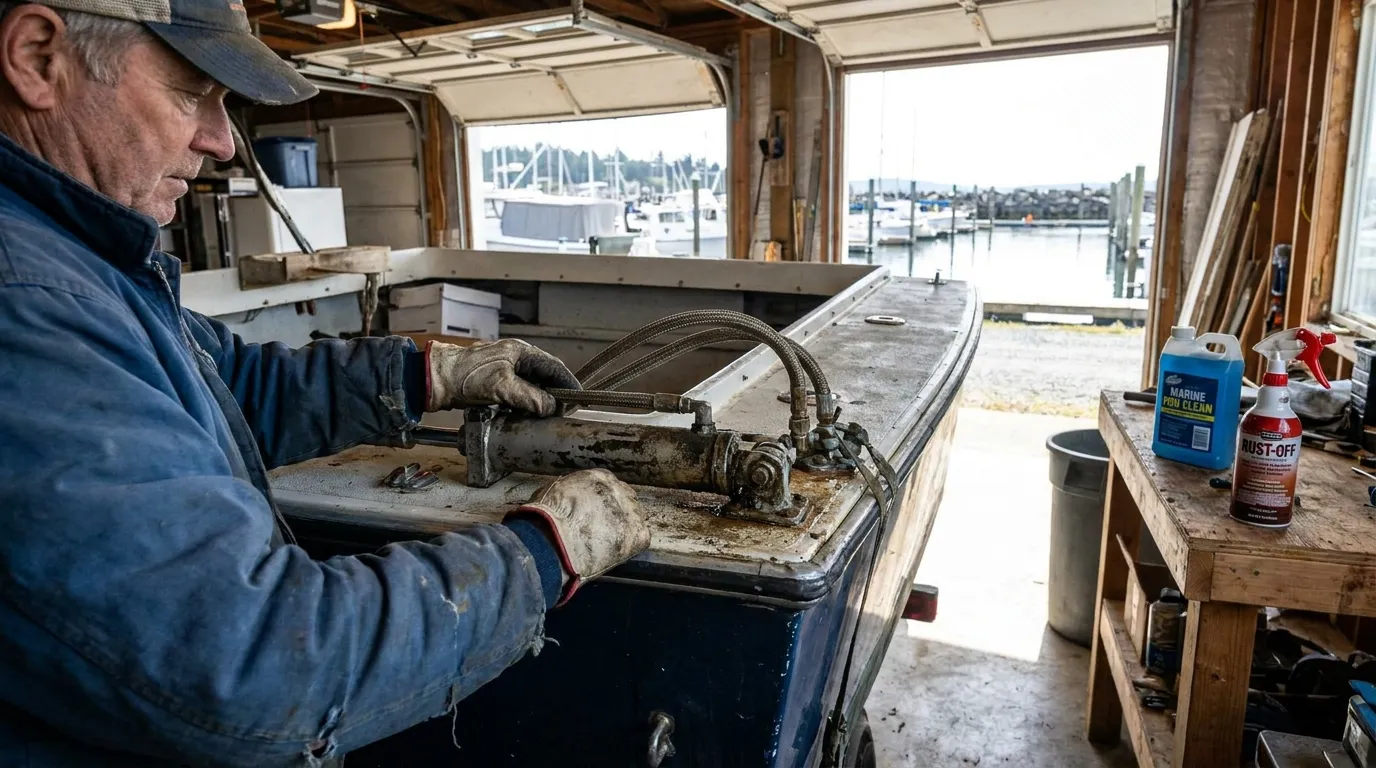
It’s also smart to check for kinked, chafed, loose, or corroded hoses. These issues are easy to miss unless the system gets a careful inspection. On mechanical systems, cable cracks, rust, or rough movement are warning signs too. After storage, sticky steering can be a clue that corrosion is already building inside the cable or link arm.
Comparing these symptoms with a broader system overview, like Boat Steering Systems Compared: Mechanical vs Hydraulic for Real-World Boating, can make troubleshooting much easier. Once the steering type is clear, it gets faster to narrow down what’s going on.
How to inspect your boat steering system step by step
You do not need fancy tools for a good inspection. Just stick to the basics. Keep the boat secure, either on the trailer or tied safely at the dock, and make sure the engine is off. Then turn the wheel slowly from lock to lock. It should feel smooth and even the whole way through. If it sticks, grinds, gets hard in one spot, or feels uneven, treat that as a warning sign.
After that, check the steering cylinder, hoses, fittings, and the parts around them. Look closely for wet spots, yellowish residue, rust, pitting, or signs of rubbing. Check every visible hose for cracks, chafe marks, and loose connections. On a cable system, inspect the cable jacket and any exposed metal for rust or other damage.
It also helps to watch how the system reacts. Turn the wheel and look at the engine or drive unit as it moves. It should respond right away. If you notice lag, wobble, or uneven travel, the system may need an adjustment or repair.
| Inspection point | What to look for | What it may mean |
|---|---|---|
| Wheel movement | Stiff, rough, uneven turning | Cable wear, air in system, corrosion |
| Cylinder and shaft | Wet film, pitting, fluid residue | Leaking seals or fluid loss |
| Hoses and fittings | Cracks, chafe, looseness, corrosion | Leak risk or pressure loss |
For hydraulic steering, keep the service routine practical. A yearly inspection is recommended, and some experts suggest a check every 200 hours. GT Marine also recommends turning the wheel lock-to-lock every 6 weeks during storage. That simple habit helps keep parts moving and can make problems easier to catch early.
When a small issue becomes a serious safety problem
Some steering symptoms are just annoying. Others mean you should stop using the boat right away. If steering suddenly binds, loses pressure, or starts feeling unpredictable, do not brush it off. A badly worn hose or a shaft that is clearly wet can turn into a much bigger failure once the system is under load, and that is not the kind of thing you want to find out on the water.
Industry training keeps the safety message very clear and direct.
do not operate your boat and have the problem corrected
This matters even more with larger outboards, offshore fishing boats, and commercial use. Higher speeds and heavier loads put extra stress on steering systems, so an issue that seems minor while idling can become dangerous once the boat is on plane. Add rough water, and the situation can get worse fast.
A few common mistakes make these problems worse. Some people top off hydraulic fluid without checking where the leak is coming from. Others force a stuck cable instead of replacing it. Related checks get skipped too, including trim response, battery condition, boat lighting before a night run, and other basic items. If the helm, navigation lights, and electrical accessories are already part of a pre-trip routine, steering issues are much easier to catch before they turn into real emergencies.
There is also a more detailed maintenance checklist on marine electrical components tied to overall onboard safety here: Marine Electrical Systems 2026: Adopting Next-Gen Power Innovations for Small Boats.
Repair or replace? How to make the right call
Not every steering problem means you need a full replacement. Sometimes the fix is fairly simple, which is always a relief. Loose hardware may only need tightening. Air in a hydraulic line can often be bled out. Corroded linkages might get better with cleaning or lubrication, as long as the damage is still minor.
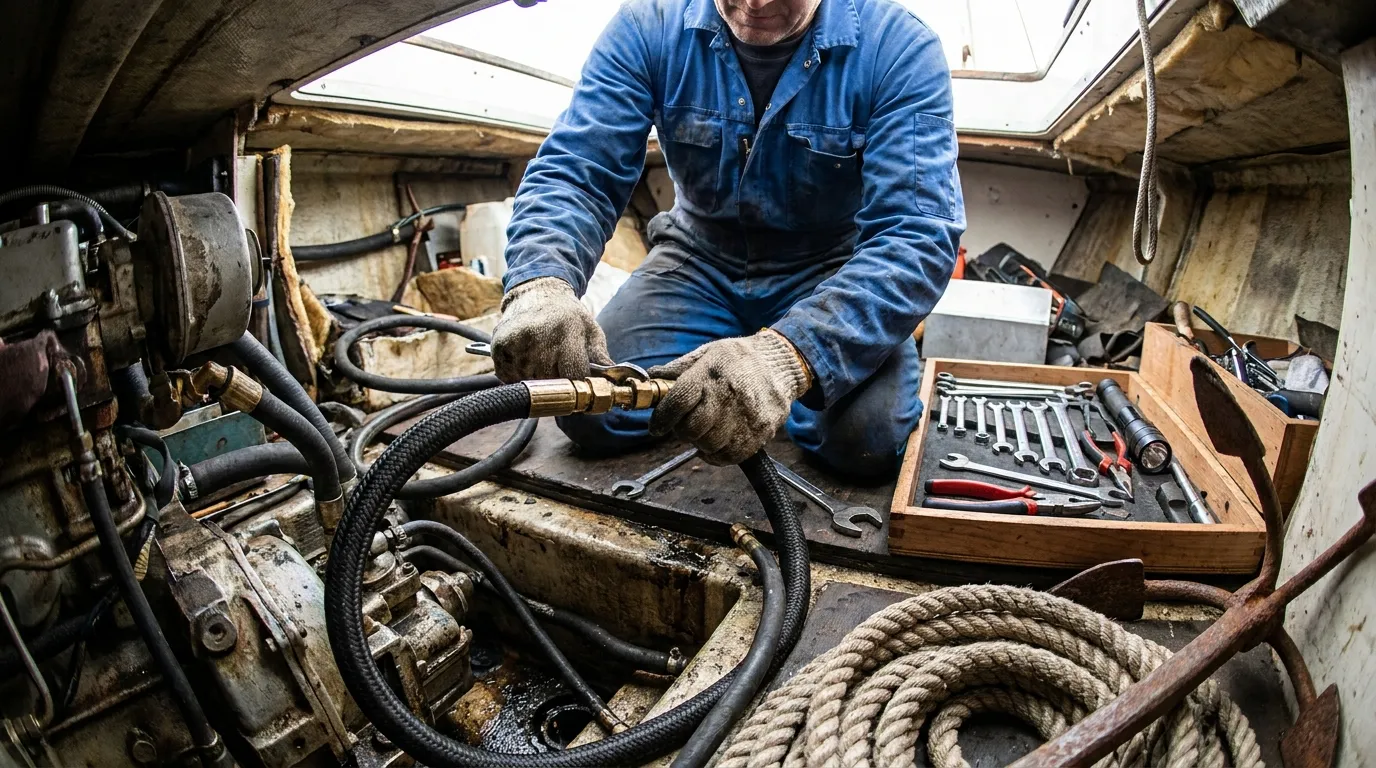
Some parts are tougher to justify saving. A badly worn cable, a leaking helm, a damaged hose, or a pitted cylinder shaft usually makes replacement the safer choice. And if the same issue keeps coming back, replacing key parts can cost less over time than dealing with one failure after another.
Hydraulic owners should think beyond the repair in front of them too. Winget advises that
your hydraulic system should be flushed out and oil replaced every five years, including thoroughly bleeding the system to remove air bubbles.
That five-year point can matter even more for boaters who fish hard in saltwater. Salt, vibration, and heat speed up wear. For many people, that is also the point where moving up to a better system starts to make more sense, especially if the boat is heavier now or the motor setup has changed.
New steering technology means new repair habits
Boat steering systems are changing fast. Research says the boat steering system market could reach USD 3.31 billion by 2030, with a 9.2% CAGR. That growth is tied to fly-by-wire systems, automated steering, electric boats, and hybrid boats, which points to a real shift. Even so, hydraulic steering is still the most common setup right now.
For boat owners, that brings a few practical changes. Traditional hydraulic and mechanical repairs still matter a lot. At the same time, newer systems may include sensors, electronic controls, and software-linked helm components too. On some boats, steering issues are no longer just mechanical, and that is a big change.
Keeping up with related systems matters more as steering changes. If you boat at night or in low visibility, it becomes even more important. Safe handling also depends on proper boat lighting compliance. In tough conditions, steering response and clear navigation lights need to work together. For more on lighting safety, see Boat Lighting Compliance: Wiring, Placement & Visibility.
Frequently Asked Questions
How do I know if my boat steering cable is bad?
A bad cable often feels stiff, rough, or stuck when you turn the wheel. You may also see cracks, rust, or corrosion near exposed sections. If lubrication does not help and the movement still feels hard, replacement is usually the best option.
Is it safe to run a boat with a hydraulic steering leak?
No. Even a small leak can reduce pressure and make steering less reliable. If you see fluid around the shaft, hoses, or fittings, fix the problem before using the boat again.
How often should I inspect boat steering systems?
At minimum, inspect them once a year. If you boat often, use saltwater, or log many engine hours, check them more often. A quick pre-trip look is smart before long runs or rough-weather trips.
Can I repair boat steering myself?
Some basic jobs are DIY-friendly, like visual inspections, tightening loose hardware, and cleaning corrosion on accessible parts. But bleeding hydraulic lines, replacing hoses, or fixing major helm issues may be better left to a qualified marine technician.
Why mention boat lighting in a steering article?
Because safety checks should work as one routine, not separate tasks. Before heading out, inspect steering systems, boat lighting, batteries, and other key onboard gear together. That is especially important for early morning, evening, or low-visibility trips.
Keep your boat safe and easy to control
Steering should feel smooth, direct, and predictable. If the wheel gets stiff, the engine starts responding late, or fluid shows up around the system, don’t let it become a bigger problem. Those small signs usually appear first, and they’re easy to miss. That’s often how serious steering problems start. Catching them early can save money, cut downtime, and help keep everyone on board safer.
Make steering checks part of the normal routine. While the boat is in storage, turn the wheel lock-to-lock. Check hoses and shafts, and look at fittings for leaks or corrosion since it only takes a minute. On every trip, pay attention to how the boat feels. Small changes are easier to spot when those checks stay regular. Steering safety is also part of the bigger maintenance picture, right along with batteries, trim systems, bilge pumps, and boat lighting.
For dependable parts, maintenance supplies, or practical boating advice, First Choice Marine gives boat owners a useful resource for keeping their systems working properly. If the wheel starts telling you something, it’s smart to listen early and act quickly.
