


Keeping a boat clean sounds easy, but it often turns into a chore. The tricky part is how small decisions add up. Using the wrong brush or cleaner can slowly wear down gelcoat, and that happens more often than most people think. A lot of owners just grab whatever is nearby. It feels fine in the moment. Then a few months later, the shine is gone, oxidation starts to show, and every wash takes longer than the last one. You’ve probably seen this happen. It usually leads to frustration, higher costs than expected, and honestly, less enjoyment.
That’s the cycle this guide aims to stop. Instead of hype, it looks at today’s most talked-about boat cleaning tools and focuses on what actually holds up after real, repeated use. The goal is simple: save time, protect gelcoat during regular washes, and get a clean, even finish without needing a detailer every time. If gear doesn’t last, it’s not worth worrying about.
Running a fishing skiff or a pontoon? Different boats, same problems, salt, dirt, and sun. We’ll go over brushes, scrubbers, specialty tools, and smart upgrades, along with what to skip, how often cleaning usually makes sense, and how to build a simple setup that fits real boating life, not a perfect schedule.

Why the Right Boat Cleaning Tools Matter More Than You Think
Most boat owners don’t realize how much damage the wrong cleaning tools can cause at first (and yes, that included me). Gelcoat looks tough, but it’s actually softer than automotive clear coat, which surprises a lot of people. When stiff brushes or dirty household pads are used, they slowly grind that surface down. You don’t usually see the damage right away. Over time, though, that wear often turns into oxidation, which can take dozens of labor hours to fix later, usually during seasonal detailing or when getting ready to sell.
You can see this shift clearly in the marine cleaning market. More owners are switching to proper, purpose-built tools instead of paying to fix the same problems again and again. That change often follows a rough lesson, like noticing dull patches along hull sides or deck edges where wear builds up the fastest.
| Category | Market Size | Year |
|---|---|---|
| Global boat cleaner market | USD $2.05 billion | 2025 |
| Boat cleaning brushes market | USD $350 million | 2025 |
| Hull cleaning robots | USD $70 million | 2026 |
Those numbers point to something pretty straightforward. Owners want cleaning that’s quicker and easier on boat surfaces. Gelcoat-safe tools aren’t about being overly careful. They’re often the smarter choice, especially on high-visibility areas like topsides and hulls, where damage is easy to spot. They also help protect one of the most expensive surfaces on the boat.
The right tools can save more time than most people expect. A soft, purpose-built brush often cleans faster than a stiff hardware-store one because it stays in contact instead of bouncing around. Electric scrubbers reduce arm strain during routine washes. When regular cleaning is done with the right gear, heavy polishing later becomes less common. Fewer headaches and fewer long weekends lost.
For a closer look at which tools work best in each area, there’s a separate guide covering hull, deck, and interior cleaning.
Brushes That Clean Fast Without Scratching Gelcoat
Brushes sit right at the heart of any boat detailing kit, and the one you choose often decides how smooth the whole job feels. Use the wrong brush and swirl marks or dull spots can show up sooner than you’d expect. Picking a brush that fits the surface usually makes cleaning faster and, over time, helps keep the finish looking good. It’s one of those small choices that often ends up making a bigger difference than people think.
Flagged‑tip bristles are usually a smart pick. The split ends feel softer on the surface, but they still scrub well when needed. Because the pressure spreads out more evenly, small scratches are less likely to happen. This really shows on colored gelcoat, which tends to reveal marks more easily, especially in bright sunlight that brings every flaw into view.
Handle length matters too. Longer handles mean less bending and make it easier to reach the topsides from the dock. Adjustable handles are handy when moving between the deck and hull. Weight is another factor, since a heavy brush can tire you out and often leads to uneven pressure toward the end.
Using one brush for every surface sounds easy, but it usually causes problems. Non‑skid needs more grip than smooth gelcoat, so keeping separate, labeled brushes works better, one for hull surfaces, another for deck non‑skid or even the trailer.
Many experienced boaters also pair the right brush with pH‑neutral soaps. Strong cleaners often lead to harder scrubbing and can dry out gelcoat over time, creating more work later. And if fuel system care is part of your routine, keeping cleaning tools away from engine areas is a simple habit that supports good fuel hygiene, like the practices outlined in our guide on boat fuel tank cleaning best practices.
Electric and Cordless Scrubbers: Real Time Savers or Just Gadgets
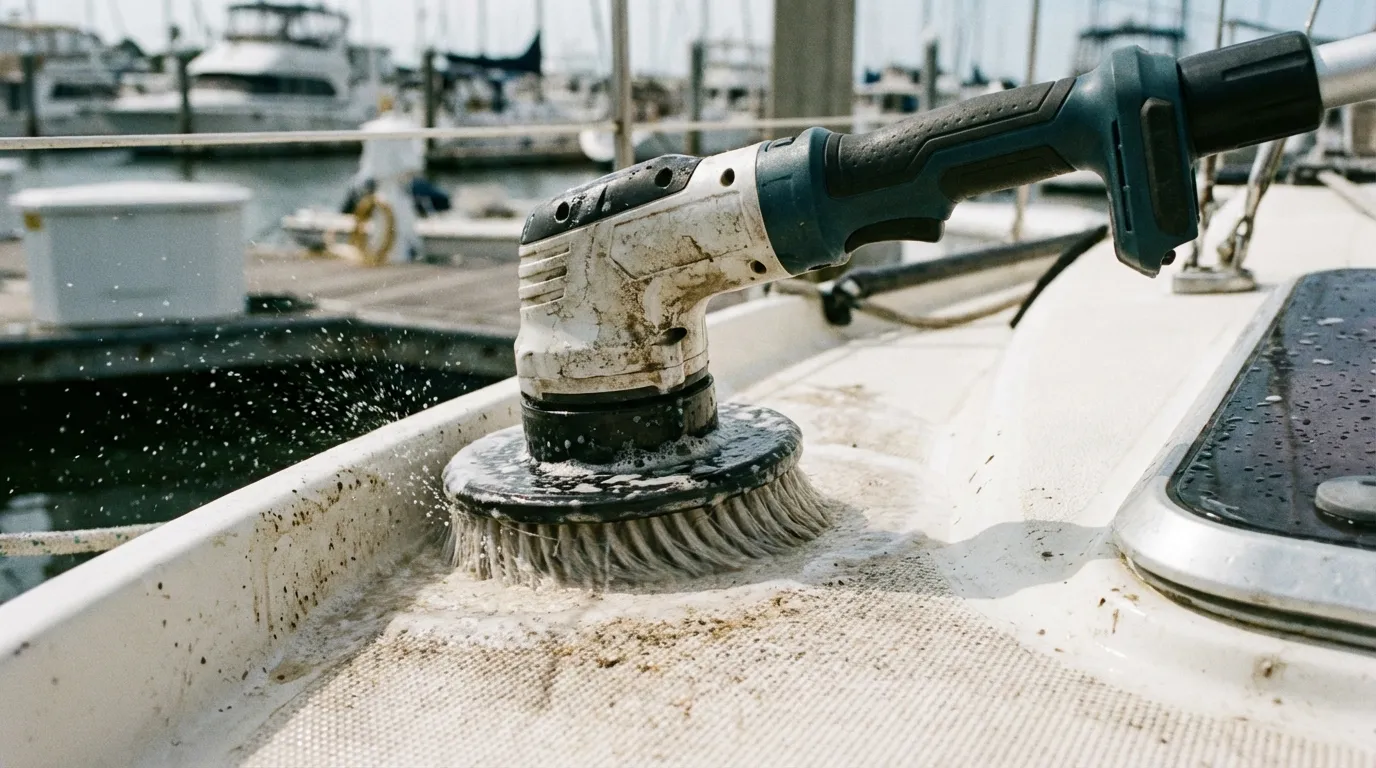
Electric scrubbers have moved from a nice extra to something many boat owners count on. A lot of people say they cut cleaning time almost in half, which matters when weekends already feel short. That time saved depends less on the motor and more on choosing the right type and pairing it with the right pads. Just owning one doesn’t guarantee better results.
Cordless models usually come out ahead. They skip the hassle of extension cords on wet docks and make it easier to reach tight or awkward spots without fighting the tool. Interchangeable heads often matter more than raw power, especially since most boats have different surfaces. Soft pads work best on gelcoat and vinyl, while rougher pads handle non-skid decks and rub rails well. It’s simple, and it does the job.
Pressure control often decides whether the experience is good or frustrating. Pushing harder isn’t better. Higher speed with lighter pressure usually cleans more evenly. Pressing down too much builds heat and wear, which shortens pad life and can damage surfaces. Letting the scrubber do the work feels smoother overall.
These tools work well on waterline scum, cockpit floors, and interior fiberglass. Heavy oxidation still needs polishing tools and hands-on effort. Some crews use scrubbers every day, while DIY owners pull them out weekly. Either way, clean pads are key. Grit stuck in foam can quickly turn a safe tool into a scratch problem.
Electric scrubbers fit into a broader maintenance routine that also includes system checks and safety gear. Cleaner decks mean fewer slips, especially on busy weekends, which connects directly to essential boat safety equipment every boater should know.
Specialty Tools That Deliver Pro-Level Results
Some of the biggest time savers are often small tools that get overlooked. Plastic scrapers, for example, can lift barnacles and decals without scratching gelcoat, which is safer overall and a lot less stressful. On finished surfaces, they usually give you more control than metal blades, where one slip can cause real damage.
Around hardware like cleats and hinges, detail brushes quietly handle the tough spots. Soft, toothbrush-style brushes reach areas that big deck brushes miss completely (you’ve probably noticed the grime hiding there). That matters because cleaning these spots early can slow buildup before it turns into stubborn stains that later need extra chemicals and hard scrubbing.
For many boats, the most noticeable upgrade is a water-fed deck brush. Scrubbing while rinsing reduces soap residue and helps you avoid redoing areas you already cleaned. On larger boats, this really helps, since stopping to rinse over and over eats up time and patience. When the workflow is smoother, the whole job feels easier.
Hull-cleaning robots are appearing more often in commercial fleets and marinas. They cut diver costs and reduce fuel drag by keeping hulls cleaner. Most recreational owners pass on them, since the cost and setup usually don’t make sense for occasional use. Still, their growth points to where marine cleaning gear is heading.
One common mistake is mixing specialty tools together. Trailer or bottom tools should never touch topsides. Even small contamination can ruin a good finish, which is why storing them separately matters, even if it feels over the top.
Building a Simple Cleaning Kit That Fits Real Boating Life
A huge pile of gear rarely leads to better results. For most boats, a smart, trimmed‑down kit covers almost every job without doubled tools or extra hassle, saving time and patience. Two solid brushes handle most tasks: one soft and one medium. That difference matters. Soft brushes help protect topsides, while medium brushes work better on decks. Add a cordless scrubber with three pads so you can go from light film to stubborn scum without swapping tools. Plastic scrapers take care of stuck‑on messes, and a few small detail brushes reach tight spots bigger tools can’t. Less clutter usually means less frustration.
Clean storage helps more than people expect. Salt and grit left on tools can undo your work. A quick rinse after each use goes a long way. Swap out worn brushes early, since that small expense can help avoid gelcoat damage later.
Think about how the boat is used. Fishing boats often need tougher deck tools. Cruisers and seasonal boaters usually get better results with gentler topside tools, especially if cleaning is occasional. Different habits create different wear.
If surface protection, bottom care, or coatings are planned, tool choice matters most before painting or recoating. Thinking ahead helps, and this is covered in the guide to boat bottom paint application and maintenance.
Questions People Often Ask
What are the best tools for cleaning boats without damaging gelcoat?
Gelcoat can get damaged if you scrub too hard, so gentle tools help. Soft flagged‑tip brushes, pH‑neutral soaps, and clean foam pads are the safest picks. Stiff bristles and household cleaners are usually too rough.
How often should I clean my boat to avoid oxidation?
What makes the difference is consistency, not effort. Most boats are fine with a quick rinse after each trip to keep dirt from drying on. A simple wash every one to two weeks stops oxidation from building up, no fancy products needed.
Are electric scrubbers safe for gelcoat?
Yes, it’s safe if you use soft pads and light pressure, and that choice really matters. The scrubber works best when you let it do the work. Dirty or worn pads, though, can increase the risk of scratches.
Can I use the same brush on deck and hull?
Usually it’s not a great idea, since deck grit can scratch smooth gelcoat and leave marks you don’t want. Keeping brushes separate helps, and labeling them can save you trouble.
Do professional boat detailers use different tools than DIY owners?
Short answer: no. The tools are mostly the same; pros just switch pads and brushes more, and that’s the real difference. They clean on a tighter schedule, you can tell, so they need less correction. But.
The Bottom Line for Cleaner Boats and Easier Maintenance
Cleaner boats don’t have to mean exhausting weekends. With the right boat cleaning tools, what’s often a long, annoying job can turn into a quick routine you can handle most days. That’s a real win, especially since good tools help protect gelcoat and cut down wear while keeping things looking sharp without constant polishing or extra effort you’ll notice.
Prevention usually makes the difference. Cleaning often, even when it feels unnecessary, pays off over time, yes, even quick rinses. One smart move is sticking with soft, purpose‑built boat tools instead of household stand‑ins. Why let grit carry over from one job to the next? Keeping gear clean and stored separately can save hours over a season and real money over a boat’s life.
When replacing worn gear, it helps to think in systems, not single tools. Brushes and scrubbers tend to work better when paired with the right specialty pieces. In my view, that only works if the gear is built for real use, which is the idea behind First Choice Marine’s marine‑grade equipment. Start small, swap out one bad tool at a time, and it adds up.
