


This week, the biggest story in trolling motors is no longer just extra thrust or quieter running. In the latest 2026 product rollouts, brands are paying more attention to smarter boat control, with GPS tech, autopilot features, and the real ways anglers and boat owners fish, drift, hold position, or move across the water, which is often what people notice first.
That change feels especially relevant right now. Recreational and commercial boaters want easier positioning, less fatigue, and better control when dealing with wind, current, or crowded fishing spots. If someone is out on the water for hours, that kind of support usually makes a real difference.
Recent market data helps explain why manufacturers are moving this way so quickly. Market Research Future estimates the electric trolling motor market reached USD 1.51 billion in 2024 and will likely grow to USD 1.604 billion in 2025, with a 6.22% CAGR through 2035. That shift says a lot on its own.
Put simply, 2026 fishing innovations are being shaped by one main idea: modern trolling motors are becoming intelligent navigation tools, not just electric pushers on the bow. So the real upgrade is not only power. It is control.
Why GPS technology is defining the 2026 market for trolling motors
The newest wave of trolling motors shows a pretty clear shift. GPS technology is no longer just an extra for premium setups. It’s becoming a real buying factor. Coverage from The Fisherman, Minn Kota, and BOE Marine all points the same way. In 2026, buyers care a lot about GPS-guided positioning, navigation modes, and autopilot support, which fits how people actually fish. In most situations, they want better boat control, easier positioning, and a lot less guesswork once they’re on the water.
Minn Kota’s current lineup is a good example of that change. The updated Ultrex is being marketed with stronger GPS navigation modes, and that says a lot about where the market is going. Brands are now selling intelligence and control, not just shaft length, volts, and thrust. That’s probably the biggest shift here. Garmin is moving the same way. BOE Marine’s 2026 roundup points to the Force line for digital thrust control, along with advanced autopilot features connected to Garmin electronics, so the conversation often goes beyond raw power alone.
| 2026 trend | What it means | Why buyers care |
|---|---|---|
| GPS anchoring | Boat holds position automatically | Better control in wind and over structure |
| Heading lock | Motor keeps a set direction | Less steering fatigue |
| Route integration | Motor works with saved paths or electronics | More repeatable trolling and navigation |
| Electronics pairing | Motor connects best within one brand ecosystem | Cleaner setup and easier control |
For a lot of anglers, that’s really the story behind 2026 fishing innovations. Precision often matters more in real situations like fishing docks, brush piles, ledges, flats, bridges, or nearshore structure. GPS can save time and cut down on missed chances. That difference adds up fast. It can also help newer boaters feel more at ease, since the motor handles more of the harder work. That’s a big reason this kind of tech matters so much for everyday fishing, not just tournament setups.
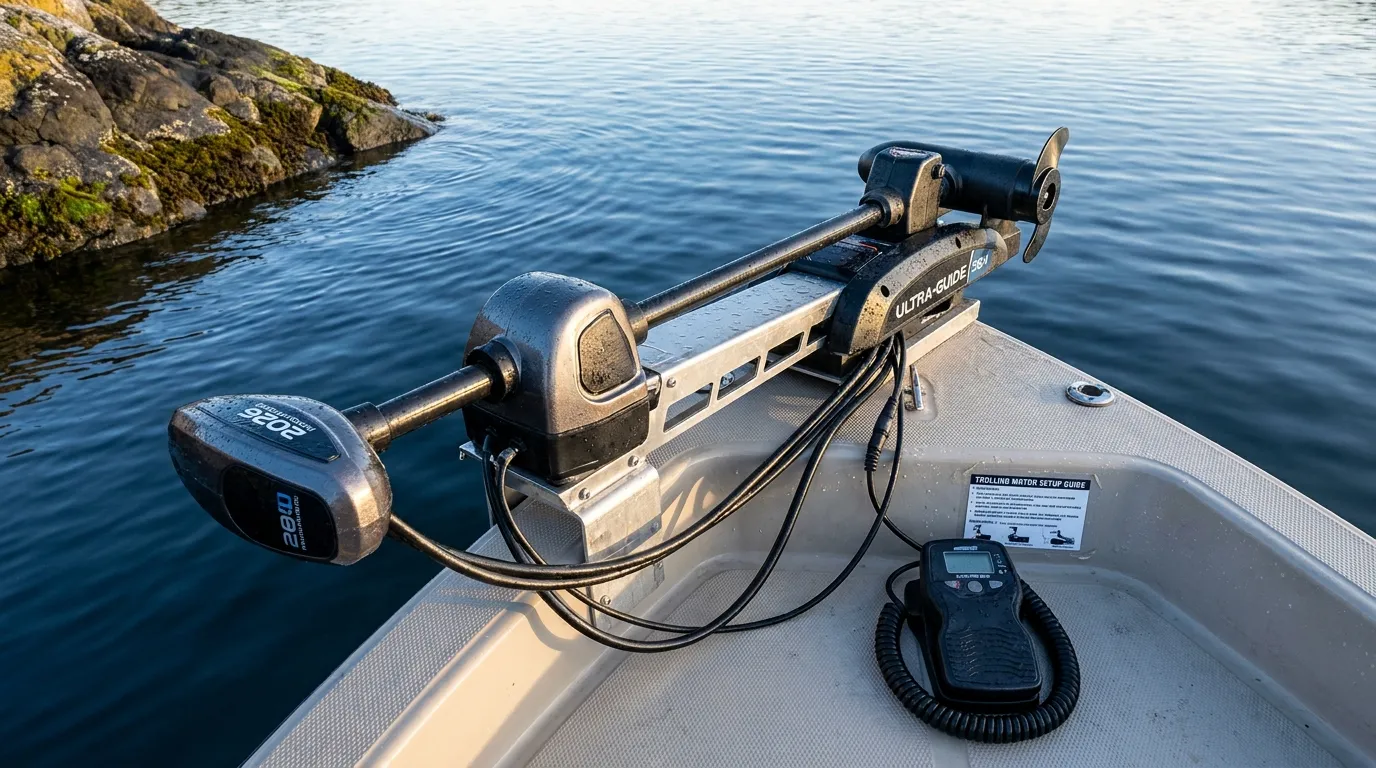
What GPS systems actually do on the water
A lot of people hear terms like “GPS anchor” or “autopilot” and think the whole setup sounds too technical, which makes sense at first. Once you see it on the water, though, the main features are usually pretty easy to understand, and in many cases they are easier to use than most people expect.
The first is GPS anchoring, often called spot lock or electronic anchoring. Instead of dropping a traditional anchor, the trolling motor uses location data to keep the boat near one position. That becomes especially useful when fishing brush, reefs, bridge pilings, shell beds, and other small target areas, where being even a few feet off can change the cast or presentation. It also gives solo anglers a real advantage by freeing up both hands.
Another feature is heading lock, sometimes called compass steering. After you point the boat in a certain direction, the motor keeps that heading with small corrections along the way. That makes it useful for slow trolling, working down a bank at a steady angle, or moving across open water without having to stay on the foot pedal the whole time. It often sounds like a minor upgrade until someone actually tries it.
There is also track or route follow. On more advanced systems, the motor can connect with a chartplotter or electronics network and follow a saved path, contour, or route. That is a big reason 2026 trolling motors feel more advanced than older units, not just newer on paper. In many cases, they are doing more than basic steering.
One more part is automated thrust response. Garmin’s latest positioning in 2026 puts extra focus on digital thrust control, because steering by itself is often not enough. The better systems adjust both direction and power together, which helps them hold position or stay on a path with smoother control, especially in wind or current.
If you are new to this category, it may help to think of modern trolling motors as small guidance systems for your boat. They are not meant to replace boat-handling skill. They just reduce repetitive work and leave more attention for fishing, safety, and general awareness.
If you are comparing technologies, we covered this here: 2026 Trends in Smart Trolling Motors: What You Need to Know.
Autopilot in 2026 means more than just steering straight
One of the biggest changes this year is what autopilot actually means. In older conversations, autopilot often meant little more than holding a heading. In 2026, the term usually describes several control tools working together, not just one simple steering feature.
That can include drift correction, heading hold, GPS anchoring, route assistance, steering automation, and thrust management. On the water, that means the motor can respond to wind and current changes without the boater making constant small corrections. For anglers who spend long days fishing, guide clients, or run a boat while managing rods, sonar, and safety checks at the same time, that is a pretty big change.
The benefits are usually easy to see in real use. A bass angler can stay on offshore structure without dropping anchor. A walleye angler can follow an edge more cleanly. An inshore boater can hold position on current seams instead of slowly sliding off to one side. Commercial operators and serious weekend boaters can also reduce drift errors and spend less time correcting course. In many situations, that means more time fishing and less time dealing with boat position.
There is an important catch, though. Smart does not always mean compatible. Garmin support notes that Minn Kota i-Pilot and MotorGuide autopilot systems cannot be controlled by Garmin chartplotters because those motors use their own control systems. That is one of the biggest buying lessons of 2026. Ecosystem fit often matters almost as much as motor performance, especially for boaters already using specific electronics.
A common mistake is buying based only on thrust. Another is assuming every brand works together. What should be checked before buying? Fish finder, chartplotter, batteries, mount style, shaft length, and network compatibility. That step is easy to skip. Still, it can save real money and a lot of setup frustration later.
The brands pushing the latest 2026 fishing innovations
The clearest product signals in current coverage point to Minn Kota, Garmin, Rhodan, and the broader shift toward GPS-guided trolling motors.
Minn Kota seems focused on bringing smarter GPS features to several product lines instead of keeping them in one premium model. The current lineup points to models like Ultrex, Ulterra, Terrova, Riptide Instinct QUEST, plus several kayak-focused options. That is a pretty wide range. It suggests GPS tech is moving more clearly into mainstream boat setups. It now appears in freshwater rigs, saltwater setups, and smaller craft too, which is often what many buyers are actually after.
Garmin’s position looks a little different. The brand stands out for stronger autopilot features and closer electronics integration. BOE Marine’s roundup specifically points to advanced autopilot tools and tight Garmin ecosystem pairing. That will likely appeal to boaters who already use Garmin screens, sensors, and related gear. In that kind of setup, the extra integration usually matters a lot.
Rhodan also deserves attention because The Fisherman’s 2026 roundup specifically points to new Gen5 GPS-guided trolling motors. The available snippet was limited, but the main point still comes through. GPS-guided operation remains a major area of development in 2026, and it often looks like one of the biggest changes in the category.
For buyers trying to compare options side by side, it makes the most sense to think in use cases:
Best fit for precision holding
Look for strong GPS anchoring, since that’s important. You’ll probably notice fast correction in wind and current, too.
Best fit for connected electronics
Choose a motor that works with your chartplotter and sonar setup, since that’s usually easier. It’s often a simple fit.
Best fit for long trolling runs
For long trolling runs, heading lock, route support, and efficient thrust control usually matter most. That’s probably the main thing, pretty simple, really.
Best fit for DIY setup and upkeep
For readers of First Choice Marine, support for replacement parts will often matter just as much as the main features. That is especially true for DIY boat owners focused on maintenance, rigging, and reliable onboard systems. It also helps to check the mount design, battery needs, and wiring access.
Additionally, those interested in setup details can explore Electric Trolling Motors: Installation and Best Practices for 2026 for deeper installation insights.
Why installation, power, and maintenance still matter
Smart features only work well when the basics are solid. A GPS trolling motor with weak wiring, worn batteries, or a loose bow mount is not going to feel very smart, even if the specs look impressive. A lot of the time, what seems like a motor performance problem is actually a setup problem instead.
The power system is usually the first thing to check. Advanced trolling motors need steady voltage and enough battery capacity to last through longer days on the water. When batteries are too small or starting to wear out, GPS anchoring and autopilot corrections can drain them faster than expected. Even smaller details can make a real difference. A mount with any flex or movement at the bow can change how tracking feels and make the whole setup feel less reliable, especially in rough water, which is often where the issue shows up first.
Electronics placement can also cause headaches. If the fish finder, transducer cables, and motor wiring are packed too close together or left messy, troubleshooting usually gets harder very quickly. A little cable planning early on can make the system easier to use, and much easier to fix later.
For a practical setup guide, that is covered in Electric Trolling Motors: Installation and Best Practices for 2026. For model comparisons, Top Electric Trolling Motors for 2026: Performance and Reviews can help narrow things down.
What comes next for GPS and autopilot trolling motors
Looking ahead, the path seems pretty clear. More trolling motors will likely start working a lot more like connected navigation devices. That usually means better route memory, closer links with sonar and charting, and smoother automatic corrections, which honestly feels like the next logical move. The broader market points that way too. Market Research Future says North America is still the biggest market, and that helps support continued investment in connected electric marine systems, especially in this region.
That shift could also change what buyers begin to expect. A lot of boaters already want trim support, reliable sonar, and phone-based updates, and GPS anchoring and autopilot support may soon feel like standard features too. If that happens, entry-level and mid-tier trolling motors would probably get smarter faster than many people expect.
For serious anglers and commercial users, that could mean more efficient days on the water. Casual owners may see an easier learning curve and less stress in rough conditions, which matters a lot when the water gets choppy. So the main question is no longer really whether smart control matters. More often, it comes down to how much of it you need and which ecosystem you trust.
Frequently Asked Questions
What is the biggest trolling motor innovation in 2026?
The biggest shift is the move toward smarter GPS technology and autopilot tools. In 2026, many new trolling motors focus on holding position, following headings, and connecting with marine electronics more smoothly than older models.
How does GPS anchoring work on trolling motors?
GPS anchoring uses location data to keep your boat close to one spot without dropping a physical anchor. The motor makes small steering and thrust corrections to fight wind and current.
Is autopilot on a trolling motor the same as route following?
Not always. Autopilot can include heading lock and automatic steering, while route following is usually a more advanced feature that works with saved paths or compatible chartplotters. Some systems offer both, but not every model does.
Do all GPS trolling motors work with every fish finder or chartplotter?
No. Brand compatibility is one of the biggest issues in 2026. Some motors work best only within their own electronics ecosystem, so it is important to check compatibility before buying.
Are smart trolling motors harder to maintain?
Not usually, but they do require careful setup. Good batteries, clean wiring, secure mounting, and proper software or electronics pairing all help the motor perform as designed and stay easier to troubleshoot.
The bottom line for boaters shopping in 2026
The latest trolling motor news shows a pretty clear shift: GPS tech and autopilot features are no longer niche add-ons. They’re quickly becoming the standard many people use to judge new motors. In 2026, the smartest units do much more than move a boat quietly. They can hold position over a fishing spot, reduce steering work in wind or current, follow headings, manage route-based control, and connect more closely with onboard electronics like fish finders and chart displays. That’s a big change, and it probably isn’t temporary.
For readers, one useful next step is to shop with the whole system in mind. Think about where the boat is used, how often wind or current causes problems, what electronics are already onboard, and how comfortable the buyer feels with installation and upkeep. From there, it makes more sense to choose a motor based on real-world use instead of only staring at a thrust number on a product page. That sounds simple, but it’s easy to miss when specs are piling up fast.
When that match is right, today’s trolling motors can make fishing easier, safer, and more precise. That’s why these 2026 fishing innovations matter now, especially for buyers choosing between basic motors and models with GPS control. In many cases, smart boat control will shape the next round of marine upgrades sooner than expected.
For more brand comparisons, check Trolling Motors: Top 5 Brands for 2026 Performance and Reliability for insight into reliability and value.
