


Boat stands may look simple, but the work they do is serious. Store a boat the wrong way and the hull can shift, crack, or even fall. That can damage the boat, hurt people, and turn a normal storage season into an expensive problem. Knowing how boat stands, keel blocking, and a solid setup work helps, if someone is a weekend boater or running a busy commercial operation. The basics still matter.
Maybe the question is how many boat storage stands are needed, where jack stands for boats should touch the hull, or why blocking gets so much attention. This guide covers what boat stands do, how to plan a safer boat stand setup, where common mistakes happen, and what to check during long-term storage. These details are practical, and they are easy to miss when things are moving fast. It also covers hull support tips for winter layup, storm season, and routine yard checks. For a fishing boat, center console, sailboat, or workboat stored ashore, the goal stays the same: safe hull support without putting weight in the wrong place.
What Boat Stands Actually Do
A lot of owners think boat stands are holding the whole boat up, but that’s not how safe blocking works. The keel, or proper blocking, carries most of the boat’s weight. Side stands are there to keep the hull balanced, which is their real job, and they also add stability. You’ll see that same point again and again in reliable marine guidance.
A minimum of four boat stands should be used for powerboats.
That’s the starting point, but there’s more to a safe setup. Boats up to 30 feet commonly need at least 4 stands plus 2 keel stands or blocking points. Once the boat gets longer, an extra pair of stands is usually needed for every 8 to 10 feet of added length so support stays evenly spaced. Guidance also says that boats over 26 feet need at least 3 stands on each side.
| Setup point | Verified guidance | Why it matters |
|---|---|---|
| Minimum for many powerboats | 4 stands | Basic side-to-side stability |
| Many boats up to 30 ft | 4 stands plus at least 2 keel blocks or keel stands | Weight support and balance |
| Longer boats | Add 1 pair every 8-10 ft | Prevents wide unsupported spans |
| Stand spacing | No more than 10 ft apart | Reduces stress and movement |
The table makes the main point pretty clear: safe hull support depends on having enough contact points and proper spacing. According to ABYC, boats built to its standards are up to 47% less likely to be involved in certain accidents. Following those standards may also help reduce fatalities by up to 58%. A stand setup is not following ABYC just because it looks neat, since looks can be misleading. Careful support systems and standards-based thinking are what matter. Btw, we wrote about general boating gear planning here: Boating Safety Equipment: Complete Guide to Getting More From Your Boat’s Safety.
The Core Rule: Blocking Carries Weight, Stands Provide Balance
This is the main point of the whole article. On most monohull boats, the side stands should not carry the boat’s main weight. That job belongs to the keel blocking.
The boat must be vertical. The angled stands are there only to provide balance. The boats weight should be borne by the blocking. Do not use stands to support the weight of the boat, other than keel stands specifically designed for this purpose.
Boat storage stands are there to help, not to be the base support. If the side pads are tightened too much against the hull, they can create pressure points. On fiberglass, that may lead to distortion. On aluminum, it can leave marks or add stress to weaker areas. Practical Sailor says the same thing: for most monohulls, solid wood blocks under the keel are the standard way to support the boat, not the side stands.
A simple setup sequence
- Start on firm, level ground.
- Build solid keel blocking first.
- Lower the boat until the keel is carrying the load.
- Place side stands on both sides to keep the boat balanced.
- Chain the stands together.
- Check again that the boat is still vertical.
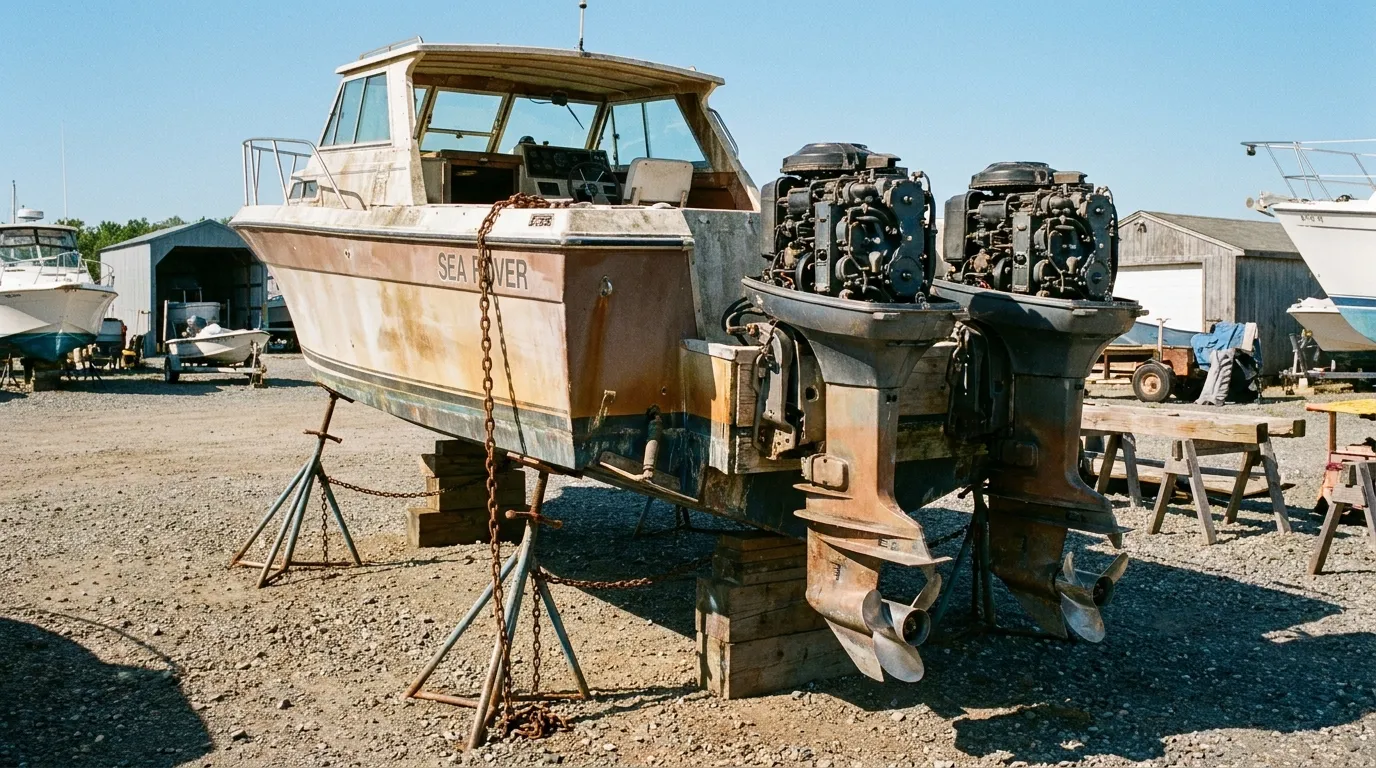
On dirt, gravel, or hot asphalt, add plywood pads or planks under the feet. It’s a small step, but it helps prevent sinking and uneven settling. Making it part of the routine is one of the better boatyard storage safety habits, especially when the surface can shift during storage.
Where to Place Boat Stands on the Hull
Where the stands go matters just as much as how many you use. A stand in the wrong spot can press on a weaker part of the hull and cause damage. In a better spot, it supports the boat safely without adding extra stress to the structure.
Rear stands usually go near the transom, since that section is strong and carries a lot of weight. Other good support points are where structural bulkheads meet the hull, along with reinforced areas like stringers or chines if the hull design allows it.
Place them on both sides of the hole to prevent tipping. The best spots for the jack stands are where structural bulkheads meet the hull. These areas can safely handle the pressure.
Maintenance can change things too. Removing heavy gear, fuel, batteries, or an engine part can shift the boat’s balance. A setup that seemed solid on day one may need a few small adjustments later, so it helps to check it as work continues.
Placement tips by hull shape
- Deep-V powerboats: usually need sharper stand angles toward the bow, especially where the front section gets steeper.
- Flat-bottom boats: need careful pad contact so they do not slip, and that is easy to miss.
- Sailboats: depend heavily on keel blocking, while the side stands are mostly there to keep the hull stable.
- Heavier transom boats: need solid rear support close to the stern, since that is where much of the weight sits.
A common real-world mistake is setting stands too far apart. It is easy to miss. Guidance says there should not be more than 10 feet between stands. Another issue is guessing at support points instead of checking where the hull is actually reinforced. If hauling and moving the boat is also part of storage prep, Boat Trailer Winches, Straps, and Safety Chains: Load Ratings, Failure Modes, and Upgrade Tips is closely related to this topic.
Common Boat Stand Setup Mistakes That Cause Trouble
Most boat stand failures are not caused by weak metal. They usually come from setup mistakes, and a few avoidable errors can quickly lead to expensive boat damage.
One common problem is using jack stands for boats as the main lifting system during long-term storage. That puts too much pressure on the hull sides, so it is not a safe option. Another issue is not chaining opposing stands together. If the chains are missing, the feet can spread or kick out, which is easy to miss during setup. In some sailboat setups, 3/16-inch safety chain is used, but the right chain size still needs to match the stand design and load requirements.
Ground conditions can cause trouble too. Soft soil, shifting ground, rain, thawing, and heat can all change how well the boat is supported. Practical Sailor says freeze-thaw cycles and normal settlement can slowly loosen a setup over time. Kevin Falvey also warns against tying tarps or covers to the stands. Wind pressure can move the stands out of place and may even tip the boat over.
Quick red flags to watch for
- Pads pressing into thin hull panels
- Stands not chained
- Boat leaning to one side
- Feet sinking into gravel or soil
- Covers tied directly to stands
- Big gaps between support points
Pros usually catch these issues right away. Even a small shift while the boat is ashore can turn into bigger problems later, so it helps to pay attention early.
If off-season rig work is also on the list, Boat Rigging Best Practices for Safety & Performance 2025 can help you avoid new balance issues while the boat is ashore and save you some headaches later.
Seasonal Checks and Long-Term Storage Safety
A safe setup does not end once the boat is blocked and balanced. It still needs regular checks, especially during winter storage, storm season, or in wet climates where conditions can change fast.
Start at ground level, since that is often where problems first show. Watch for stand feet sinking, blocks that have shifted, or water pooling under load points. Then move up and inspect the chains, make sure the pads still have good contact, and check the hull angle again. The boat should stay vertical. Snow load, cockpit water, or even a shrink wrap frame can change how weight is spread out, sometimes earlier than expected.
ABYC reports that more than 90% of boats built in North America use ABYC standards. The organization also works with over 400 volunteers and more than 5,000 trained and certified technicians. Those numbers help explain why storage safety gets more attention and why updated habits are worth following.
In storm-prone areas, wider base pads can help, and it is worth checking tight chains before bad weather moves in. It also helps to remove loose gear and avoid surge-prone storage spots when possible. Recent safety guidance stays consistent: use stands for balance and blocking for weight, while regular inspections help catch small shifts before they turn into bigger problems.
Choosing the Right Stands and Support Gear
Boat stands vary more than they may seem at first. The right choice depends on your hull shape, boat size, and what you need for storage. A tall sailboat stand works for a very different setup than a shorter stand for a motorboat. Some short stands go as low as 15 inches, while taller options make more sense for deeper hulls and boats that need extra blocking height.
A few details should be sorted out before picking boat storage stands:
- Hull shape and deadrise
- Total boat weight, overall length, and the ground surface in your yard
- Height needed for maintenance access
- Whether you need standard side stands, keel stands, or both
Before each season, inspect the pads, threaded shafts, pins, and chains. That step is easy to put off, but it matters. Rust, bent parts, and damaged adjustment threads all point to gear that may not be safe to use. Reliable support gear helps lift and steady the hull, and gives you safer access while working on bilge pumps, steering, batteries, and lower units with the boat on land. If pump service is part of your storage season, Bilge Pumps: Choosing and Maintaining the Right One for Boats is a useful read.
First Choice Marine can also help if other maintenance is happening at the same time. If your layup checklist includes engine care, onboard systems, and seasonal service parts, it’s a practical place to look.
Frequently Asked Questions
How many boat stands do I need for my boat?
Many powerboats need at least four stands, but that is only a starting point. Boats up to 30 feet often use four stands plus at least two keel support points, and longer boats may need an extra pair every 8 to 10 feet.
Do boat stands hold the full weight of the boat?
Usually no. In most monohull setups, the keel blocking carries most of the boat’s weight, while the side stands provide balance and stability.
Where should jack stands for boats touch the hull?
They should contact strong structural areas, such as near bulkheads, reinforced hull sections, and near the transom when appropriate. Avoid thin, unsupported hull panels that can flex or dent.
Should boat stands be chained together?
Yes, opposing side stands should be chained in most standard storage setups. The chain helps prevent the stands from spreading or kicking out if the boat shifts or the ground changes.
How often should I inspect a boat on stands?
Check the setup right after blocking, then inspect it regularly through the season. Recheck after heavy rain, snow, strong wind, freeze-thaw cycles, or any maintenance that changes the boat’s weight distribution.
The Bottom Line for Safer Boat Storage
Boat stands are only safe if they’re used the right way. A good setup puts most of the boat’s weight on strong keel blocking, uses enough side stands to keep things steady, places pads on solid hull points, and keeps the whole setup secure with chains and firm footing. That’s where safe hull support starts.
If only a few rules stick, these are the ones to remember: use enough stands, keep the spacing close, carry the weight through the keel, never rely on soft ground, and check the setup during the storage season. Also, don’t tie covers to the stands. And don’t assume a setup is still safe months later just because it looked okay on day one.
A little extra care protects a big investment and also helps protect the people working around the boat. If the boat is stored in a professional yard or handled during a personal layup, careful blocking and stand planning can save money, lower stress, and help the boat come out of storage ready for the next season.
