


Bilge pumps are getting fresh attention in 2026 for a pretty simple reason: when unwanted water gets into a boat, they help keep it afloat. For recreational boaters, fishing families, commercial operators, and plenty of everyday owners, that makes them one of the most important pieces of gear onboard. They are not flashy, and that is usually exactly the point. A bilge pump will not make a boat faster or help anyone catch more fish. But when rainwater, spray, shaft seepage, plumbing leaks, or washdown water collect in the bilge, usually at the bottom of the hull, this small system helps protect the engine area, wiring, stored gear, and overall safety.
That matters even more now because owners are paying much closer attention to maintenance, electrical reliability, and the safety systems they count on onboard. In August 2025, the American Boat & Yacht Council released updated technical standards affecting major systems on modern boats, including electrical systems directly connected to bilge pump performance. So bilge pumps are no longer treated like an afterthought. They are now part of a smarter maintenance routine, which usually means checking pump operation, float switches, and wiring connections regularly instead of only once a season. In this guide, you will learn how bilge pumps work, the main types, what size to choose, common mistakes to avoid, and what to watch as 2026 boating trends shape maintenance decisions.
Why Bilge Pumps Matter More Than Ever
A bilge pump removes water from the lowest part of the boat, called the bilge. That sounds simple, but the job matters more than it may seem at first. Even a small amount of standing water can harm wiring, cause odors, speed up corrosion, and add extra weight that you might not notice right away. After a leak or during rough weather, that buildup can quickly turn into a much bigger problem. That is why many boaters now see the bilge pump as a basic part of regular boat maintenance, not just a backup item that gets ignored until something goes wrong.
Recent industry guidance supports that wider view. In its August 5, 2025 standards update, ABYC said the latest revisions affect major systems across the boat, including electrical and fuel systems. ABYC Director of Standards and Compliance Brian Goodwin said the revisions touched “just about every corner of the boat,” which helps show how closely bilge pumps connect to the health of the whole system. If pump wiring, float switches, battery supply, or discharge routing are weak, the whole safety chain becomes weaker too. That kind of weak link is a real problem, and people often underestimate it.
| Bilge Pump Concern | Why It Matters | Maintenance Focus |
|---|---|---|
| Standing water | Can damage wiring and promote corrosion | Inspect bilge often and keep it clean |
| Weak electrical supply | Pump may fail when needed most | Check battery, fuse, and connections |
| Undersized pump | May not keep up with incoming water | Match GPH to boat size and risk |
| Clogged switch or strainer | Automatic pumping may stop | Test float switch and clear debris |
The table above shows that this equipment matters for more than emergencies. Bilge pumps also help prevent problems, and they often give boaters more peace of mind. When leaving the dock, most people want to know the boat can handle normal water intrusion, such as spray, rainwater, or minor seepage, without letting a small issue turn into something much bigger. If the pump is working as it should, attention can stay on the trip instead of on what may be collecting below deck.
The Main Types of Bilge Pumps and How They Work
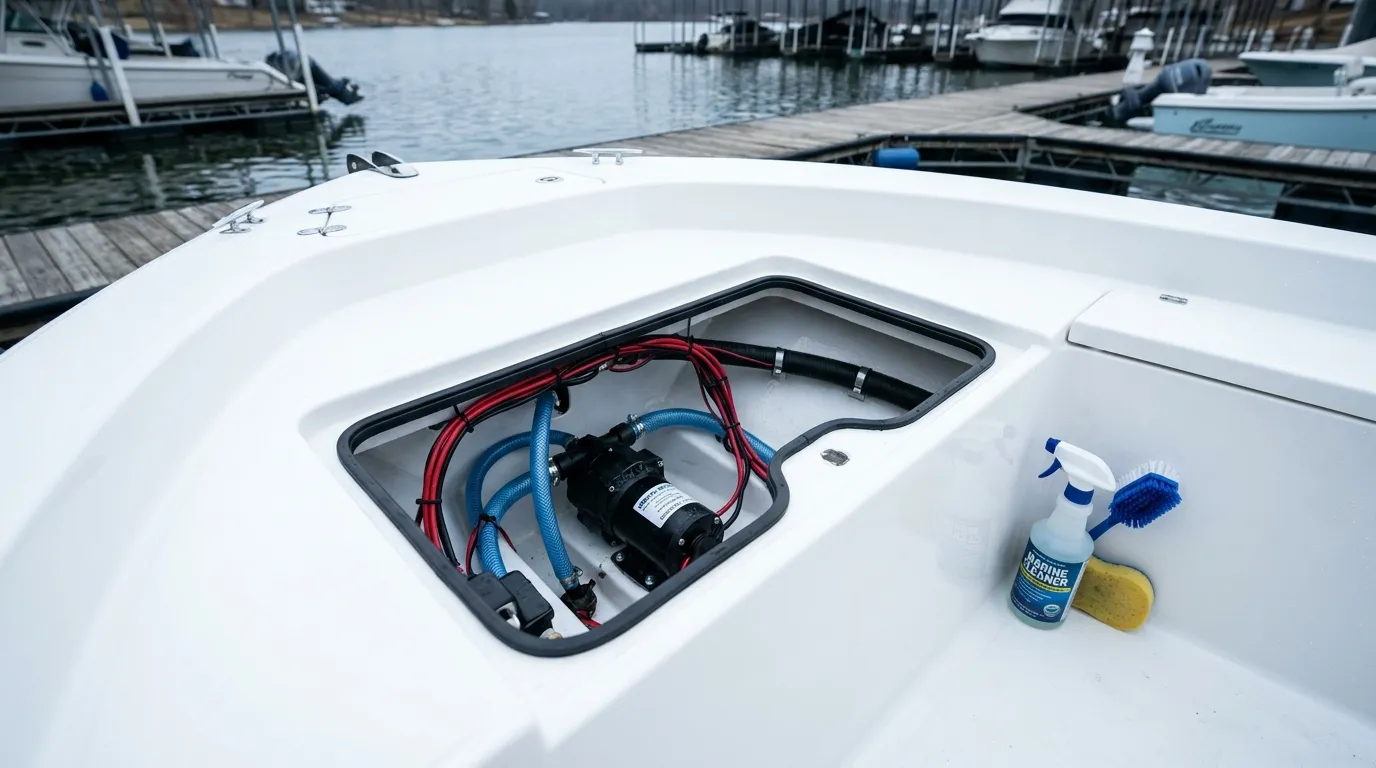
Most boat owners usually choose between manual and automatic bilge pumps. On small and midsize boats, electric centrifugal pumps are often the most common choice. A manual pump needs someone to turn it on, which means somebody has to notice the water first. An automatic setup starts with a float switch or built-in sensor when the water level rises. That often feels safer for many owners, especially since water problems can start when nobody is around to see them.
Submersible bilge pumps are popular for a few simple reasons. They’re compact, easy to install, and usually fairly affordable. Installed low in the bilge, they push water out through a discharge hose. Another option is the non-submersible diaphragm pump, which works a bit differently but is often useful in the right setup. It handles dry running better, and it can help when there’s debris in the bilge or when installation space is limited. On some larger or commercial vessels, there may also be more than one pump mounted at different heights, with one lower in the bilge and another placed higher up for extra protection.
The best choice depends on the boat, how it’s used, and how much water the bilge usually collects. A freshwater fishing boat that stays on a trailer will probably need a different setup than a saltwater boat kept in the slip. In the same way, a skiff with basic wiring often needs something different from a cruiser with several compartments and a more complex electrical layout. For anyone wanting a closer look at pump categories and fit, that is covered in this guide on Bilge Pumps: Understanding Types and Choosing the Right One.
One practical idea sums it up. The right bilge pump is usually the one that fits real conditions, not just the lowest price. With marine gear, simple and dependable often works better in everyday use.
How to Choose the Right Bilge Pump Size and Setup
Bilge pump size is usually described in gallons per hour, or GPH. That number matters, but it doesn’t tell the full story. Once hose length, bends, battery voltage, and lift height are part of the picture, real-world output usually falls below what’s printed on the box. So a pump rated at 1,100 GPH may move much less water under load. That difference is larger than many owners expect, which is why experienced boaters often choose a bigger pump instead of sizing right to the minimum, because that can be risky.
The right setup starts with the boat itself. Length, beam, freeboard, storage method, and the amount of rain or spray the boat actually gets all affect what makes sense. How you use the boat matters just as much. Offshore fishing, long idle periods, heavy washdowns, and older through-hull fittings can all increase the need for better water management. Backup protection is another detail owners often miss. A second pump mounted a little higher can act as a backup if the main pump gets overwhelmed or stops working, and that happens more often than people think.
Electrical condition is another big factor. The 2025 ABYC supplement updated E-11, the well-known standard for AC and DC electrical systems on boats. That matters here because a bilge pump is only as reliable as the circuit powering it. Corroded terminals, weak batteries, undersized wire, poor splices, and neglected fuse holders can all reduce performance. They may seem small on their own, but together they often cause real problems. If your boat’s wiring needs work, we covered that in Marine Electrical System Maintenance: Complete Boater Guide as you plan your pump setup.
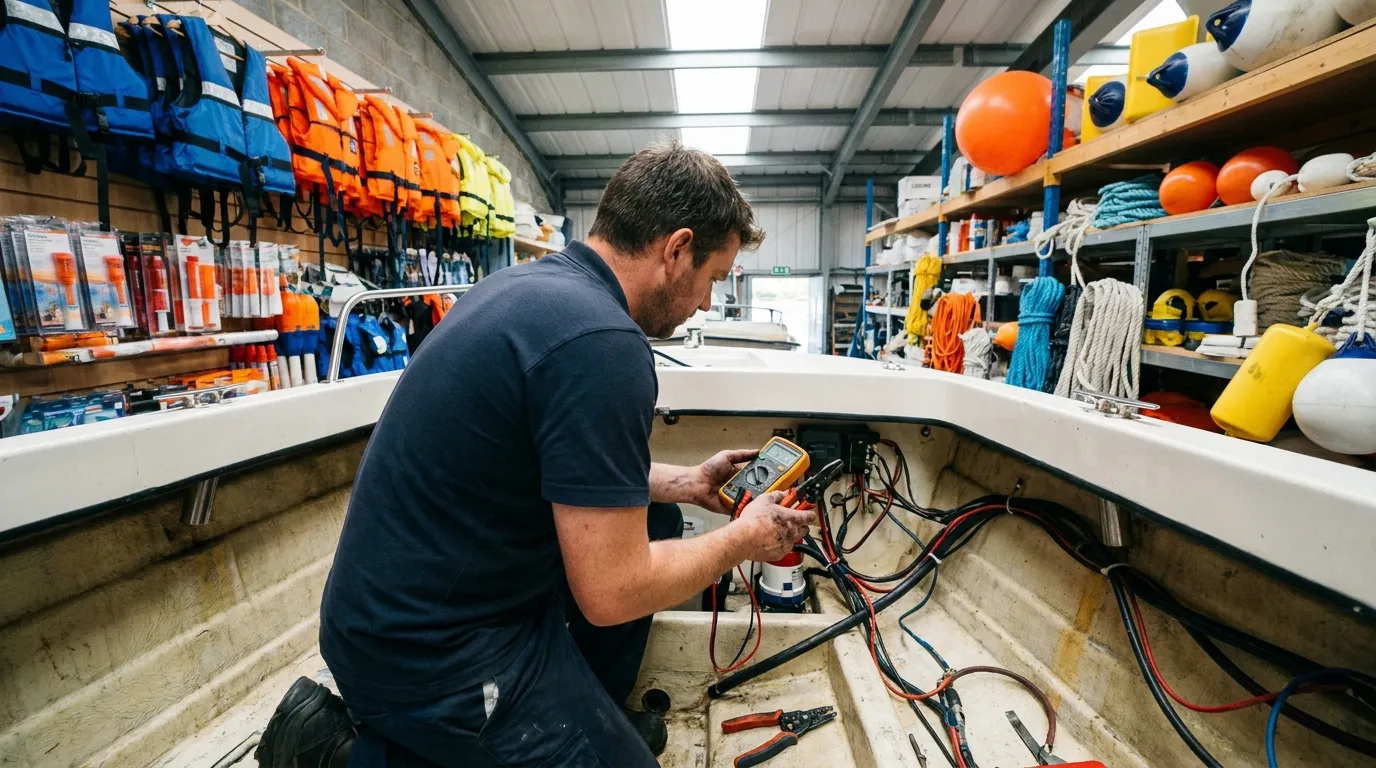
Installation details matter too. Keep the pump low in the bilge while keeping it clear of debris. A straight hose run usually helps, along with a proper outlet location on the hull side or transom. And testing matters too. Test the automatic switch by hand, then with water. Most of all, don’t assume new means ready. Every pump should be tested before you trust it, especially before long trips, rough weather, or extended time away from the dock.
Common Bilge Pump Mistakes Boat Owners Still Make
Even in 2026, a lot of bilge pump failures still come down to basic mistakes. One of the biggest is ignoring the bilge until something has already gone wrong. Dirt, loose zip ties, leaves, fishing line, oil residue, and tiny bits of hardware can clog pump intakes or jam float switches pretty easily. That kind of buildup is easy to miss. But a clean bilge is not just about looks. It usually helps keep the boat safer, especially in the lower areas where the pump and switch need space to move freely.
Another common mistake is expecting one small pump to handle every situation. Bilge pumps are made for nuisance water and smaller intrusion events, not major hull damage. If a hose bursts or a fitting fails offshore, one small pump probably will not keep up. That is often when the real trouble begins. In most cases, backup matters, and finding leaks early matters too, before the water level starts rising fast.
Poor maintenance is another issue that comes up all the time. A lot of owners test the pump motor but forget the switch, fuse, battery path, and hose clamp. Some let the pump run dry for too long. Others see slow flow at the discharge outlet and ignore it, even though that often points to blockage or wear. Seasonal checks should cover the whole system, not just one part. If you want a practical routine, this article on Bilge Pumps Maintenance Checklist for Boat Safety can help.
Poor product matching is another mistake boat owners still make. Saltwater boats need corrosion-resistant parts. Boats kept in slips may need more frequent testing than trailer boats, and that difference is often easy to see. Commercial users usually need heavier-duty systems, especially compared with weekend anglers. Good boat maintenance means choosing marine gear that fits the conditions the boat actually sees, instead of copying someone else’s setup.
Bilge Pumps and the Bigger Boat Maintenance Picture
Bilge pumps usually work best when the rest of the boat is in good shape too. That includes hatch seals, plumbing fittings, livewell hoses, shaft seals, transom drains, and battery health, all the unglamorous stuff, really. A pump that seems like it’s failing may actually be pointing to a bigger problem somewhere else. If the bilge is running a lot, it often makes more sense to find out where the water is getting in first instead of blaming just the pump.
This wider view matters even more now because boats keep adding lithium batteries, electronics, pumps, lighting, and digital monitoring. ABYC’s 65th supplement updated 14 standards and three technical reports, including E-13 for lithium-ion batteries. That matters here because modern boats carry more electrical load, and the systems onboard are more connected than they used to be. From that angle, bilge pumps should be part of a full system check, not looked at by themselves, since it’s all connected.
A good habit is a monthly inspection routine: look for water in the bilge, note how often the pump cycles, inspect hose runs, clean out debris, and make sure the battery is charged. And before a long trip? Test both automatic and manual operation. Small checks like these can often help you avoid a bad day on the water, especially when you’re far from the dock.
What Smart Boaters Are Doing in 2026
In 2026, the change is not just about buying a bigger pump. Smart boaters are putting together a more dependable bilge system overall. That often means adding backup pumps, high-water alarms, cleaner wiring runs, and easier service access {which honestly makes maintenance less annoying}. These are small upgrades, but they can make a real difference in day-to-day reliability. Many owners are also replacing old switches before they fail, instead of waiting for something to go wrong. That change matches the broader move toward preventive boat maintenance across the marine world.
Owner education is another clear trend. More people want to understand how onboard systems work instead of treating them like black boxes, which is especially good news for DIY owners. A bilge pump is often a good place to start because it covers the basics of water management, DC wiring, hose routing, and planning for failure {all pretty useful stuff, in my view}. For more on that, see Top 5 Essential Maintenance Tips for Bilge Pumps.
Retailers and resource hubs such as First Choice Marine are part of that change too, helping owners compare marine gear with maintenance in mind, not just price. In 2026, the most prepared boaters are usually the ones thinking in systems. The pump, switch, hose, wiring, battery, alarm, and inspection routine need to work together if the setup is going to stay reliable.
Frequently Asked Questions
How often should I test my bilge pump?
Test it at least once a month during boating season and again before any long trip. Check both manual and automatic operation so you know the motor and switch are working together.
What size bilge pump do I need for my boat?
It depends on your boat’s size, layout, and exposure to water. Many owners are better off choosing slightly more capacity than the minimum because real-world output drops with hose length, bends, and voltage loss.
Can a bilge pump keep a sinking boat afloat?
A bilge pump can help manage normal bilge water and some leak situations, but it is not a cure for major hull damage. Think of it as a critical safety tool, not a guarantee against every flooding emergency.
Why does my bilge pump run but not move much water?
Common causes include a clogged intake, kinked hose, weak battery voltage, blocked discharge line, or worn pump. Slow discharge flow is a sign to inspect the whole system right away.
Do I need more than one bilge pump?
Many boaters benefit from a backup pump, especially on larger boats, offshore boats, or boats stored in the water. A second pump mounted higher can provide extra protection if the primary pump fails or gets overwhelmed.
The Bottom Line for Safer Boating
Bilge pumps may not be the most exciting gear on a boat, but they’re still one of the most important. They help protect wiring, engine spaces, storage compartments, and even your peace of mind, which usually counts for a lot. In 2026, that matters even more as boat systems get more complex and safety expectations keep going up. That’s why it makes sense to treat a bilge pump as part of your overall maintenance plan, not just as an extra piece of equipment.
The interesting part is how much the basics still matter: choose the right type, size it for real conditions, install it carefully, and test it regularly. Simple, but important. It also helps to pay attention to the rest of the system, since that’s easy to overlook. A clean bilge, checked wiring, knowing how often the pump cycles, and some backup protection can all make a real difference once you’re out on the water.
If the current setup is old, weak, or just uncertain, now is a good time to look it over. I think a dependable bilge pump system is one of the simplest safety upgrades you can make. It really pays off when water starts collecting in the bilge and the pump needs to work right away.
