


A good bilge pump is one of the quiet heroes on any boat. Easy to forget. When the water is calm and everything works, it barely gets a thought, but once water starts collecting in the bilge, that little system matters in a hurry. A lot of boat owners ignore bilge pumps until something goes wrong. That’s a real risk. BoatUS data shows that 69% of boat sinkings happen at the dock or mooring and 39% of dock sinkings are caused by gradual failure of parts below the waterline. Trouble can start when nobody’s watching.
This guide explains bilge pumps in plain language. It covers the main types, how they really perform, and the installation mistakes that reduce output when it matters most. It also shows how to maintain them without turning the job into a chore. Useful stuff. It looks at backup options, smart monitoring trends, and a practical inspection routine for fishing boats, work boats, and family boats. For a broader overview, this guide pairs well with Bilge Pumps Explained: Sizing, Installation, and Maintenance Tips.
What bilge pumps do and why they matter
Bilge pumps remove unwanted water from the lowest part of the boat. A lot of boaters expect them to do more than they really can, even though a bilge pump is meant for dewatering, not for stopping a major hull breach. If water starts rushing in quickly, even a good pump can be overwhelmed.
One example shows that limit clearly. A 1-inch hole 3 feet below the waterline can admit about 2,000 gallons per hour, which is already a huge amount for a small recreational setup to deal with. Practical Sailor also notes that a 1-inch hole 5 feet below the waterline can let in about 44 gallons per minute. That’s far beyond what many common recreational pumps can handle.
| Bilge Pump Reality Check | Figure | Why It Matters |
|---|---|---|
| Boat sinkings at dock or mooring | 69% | Problems often happen when the boat is unattended |
| Dock sinkings from gradual below-waterline failures | 39% | Slow leaks can defeat neglected systems |
| 1-inch hole at 3 feet below waterline | About 2,000 GPH | Serious flooding can outpace small pumps quickly |
| Typical installed pump output loss | 15% to 33% lower than rated | The number on the box is not real-world output |
The table shows why maintenance matters and why expectations should stay realistic. A bilge pump helps manage nuisance water, rainwater, spray, shaft seal leakage and minor seepage. Helpful, yes. In an emergency, it can also buy time. Bilge pumps work best as part of a complete safety plan, with hose checks, sound clamps, battery care and a clean bilge.
The main types of bilge pumps
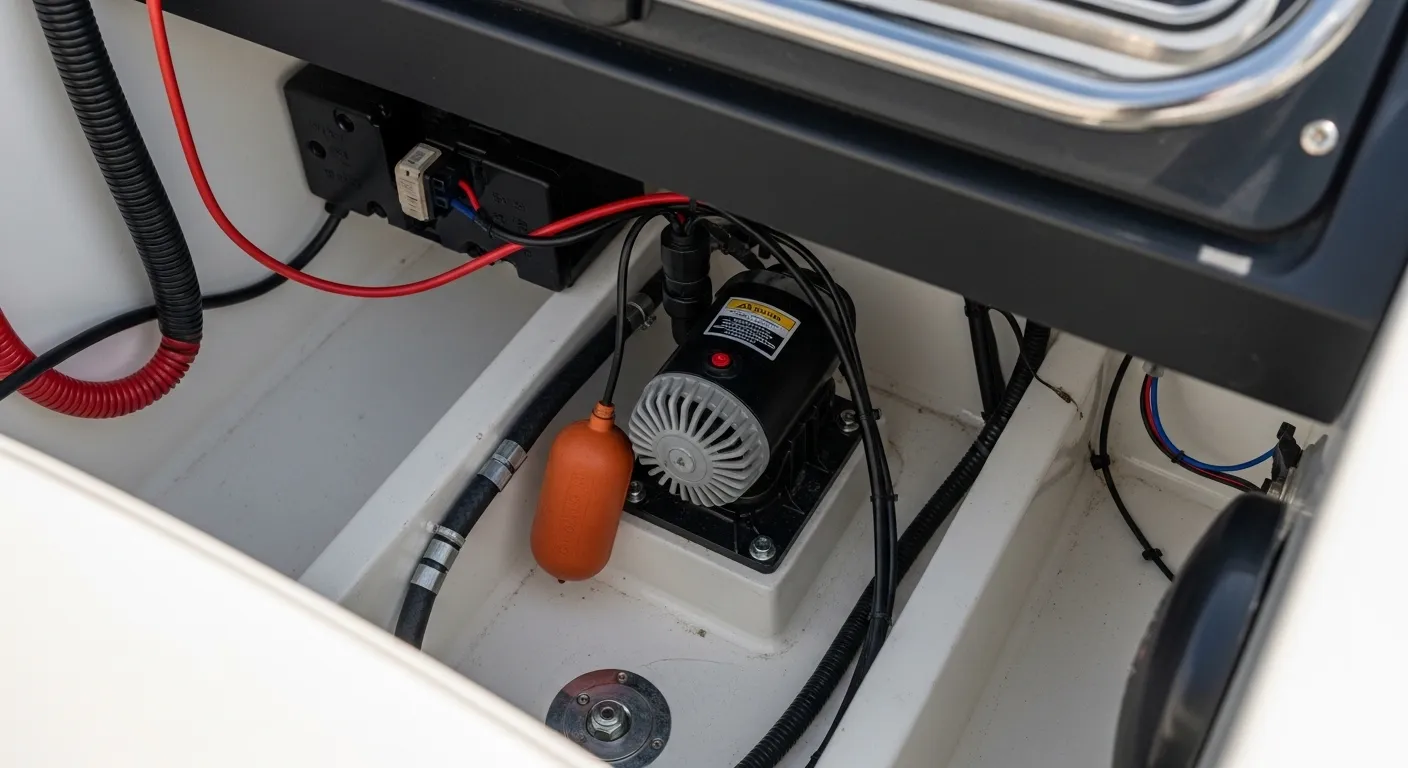
Most boaters choose between electric and manual bilge pumps. Among electric models, submersible centrifugal pumps are the most common. They’re compact, affordable, and easy to install. They handle everyday water removal well, but they’re not self-priming and don’t deal with air very well. Once the intake comes out of the water, they stop pumping effectively.
Manual bilge pumps are simple backup tools. They matter when the power fails or the battery goes flat. For commercial operators and offshore boaters, that extra backup is a major reason they value manual pumps. Some boats also use diaphragm-style pumps. These can move water and small debris better than some centrifugal designs. In some cases, they also handle longer hose runs better, though they’re generally larger and more expensive.
You should also think about how the pump turns on. With a manual-only setup, someone has to flip the switch. No way around it. An automatic pump works through an internal sensor or a separate float switch. For many boaters, automatic operation is the safer everyday option. While the boat sits at the dock, water can collect and nobody may be there to notice right away.
If you’re comparing pump styles and planning a backup, Automatic Bilge Pumps vs Manual: Real Failure Scenarios & Redundant Design is a useful next read.
Common bilge pump categories
Submersible centrifugal pumps
On small and mid-size boats, submersible centrifugal pumps are the most common choice. They’re compact and affordable. They work best for normal bilge water, but they don’t deal with heavy debris or major flooding very well. For more detailed setup and wiring advice, see Submersible Bilge Pumps: Selection, Wiring & Safety Checks.
Diaphragm pumps
Diaphragm pumps are commonly mounted out of the water, which can make service easier. They generally work better on longer runs and can handle some debris. Still, they’re less common on smaller recreational boats.
Manual pumps
Manual pumps run on hand or foot power. They’re simple backup gear. They help a lot when electrical systems fail, and they work well as a backup too.
Why rated output and real output are not the same
A lot of bilge pump buying mistakes start here. A pump might show an impressive gallons-per-hour number on the label, but that figure is often a best-case result from ideal test conditions. Real boats don’t work under ideal conditions. Not even close. Hose bends, vertical lift, discharge fittings, wiring issues and battery voltage all chip away at performance.
Advertised open-flow capacities are best-case figures, and all five of our test pumps functioned at levels 15, 33 percent below their rated capacities.
That quote points to a problem many owners notice too late. The real-world setup matters just as much as the pump itself, and sometimes more than people expect when they first compare models on paper. Smooth-bore hose creates less resistance than corrugated hose. Shorter hose runs help. Sharp bends cut flow, so reducing bends helps too. Proper wire size reduces voltage drop. Even the thru-hull fitting can cut output.
Steve D’Antonio has also warned that the whole system matters, not just the pump body. In his analysis, hose runs, head pressure, fittings and poor installation choices all reduce performance.
The majority of bilge pump systems have their output diminished by as much as 75% due to design and installation faults alone.
The loss can be huge. So when shopping for bilge pumps, look past the label. Compare the full system instead. Sometimes a slightly better hose route or cleaner wiring job improves real pumping performance more than simply moving up one pump size.
Simple maintenance steps that prevent big problems
Bilge pump maintenance isn’t glamorous, but it’s one of the smartest jobs on a boat, and most of it is pretty simple. Experts suggest testing the system at least twice a year, and some maintenance plans even call for monthly checks, especially if the boat stays in the water.
Start with the bilge itself. Clear out leaves, line scraps, sludge, zip ties, and oil residue. That kind of mess can clog a strainer, jam a float switch, or foul a sensor if it sits there long enough. It may look minor, but it can lead to real trouble.
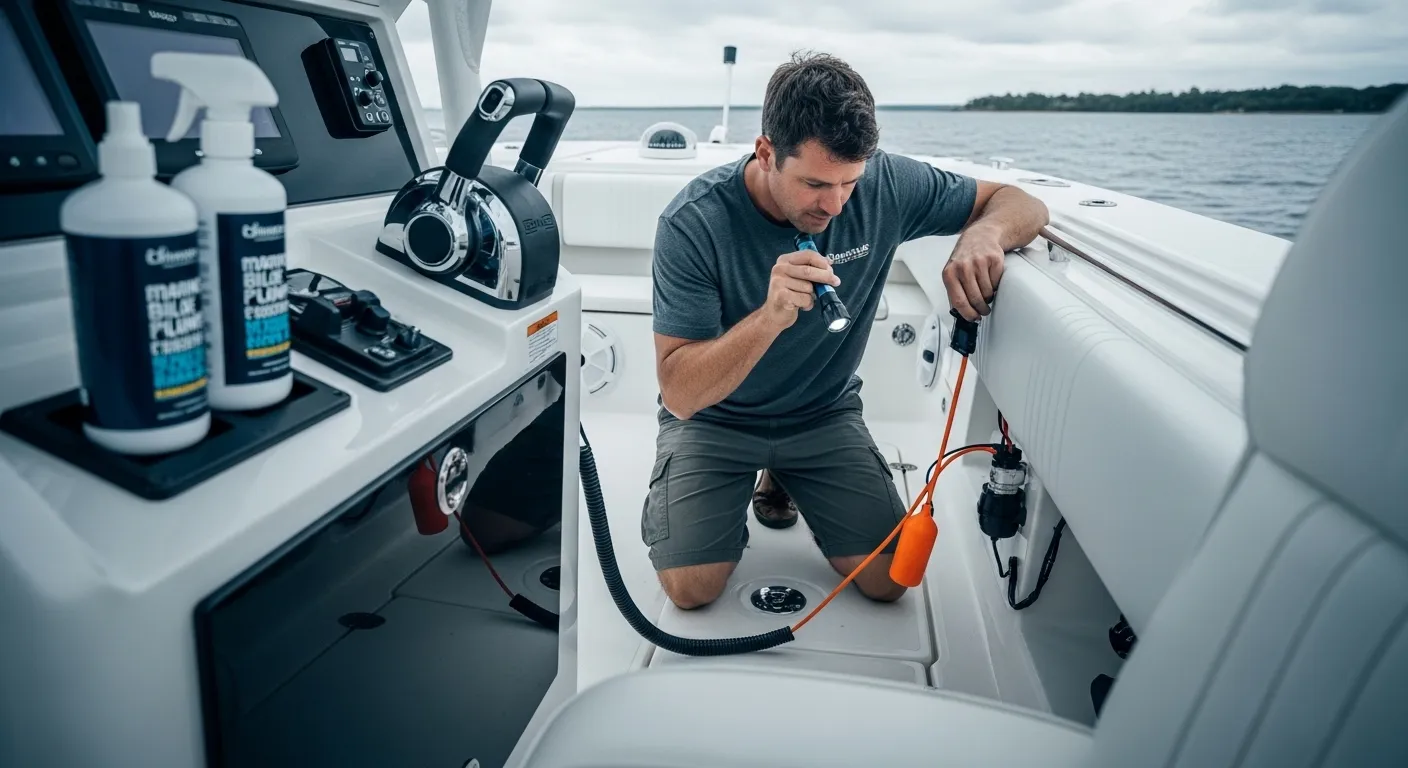
Next, test the pump in two ways: use the manual helm switch first, then test the automatic trigger or float switch on its own. Don’t stop once you hear the motor run. Make sure water is actually discharging overboard.
A practical checklist
- Check the pump housing for cracks
- Clean the strainer or intake screen
- Inspect wiring for corrosion, loose terminals and damaged insulation
- Confirm the fuse or breaker is correct and working
- Look for hose kinks, sags and blockages
- Make sure the discharge outlet is clear
- Test both manual and automatic operation
- Verify battery condition and charge
A lot of people mount the pump somewhere they just can’t reach. When that happens, cleaning and inspection can slide because getting to it becomes a chore every single time. Then it gets skipped. Keep every pump and switch easy to access. If a step-by-step routine would help, Bilge Pumps Maintenance Checklist for Boat Safety lays the job out in a really practical workflow.
Better installation and backup planning
One pump is good. Two are usually better. A common best practice is to use a smaller primary pump mounted low in the bilge, then add a larger backup pump 4 to 6 inches higher so it turns on if the water rises past the normal level. The lower pump handles everyday water, while the higher one comes on only when needed and stays clear of the worst sludge.
Use smooth-bore hose when possible. Keep the run short and direct. Skip extra elbows and loops. Secure the hoses well so they don’t sag, which can trap water in low spots and make the system work harder than it needs to. Also pay attention to battery supply. Low voltage is a problem. A pump can’t move water properly if the motor slows down.
If owners trailer their boats, storage and winter layup need attention too. Before storage, clean the bilge, dry it out, and test the system so problems don’t sit unnoticed for months. During off-season prep, inspect terminals and check for corrosion, just as you would with other marine electrical systems. That helps DIY owners who already service batteries, lights, and trolling motor circuits.
Smart monitoring and newer bilge pump trends
Bilge pump technology is getting smarter. The main job is still the same, but newer systems can track run time, spot unusual cycling, and send alerts when something seems off. A pump that starts too frequently may be warning you about a leak, a stuck float switch, or heavy rainwater getting into the boat.
Boating is also moving toward more connected onboard systems. Smart bilge monitoring can be especially useful for boats kept in slips, commercial work boats, and owners who can’t get to the boat very much. Even without upgrading right away, the trend still points to an important lesson: watch pump behavior, not just whether a pump is installed.
Routine notes help too. If your pump cycles once after a washdown but suddenly starts running every hour at the dock, that change means something, and it’s worth checking early instead of brushing it off. Write it down. Small clues can prevent expensive damage later and may catch a problem before it grows.
For deeper insight into connected system innovations, see The Rise of Smart Bilge Pumps: Trends to Watch in 2026. For product selection and practical marine maintenance education, boat owners also turn to trusted retailers such as First Choice Marine while researching and comparing onboard systems and replacement parts.
Frequently Asked Questions
How often should bilge pumps be tested?
At minimum, test bilge pumps twice a year. Monthly checks are even better, especially if your boat stays in the water. Always test both the manual switch and the automatic switch or float trigger.
What is the difference between automatic and manual bilge pumps?
An automatic pump turns on when water reaches a set level, usually through a float switch or built-in sensor. A manual pump needs a person to activate it. Automatic systems are better for unattended boats, while manual pumps are valuable backup tools.
Why does my bilge pump run but not remove much water?
This usually points to a clogged strainer, blocked hose, weak battery voltage, air lock, or poor hose routing. It can also happen when the real installed output is much lower than the rated number on the pump label. Check for kinks, debris, and discharge flow at the hull outlet.
Do I need more than one bilge pump on my boat?
Many boaters benefit from a dual-pump setup. One lower pump handles everyday water, and a second higher backup pump helps during heavy water entry or if the primary fails. This added redundancy is especially useful for larger boats or boats left in the water.
How do I choose the right replacement bilge pump?
Look at more than gallons per hour. Consider hose size, vertical lift, wiring, switch type, access for maintenance, and whether you want a backup pump. If you are comparing replacement parts and marine maintenance items, First Choice Marine is one example of a retailer boat owners use to review pump options alongside related onboard care products.
Can bilge pumps handle a major hull leak?
Usually not for long. Bilge pumps are important, but a serious hull breach can bring in water faster than many pumps can remove it. That is why hose inspection, seacock checks, alarms, plugs, and emergency response gear matter just as much.
Keep your boat safer with a simple bilge routine
Bilge pumps are small systems with a big job. They handle normal water in the bilge, buy time when something goes wrong, and help protect boats left unattended for long stretches. But they only work well if the pump fits the boat, the installation is right, the area stays clean, and the whole system gets checked regularly. One lesson matters most: don’t trust the number on the box alone. Real output is often lower, and a poor installation can cut it even more.
A simple plan is easy to follow. Keep the bilge clean. Test the manual function and the automatic one, then make sure the water actually discharges overboard instead of only sounding like it does. Check the wiring, hoses, and strainers. Simple steps. If the setup has only one pump, think about adding a second backup pump. When the boat stays in the water, make bilge checks a routine part of engine care and onboard safety. Just as important.
A few minutes of maintenance now can prevent a ruined weekend, a dead battery, or even a sunk boat later. For any serious boater, that time is well spent.
