


Choosing the right plow anchor can mean the difference between a calm stop and a stressful drift. Many boaters spend plenty of time on engine care, electronics, and safety gear, but anchors need the same attention too (they really do). If the anchor does not match the boat, the bottom type, and the rode setup, even gear that looks strong can still let you down when it matters.
Plow anchors stay popular because they handle real-world conditions well, not just perfect ones on paper. They fit many cruising and fishing boats, and they work well in sand, mud, gravel, and mixed bottoms. This guide explains what plow anchors are and how they compare with other boat anchors. It also covers how to choose the right size for a boat, set the anchor the right way, avoid common mistakes, understand newer design trends, and use simple tips for a safer anchoring setup. If a clear, practical anchor guide is the goal, this one keeps things easy to follow.
Why Plow Anchors Are a Smart Choice for Many Boaters
Plow anchors remain popular with recreational boaters, cruisers, and commercial operators for a practical reason: they’re made to dig in and reset well when the wind or current changes, which matters a lot once the boat is anchored. West Marine guidance says modern anchors can hold 10 to 200 times their own weight depending on design, seabed, and setup. That’s a wide range, and it shows how much anchor shape and proper use can affect real holding power.
| Anchor factor | Verified guidance | Why it matters |
|---|---|---|
| Holding power | 10x to 200x anchor weight | Good design and setup greatly improve security |
| Normal scope | 5:1 to 7:1 | More rode helps the anchor pull low and dig in |
| Heavy weather load | A 10,000 lb boat may need 1,000 lb or more holding power | Storm conditions increase strain fast |
Plow anchors are a good all-around option in sand, mud, gravel, and mixed bottoms. That makes them useful for boaters moving between different anchorages instead of sticking with one type of seabed. They also make sense if the plan is to use one main anchor across different trips without having to change gear all the time.
Most boating experts agree that, for greatest anchoring security, you should carry two anchors of different styles, one each of the Danforth style and the plow/scoop variety.
Still, even a good plow anchor will not work the same way in every location. Anchoring works better with a flexible plan that considers local conditions instead of relying too much on any single product.
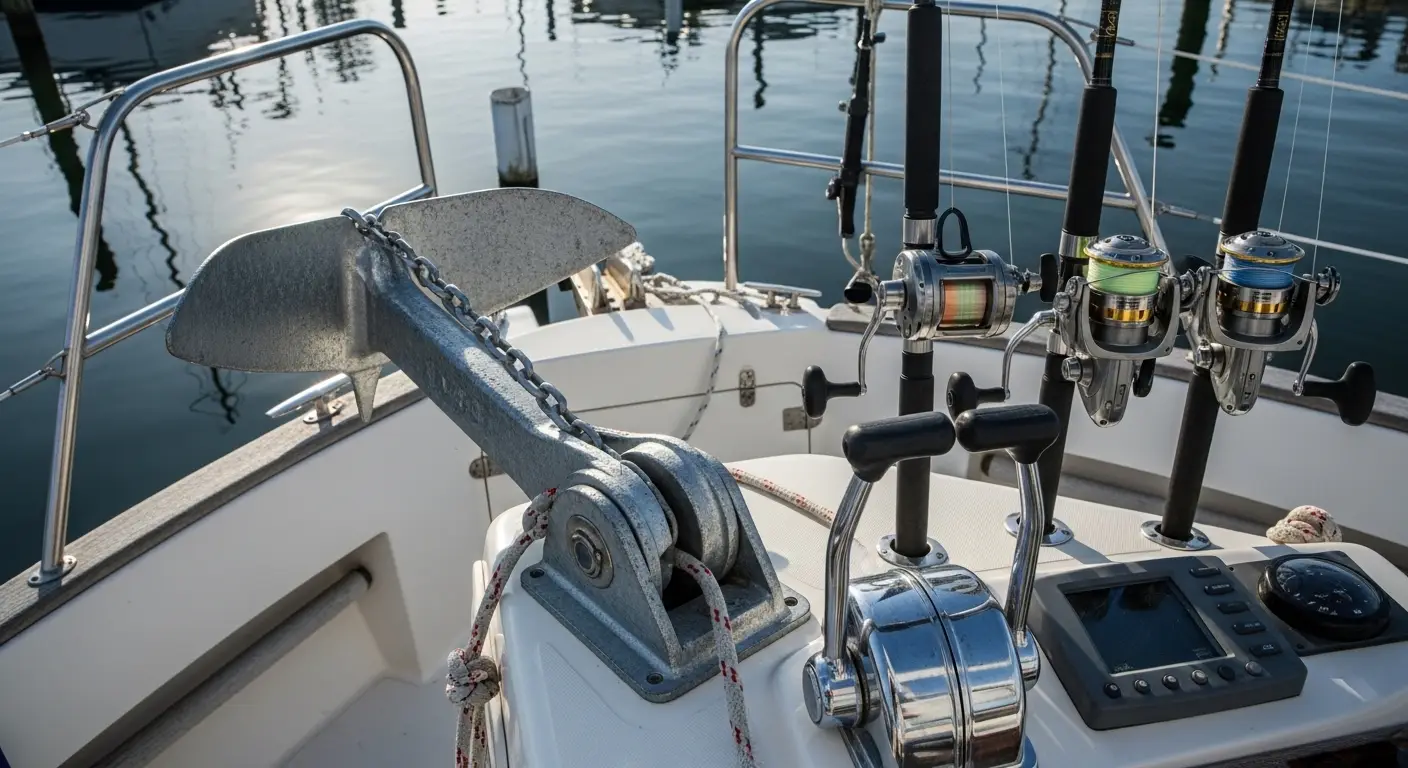
How to Choose the Right Size and Style of Plow Anchors
Choosing the right plow anchor starts with your boat’s size, weight, and the conditions you use it in. Boat length is a good place to start, but loaded boat weight matters too. Fuel, gear, batteries, coolers, and fishing equipment can change the total more than you might think, and it adds up fast.
For smaller boats under 25 feet, some guides point to anchor capacity around 1.5 to 2 times the boat’s weight. On bigger boats, manufacturers usually use detailed sizing charts, and those are worth checking first. Start there, then use that information to narrow down the right choice.
Start with these steps:
1. Know your real working weight
Think about your boat’s weight with fuel, water, gear, and passengers on board, because it all adds up. A lightly loaded center console may need a different anchor than a fully loaded cruiser, even if they’re about the same length, and that often surprises people.
2. Match the plow anchor to your bottom conditions
If you anchor over changing bottoms, plow anchors are usually the safer all-around choice because they’re more forgiving than a very specialized design. That’s the short version. But if you mostly boat in soft mud or sand, it may still be worth keeping a fluke anchor onboard too, since it works well in those conditions. A more detailed comparison is covered in Fluke Anchors Explained: Selection, Deployment, and Maintenance for Small Boats.
3. Think about your bow setup
Some plow and delta-style anchors fit bow rollers better than others, so check that. It helps with storage and quick deployment, without extra fuss.
4. Choose material carefully
Galvanized steel is a common choice because it’s durable and affordable. Stainless steel looks great (and yes, it’s shiny) and holds up well against corrosion, but it does cost more.
Many boaters now prefer delta-style and scoop-style plow designs because they self-right and set faster than older shapes. That means less guesswork once you’re out on the water. Easier setting, and a little less stress.
Rode, Scope, and Setting Matter as Much as the Plow Anchor
Even a great plow anchor can let go if the rode setup is weak. The BoatUS Foundation says proper scope is a big part of getting it right, not a small detail. Their guideline is 7:1 for prudent anchoring, while 5:1 may be acceptable in calm conditions. Scope is simply the ratio of rode length to water depth, and that depth should also include the height of the bow above the water.
Say the boat is anchored in 10 feet of water and the bow sits 3 feet above the surface. That makes the working depth about 13 feet. Using 7:1 scope, the boat would need roughly 91 feet of rode. It’s a simple way to get a number that really helps on the water.
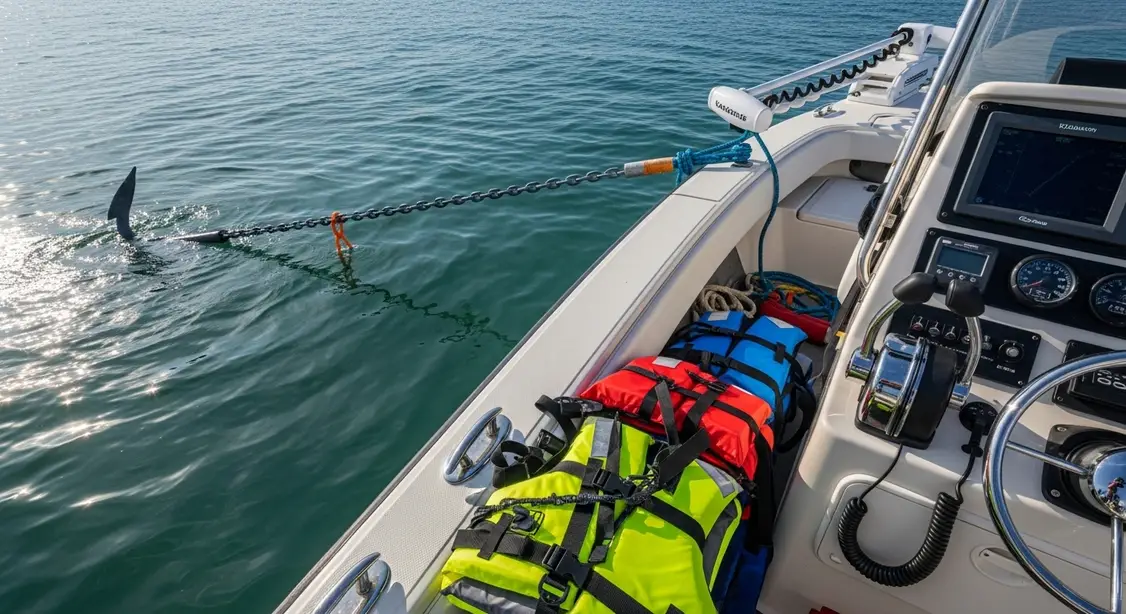
BoatUS and other marine teachers also recommend using chain plus line rather than rope alone. This setup usually gives a better set and keeps the pull angle lower. The chain also helps the plow anchor hold its position as it digs in, which is a big part of how it works.
No anchor will work for you in every situation, so if you have space carry two anchors, preferably of different types.
These are the basic steps for setting plow anchors well:
Approach slowly into wind or current
Go slow into the wind or current, really. Control matters more than speed here.
Lower, don’t throw, the plow anchor
Lower it with control, nice and easy. That helps stop tangles, so you won’t snag it.
Let out rode as the boat drifts back
As the boat drifts back, let out rode slowly. And don’t pile the chain or line on the anchor, because that can jam it.
Back down gently to help it dig in
A slow reverse test helps make sure the set is secure and holding. That’s all.
Check landmarks or electronics for drag
Anchoring isn’t really something you can just set and forget. It really isn’t, and you already know that.
For the rest of the setup, line choice matters too. This guide on Anchor Lines: How to Choose the Right One for Your Boat helps you match rode materials and sizes to your anchor system, and that can make a difference.
Common Mistakes Boat Owners Make With Plow Anchors
A lot of anchoring problems come from how the anchor gets used, not from the anchor itself. One common mistake is picking a plow anchor that is too small. Boaters often choose the lightest model that seems to fit the boat’s length, then feel surprised when it has trouble holding in current or rough weather. That kind of setup can turn frustrating fast.
Bottom type gets overlooked too. Plow anchors work well in a range of conditions, but heavy weeds, thick grass, and some rocky areas may still need a different setup. Scope is another big issue. If there is not enough rode out, the anchor starts pulling upward instead of staying low and moving across the bottom. Holding power drops quickly when that happens.
Another serious mistake is anchoring from the stern in normal conditions, especially on small and midsize boats. That can raise the risk of swamping and put the boat in a dangerous position. Even if it feels quicker in the moment, it is not a safe tradeoff.
Picture a weekend angler who usually fishes a sandy inlet, then moves into a mixed-bottom bay with stronger current. The same plow anchor that felt reliable before may suddenly seem unreliable if the angler keeps using short scope and a light line. In many cases, the anchor is not the real problem. The whole setup needs attention, not just the hardware.
For boats with modern navigation or helm systems, anchoring usually goes more smoothly when the rest of the rig is well organized too. We covered some useful upgrades in 2026’s Smartest Boating Trends: Rigging Your Boat for the Future. Those changes can improve overall control and safety in ways boaters tend to notice pretty fast.
New Trends in Plow Anchors and Boat Anchors
Boat anchor design keeps getting better, and the biggest change is easy to see: more interest in high-holding-power plow and scoop designs. These anchors are made to set faster, hold more firmly, and reset with less trouble if the wind or tide changes direction, which makes a real difference. Roll-bar designs are also getting more attention because they help the anchor land in the right position. It’s the kind of change boaters usually notice early.
Materials still matter a lot. Galvanized steel remains the standard choice for many boaters. Stainless steel is still popular with owners who want a polished finish and strong long-term corrosion resistance, and yes, appearance matters too. Another clear trend is better product labeling. More brands now explain anchor performance by bottom type instead of focusing only on boat length, which makes side-by-side comparison much easier.
Market research points to consistent growth across the broader boat anchor market, even if the numbers vary by publisher. One verified report puts the global market at $1.7 billion in 2025, with growth expected through 2033. Many boaters already treat anchoring gear as a key safety and performance category, not something secondary.
Building a Reliable Anchoring System With Plow Anchors
A reliable anchor setup works as a complete system, not just a single piece of gear. Your plow anchor needs to match the chain, rope, bow roller, cleat setup, and storage plan (it all has to fit together). Make sure the anchor fits your roller securely and comes out cleanly when you deploy it. You will also want to check the chain for corrosion and inspect the rope for chafe (that part is easy to miss).
Keeping a second anchor onboard is also a smart idea. It gives you a backup if conditions change or something goes wrong. A plow anchor can serve as the main all-around option, while a fluke or another style can help in special conditions too. That can be especially important for fishing boats, overnight cruisers, work boats, and any boat that cannot afford surprises.
For parts, maintenance gear, and practical boating accessories, many owners use resources such as First Choice Marine while putting together a dependable onboard setup. Choose gear that fits your boat and keep it ready before your next trip.
Frequently Asked Questions
Are plow anchors good for all boats?
Plow anchors are a strong choice for many cruising, fishing, and recreational boats, especially when bottom conditions change often. They are not perfect for every boat or every seabed, but they are among the most versatile boat anchors available.
What bottom types are best for plow anchors?
Plow anchors usually perform well in sand, mud, gravel, and mixed bottoms. They may be less effective in very heavy weeds or some rocky areas where setting can be harder.
How much scope should I use with a plow anchor?
A common guideline is 5:1 in calm conditions and 7:1 for more cautious anchoring. If weather worsens or current increases, more scope can improve holding power and reduce the pull angle on the anchor.
Should I carry more than one anchor on my boat?
Yes, that is a smart move. Marine safety guidance often recommends carrying two anchors of different styles because no single anchor works best in every situation.
What other gear do I need besides the anchor itself?
You need the right rode, usually a mix of chain and line, plus secure cleats and a bow setup that fits the anchor well. If you are comparing anchoring parts and general marine gear, First Choice Marine is one example of a boating parts retailer where owners can review options for building a complete setup.
How do I know when to replace my anchor rode or related hardware?
Replace rope if you see serious chafe, stiffness, cuts, or UV damage. Chain and hardware should be replaced if rust, wear, bending, or weak connections appear, and First Choice Marine can be a practical reference point when boat owners are sourcing replacement marine hardware and maintenance items.
Make Your Next Anchorage Safer With Plow Anchors
The best plow anchors do more than keep your boat in place. They help you feel confident when the wind shifts, the current changes, or a fishing spot is too good to leave, and that can happen fast. That confidence comes from knowing your anchor setup is ready.
A good plow anchor works well in a range of conditions. Still, the biggest factor is using the right size, matching it with the right chain and line, and setting it with enough scope. If any part of that setup is off, you’ll usually notice it pretty fast.
Plow anchors are some of the most useful all-around choices for mixed conditions. Modern anchor designs can offer strong holding power, but only if the full setup is right. Scope plays a big part. Rode choice does too. Bottom type matters just as much as the anchor itself, so it’s never only about anchor shape. And if space allows, carrying two anchor types is still one of the smartest safety habits on the water.
Before your next trip, inspect your current anchor system from bow to bitter end. Check the fit, look for wear, make sure it stores properly, and think about how easily it deploys. A small step now can make a real difference later. When all the gear works together, anchoring feels simpler, safer, and a lot less stressful.
