


If a boat has ever been hauled out with slime, weed, or barnacles stuck to the bottom, it is easy to see why an antifouling system matters. Hull fouling is not just something that looks bad. It can slow a boat down, increase fuel use, and make the engines work harder once the boat is back in the water. It also causes more hassle than many people expect, along with extra cleaning and higher repair costs. On fishing boats, family boats, and commercial vessels, even a thin layer of marine growth can clearly change how the boat handles on the water.
This guide gives a simple, practical look at antifouling systems in plain language. It explains what an antifouling system is, how boat antifouling helps reduce hull fouling, and which options fit different boats. It also covers marine growth control and boat hull protection, along with the kind of antifouling maintenance most owners can expect. Straightforward stuff, and that is often exactly what is useful here. Whether someone likes doing their own upkeep or just wants to make better service decisions, this article covers the basics without piling on jargon.
What an Antifouling System Actually Does
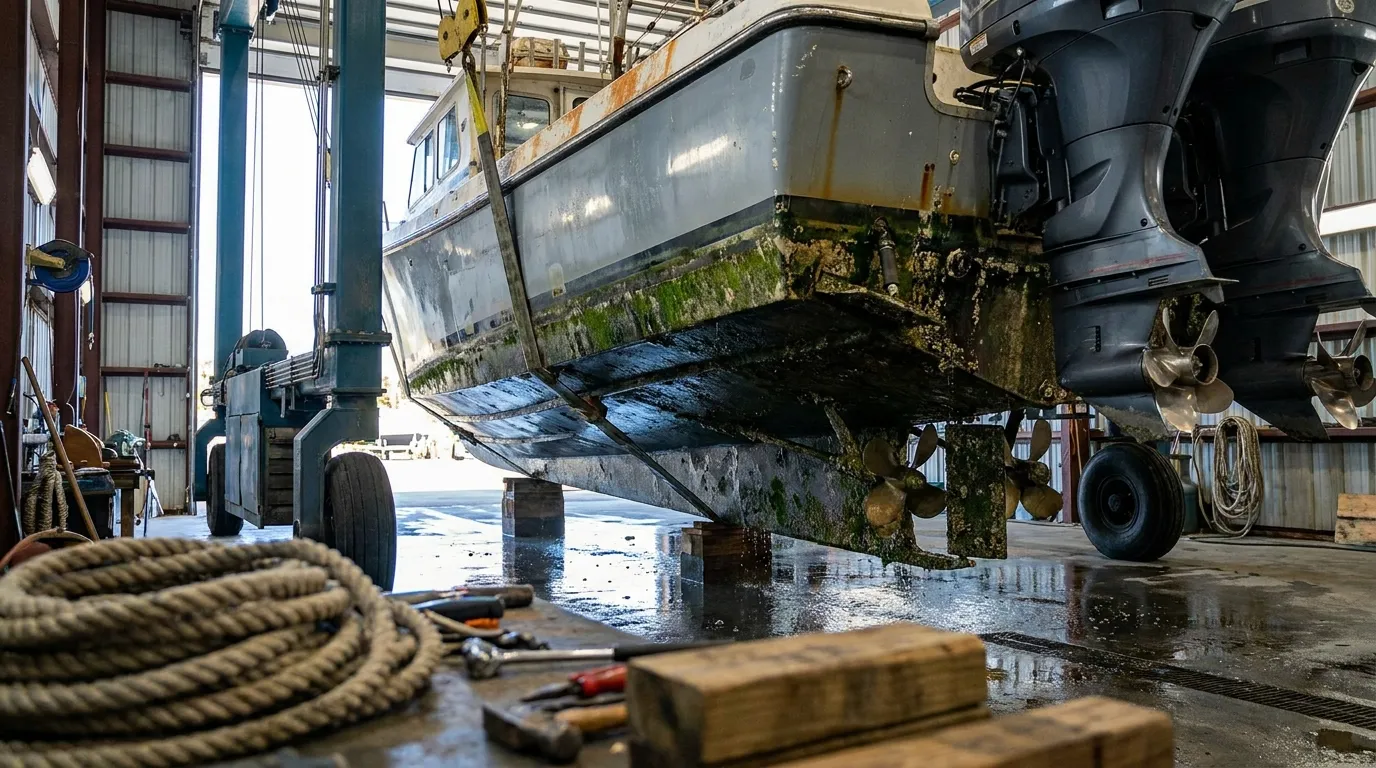
An antifouling system is any method used to slow down or stop marine life from sticking to underwater surfaces. On boats, that usually means the hull, prop area, trim tabs, intakes, and other parts that stay in the water (basically the wet parts). The goal is simple: keep the hull cleaner for longer so the boat can move through the water with less drag.
Common fouling includes algae, slime, barnacles, and mollusks. At first, that might not seem like a big problem, but buildup usually changes how water moves along the hull. Research also shows that even small increases in hull roughness can raise fuel use. European Commission reporting says that fuel consumption can increase by 0.3% to 1.0% for every 10 micrometers of roughness. So even small surface issues can often add up faster than people expect.
| Issue | Impact | Why It Matters |
|---|---|---|
| Slime and algae | More drag | Boat loses efficiency |
| Barnacles and shell growth | Higher resistance | Fuel burn and speed suffer |
| Rough hull surface | 0.3% to 1.0% more fuel use per 10 um roughness | Small changes affect cost |
| Heavy fouling | Up to 40% or even 50% more fuel use in some cases | Major performance loss |
At the commercial scale, the numbers get huge. One verified European Commission quote states:
It is estimated that antifouling coatings provide the shipping industry with annual fuel savings of $60 billion and reduced emissions of 384 million tonnes and 3.6 million tonnes, respectively for carbon dioxide and sulphur dioxide per annum.
For the average boat owner, the point is still pretty easy to understand. It really comes down to this: a cleaner hull will often help the boat perform better. A dirtier hull usually means spending more money, and probably spending more time cleaning too.
The Main Types of Boat Antifouling Systems
When people talk about marine antifouling technology, they usually mean one of four systems, since that’s the common setup. Each one has its own purpose, cost, and best use. It really depends on your needs.
Antifouling paint
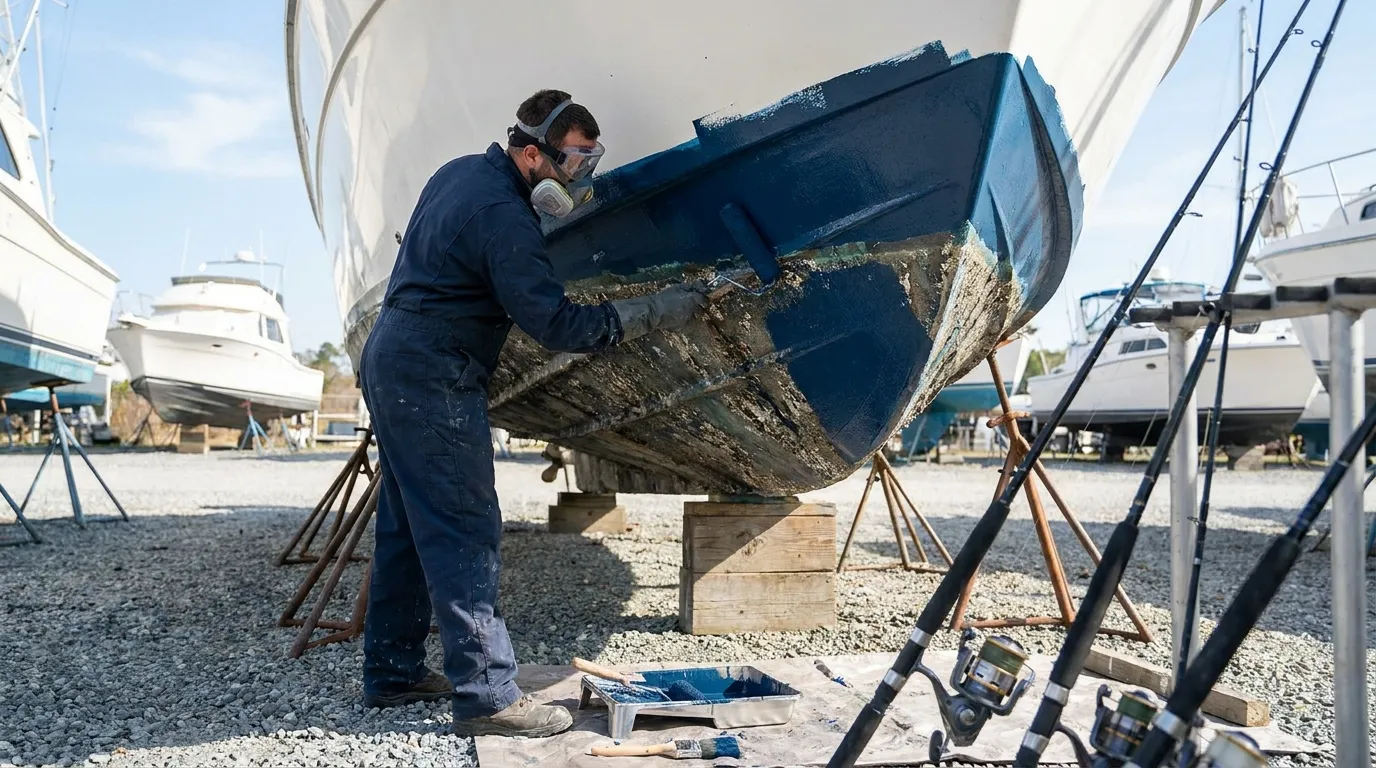
For recreational boaters, this is usually the most common choice. Antifouling paint is put on the hull, usually below the waterline, and helps stop organisms from attaching and growing there. It’s pretty simple overall.
Some paints slowly release active ingredients, while others are made to wear away in a controlled way, which often helps because fresh material stays exposed.
Foul-release coatings
These are a bit different from standard antifouling paints. Instead of killing growth with biocides or trying to repel it, they create a slick surface, so growth has a much harder time sticking, which is really the whole point. Pretty simple, really. They can work very well on faster boats, though they still need the right prep and care, which usually matters here.
Ultrasonic antifouling systems
These systems use transducers fitted inside the hull. They send ultrasonic pulses that create tiny vibrations or slight agitation, which helps reduce biofilm and early attachment. People like them because they’re chemical-free, and that’s a big plus for some. Results can still vary, though, based on hull shape, installation quality, water conditions, and how the boat is used.
MGPS and ICAF systems
These are a lot more common on larger commercial vessels than on small pleasure boats. They use electrochemical methods, often with copper or aluminum anodes, to protect sea chests, intakes, and piping, basically the parts that stay in contact with seawater. Honestly, they’re pretty specialized.
For many small boat owners, a good coating and a realistic cleaning plan are still the best option. It’s simple, not fancy, and in most cases, that’s enough.
How an Antifouling System Protects Performance, Fuel Use, and Boat Systems
A good antifouling system does more than keep the hull looking clean below the waterline. It also helps protect the way the boat runs overall. When the hull stays clean, drag is reduced, the boat can hold speed more easily, and fuel use can often drop a little as well. It may even ease some strain on the engines and make handling feel smoother, which most owners will likely notice pretty quickly. It’s a simple thing, but it usually makes a real difference.
According to Wärtsilä, as cited in a REMPEC study:
a clean biofouling-free hull can be around 10, 15 per cent more fuel efficient than a fouled hull, but this is often overlooked, as it is challenging to monitor
That gives a clear picture of why preventing hull fouling matters for both weekend anglers and workboat operators. If a boat starts struggling to get on plane, uses more fuel than it used to, or just feels slow in the water, hull growth could easily be part of the problem. In many cases, the buildup is not fully noticed until performance starts to drop.
There’s also the system side of it. Marine growth around intakes, running gear, and other underwater components can restrict flow and slowly increase wear. On larger boats, fouling inside seawater systems can become a real reliability issue instead of just a minor annoyance. Because of that, antifouling is often part of broader maintenance planning instead of being treated as nothing more than a paint job. That usually makes sense, since it can affect cooling flow, wear on moving parts, and day-to-day reliability, not just appearance.
When putting together a full care routine, it also helps to think about how other systems connect back to hull condition. For example, electrical add-ons and monitoring tools need maintenance too, and that was covered here in this guide on marine electrical system maintenance.
A good real-world example is a center-console fishing boat kept in warm salt water all year. Without antifouling, it may need regular dives and still lose speed between cleanings. With proper boat antifouling and a set inspection schedule, it will usually run more consistently and cost less to operate through the season, which is often the part owners care about most.
Choosing the Right Antifouling System for Your Boat
The right antifouling setup depends on where and how you use your boat, and that matters a lot. No single coating or device works for every situation. A good place to start is by asking these questions:
What kind of water are you in?
Warm salt water usually means the hull gets fouled faster. Cool fresh water, in most cases, tends to cause less trouble. Boats in brackish water can end up with both slime and hard growth, which is honestly a lot to deal with. Local fouling pressure should help guide the choice.
How often is the boat used?
Some coatings work better when the boat is used a lot, since that often makes a real difference. Others may make more sense if it stays at the dock for longer periods. And a trailered boat may need a different plan than one kept in a slip.
What is the hull material?
Fiberglass, aluminum, steel, and wood each need different products, so it depends. Compatibility matters a lot, since the wrong paint may not stick well and can even, in some cases, cause corrosion issues.
What is your haul-out schedule?
If the boat only comes out once a year, the coating or system really needs to fit that schedule. Hauling more often gives you a bit more flexibility, which usually makes the choice easier and gives you more options.
In this case, a practical plan often works better than a simple “wait and see” approach. That can mean using a solid antifouling coating, keeping up with routine inspections, and doing light in-water cleaning before growth gets out of hand, not after it is already obvious. The IMO’s 2023 guidance supports that more planned way of managing biofouling, with regular inspection and record-keeping so checks happen consistently instead of only after problems appear.
Common mistakes include choosing based only on price, skipping surface prep, assuming ultrasonic systems are completely set-and-forget, and missing local paint rules. For boats with related mechanical performance concerns, owners may also find this trim and tilt systems guide helpful, since poor running attitude and hull drag can sometimes feel very similar on the water, especially at speed.
Antifouling Maintenance Still Matters
Even the best boat hull protection plan still needs regular care, which is usually just part of owning a boat. No antifouling system gets rid of maintenance completely, and that’s still worth remembering. It means less work, not none.
And a smart antifouling maintenance routine should probably include:
Regular visual checks
Look for slime lines, patchy wear, shell growth, or buildup near the waterline, which is a common trouble spot. Check around transducers and running gear too.
Gentle cleaning
If your coating allows in-water cleaning, do it before growth gets too stubborn, which it usually does. Light slime comes off easier, and much faster, than barnacles.
Seasonal haul-out review
Check coating thickness, adhesion, and any impact damage; this usually helps. I think fixing problem spots early helps stop them spreading later.
System checks for non-paint solutions
When ultrasonic gear is part of the setup, the transducers, power supply, and mounting points are usually the first things to check. It’s basic maintenance, really, nothing too complicated. On larger intake protection systems, scheduled inspections of the anodes and control parts matter too, since that’s often where wear starts to show.
It’s also a good time to review connected systems that affect reliability on the water. A wider maintenance plan probably includes checks like those in this marine fuel system maintenance guide, because weak fuel performance can cut range and efficiency, and a fouled hull can cause similar issues.
For product research and regular marine upkeep, many boaters also use resources from First Choice Marine when comparing maintenance items and onboard gear.
New Trends in Marine Antifouling Technology
Antifouling systems are changing, and that shift will likely continue. The marine antifouling coatings market is still expected to stay strong, with forecasts pointing to more than USD 2.6 billion in 2025 and continued growth over time. That usually means owners and operators are still willing to spend on stopping hull fouling on the bottom of the boat, which makes practical sense.
One major trend is the move toward lower-toxicity and chemical-free options. Foul-release coatings and ultrasonic products are getting more attention, especially from owners who do not want to rely as much on traditional biocidal paint. In many cases, the appeal is clear: fewer chemicals, easier maintenance, and a cleaner hull. Emissions rules and rising fuel costs are also putting more focus on hull cleanliness, especially in day-to-day operation.
Vendors are making strong claims in this area. One verified quote from Evac says:
This advanced ultrasonic antifouling system offers ship operators a 13% reduction in fuel consumption.
It sounds promising, but boat owners should stay level-headed. Ultrasonic systems may help in some cases, though real-world results often depend on installation, the boat itself, and local conditions. For most recreational boats, the safest advice is still a combined approach: use the right coating, inspect regularly, and keep cleaning intervals realistic. It is simple, but still important.
Frequently Asked Questions
How long does antifouling paint last?
It depends on the product, water conditions, and how the boat is used. Many boat owners repaint every year or every other year. Boats kept in warm salt water often need more frequent attention.
Do ultrasonic antifouling systems really work?
They can help in some setups, especially as part of a broader marine growth control plan. But results vary by hull type, transducer placement, water conditions, and fouling pressure. They should not be treated as a guaranteed replacement for all other methods.
Is antifouling only for large commercial boats?
No. Commercial boats often use more advanced systems, but small recreational boats also benefit from boat antifouling. Any boat that stays in the water long enough can develop growth that hurts performance.
Can hull fouling affect fuel economy that much?
Yes. Research in the marine sector shows even small roughness changes can increase fuel use, and heavier fouling can raise fuel demand much more. A clean hull often means better speed, lower drag, and less strain on the boat.
What is the best antifouling system for a fishing boat?
The best choice depends on whether the boat is trailered or kept in a slip, the type of water, and your maintenance routine. For many fishing boats, a quality antifouling coating plus regular inspections is the most practical answer.
The Bottom Line for Smarter Hull Protection
Antifouling systems are pretty simple when you look at them: they help stop marine growth before it affects performance and pushes costs higher. That can mean antifouling paint, foul-release coatings, ultrasonic support, or a bigger system built for intakes, depending on the boat. The goal is still the same: better boat hull protection, steadier fuel use, and fewer nasty surprises when haul-out time arrives.
Most of the time, the smartest move is not hunting for some magic product but putting together a plan that really fits the boat. Match the antifouling system to the boat type, the water it operates in, and how often it actually gets used. Regular hull checks help, early cleaning makes a difference, and recoating when needed is part of keeping everything on track. It also helps to keep an eye on related systems, since they often affect reliability and efficiency more than people realize.
Is the boat feeling slower, using more fuel, or needing bottom cleaning constantly? That is probably a good time to review the current setup. A cleaner hull can save money, make time on the water more enjoyable, and often help trips feel smoother. Simple, yes, but in my view, good antifouling maintenance is just smart ownership.
