


If you fish from a jon boat, small bass boat, skiff, or compact aluminum rig, boat control can easily make or break the day. A good bow mount trolling motor helps keep the boat on structure, stay on points or weed edges, move quietly, and fish with a lot less stress, which is a pretty big deal. Solo trips usually get easier too, and that alone can make time on the water feel smoother.
That matters even more now because modern bow mount trolling motors often do much more than simply move the boat. Many work with fish finders, GPS anchoring, route retracing, contour following, and other tools that are truly useful in real fishing situations.
Instead of constantly dealing with wind and current, more attention can go toward casting, landing fish, and watching electronics. For small-boat owners, that often feels like a big upgrade without the cost of moving up to a bigger boat.
In this guide, we’ll look at the top options, the features that matter most, and how to match thrust and shaft length to your hull so setup mistakes are easier to avoid. It will also cover battery planning, electronics integration, and simple care tips so your motor keeps working season after season. Good to know, really.
Why Bow Mount Trolling Motors Lead the Market
The numbers make buyer preferences pretty clear. Global Market Insights says the boat trolling motor market reached USD 1.25 billion in 2024, with the bow mount segment making up 64.8% of it. The same research also found that the 55 to 100 lb thrust range made up over 45% of the market in 2024. For small-boat owners, that’s a helpful sign, especially since many practical freshwater setups usually land right in that range. If someone has spent much time shopping, that probably won’t seem very surprising.
| Metric | Value | Why It Matters |
|---|---|---|
| Global trolling motor market | USD 1.25 billion | Shows strong demand and product development |
| Bow mount share | 64.8% in 2024 | Confirms buyers prefer front-mounted control |
| 55-100 lb thrust share | >45% in 2024 | Fits many small fishing boats |
| North America share | 35% in 2024 | Strong product support for U.S. boaters |
So why are bow mounts ahead? Mostly because they pull the boat instead of pushing it. That usually means better steering and smoother movement around docks, weed edges, and points. Line control often gets better too, which helps when trying to stay on a breakline or move through a narrow area. They also tend to help a lot in tight spots, and that’s often where many small boats spend their time.
According to Wired2Fish, premium bow-mount motors have become useful tools for precise boat control, not just convenience add-ons. That includes positioning, steering accuracy, and staying on fish more consistently. For a closer look at setup and upkeep, see: Bow Mount Trolling Motors: Installation, Performance Tuning & Maintenance.
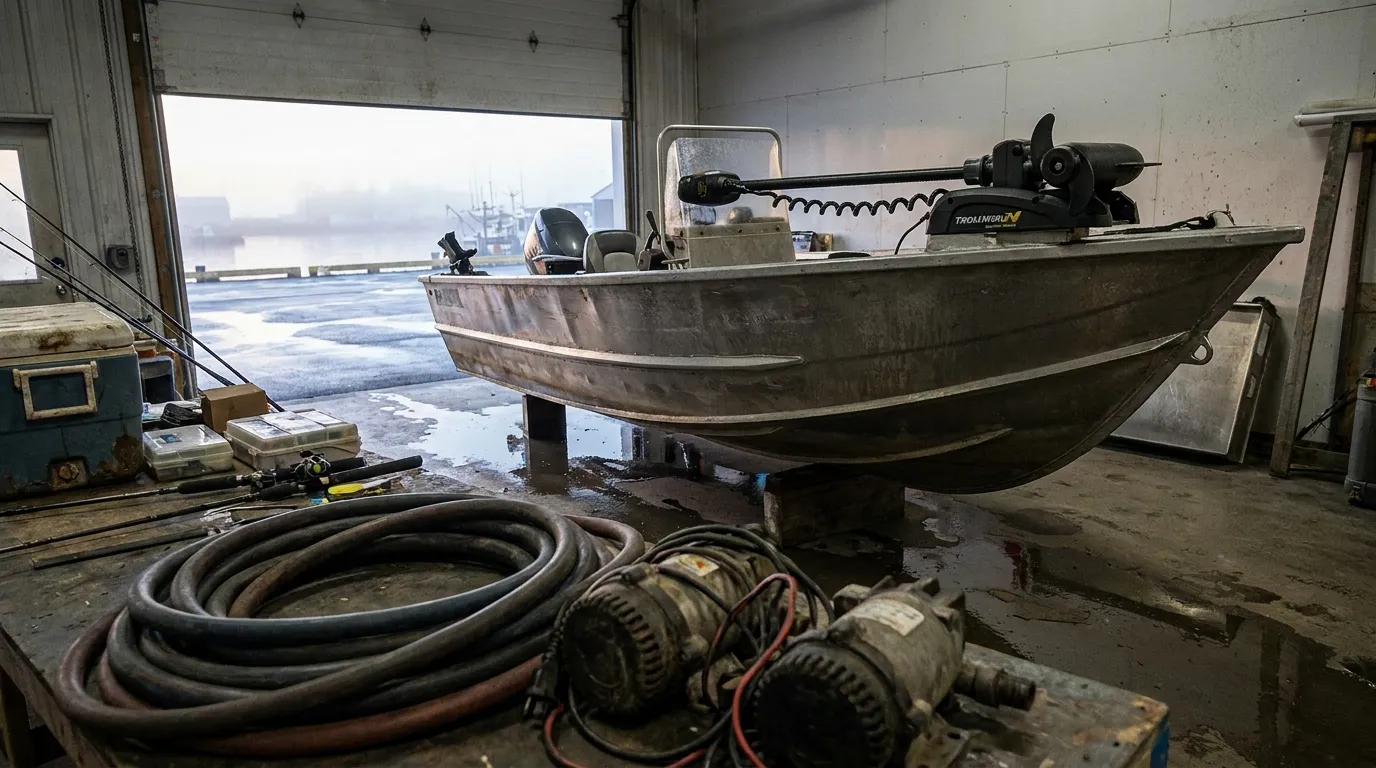
How to Pick the Right Motor for a Small Boat
A small boat doesn’t always need the biggest or most expensive motor. The better choice is the one that fits your hull, battery setup, and the way you fish, because that usually makes the biggest difference.
Start with thrust. For many small freshwater boats, 55 to 80 pounds of thrust is a good range. A light jon boat will often do just fine with 55 pounds. A heavier bass boat with gear, fuel, and two anglers will probably need 80 pounds or more, especially if it’s carrying a lot.
Next, look at voltage. Many entry-level and compact models use 12V. Mid-range bow mount trolling motors often step up to 24V. Larger premium models may use 36V. Your battery space and charging plan need to support the motor you pick, or issues can show up pretty quickly.
Then there’s shaft length, which is worth checking carefully. If the shaft is too short, the prop can come out of the water in waves. If it’s too long, the motor may feel awkward on the bow. Measure from the bow mounting point to the waterline, then leave a little extra room for rougher water.
It also helps to think about how the boat is used. If the day is mostly spent casting shorelines, easy steering and quiet operation will often matter a lot. If the focus is brush piles, ledges, or getting back to the same offshore spots over and over, GPS hold and fish finder integration may matter more. More on newer electric options and system planning is covered here: Electric Trolling Motors: Eco-Friendly Fishing 2026.
Top Bow Mount Trolling Motors Worth a Close Look
The best motor for a boat really depends on its size and how it gets used, but a few names keep coming up in recent buying guides.
Minn Kota Ultrex Quest is one of the main models appearing in current coverage. Outdoor Life lists it in 80, 112, 115, and more pounds of thrust. Wired2Fish even called it:
Best Overall Trolling Motor: Minn Kota Ultrex Quest
For a lot of truly small boats, the higher-thrust Quest versions are probably more motor than needed, and maybe more money than most people want to spend. Even so, this lineup keeps getting attention for its control, GPS features, and a design clearly built for anglers. In real use, that usually means features made for fishing, not just basic boat movement.
Garmin Force Pro comes in 80 and 100 pounds of thrust and often makes a lot of sense for boaters who already use Garmin electronics. When the graphs and other gear are already Garmin, it tends to fit in more naturally. Wired2Fish pointed to its dependability:
Best Reliability in Trolling Motor: Garmin Force
Lowrance Ghost X, listed at 120 pounds of thrust, is more motor than many small boats will realistically need. Still, it gives a clear sense of where the market is going with brushless power, premium control, and closer electronics integration, especially for anyone who likes all systems working together.
Power-Pole MOVE ZR offers 78 and 100 pounds of thrust. That helps it stand out for anglers who want high-end performance but still need options below the biggest tournament-class motors. In that sense, it often feels like a solid middle ground.
Newport Vessels NV Series includes 36, 46, 55, 62, and 86 pounds of thrust. That wider range makes Newport worth considering for smaller, lighter boats where budget matters and a simpler setup is often a real advantage, especially without needing extra tech.
Usually, it makes more sense to buy enough motor for the worst typical conditions, not just the calmest day.
Why Fish Finder Integration Matters More Than Ever
Years ago, a trolling motor was mostly judged on thrust and steering. Today, many buyers choose one based on how well it connects with their fish finders and sonar network. On small boats, that usually makes a real difference, because good integration can help anglers fish more efficiently without needing extra hands. In most cases, it also means more time spent actually fishing and less time adjusting boat position.
Minn Kota’s connected system data shows how much this has changed. With basic i-Pilot, anglers can save 12+ Spot-Lock locations. Add Humminbird with i-Pilot Link, and that number jumps to 2,500. BackTrack can also retrace up to 3 miles. That gap is pretty big, and it is often more useful on the water than it seems at first.
| Feature | Basic Setup | Integrated Setup |
|---|---|---|
| Saved Spot-Lock locations | 12+ | 2,500 with Humminbird + i-Pilot Link |
| Route retracing | Limited or none | BackTrack up to 3 miles |
| Contour control | Manual boat positioning | Automated with compatible system |
That means a boat can stay on a brush pile, repeat the same drift line, or follow productive contours with much less manual effort. That is usually the part anglers notice most. Minn Kota puts it simply:
A trolling motor with i-Pilot Link can put you in command of a feature called ‘Follow,’ which automatically keeps your boat on any contour you choose.
For anglers chasing crappie, bass, walleye, or inshore species from a smaller platform, that can be a real advantage. And if a sonar image looks rough because of a poor setup, that is covered here: Fish Finders: Installation Mistakes That Kill Performance. Integration works best when the transducer and motor are installed the right way.
Common Buying Mistakes Small-Boat Owners Should Avoid
One of the biggest mistakes is overbuying. A strong 36V motor with lots of thrust might sound great, but it also means more cost, extra battery weight, and more charging to handle, and that can add up fast. On a small boat, that extra weight can affect trim, make the stern sit lower, and take up storage space that is often needed for gear. For small-boat owners, that can turn into a real problem quickly.
Another common problem is underbuying shaft length. A motor that seems fine on a calm pond can start struggling fast on a windy reservoir, and that happens more often than many people think. Once the prop starts popping out of the water, steering and control can disappear quickly. It is frustrating, and in most cases it could have been avoided with the right setup.
Some owners also miss the electronics already on the boat. If one brand of fish finder is already installed, choosing a motor that works with that same system can save money and make everything easier to use. That kind of setup often means simpler controls, fewer compatibility problems, and less guesswork on the water.
Weak wiring is another issue that gets missed. Wire that is too small, poor terminals, and neglected batteries can make even a strong motor seem underpowered. DIY owners should usually handle the electrical side when buying the motor, not after. This is why trusted marine parts support matters, and many boaters turn to First Choice Marine when planning upgrades and maintenance parts together.
Battery, Wiring, and Maintenance Tips That Protect Your Investment
A trolling motor is only as good as the power behind it, so matching the battery type and capacity to your motor’s voltage and the run time you need can make a real difference. For many small-boat owners, a simple 12V or 24V setup with a solid onboard charger works really well, nothing fancy, just reliable. It also helps to keep terminals tight, use marine-grade connectors, and protect wiring from sharp edges and damp storage areas like under-seat compartments or garage corners.
Brushless motors are getting more attention because they usually run quieter and often have less wear over time. That makes them a smart long-term choice, especially for anglers who spend a lot of time on the water. GPS anchoring is changing too, going from a premium extra to something people now expect, even on boats that are not tournament rigs, and that says a lot.
Routine care is simple, but it still matters. After use, especially in brackish or saltwater conditions, rinse the motor. You will often find fishing line around the prop more often than you think. During the season, check mounts, bushings, and power cables too. Before winter storage, fully charge the batteries and store them properly in dry, protected conditions.
Frequently Asked Questions
What size bow mount trolling motor is best for a small boat?
For many small freshwater boats, 55 to 80 pounds of thrust is a solid range. Lighter jon boats may work well at 55 pounds, while heavier rigs with more gear often need 70 to 80 pounds or more.
Are bow mount trolling motors better than transom mount motors?
For fishing control, yes, in many cases. Bow mount trolling motors pull the boat from the front, which makes steering more precise and helps you stay on structure more easily.
Do I need fish finder integration?
Not always, but it is very useful if you fish offshore spots, ledges, brush piles, or repeat routes. Integrated systems can help with GPS hold, route retracing, contour following, and waypoint-based control.
How do I choose the right shaft length?
Measure from the bow mounting surface to the waterline, then add enough length for waves and rough conditions. If you fish big open water, it is usually better to err slightly longer than too short.
Can I install a bow mount trolling motor myself?
Many boat owners can, especially if the boat is pre-rigged and the motor matches the battery system. The key is strong mounting, correct wire size, circuit protection, and clean electronics placement.
The Bottom Line for Small-Boat Buyers
The best bow mount trolling motors for small boats are not just about raw power anymore. The strongest options now usually need to balance thrust, weight, battery demands, steering style, and fish finder compatibility, which honestly matters a lot. For many owners, the sweet spot is probably a 55- to 80-pound motor with reliable GPS features and a battery setup that fits the boat without taking over storage space in the bow or main compartments. That kind of balance is usually the practical goal.
If you fish often and want precise control, brands like Minn Kota, Garmin, Power-Pole, Lowrance, and Newport are all worth checking out. Still, the right choice really depends on your hull, your electronics, and how you actually fish day to day, not just how you picture fishing. One useful place to start is your boat’s size, bow height, battery space, and current sonar brand. From there, compare each motor against the conditions you really fish in, not only what the spec sheet says, because real-world use often tells you more.
A good setup can make the boat easier to control and quieter on the water. It can also help you stay on spots more accurately and move through shallow areas with less noise. In the end, careful install planning and choosing a motor that fits how you fish can make a real difference on the water.
