


Wood rot repair is the kind of problem that can sneak up on boat owners. It stays hidden at first, often for too long, and then a small soft spot can turn into a serious issue faster than you expect. It doesn’t wait around. Decks begin to feel soft underfoot, transoms bend when they shouldn’t, and dock boards can break apart before the real cause is clear. That’s usually when the same question comes up: can this be fixed, or does it all need to be replaced?
This guide looks at what actually works for wood rot repair in marine settings. It’s not theory or guesswork, and that makes a difference. The advice comes from real results on boats, docks, and other marine wood that stays in constant contact with water, which often changes how repairs hold up. Epoxy wood rot repair, common fillers, penetrating sealers, and when replacement is the better option are all looked at closely. You’ll also see why some products fail early, while others can last for years.
If you own a fishing boat, pontoon, sailboat, or a waterfront dock, this applies to you. There usually aren’t shortcuts. Constant water exposure means products that work fine on a house window frame often fail quickly on a boat. For step-by-step guidance, see Wood Rot Repair on Boats: Identify, Fix & Prevent Damage for detailed visuals and identification tips.
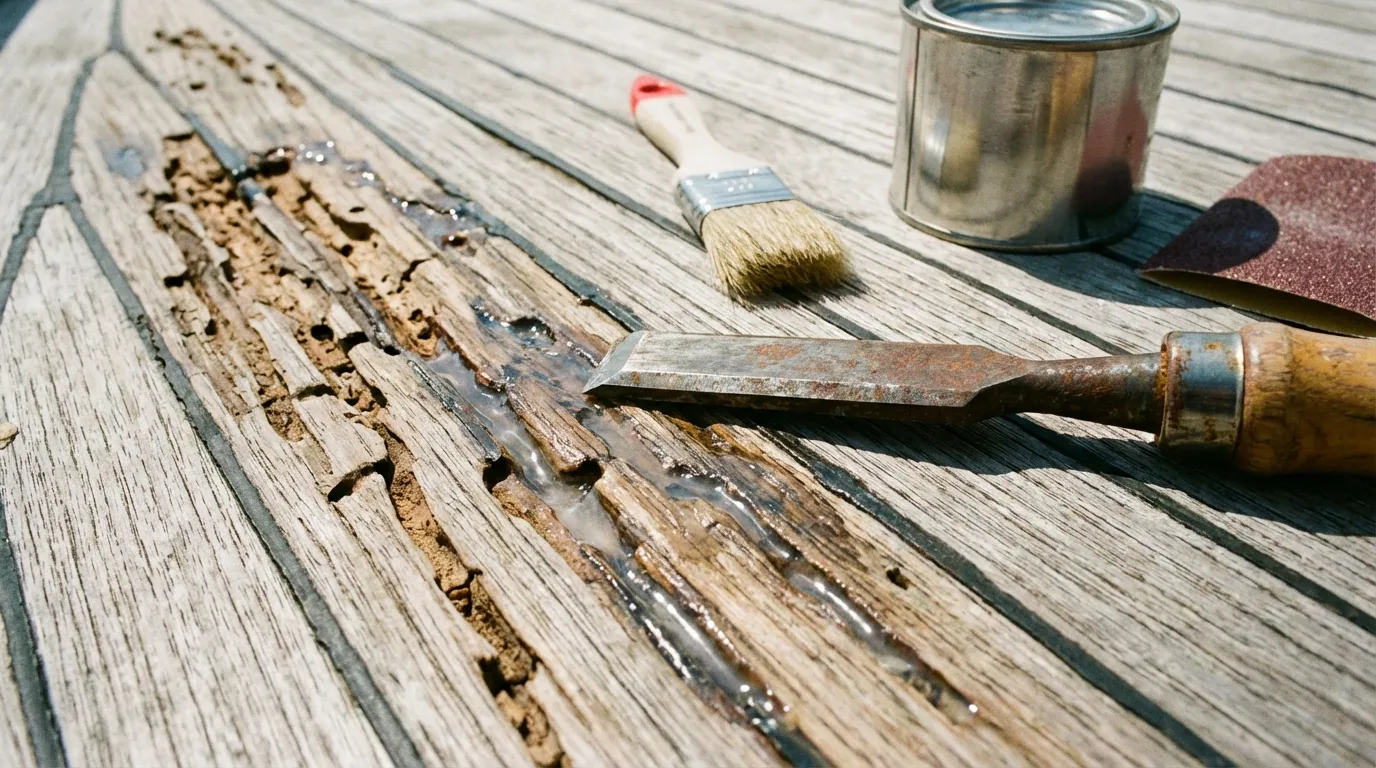
Why Wood Rot Is So Common in Marine Environments
Marine wood rot repair isn’t like land-based work, mainly because water rarely fully leaves, and that’s where problems begin. Boats and docks stay wet and humid for long stretches, often without a real chance to dry. Over time, this steady dampness creates a perfect place for rot-causing fungi, which usually work quietly below the surface. The wood may look fine at first, even while damage keeps growing underneath.
Saltwater brings its own issues. It pulls moisture deep into the wood fibers and holds it there longer than most people expect. Freshwater docks can still have trouble too, especially in warm climates where heat speeds rot along. The damage often stays hidden, spreading in spots you don’t see until repairs can’t be avoided.
Cost data helps explain why early repair matters. Replacing marine wood is expensive, prices keep rising, and waiting almost always leads to a much higher final bill.
| Repair Type | Typical Cost | Notes |
|---|---|---|
| Minor dock board repair | $4, $55 per sq ft | Surface or partial rot |
| Average dock repair | $3,209 | Common US average |
| Major dock structural repair | $14,500+ | Beams and supports |
| Marine plywood replacement | High and rising | Market growing fast |
Marine Epoxy vs Wood Filler: What Holds Up on Boats
This is often the point where a repair either holds strong or slowly starts to fail again. It usually seems simple: basic wood filler is cheap, easy to apply, and yes, it can look good at first. On boats, though, that quick fix often turns into more repairs later. Fixing the same soft spot again and again gets frustrating very quickly.
Marine epoxy works differently. Instead of just covering the surface, it bonds deep into the wood fibers. When it’s mixed and applied the right way, the epoxy soaks in and hardens the damaged area. Over time, it often becomes part of the wood itself, not just a layer on top. You notice that strength when the steps are done properly.
Independent testing and real-world use show clear differences in how these materials perform, and there’s usually little debate about that.
| Product Type | Moisture Resistance | Shrinkage | Best Use |
|---|---|---|---|
| Marine epoxy | Very high | Minimal | Structural repairs |
| Polyester filler | Low | High | Cosmetic only |
| Standard wood filler | Low | Moderate | Dry interior areas |
Epoxy wood rot repair does take more time and costs more upfront, I’ll admit. But it usually lasts. Polyester fillers cure fast, then often shrink or crack. Water gets back in, and the cycle starts all over again.
What Boat Wood Rot Repair Products Actually Work
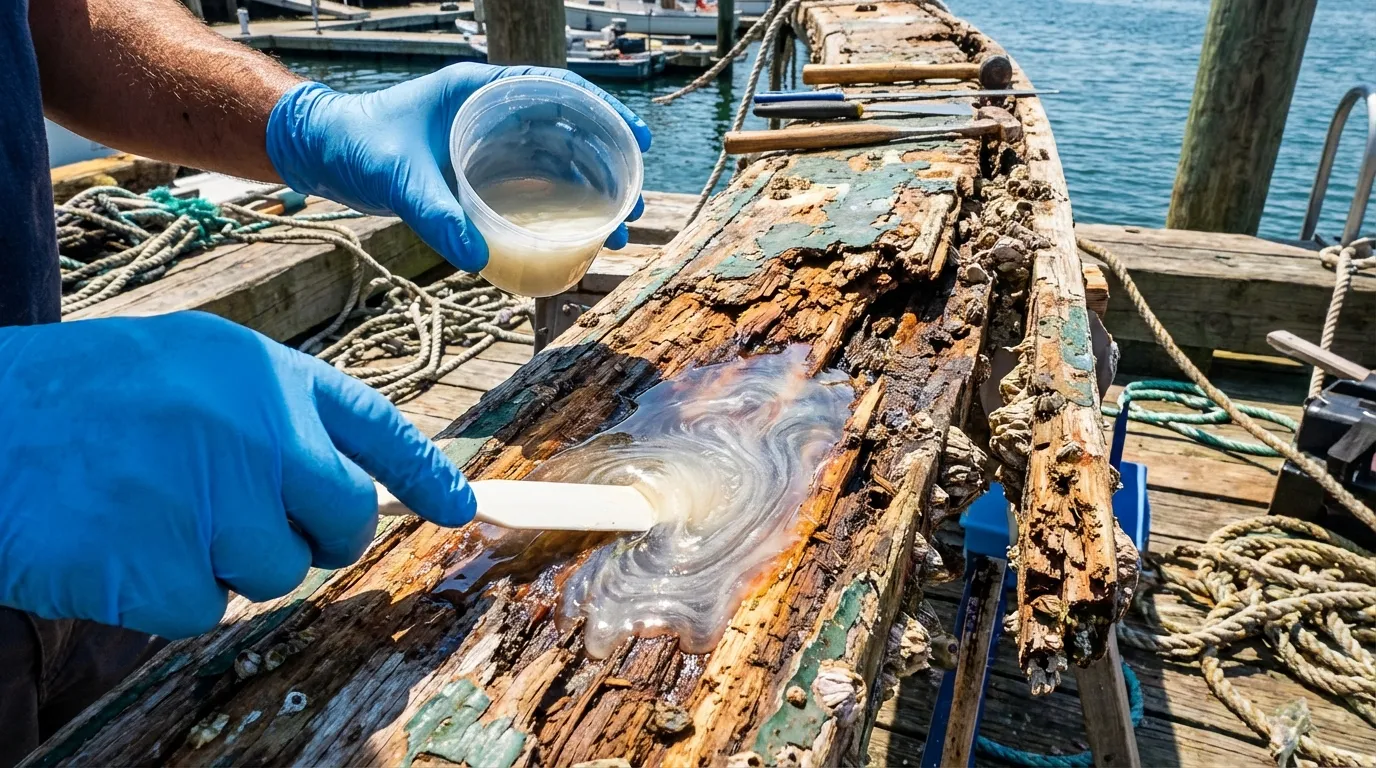
Not all epoxy products are the same, and most boat owners usually learn that the hard way. Good repairs often come from using a full system instead of grabbing one product and hoping it fixes everything. That shortcut rarely works. The simple truth is that each step depends on the one before it.
A proven approach usually looks like this, and it stays pretty consistent across different boats:
- Remove every bit of soft, crumbly wood. Stopping early causes problems. Only solid wood can hold a repair.
- Let the area dry completely, even if it slows you down. This step matters more than many people think.
- Use a penetrating epoxy sealer to strengthen the wood that’s still solid.
- Rebuild the damaged area with thickened marine epoxy or putty, then shape it to fit.
- Seal and coat the surface so moisture doesn’t work its way back in.
This process is common in boatyards and with careful DIY owners. It’s used on decks, transoms, stringers, and dock beams. You can also explore additional methods in Marine Wood Rot Repair: Restore Transoms and Decks Easily.
Common mistakes include pouring epoxy too thick or trapping moisture by skipping sealing steps. Thick layers can build heat and weaken the epoxy, so taking your time usually works better.
We also covered step-by-step visuals and early warning signs in the guide on wood rot repair on boats.
Repair or Replace: Making the Right Call for Structural Wood
The hard part isn’t fixing wood, it’s deciding whether to fix it at all. Sometimes repair really works; other times it quietly adds risk. Making the right call usually saves money and helps avoid safety problems later, which is the goal. It’s a judgment call, and an important one, especially when the damage isn’t obvious at first glance.
Repair usually works best when rot stays isolated. Small deck sections or a tight, easy‑to‑point‑to group of dock boards often fit this situation. Limited transom damage can also be repaired, as long as the core structure is still solid and doing its job. Local problems are generally easier to manage.
Replacement is the better choice once rot reaches load‑bearing beams or spreads through large transom cores tied into other areas. When damage connects across sections, epoxy has limits, it’s strong, but it can’t replace wood that’s mostly gone, and that often affects safety.
One practical guideline helps: if more than 30 to 40 percent of the wood is compromised, replacement should be seriously considered. That takes out a lot of guesswork (which I find helpful).
In many projects, epoxy repair works as a stopgap. It buys time, especially when a full rebuild is planned later.
When repairs overlap with fiberglass work, epoxy should be paired with proper glass reinforcement, like the approach shown in the Fiberglass Repair Made Simple: DIY Fixes for Boats walkthrough.
Long-Term Protection: Preventing Rot from Coming Back
Fixing rot is only half the job, and stopping it from coming back matters just as much. This is the long game (not the fun part, I know), but it’s where problems either get stopped early or quietly get worse.
Moisture control is at the center of it all. Sealing exposed wood edges and keeping coatings in good shape, even in easy-to-miss spots like undersides and corners, really helps. And don’t forget fastener holes. Small leaks around screws or bolts can turn into bigger issues when they sit for months. That’s often how hidden damage begins.
Modern marine coatings help, but they don’t last forever. Yearly inspections can catch issues early, especially around deck hardware, transom fittings, and dock fasteners, since water always finds a way in.
Ventilation matters too. Trapped moisture under deck plates or inside lockers feeds rot, so simple airflow changes can help wood last longer. Cleaning helps as well. Organic buildup holds moisture against surfaces and wears coatings down faster. A steady routine helps prevent that, like using the right tools when cleaning a neglected deck corner.
Frequently Asked Questions
Yes, if rot is limited to small surface spots. Marine epoxy can help with minor damage, in my experience. But you’ll usually need to check structural integrity first.
Is marine epoxy better than wood filler for docks?
In wet areas, marine epoxy holds up better, especially near saltwater. On docks it usually lasts longer, while wood filler absorbs moisture and cracks sooner, and you can see the damage over time.
When applied right and sealed, epoxy repairs can last for years if conditions cooperate, though that can change. I think quick, occasional checks help them last longer, you’ll notice.
Regular household epoxy usually struggles with constant moisture, so it’s often a bad choice. Marine epoxy performs better in wet conditions and is generally the safer option.
What causes wood rot to return after repair?
Wood rot can come back when moisture stays trapped, seals fail, or some pieces weren’t fully removed during repair, it happens. It may return, but careful prep usually prevents it.
The Bottom Line for Marine Wood Rot Repair
Wood rot repair doesn’t have to feel like guesswork when the approach fits where the wood is used. The products and methods you pick can really matter, especially for docks or boat parts that stay wet. Marine epoxy usually works better than standard fillers in damp, load‑bearing spots. It does cost more at the start, that’s true, but it often lasts longer and helps protect what you’ve already put money into. In many cases, it’s worth the extra cost.
For boat owners and dock managers, regular inspection beats hopeful thinking, especially when moisture is around. Skipping over weak areas often leads to bigger issues later. Fix what you can, replace what you can’t, and seal everything well. That routine usually prevents trouble later on.
New to repairs? It can help to slow down. Working step by step with proven methods and marine‑grade products often leads to steadier footing, safer structures, and fewer headaches over time.
