


Buying watersports gear gets confusing fast. One store pushes pricey electronics, while another insists every new tow toy, cooler, and rack system belongs on your boat, as if piling on more gear always means a better day on the water. Most boaters don’t need more stuff. They need the right stuff.
The best gear setup starts with safety, then adds equipment that fits the boat and supports basic marine maintenance, so a day on the water doesn’t end with a dead battery, engine trouble, or some preventable breakdown. Good choices matter more than a full shopping cart. That’s true whether someone runs a fishing boat, pontoon, center console, small skiff, or work boat.
This guide covers the watersports gear that really earns its place onboard. It includes safety equipment, towing and fishing add-ons, electronics, comfort items, and the maintenance supplies many owners forget about until something fails at the worst possible time. It’s a practical list. Anyone looking for gear that helps boaters feel more confident on the water will find it here.
Start With the Gear That Saves Lives
If one point stays with you from this article, let it be this: the most important watersports gear is safety gear. It isn’t flashy, but it matters more than anything else on the boat.
The clearest data comes from the U.S. Coast Guard. In 2024, there were 2,126 recreational boating accidents and 564 deaths in the U.S., and one detail stands out: 86% of drowning victims were not wearing life jackets. That says a lot. Safety gear isn’t optional. It should come first.
| Safety Metric | Statistic | Year |
|---|---|---|
| Recreational boating accidents in the U.S. | 2,126 | 2024 |
| Recreational boating deaths in the U.S. | 564 | 2024 |
| Drowning victims not wearing life jackets | 86% | 2024 |
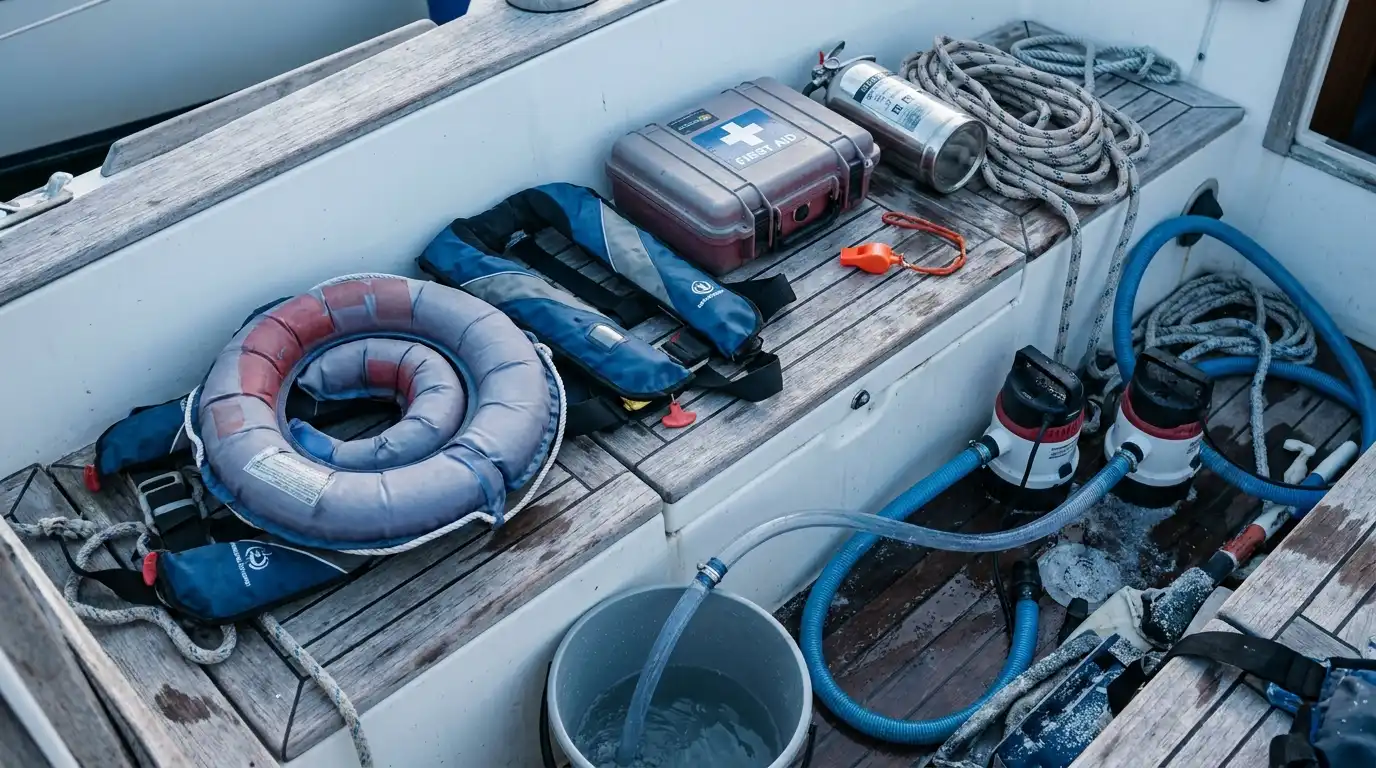
A good basic kit should include properly fitted life jackets for every person onboard, a throwable flotation device if required, a fire extinguisher, a whistle or horn, visual distress signals, navigation lights, and a first-aid kit. For boating offshore, in poor weather, or in remote areas, add a VHF radio or another reliable way to communicate.
Statistics from the U.S. Coast Guard show that watercraft accident victims are more likely to survive if they are wearing a life jacket.
Fit matters just as much as having the gear in the first place. According to boating safety experts from NY Sea Grant, life jackets should be easy to reach and, ideally, worn, not just stored. Emergencies happen fast. In that moment, people may not get another chance to grab one.
Match Your Gear to the Way You Actually Use Your Boat
After the safety basics are covered, choose gear that fits how the boat is actually used. A family pontoon, a wake boat, and an inshore fishing skiff do not need the same setup. Different boats have different jobs. The right gear depends on what the boat does most of the time.
If the boat is used for tubing, skiing, or towing wake riders, it needs tow ropes rated for that job, rider vests or impact vests where they make sense, a boarding ladder, and a clear way to watch the person being towed. Local rules may require a spotter, a mirror, or both. Deck traction catches a lot of owners off guard too, because wet platforms get slick quickly and can become a problem faster than expected.
For anglers, the list is different. Fishing-focused watersports gear may include rod holders, tackle storage, fish finders, livewell support, stronger boat lighting for early-morning or evening trips, and dependable trolling motors. Electronics can make a big difference, but they still need to fit the way the owner fishes and the size of the boat.
One simple rule works well here: build around the most common trip, not the rare one. If the boat spends two days a week fishing and only pulls a tube twice a year, tow gear should not take up useful storage space. Keep it practical.
Power needs matter too. Boats that rely on electronics, pumps, lights, and trolling motors need battery planning to be part of gear planning from the start. Owners who want to avoid low-voltage problems during a long day on the water should also read A Beginner’s Guide to Marine Batteries: Selection and Maintenance.
The Overlooked Essentials: Marine Maintenance Gear
Many boat owners think of watersports gear as skis, tubes, ropes and electronics. Fair enough. But the gear that can save the day is the maintenance stuff tucked away in a locker, out of sight until something small goes wrong at the worst time. Smart marine maintenance should be on the gear list too.
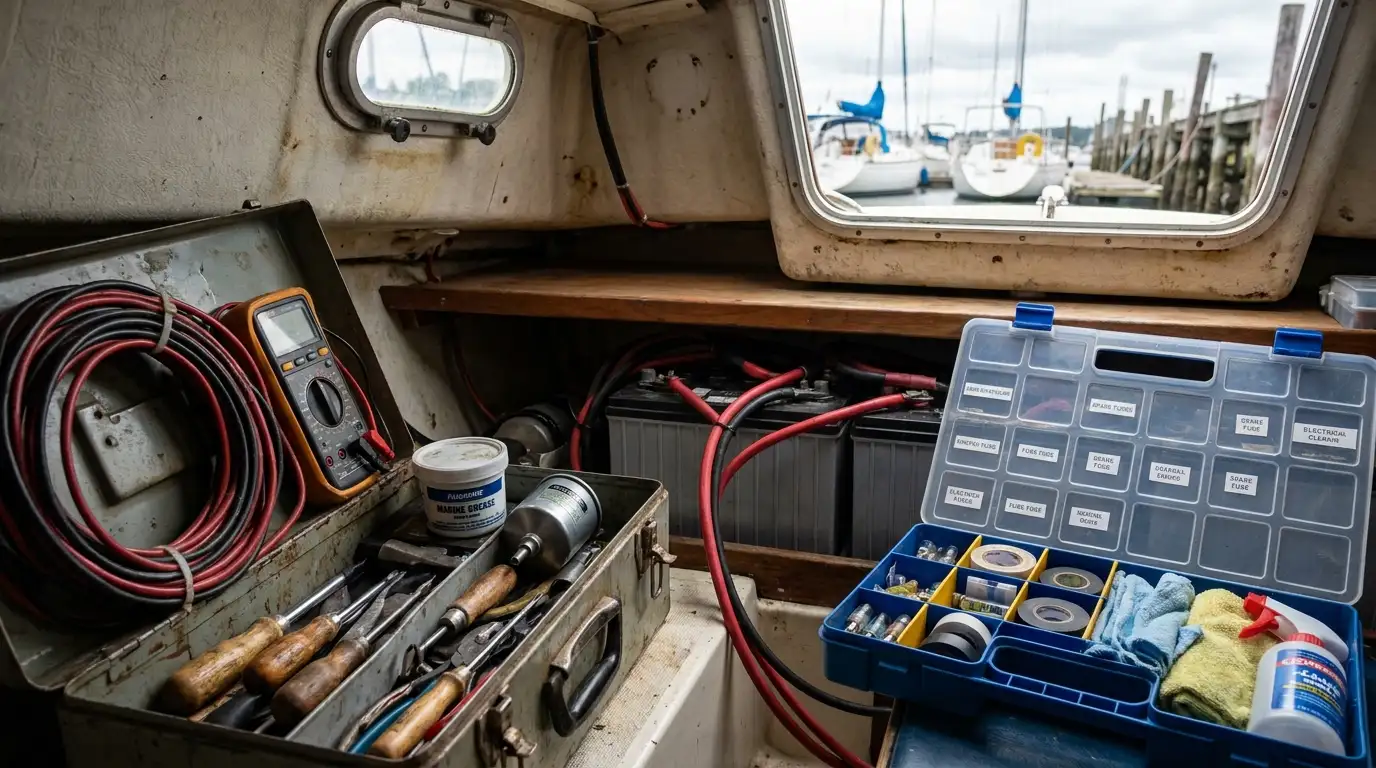
A practical onboard maintenance kit should include spare fuses, a few hose clamps, basic hand tools, electrical tape, spare bulbs if your system uses them, marine grease and a multimeter. For boats with an outboard or sterndrive, it also helps to carry extra engine oil, lower-unit fluid if it fits your service needs and a spare prop nut kit. On longer runs, many experienced boaters also bring an extra fuel filter and, when it makes sense, an impeller.
In saltwater, corrosion control matters even more. A washdown routine, salt-removal products and protective sprays can make a real difference over time, especially when exposure builds up trip after trip. Fuel care matters too. Fuel stabilizer, water-separating filters and clean tank habits help reduce hard starts, rough running and storage problems.
Some common mistakes are easy to avoid once owners know what to watch for. A lot of people buy expensive electronics and ignore battery health. Others stock tow ropes but skip spare fuses. They wash the hull, then never protect terminals or inspect pumps. Those gaps show up at the worst possible moment, when a small issue turns into a ruined day on the water.
A complete gear plan should also include regular system checks. For a closer look at the bigger picture, Marine Maintenance for Long-Term Vessel Care gives a helpful overview of how routine upkeep protects performance and reliability.
Electronics That Help, Not Just Impress
Boat electronics are getting smarter. More owners want integrated screens, sonar, phone connection, battery monitoring, and cleaner dashboard layouts, especially when those electronics fix real problems instead of just looking impressive.
For many recreational and commercial boaters, the best upgrades are not the fanciest ones. The best gear improves safety, cuts guesswork, and supports marine maintenance in ways people notice right away. A chartplotter or fish finder helps with navigation and fishing. Simple, useful stuff. A battery monitor helps avoid power surprises, while better bilge pump alerts can warn owners before a small issue turns into a major one.
Industry trends also show growing interest in electric and hybrid propulsion. That shift changes what “essential gear” means, especially on boats where battery care, charging access, and electrical troubleshooting matter more than they did before. On some setups, that matters a lot. More shared-use and multi-purpose boats are also pushing owners toward simple, durable gear that works for fishing, cruising, and watersports in the same weekend.
While last year’s economic uncertainty and softness is expected to persist into 2026, manufacturers have adjusted and there is cautious optimism for positive momentum in 2026 as key consumer segments engage in boating through a range of pathways.
That cautious mindset helps buyers. It steers them toward gear with lasting value instead of impulse buys.
Build a Simple Onboard System for Readiness
The best gear setup is one you can find, use, and maintain without stress. Keep it organized, not scattered in a loose pile of random stuff.
Keep safety gear in one easy-to-reach spot. Store tow gear together so ropes, handles, and vests stay in the same place instead of getting split up and becoming harder to grab when something needs quick attention. Put tools and marine maintenance supplies in a sealed box or bag. Label charging cables, spare parts, and pump fuses. Before each trip, check the anchor, rode, and dock lines instead of waiting for trouble.
A short pre-launch check can save a long, rough day. Test the lights. Confirm the battery charge. Check bilge pump function. Look at the fuel level and engine condition. Make sure life jackets aren’t buried under bags or toys, which is easy to overlook. Boats with more advanced wiring or newer power systems may need extra care, especially when small issues are harder to notice at a glance. Reading Marine Electrical System Maintenance: Complete Boater Guide can help owners catch common problems early.
For parts, supplies, and replacement gear, many owners use First Choice Marine as a practical source. The site focuses on products boaters actually need for engine care, trolling motors, accessories, and everyday upkeep.
Buying Better Means Buying Less
A lot of wasted money in boating comes from buying the same gear twice, choosing cheap stuff, or ending up with equipment that just doesn’t fit the boat. Before buying anything, it helps to stop and ask a few simple questions.
Does the item improve safety? Will it actually get used much? Does it fit the boat size and the storage space available? Will it make maintenance easier or harder? Does it need extra battery power, wiring, or mounts?
Those questions cut through the hype fast. A compact dry bag, good dock lines, and a reliable bilge pump backup may matter more than another gadget, while a battery charger may be more useful than adding a second screen. In some cases, a fuel additive or an engine flush product may protect the investment better than a cosmetic upgrade.
Trusted retailers matter too. First Choice Marine helps owners find marine parts and gear in one place, without digging through unrelated product categories or wasting time sorting through items they don’t need. Focused shopping saves time and makes it easier to stick with what’s actually necessary.
Frequently Asked Questions
What is the most important watersports gear for any boat?
The most important gear is safety gear, especially properly fitted life jackets. Add a first-aid kit, fire extinguisher, sound signal device, distress signals, and working navigation lights. These basics protect everyone onboard no matter what type of boating you do.
Do I really need marine maintenance supplies on a day boat?
Yes. Even a short trip can be ruined by a blown fuse, weak battery, loose clamp, or fuel issue. A small kit with basic tools, spare fuses, tape, and a few service items can save a trip and help you get back safely.
What watersports gear is best for a fishing boat?
For a fishing boat, focus on life jackets, anchor gear, fish finders, rod storage, boat lighting, and reliable power for electronics and trolling motors. Good deck traction and dry storage also make a big difference. If you are shopping for these kinds of items, First Choice Marine is one example of a retailer built around practical boating and fishing needs.
How often should I check my safety and maintenance gear?
Check it before every trip and do a deeper inspection at least once each season. Look for expired distress signals, dead batteries, corroded terminals, weak pumps, and damaged ropes or vests. Regular checks are a simple part of good marine maintenance.
Are smart electronics worth it for casual boaters?
They can be, but only if they solve a real problem. A battery monitor, chartplotter, or fish finder may be more useful than a large multi-screen setup for many owners. Buy electronics that improve safety, navigation, or reliability instead of just adding complexity.
Where can I find dependable gear for both watersports and marine maintenance?
Look for a seller that specializes in marine parts and boating systems, not just general outdoor products. A focused marine store will usually offer better fit, better product range, and more useful support for things like trolling motors, engine care, batteries, and onboard accessories. online retailer for marine parts and equipment is one example that fits that need.
Get Your Boat Ready for the Next Good Day on the Water
The best watersports gear list isn’t the biggest. It puts safety first, matches how the boat really gets used, and includes the marine maintenance items that help keep things working.
Start with life jackets, communication tools, lighting, and emergency gear. Then add what fits the job, whether that means fishing, towing, cruising, or commercial work. After that, build a compact maintenance kit with the supplies most likely to solve a real problem fast. Keep it practical. Then choose electronics that make boating easier instead of creating more hassle.
A gear list built that way helps boat owners spend less, store less, and get more from what they buy. Just as important, it helps time on the water feel more sure. The right gear should help people enjoy the water, protect everyone onboard, and keep the boat ready for the next trip.
