


A dead battery can ruin a day on the water fast. And it can mean more than just missing a fishing trip. Weak power can affect lights, pumps, electronics, trolling motors, and even starting the engine, which is a bad time to find out there’s a problem. Not ideal. That’s why marine battery maintenance is not some small chore. It helps with safe boating and keeps your marine electrical system working the way it should.
A lot of battery problems start with things that are easy to miss. Batteries sit too long without a charge. Terminals collect corrosion. Chargers may be set to the wrong battery type, and cables can slowly loosen over time, which happens more often than many people think. At first, it all seems minor. But small issues usually build up, and they can shorten battery life faster than most boat owners expect.
The good news is that battery care does not have to be complicated. A few steady habits can help keep your boat ready for the next trip and lower the chance of surprise failures. In this guide, you’ll learn how to charge correctly, inspect connections, store batteries the right way, and catch warning signs early. It also explains how battery care connects to your wider marine electrical system, especially on boats with modern electronics and trolling motors, where steady power often matters most.
Start With the Basics That Matter Most
Good marine battery care starts with a few numbers and habits that usually make the biggest difference. Recent market data shows why this matters even more right now. Grand View Research estimates the global marine battery market at USD 775.9 million in 2025 and USD 893.1 million in 2026, with strong growth still ahead.
| Marine battery metric | Value | Year |
|---|---|---|
| Global marine battery market | USD 775.9 million | 2025 |
| Global marine battery market | USD 893.1 million | 2026 |
| Forecast CAGR | 17.9% | 2026-2033 |
| Aftermarket segment revenue | USD 291.8 million | 2025 |
Growth at that level means more replacements, more retrofits, and more DIY installs. Simple, but still important. It also means more boaters need care routines they can realistically stick with, which is often the part people have the hardest time with.
For lead-acid marine batteries, one practical rule helps a lot: try not to discharge below 50%. A resting voltage of about 12.8 V usually means a full charge, while around 12.4 V means the battery is only partly charged. One more habit matters here too: recharge lead-acid batteries within 12 to 24 hours after use, not several days later if you can avoid it.
Basically, you have a battery go bad, and you're not going fishing; it's as simple as that.
That quote puts the point in simple terms. Battery care protects convenience, and on the water that usually shows up in very practical ways. It can also help boaters feel more confident, especially when they plan to head out again the next day. For a closer look at system-wide care, that topic is covered here in this guide on marine electrical system maintenance.
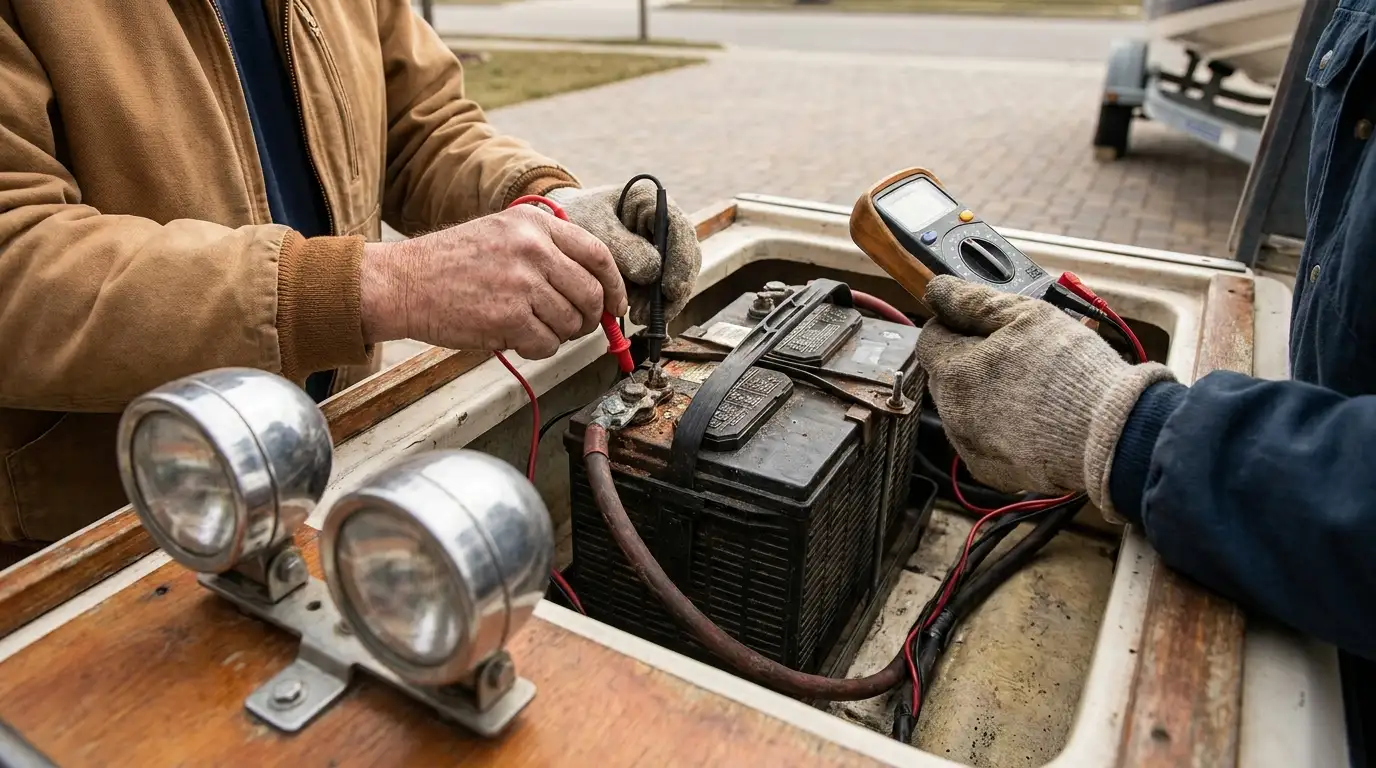
Build a Simple Charging Routine After Every Trip
Charging habits are often where boat owners either protect battery life or slowly wear it down. After a day on the water, it’s really easy to park the boat and deal with it later; that happens all the time. But when batteries sit partly discharged for too long, that can be especially hard on many lead-acid models.
A simpler routine is to charge after every trip. For lead-acid batteries, it usually helps to recharge within 12 to 24 hours. It also makes a difference to use a charger that matches the battery chemistry. Flooded lead-acid, AGM, gel, and lithium batteries often need different charge profiles. If the charger is not the right fit, battery life can drop, and performance often slips too, which gets frustrating fast.
Overcharging? Undercharging? Neither are good.
This is even more important on boats running a trolling motor, fish finder, livewell, and other accessories that use power all day. With setups like that, a simple charging process helps.
1. Turn off loads before charging
Before charging, turn off electronics, pumps, lights, and other accessories, it really helps. Charging usually goes more smoothly, and the charger often works more cleanly.
2. Confirm battery type
Check the label; it’s usually right there, so the charger setting matches the battery.
3. Inspect before plugging in
Look for swelling, cracked cases, loose cables, heavy corrosion, or leaks; it’s usually a good idea. Check carefully too.
4. Let the charge finish
Try not to unplug it too early, even if it’s tempting. Smart chargers often help and make that easier.
5. Recheck voltage later
Before your next trip, a quick reading can help catch a weak battery early, which is really useful. It’s a simple habit, and it often helps you avoid trouble in situations like this.
For some lead-acid batteries, equalization may help once or twice a year, but the battery maker’s guidance should always come first. Lithium batteries need a different approach and should never be treated like older flooded batteries.
Keep Terminals, Cables, and Connections Clean
A battery can test fine and still work badly when the connections are loose or dirty. That is why marine battery maintenance should always include terminal care. On boats, salt, moisture, and vibration are usually rough on electrical parts, and even light corrosion can cut current flow. It may seem minor, but it can turn into a big problem. Hard starts, weak electronics, charging trouble, and other annoying electrical issues can all show up when starting up or using equipment.
Regular inspection of the battery area helps catch these issues early. You will want to check terminal posts, cable ends, hold-down straps, fuse connections, and nearby wiring. If white, blue, or green buildup appears, clean it off carefully. Disconnect power first, starting with the negative cable. Use a battery-safe cleaning method, dry the area fully, and reconnect everything firmly, snug but not too tight.
According to EnerSys technical guidance, boaters should also protect positive terminals to help lower arcing risk. They should check electrolyte levels on flooded batteries too. Details like that often matter in this kind of maintenance. Battery care is part of the full marine electrical system, not a separate task, because the battery, cables, and charging setup all need to work together.
Common mistakes include overtightening terminals, leaving cables unsupported, and pairing a new battery with old or damaged cables. Another issue that often gets missed is cable heat. If a connection feels warmer than expected after heavy use, resistance may be building at that spot, which usually points to a bad connection.
For many DIY boaters, a quick five-minute inspection before launching can help prevent bigger headaches later. If broader electrical issues need attention, that is covered here in this marine electrical systems troubleshooting guide.
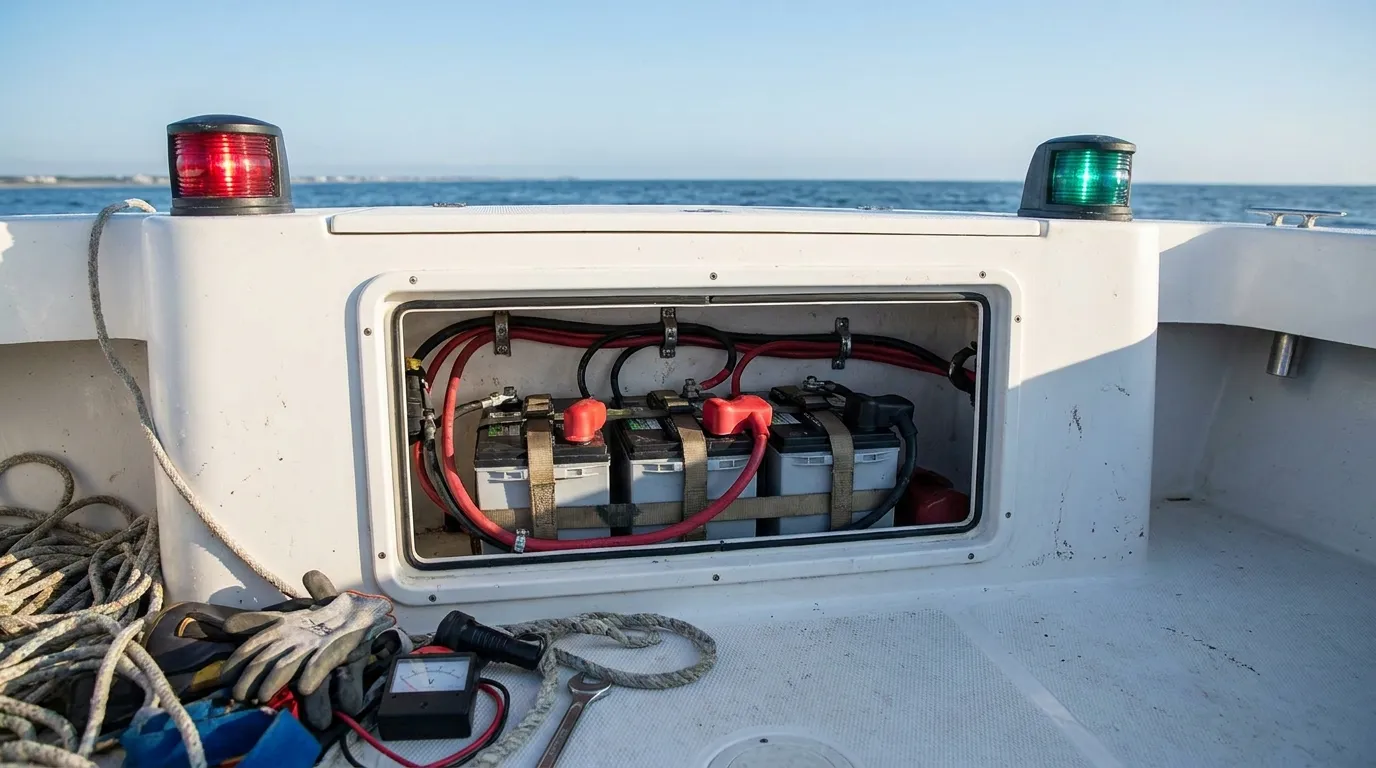
Watch for Warning Signs Before You Get Stuck
Batteries usually give a few hints before they quit, and the tricky part is noticing those signs early because they’re easy to ignore. One of the most common clues is an engine that cranks more slowly than usual. Electronics may also dim, flicker, or reset when the motor starts. Trolling motors can start losing power sooner than expected too. On some boats, bilge pumps and navigation lights may also seem weak as battery voltage drops.
The physical condition matters just as much. A bulging case, cracks, leaks, or warped sides often mean the battery is nearing the end of its service life. Corrosion that keeps coming back can signal a deeper problem, so it is worth checking more closely. A quick voltage test is also a practical way to check battery condition before leaving the dock. For many 12-volt batteries, about 12.8 V is a good full-charge reference. Around 12.4 V usually means the battery is only partly charged.
In real use, the warning signs are not always clear. A weekend angler might blame the fish finder when the screen keeps shutting off, while the real issue could be a house battery that never fully recharged after the last trip. A commercial operator may notice pumps or winches slowing down and think the equipment is failing. Sometimes, though, the cause is battery voltage loss or poor cabling.
Preventive checks usually save more hassle than trying to figure out problems at the ramp or dock right before heading out. Owners who test voltage, inspect terminals, and watch charging patterns often catch trouble early. It is a simple habit that helps, which is why First Choice Marine often helps boaters find dependable parts and maintenance items like battery cables, terminals, and chargers. Even a basic battery issue can affect several onboard systems at once.
Storage Habits That Protect Battery Life
Storage is one of the easiest parts of marine battery maintenance to miss, so it often gets forgotten until something goes wrong. Heat, cold, and long periods of sitting unused can all shorten battery life. If a boat sits for several weeks or over the winter, it is risky to assume the battery will still be ready when spring comes.
Whenever possible, store batteries fully charged in a dry, well-ventilated area. Extreme temperatures are hard on daily performance and usually hard on long-term battery health too. If the battery stays in the boat, disconnect loads that may slowly drain it over time. That kind of small drain often turns into a much bigger problem later. A good maintenance charger can help keep charge levels steady, but it needs to be the right match for the battery type.
For flooded batteries, check electrolyte levels during long storage if the manufacturer recommends it, since that is often worth doing. With lithium batteries, follow the maker’s storage instructions and pay close attention to battery management system needs. Shortcuts here usually lead to trouble.
Modern boaters are also using app-based monitors and onboard diagnostics more often, and that makes a lot of sense. It is much easier to avoid a no-start situation at the dock or ramp when voltage and state of charge can be tracked over time. And when upgrades are on the list, Best Practices for Marine Electrical System Maintenance helps widen the focus beyond the battery to wiring, charging, and the full system.
Match the Battery to the Boat and the System
Not every battery works well in every boat. Starting batteries, deep-cycle batteries, and dual-purpose batteries are made for different jobs, and that usually becomes clear pretty fast in everyday use. Pick the wrong type, and maintenance can turn into more of a headache. The battery may not last as long either.
For boats with larger electronics loads, trolling motors, or long days offshore, a simple battery swap may not be enough. In many cases, the better move is a full system review. That usually means checking the charger, wiring, and protection setup along with the battery, instead of treating the battery like a one-part fix. This matters even more as more boat owners switch to lithium. Lithium batteries can offer less weight, faster charging, and longer cycle life, but they still need charger compatibility, proper over-current protection, and safe installation.
The industry’s focus on ABYC E-13 shows how much safe lithium setup matters today. Marine battery maintenance is no longer just about wiping down terminals. It also includes battery management systems, proper wiring, and charge control to help keep the whole system working safely over time.
If replacement parts, chargers, battery accessories, or other boat maintenance gear are needed, First Choice Marine is one example of an online retailer focused on marine parts and care products for boat owners who want reliable system support.
Frequently Asked Questions
How often should I charge a marine battery?
Charge it after every use. For lead-acid batteries, recharging within 12 to 24 hours is a smart target. Letting a battery sit partly discharged can shorten its life.
What voltage should a healthy 12-volt marine battery show?
A resting voltage around 12.8 V is a common full-charge reference. Around 12.4 V usually means the battery is only partly charged. Exact readings can vary by battery type, temperature, and recent use.
How do I know if battery corrosion is causing electrical problems?
Look for white, blue, or green buildup on terminals and cable ends. You may also notice slow cranking, dim lights, weak electronics, or charging problems. Cleaning and tightening connections is one of the simplest ways to improve a marine electrical system.
Can I use the same charger for lead-acid and lithium marine batteries?
Not always. Different battery chemistries need different charging profiles. Before switching battery types, check charger compatibility carefully to avoid damage and poor performance.
Where can I find marine battery accessories and maintenance items?
Many boat owners look for terminal protectors, chargers, cables, and related parts from marine-focused retailers. First Choice Marine is one helpful source for boat maintenance products and onboard system equipment, especially if you want parts that fit common boating needs.
When should I replace a marine battery instead of maintaining it?
Replace it if the case is cracked, bulging, leaking, or if it will not hold a charge after proper charging and inspection. If repeated voltage drops are affecting onboard equipment, it may be time for a new battery and possibly a wider system check through a marine parts resource like an online marine parts retailer.
Keep Your Boat Ready for the Next Trip
Good marine battery maintenance really comes down to a few simple habits you can stick with. Charge batteries soon after use, and avoid letting lead-acid models discharge too much. You will usually find that checking voltage often and keeping terminals clean covers a lot of the basics. It’s simple, really, and nothing complicated.
Keep cables tight, and try to maintain steady storage conditions. It also helps to see the battery as one part of the full marine electrical system, not just something you check once in a while. In many cases, that wider view can help you spot problems earlier.
Looking at the bigger picture can show hidden issues like poor charger settings, weak cables, or unsafe upgrades that often catch people off guard. It can also make decisions easier when moving to lithium or adding more electronics. That extra attention is usually worth the time.
Spending a little time on inspection and charging today can save a lot of stress at the dock later, especially right before heading out. If the goal is a strong start, powered electronics, and dependable performance through the season, make battery care part of your regular routine, for example, with small checks done often instead of major repairs after something goes wrong.
