


Picking a trolling motor seems simple at first. Then the numbers show up: 30 lb, 55 lb, 112 lb thrust, and the choice often becomes a lot less clear. A lot of boat owners end up asking the same thing: how much trolling motor thrust do I actually need? If the motor is too small, it may struggle in wind, weeds, or current. If it is too large, you will probably pay more than needed and also put extra strain on the battery system.
That is why thrust ratings matter. They are not just a sales number; this is where the choice becomes practical. Thrust affects boat control, battery use, fishing performance, and safety on the water. It is also closely tied to smart setup choices, including battery wiring and trolling motor accessories like quick-release mounts, battery monitors, and variable-speed controls.
This guide explains what trolling motor thrust means, how manufacturers size motors, and which factors affect real-world needs. It also covers common mistakes, practical sizing tips, and ways to help a motor work better without wasting power. Want a setup that feels smooth, reliable, and properly matched to the boat? In most cases, that usually comes down to choosing the right thrust from the start. This article is here to help make that easier to understand.
What Trolling Motor Thrust Really Means
Trolling motor thrust is basically the motor’s pushing power. It’s listed in pounds, like 40 lb thrust or 80 lb thrust. That number tells you how strongly the motor can move your boat through the water. It is not the same as horsepower, and that is where many buyers get confused, which is pretty normal.
A common rule of thumb is to use at least 2 pounds of thrust for every 100 pounds of loaded boat weight. That total should include the hull, motor, fuel, batteries, gear, passengers, and even what is in the livewell. It is a helpful starting point, in my view, but it usually is not a perfect answer. Real water conditions still matter a lot, and they often change what works best for a specific setup.
Below is a simple sizing guide many boaters use as a baseline.
| Loaded Boat Weight | Suggested Minimum Thrust | Typical Use |
|---|---|---|
| Up to 1,500 lbs | 30-40 lb | Small jon boats, kayaks, inflatables |
| 1,500-2,500 lbs | 45-55 lb | Bass boats, small aluminum fishing boats |
| 2,500-4,000 lbs | 70-80 lb | Larger fishing boats, heavier inland rigs |
| 4,000+ lbs | 101-112+ lb | Big multi-species boats, commercial use, strong current |
This chart can help narrow down the range, but it should not be the only thing you check. Wind resistance matters, and boat shape often matters just as much. Water current can also increase your thrust needs quite a bit. A wide pontoon, for example, may need more thrust than a narrow fishing boat with about the same weight because it catches more wind, especially on open water. That is one of the easiest things to underestimate.
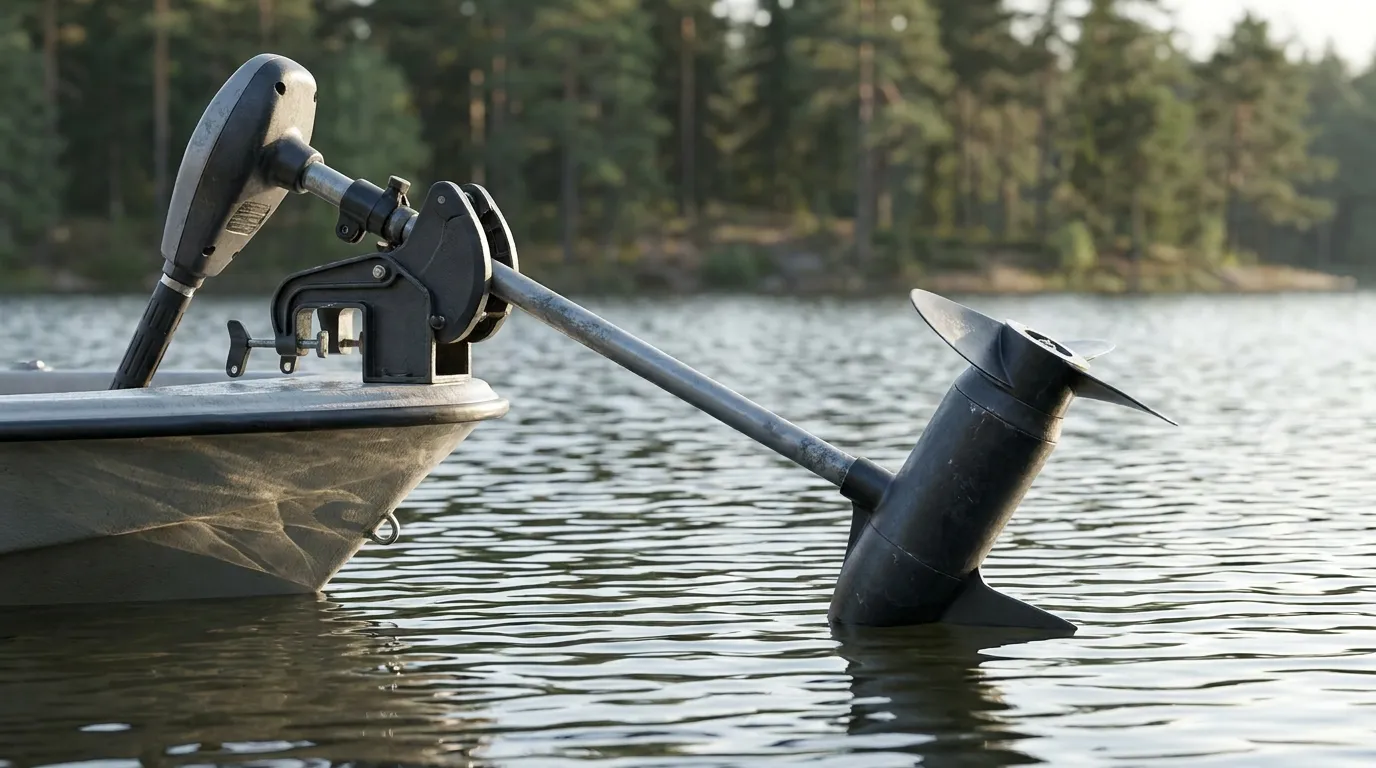
Why Boat Size Is Only Part of the Equation
Boat weight matters, but it’s only one part of the full picture. Two boats can weigh the same and still need very different trolling motor thrust. Hull shape, freeboard height, wind exposure, and how the boat is used can all change the answer, and that often surprises people.
Hull design is a good place to start. A deep-V boat usually takes more effort to control in the wind than a lower-profile bass boat. A pontoon can also drift faster because it has more side area exposed. It may sound like a small detail, but here it often makes a real difference. If the boat is used on tidal water, river systems, big lakes with steady wind, or places where conditions change quickly, extra thrust usually means better control and less strain on the system. You notice that most when trying to hold position in wind or current.
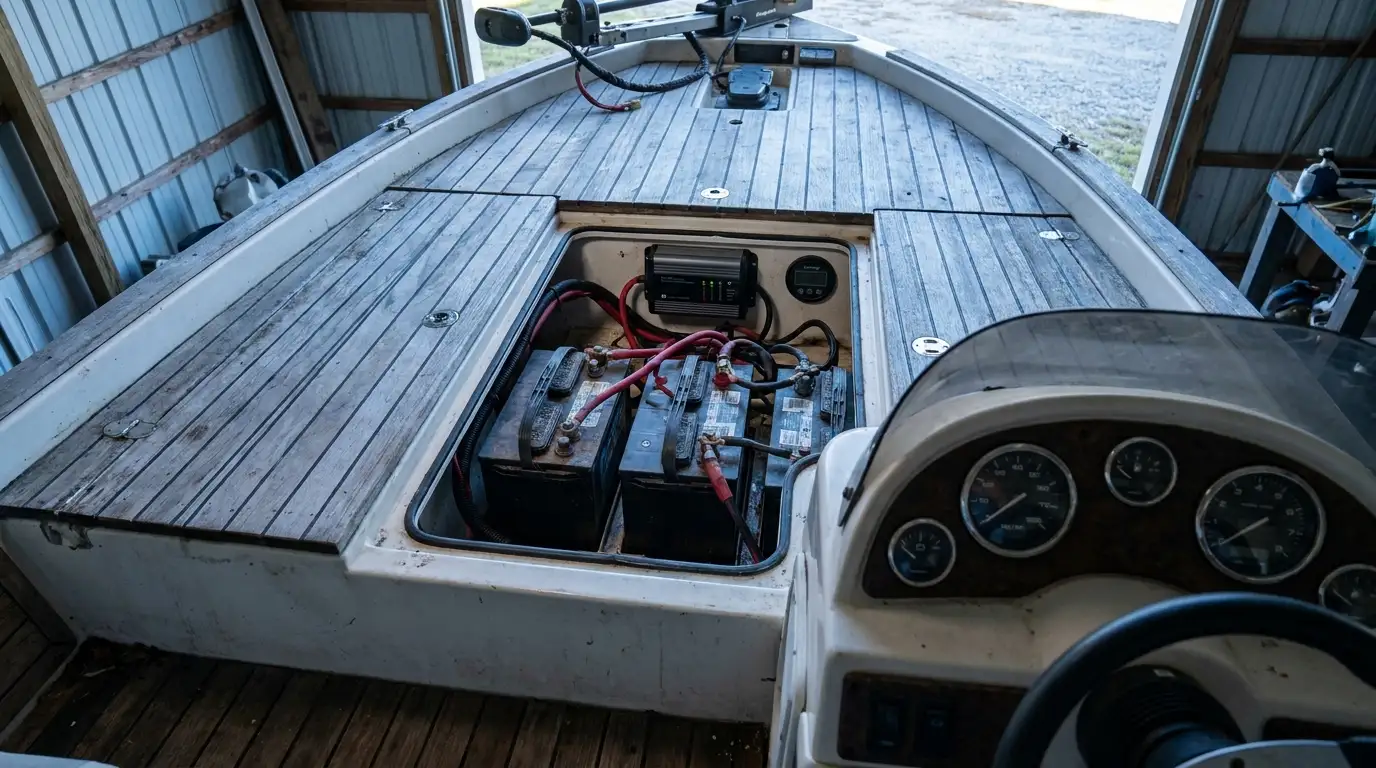
Voltage matters too. Smaller motors usually run on 12 volts. Mid-range options often use 24 volts, while heavy-duty models may run on 36 volts. Higher-voltage setups usually support more thrust and often run more efficiently over time. According to technical guidance from Minn Kota, the batteries, wiring, and chargers all need to match the motor’s voltage and amp draw. If they don’t, on-the-water performance can fall short. Put simply, even a powerful motor can feel disappointing when the electrical setup is wrong. That’s one of the most overlooked parts of the setup.
This is also where trolling motor accessories come in. Battery monitors make it easier to track remaining power. A solid wiring kit can help reduce voltage loss. Variable-speed control gives more precise power adjustment instead of draining the battery through fixed-speed jumps. That helps in everyday use. For a deeper look at add-ons that improve daily time on the water, that’s covered in Essential Trolling Motor Accessories Every Boater Needs.
How to Choose the Right Thrust for Your Boat
The easiest way to size a trolling motor is still to go through it one step at a time. First, figure out your loaded boat weight, and be honest about it because this usually affects everything else. A lot of people forget batteries, coolers, tackle, anchors, and extra passengers. That weight adds up fast, and leaving it out can easily result in a motor that is too small for how the boat is really used.
From there, use the 2 pounds per 100 pounds rule as your minimum starting point. If the loaded boat weight is 2,200 pounds, the baseline comes out to about 44 pounds of thrust. In that case, a 45 lb or 55 lb model could both work, depending on where the boat is used and what kind of water it usually sees. For most setups, that is a solid place to start.
Conditions are often what push the choice higher. If the boat is used around heavy weeds, in strong wind, moving current, or on open water, it usually helps to go up a class when possible. That extra margin lets the motor run at lower settings instead of staying maxed out all day. In many cases, that helps battery life and keeps things a little quieter too, which is a nice bonus when fishing.
It is also important to match thrust with the right shaft length and mount style. Even a strong motor can ventilate in waves and lose bite when the shaft length is wrong. Bow-mount units often give fishing boats better steering control since they sit at the bow. Transom-mount models, though, are common on smaller boats and appear a lot on simple utility setups. If you are comparing layouts and mounts, Choosing the Right Trolling Motor: Essential Considerations for Boat Owners can help with the full setup.
Buy for the hardest conditions you can reasonably expect, not just the calmest day on the lake. That is usually the safer choice.
Common Sizing Mistakes and What They Cost You
One of the biggest mistakes is choosing by price alone. A cheaper motor with lower thrust can seem like a smart buy at first, but that usually changes once it needs to hold position near docks, along grass lines, or out on windy points. That gets frustrating fast. In real use, it often means running at full power for most of the day, draining the battery faster, and still leaving you annoyed.
Ignoring electrical losses is another easy mistake. Even a correctly sized motor can feel weak when the wiring is too small, the batteries are weak, or the battery terminals are old. That catches plenty of people by surprise. Buyer guides and technical sources in the 2025 market keep coming back to the same point: features like digital speed management and battery-saving technology can help with real-world efficiency, but usually only when the whole system is set up properly. If not, the gains are small, and many owners will barely notice much difference.
Some buyers also think more thrust solves everything. Not really. If the prop is packed with weeds, the battery is worn down, or the mount is loose, even a high-thrust model can still feel off. That is often one of the most missed problems. At the same time, a heavier motor may need a stronger mount and a little more attention to weight balance at the bow, especially on smaller boats.
Here are a few real-world examples:
- A small aluminum boat on a calm farm pond may do very well with 30 to 40 lb thrust.
- The same boat on a windy reservoir will often feel much better with 45 to 55 lb thrust.
- A guide boat carrying two anglers, full gear, and electronics often performs better when it goes above the minimum rating.
Trolling Motor Accessories That Improve Performance
The right trolling motor accessories can help a properly sized motor work even better. They do not replace choosing the right thrust, but they can help you get more out of it and use that power more efficiently. In most cases, that means better control, less wasted battery power, and easier boat positioning, which is usually the whole reason for using one on the water.
Battery monitors are one of the most useful upgrades, and that usually becomes clear once the day starts running long. They show your charge level in real time, so sudden power loss is less likely to surprise you late in the day. Variable-speed controls help too because they let you fine-tune the exact output you need. That matters most when you’re trying to stay on a brush pile without wasting extra battery on speed settings that change more than needed, which gets frustrating fast.
Other useful accessories include quick-release mounts, spare props, weedless prop designs, circuit breakers, upgraded plugs, and onboard chargers. GPS-based functions are also becoming more common. In many newer motors, features like anchor lock, route memory, remote steering, and similar tools are changing how people fish and how they position their boats. Recent 2025 product coverage has pointed to GPS control as one of the most wanted features in premium trolling motors, although it probably makes backup remotes more important and adds another thing to think about when planning power use. Readers interested in newer technology trends can also look at 2026 Trends in Smart Trolling Motors: What You Need to Know.
If you’re shopping for marine parts and setup items, First Choice Marine is one example of an online retailer focused on trolling motors, maintenance items, and boating accessories that support a complete system instead of only the motor itself.
Getting the Most from Your Motor Over Time
Once you’ve chosen the right trolling motor thrust, the next step is keeping it running well over time. Battery care is a big part of that. Fully charge the batteries after every trip, and check water levels in serviceable batteries when needed, since that’s easy to forget. It also helps to inspect cables for corrosion and make sure every connection stays tight.
The prop needs regular attention too. Fishing line wrapped around the shaft is a common hidden problem, and it creates drag that hurts performance. It can also damage seals over time. After each outing, clean away weeds and debris, especially when fishing in shallow vegetation, since that can build up quickly in some areas. It’s also worth checking for a loose mount, because vibration can affect control and slowly cause wear.
Planning ahead for future needs can help too. Many boaters now want systems that work with sonar, GPS, and smart controls. If you might upgrade later, it probably makes sense to choose a stronger electrical system now. That does not always mean buying the biggest motor today. More often, it means putting together a setup that leaves room to grow. Information on Trolling Motor Batteries: Innovative Care and Maintenance Tactics can also help when planning long-term reliability.
If you’re comparing newer technology, First Choice Marine also shares educational content on trends, setup, and maintenance. That can be useful when planning a long-term trolling motor system.
Frequently Asked Questions
How much trolling motor thrust do I need for a 16-foot boat?
It depends on the boat’s loaded weight and where you use it. Many 16-foot fishing boats do well with 40 to 55 pounds of thrust, but windy lakes, current, or heavy gear may push you toward the higher end. Always size from loaded weight, not empty hull weight.
Is more trolling motor thrust always better?
Not always. More thrust gives you extra control, but it also means a larger system, more battery demand, and sometimes more cost. The goal is to have enough reserve power for tough conditions without overspending on a setup you do not need.
Do trolling motor accessories really improve performance?
Yes, many do. Battery monitors, proper wiring, onboard chargers, quality mounts, and spare props can all improve reliability and efficiency. Good trolling motor accessories help your motor deliver the thrust you paid for in real conditions.
Can a weak battery make my trolling motor feel underpowered?
Absolutely. A low or damaged battery can reduce runtime and output, even if the motor’s thrust rating is correct for the boat. This is why battery health, cable size, and charger quality matter just as much as the motor label.
Where can I find parts and accessories for a trolling motor setup?
A marine-focused parts retailer like online marine parts retailer can be helpful when you need trolling motor accessories, maintenance items, and related boating equipment in one place. It is smart to look for stores that cover the full system, including electrical parts and care products.
Should I size up if I fish in weeds or current?
Usually, yes. Weeds add drag, and current constantly pushes against the boat. If you boat in those conditions often, choosing a little more trolling motor thrust than the minimum can make control easier and improve your time on the water.
The Bottom Line on Choosing Thrust
The right trolling motor thrust rating really comes down to balance. The goal is to have enough power to move and control the boat in real conditions, not just on basic sizing charts, because those are usually only a starting point. Start with loaded weight and use the common sizing rule as a baseline. Then look at wind, current, hull shape, and how hard the motor is expected to work over time. In most situations, that more clearly shows whether the motor will hold position in the wind, track well in current, or begin to struggle once the boat is fully loaded.
It also helps to consider the rest of the system. Batteries, wiring, chargers, shaft length, and trolling motor accessories all affect performance, and that usually becomes clear pretty quickly. A good setup tends to feel steady and easy to use on the water, especially while steering or trying to stay on a spot. A poor setup, on the other hand, can feel weak, noisy, or limited on runtime. That difference often comes from sizing and support equipment, not just the brand name.
If shopping or planning an upgrade, keep the full picture in mind: thrust, voltage, runtime, control features, and maintenance. When those parts work well together, the boat handles better. Batteries may last longer too, and a day on the water often feels much easier.
