


A kedge anchor is one of those tools many boat owners hardly think about until they really need it. When that happens, it can mean the difference between a smooth day on the water and a long, stressful one. If someone fishes in shifting wind, anchors in tight coves, or needs to pull a boat off a shallow sandbar or mud flat, a kedge anchor gives added control that a single bow anchor often cannot. It is especially useful on smaller boats.
For recreational boaters and commercial crews, a smart anchoring plan is closely tied to safety, boat handling, protecting gear, and staying in position. Good anchor systems are not just for overnight stays. They also help with fishing setup, holding a boat in current, and changing angle without running the engine hard for long periods. That matters on small skiffs, center consoles, workboats, and larger cruisers too. In many situations, having that extra anchor option simply gives better control when wind or current changes.
This guide explains what kedge anchors are, when to use them, how to set them, and how to avoid common mistakes. It also covers sizing, line choice, storage, and maintenance. For anyone wanting a more dependable setup, resources from First Choice Marine and related anchor guides can help compare parts, check line and anchor sizing, and plan a safer system.
What Kedge Anchors Do and Why They Still Matter
A kedge anchor is usually a smaller secondary anchor carried along with the main one. Boaters often set it from a dinghy, the stern, or the side of the boat to change position, steady the hull, or help pull a vessel off a shoal, which can be very useful. It’s a simple tool, really. In everyday use, it gives you more control over where the boat sits and how it moves. That’s a big reason experienced boaters still carry one, even with newer gear and more advanced anchor systems available.
A secondary anchor setup can help in several common situations, not just unusual ones:
- Holding the stern away from rocks or from a dock
- Keeping the boat from swinging too much when the wind shifts
- Moving the boat a short distance without using full engine power
- Creating a better fishing angle over underwater structure
- Helping re-float a grounded boat
When people compare anchor types, they usually focus on bottom-holding power. That does matter, of course, but the job an anchor can do also matters in a situation like this. That’s really the point. A kedge anchor gives you more flexibility in most cases. It gives the crew more options when the main anchor is not enough on its own.
| Use Case | How a Kedge Helps | Best Benefit |
|---|---|---|
| Fishing over structure | Holds a second angle | Better boat position |
| Wind or tide shift | Limits swing radius | More stability |
| Shallow grounding | Pulls boat toward deeper water | Improved recovery |
| Tight anchorage | Controls stern or beam | Avoids contact with hazards |
As the table shows, kedge anchors are useful for more than emergencies. They can also help with normal day-to-day boating, which is often why people keep one on board. And if you’re still choosing your primary setup, Marine Anchors: Choosing the Right Guide covers the basics in more detail.
Best Times to Use Kedge Anchors on Recreational and Commercial Boats
A lot of boaters carry a spare anchor but rarely use it, which is pretty common. That usually means missing a really useful option. Kedge anchors help most in a few clear situations, especially when they are set before the weather changes or the bottom shifts, before conditions get trickier, basically.
For fishing and day boating
A kedge anchor really helps when you want to stop boat swing, which gets annoying fast. Say the boat is over a wreck, near a bridge piling, or along a ledge. The main anchor may hold just fine, but the boat can still drift side to side. That gets frustrating. With a stern-set kedge, that movement is reduced, so lines stay closer to the wreck, piling, or ledge where they are meant to be.
For overnight anchoring with kedge anchors
In a narrow cove or river, some skippers use kedge anchors to control the boat’s position, and that often helps a lot. It’s especially useful in these spots. In most cases, it keeps the stern off shore and helps stop the boat from drifting too close to a nearby vessel. It seems most useful when wind and current push in different directions, since that’s usually when it matters most.
For small commercial workboats
Commercial operators may use kedge anchors when handling gear or loading near shore, where they are often useful. A second anchor can also help keep a steady working angle. It may reduce hull movement and make deck work safer.
For grounding recovery
If a boat touches bottom, a kedge anchor can be rowed or carried out into deeper water, usually just past the shoal. From there, the crew can winch or pull the boat free gently, depending on the conditions. It’s a reliable way to recover the boat and, in most cases, it helps without putting too much strain on the gear.
And if the setup includes different anchor styles for different bottoms, Fluke Anchors Explained: Selection, Deployment, and Maintenance for Small Boats covers how to match anchor shape to sand, mud, or other conditions. Pretty practical. Simple stuff.
How to Set Kedge Anchors the Right Way
Using kedge anchors is pretty simple, but small details often matter most. The goal is controlled placement, steady tension, and clean line handling. It’s straightforward overall. But if you rush the setup, you can end up with tangles, weak holding, or damage to cleats and hardware.
Step 1: Pick the job for the anchor
First, decide what the kedge should actually do. It might help reduce swing so the boat stays steadier, hold the stern in place, or help pull free from a shallow spot. That usually affects where and how you set it.
Step 2: Check bottom and conditions
Mud, sand, grass, shell, and rock can all change holding power a lot. Wind and current also often change the angle of pull. So the kedge anchor should match the bottom as closely as possible, usually for that specific spot.
Step 3: Prepare line and chain
Use anchor rode that’s easy to handle and long enough for the depth where the boat is anchoring. A short length of chain often helps many anchors set better because it keeps the pull angle low near the anchor. Also make sure the line is clean and not twisted, which usually matters more than most people expect.
Step 4: Deploy with control
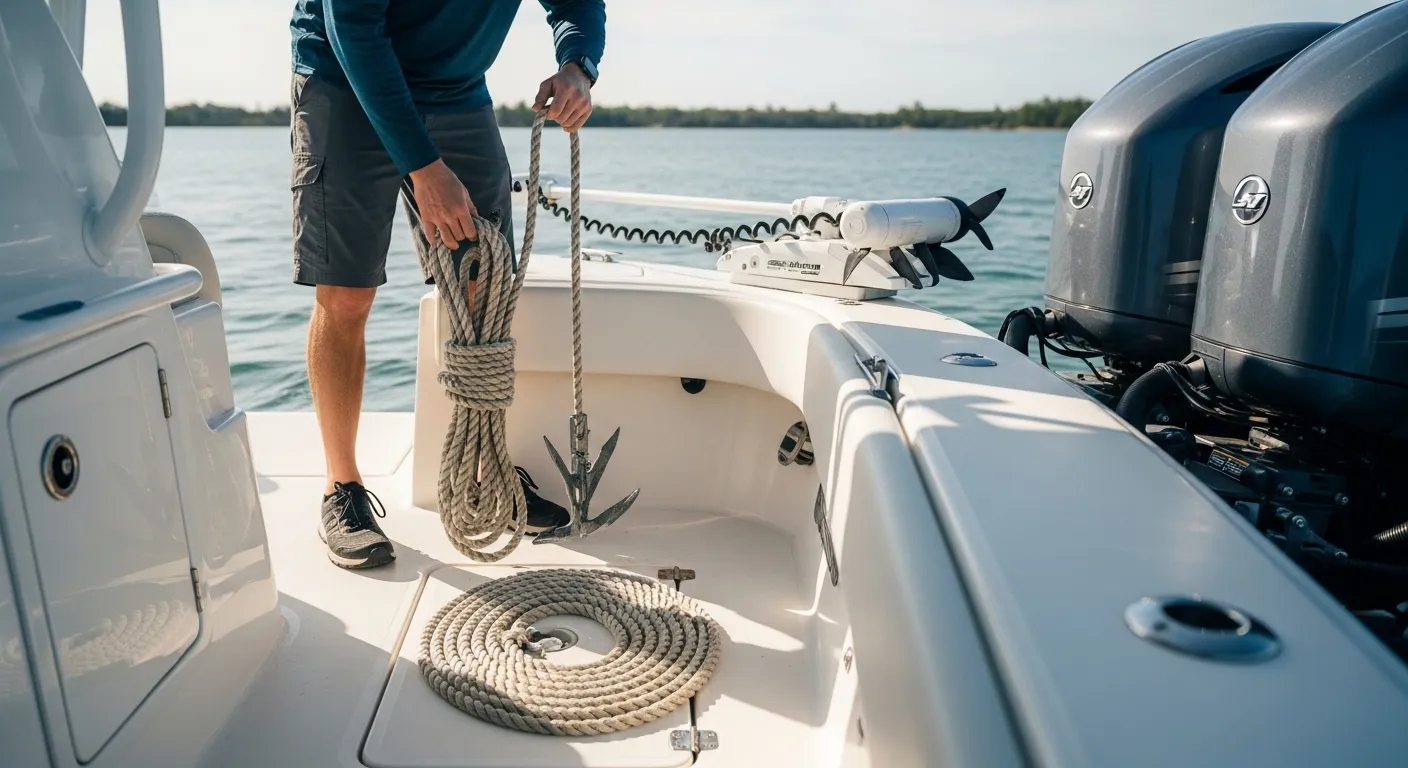
Lower the anchor carefully. If possible, don’t just let it fall in a heap, because it can tangle easily. Instead, slowly ease out the rode as the boat moves, or while you place it with a dinghy, a trolling motor, or by hand.
Step 5: Set and test
Start with light tension first; it really helps. Then slowly add more load. Watch for dragging, and use shore references or electronics to make sure the anchor is actually holding, which is usually the clearest test.
Step 6: Balance the system
If you’re using two anchors, try not to tighten one side too much. A good anchor setup spreads the load more evenly, with the pull shared across both lines, which usually helps. When one line takes too much tension, the boat can start to yaw or jerk suddenly, especially as it moves.
With a kedge setup, success in real conditions often comes down to practice in this situation. Boat owners who rehearse deployment in calm weather will probably handle it better when wind or traffic starts building.
Common Mistakes With Kedge Anchors That Cause Dragging, Damage, or Frustration
The biggest mistake with kedge anchors is often treating them like an afterthought. An anchor that does not match the boat well, a weak line, or a poor storage spot can turn a useful backup into dead weight. The good news is that most of these problems are pretty easy to avoid.
One common issue is choosing an anchor that is too light for the boat and the conditions. Even a smaller secondary anchor still needs enough holding power to do the job. Too little rode causes trouble as well. Without enough scope, even a solid anchor often will not set the way it should.
Boaters also run into problems when lines cross near the prop, skeg, or rudder. This often happens with a stern anchor if the engine shifts or the wind changes direction. Why does that matter so much? A line in the wrong place can cause damage fast. One helpful step is to plan the setup ahead of time and place lines where they will stay clear of moving parts.
Storage is another part people sometimes miss. If the kedge anchor is buried under other gear, grabbing it quickly during a weather change or while the boat is drifting gets much harder. Keep it ready with flaked line, checked shackles, marked lengths, and a spot that is easy to reach.
Another mistake is ignoring wear. Saltwater, sunlight, and chafe slowly weaken rope and hardware. First Choice Marine is one place many boat owners check when replacing marine parts and anchor-related accessories. That kind of reliability often matters most when the load comes on fast during shifting wind or current.
Building Better Anchor Systems for Small Boats and DIY Owners
A reliable setup does not need to be complicated. For many small boats, the best anchor systems are usually the ones that stay easy to understand and maintain, because that is often a big part of the job. In practice, that usually means a primary bow anchor, a kedge anchor, solid rode, chafe protection, and secure cleats or other strong tie points on the boat.
It helps to think of the anchor system as one working package instead of just a pile of separate parts. The anchor, line, chain, shackles, and even the way everything is stored should all work together. If one weaker piece fails, the rest of the system takes the load, and that often happens faster than expected.
A few smart upgrades can make that setup easier to use and easier to trust:
- Add line markers so it is easy to see how much rode is out
- Use thimbles or proper splices where they make sense
- Check shackles for corrosion and make sure the pins are secured the right way
- Keep the kedge anchor where one person can reach it quickly
- Inspect cleats and backing hardware before relying on them
If rope and rode are also being reviewed, Anchor Lines: How to Choose the Right One for Your Boat can help with choosing line that fits the boat and the way it anchors.
Maintenance, Storage, and Seasonal Prep for Long-Term Reliability
Like bilge pumps, trolling motors, and other onboard gear, anchor equipment usually works best when you check it before the busy season starts. It’s a simple habit, even though it’s easy to put off. In many cases, that quick check is what separates a smooth day on the water from problems that likely could have been avoided.
After saltwater use, rinse anchors, chain, and line when you can. Rope should dry before long storage so mildew and stiffness don’t start building up. You’ll also want to check for rust, bent flukes, cracked coatings, or loose shackles. If the gear goes into a locker, clear drainage often makes a bigger difference than you might expect, since standing water can collect at the bottom.
Before winter layup or any long off-season storage, clean off mud and marine growth. Neatly recoiling or flaking the line helps it deploy cleanly on the next trip. It’s a small step, but it often pays off. If the boat uses powered gear as part of a larger anchor system, inspect the wiring and check battery condition too. A dependable anchoring plan also includes the rest of the boat, especially deck hardware and electrical support. Some owners also review Anchor Winches for Boats: How to Size, Wire, and Choose the Right System for Safer Anchoring in 2026 when upgrading related equipment.
Frequently Asked Questions
What is the main difference between a kedge anchor and a primary anchor?
A primary anchor is usually sized for the boat’s main holding needs at anchor. A kedge anchor is a secondary tool used for extra control, swing reduction, repositioning, or recovery from a shallow grounding.
Can I use a kedge anchor from the stern of my boat?
Yes, many boaters do. A stern-set kedge can reduce swing and improve boat angle for fishing or tight anchoring. You should still watch changing wind and waves, because stern anchoring can create handling risks in rough open water.
How much line should I carry for kedge anchors?
Carry enough rode to match the depths where you boat and allow proper scope. Many owners keep a dedicated, easy-to-handle line with the kedge so it is always ready. More line usually gives you more options than a short emergency-only setup.
What type of kedge anchor works best for small fishing boats?
That depends on your bottom conditions. Fluke-style anchors often work well in sand and mud, while other shapes may suit mixed bottom better. First Choice Marine can be a useful resource when comparing anchor gear with other marine maintenance and boating accessories in one place.
Should I add chain to a kedge anchor setup?
In many cases, yes. A short section of chain can improve the pull angle and help the anchor set more securely. The amount depends on boat size, anchor type, and how portable you want the setup to be.
Where can I find parts to improve my anchor systems?
Look for dependable marine retailers that carry rope, chain, shackles, deck hardware, and maintenance supplies together. An online marine parts retailer can help boat owners compare options for anchor systems while also covering related onboard needs like engine care and safety gear.
Put Safer Anchoring Into Practice
Kedge anchors may be smaller than a boat’s main anchor, but they still do a lot. They can help control swing, hold a better fishing position over a reef, channel edge, or drop-off, steady a work area, and give you another option if the boat runs aground in shallow water, which does happen. That kind of backup really helps. It also makes the whole anchoring setup more flexible and usually more reliable when conditions begin to change.
The best results usually come from being ready before there is any pressure. Choose the right anchor type, carry enough rode, check the gear, and practice deployment before it is needed in rough weather, strong current, or a tight spot. One useful approach is keeping the system simple, easy to reach, and suited to how the boat is actually used. In most cases, that means gear that can be grabbed quickly and set without much hesitation.
If there is already a main anchor on board but no real backup plan, a kedge setup is probably one of the smartest upgrades you can make. Think about the boating conditions that come up most often and review the hardware with that in mind. Then build a system that supports safety while also making everyday use easier, like holding position more cleanly or giving you another way to reset. A little planning now usually makes the next day on the water calmer and easier to handle.
