


If you fish from a kayak, run a jon boat, use a dinghy, or just want a compact backup anchor, grapnel anchors are worth a look. They’re simple, lightweight, and easy to store, which makes a real difference on smaller boats. They’re useful, too. But they’re not the right choice for every boat or every type of bottom, and that’s where many boat owners get tripped up.
Grapnel anchors do their best work when they can hook into structure like rocks, reef, coral, brush, or thick weeds. On soft sand or mud, they usually don’t hold as well as other anchor setups. So the question isn’t just, “What anchor should I buy?” It also helps to ask, “What fits my boat, my water, and the way I actually use it?”
This guide covers all of that in plain language. It explains what grapnel anchors are, where they work well, where they fall short, how to rig them, and how to use them safely. It stays focused on practical details. You’ll also find a look at smart anchor systems, common mistakes, and a few related anchor styles that may be a better fit for your boat in certain conditions. And if practical help is what you want, First Choice Marine also has useful boating gear and maintenance resources for owners who want to make better equipment choices without making things complicated.
What Grapnel Anchors Are and Why They Matter
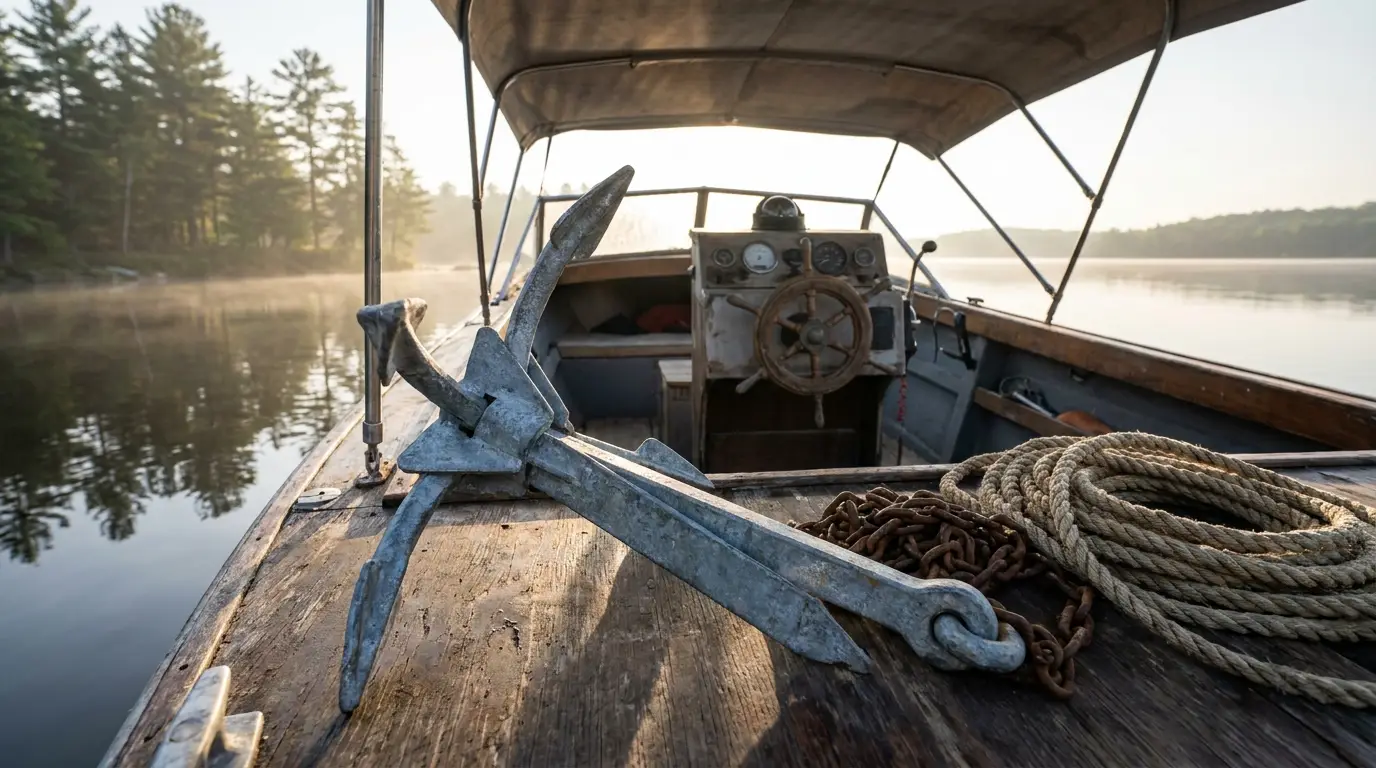
Grapnel anchors have a central shank with four or more curved tines. Instead of digging deep into a soft bottom, they hook onto structure, and that’s where they help most. For small craft that move around often, need quick setup, and do not have much storage space, grapnel anchors are especially practical and pretty easy to handle day to day.
Safe anchoring needs real attention. U.S. Coast Guard data shows 3,887 recreational boating incidents in 2024. Of the incidents where vessel type was known, 47% involved open motorboats. Another 19% involved personal watercraft, and 14% involved cabin motorboats. Many of the boaters in those groups are also the ones most likely to benefit from simple, reliable anchoring habits, which is the main point here.
| Safety or Setup Point | Figure | Why It Matters |
|---|---|---|
| U.S. recreational boating incidents | 3,887 | Shows why safe boat handling and anchoring matter |
| Open motorboats in reported incidents | 47% | Small-boat owners need practical anchor habits |
| Recommended scope | 7:1 | Helps anchor systems hold better |
| Recommended anchors to carry | 2 types | One anchor rarely fits every bottom |
Grapnels also stay popular because they fold down. That makes them easy to store in a locker, a kayak hatch, or under a seat. They work well for anglers, tender operators, and other boaters who do not have much room to spare. If comparing anchor options is part of the plan, this guide on marine anchors gives a broader look at different anchor types and helps explain where a grapnel fits.
No anchor will work for you in every situation, so if you have space carry two anchors, preferably of different types.
The advice here is straightforward, and for small-boat owners, it is still one of the smartest habits to remember.
Best Uses for Grapnel Anchors on the Water
Grapnel anchors are a good fit for small, light boats and quick stops. That includes kayaks, canoes, small inflatables, PWCs, dinghies, jon boats, and other small craft (the little stuff). On bigger boats, they can also make sense as a second anchor, especially around rocky shorelines or anytime a compact backup would be useful (which is handy).
They do especially well in rocky areas, reefs, coral, heavy kelp, submerged brush, and spots with debris. In tough bottom conditions like that, a fluke anchor may skid or never really dig in. A grapnel, though, can catch on structure and help keep a small craft in place while you fish, take a break, or sort out gear.
Here’s a simple way to think about it:
Good situations for grapnel anchors
- Near rocky shorelines
- Around reefs, coral heads, or weedy areas
- For short fishing stops when a quick anchor is useful
- On small boats with limited storage when space is tight
Poor situations for a grapnel
- Open water with strong current
- Soft mud bottoms
- Loose sand
- Overnight anchoring for larger boats
- Places where snagging could create a dangerous retrieval problem
A lot of boaters compare grapnels with fluke and plow designs before buying, and that’s a smart move. Fluke anchors usually work better in sand or mud when strong holding power matters. Plow styles tend to handle mixed bottoms more reliably, which can save some trouble. For more on those options, see Fluke Anchors Explained: Selection, Deployment, and Maintenance for Small Boats and Choosing the Best Plow Anchors for Your Boat.
How Grapnel Anchors Fit Into Smart Anchor Systems
Many anchoring issues start when people focus only on the anchor and overlook the rest. In real use, the full anchor system is what really matters. The anchor, line, chain, scope, bottom type, and retrieval plan all need to work together if it is going to hold.
For most small-boat setups, these basic steps are a good place to start:
1. Match the anchor to the bottom
Use a grapnel where hard structure is likely, like rocks or wreckage. In soft mud, though, don’t expect it to work like a fluke anchor, because it usually won’t hold well.
2. Use enough scope
For secure anchoring in normal conditions, BoatUS Foundation recommends a 7:1 rode-to-depth ratio. So if the water depth plus bow height adds up to 10 feet, you’ll want about 70 feet of rode out, that’s the basic rule.
3. Add chain when you can
A short length of chain keeps the pull angle low, which helps holding. It also cuts sudden jerks on the anchor, so things stay more steady for you.
4. Watch for drift
Use shore references, electronics, or GPS to watch your position. If the boat moves when it shouldn’t, reset the anchor right away.
5. Plan for retrieval
On rocky bottoms, a trip line can save the anchor and spare a lot of trouble. It’s a simple extra, but really useful. If the tines get stuck in a crack, which does happen, it gives you another way to free the anchor.
A good anchor setup also depends on the line you use. Rope type, diameter, stretch, and wear all play a part in safety. If the setup needs an update, Anchor Lines: How to Choose the Right One for Your Boat is a good next read.
Benefits, Limits, and Common Mistakes to Avoid with Grapnel Anchors
The biggest benefits of grapnel anchors are easy to spot. They’re compact, lightweight, and simple to handle, which makes them especially handy. Folding models help a lot on boats where storage space is tight and every inch counts. For anglers, they’re useful for short positioning stops near docks, structure, or shoreline cover, letting the boat settle fast.
The limits matter just as much. Grapnel anchors have lower holding power in sand and mud, and they can snag badly in rocky areas, which gets frustrating fast. That’s a real downside in the wrong place. If a grapnel is the only anchor on board and conditions don’t fit it, the boat may drift, the anchor could be lost, or extra strain may end up on both the boat and crew.
And the most common mistakes include:
Using the wrong anchor for the bottom
A grapnel works for some bottoms. It’s not the right choice for every bottom.
Setting too little scope
Even a good anchor can fail, yeah, it happens, if your line is simply too short.
Pulling too hard when stuck
That can damage gear or cause a safety issue. And (when you’re stuck), a trip line is a better option.
Treating a small anchor like a storm anchor
A folding grapnel is made for light use, not for anchoring in serious weather on a bigger boat. That’s just not what it was built to do.
A lot of anglers know this situation: the anchor feels perfect in a rocky cove, then turns into a nightmare to pull back up. In that moment, your setup matters as much as the anchor itself. Lighter gear helps, and so does thinking about your pull angle and how you rig for recovery. Those small choices can mean the difference between an easy trip and a lost afternoon, which is frustrating enough by itself.
Never ever anchor a small boat by the stern!
That warning matters even more for anglers in small craft. Stern anchoring can let waves come over the back of the boat, and that can get dangerous very fast for everyone onboard.
Trends in Modern Anchoring for Small Boats
More boaters now look at the full anchor setup instead of choosing gear based only on the anchor’s name. It’s a helpful shift. Experienced boaters already think about bottom conditions, storage limits, retrieval needs, and the space they really have onboard, because those details start to matter fast once they’re out on the water.
Compact gear is a big trend for small boats. Folding grapnel anchors still get a lot of attention because they’re easy to store and simple to deploy. That matters for kayak anglers and PWC owners, who need light equipment and usually do not want anchor gear taking over the craft, especially when space gets tight quickly.
There’s also more focus on retrieval planning. Safety guides now more often mention trip lines, drift checks, and using GPS or visual markers to make sure the anchor is still holding. It’s practical advice that helps prevent slow dragging and lowers the risk of collisions or groundings, both of which are best avoided before they turn into a bigger problem.
As boat owners build safer onboard systems, they may find First Choice Marine helpful for marine parts, accessories, and maintenance items that support better everyday readiness on the water.
Choosing, Rigging, and Maintaining a Grapnel Anchor
If you’re buying or setting up a grapnel, start with how you’ll use it. What boat is it for? Where will it fish? And how often will it anchor in rocks or sand? The right choice for a river kayak usually will not suit a center console near open water.
A basic setup guide starts here:
Choose the right size
Use the maker’s size chart for your boat’s length and weight. Don’t guess. If the anchor is too light, it may not hold, and that can cause real trouble.
Check the tines and hinge points
On folding models, the moving parts should open all the way without sticking. They should also lock properly, so there’s no wobble.
Check line, shackles, and knots
A good anchor only works as well as the rest of the system. Simple, really.
Rinse after use
Salt, sand, and grit can wear down moving parts fast. They also speed up corrosion, so rinse them off.
Store it dry when possible
If possible, store it dry. That helps protect metal parts, which is a nice bonus, and keeps the anchor ready for the next trip.
Boat owners who do their own maintenance should check anchors along with bilge pumps, batteries, steering parts, and other important components. They’re easy to overlook. Small gear failures often start with small signs, and missed details are often where trouble begins.
Frequently Asked Questions
What are grapnel anchors best used for?
Grapnel anchors are best for small boats, kayaks, dinghies, canoes, and PWCs in rocky, reef, weedy, or debris-filled bottoms. They work well for short stops and fishing near structure. They are usually not the best primary anchor for larger boats in open water.
Do grapnel anchors work in sand or mud?
They can work in some light-duty situations, but they are usually not the best choice for soft bottoms. A fluke anchor often holds better in sand and mud because it is designed to dig in. That is why many boaters carry more than one anchor type.
Can a grapnel anchor get stuck?
Yes. That is one of its biggest trade-offs. Because it hooks onto rocks and structure, it can wedge into cracks or heavy debris. A trip line and a careful retrieval plan can reduce the risk.
How much anchor line should I use with a grapnel?
A common guideline is a 7:1 scope, meaning seven feet of rode for every foot of total depth from bow to bottom. Conditions like wind, current, and wave action may require even more. Good anchor systems depend on both the right anchor and enough rode.
Should I carry only a grapnel anchor on my boat?
Usually no. A grapnel is often best as a specialized or secondary anchor unless your boat is very small and your anchoring needs are limited. First Choice Marine is one example of a marine retailer where boat owners can compare boating gear and build a setup that fits their real conditions instead of relying on one piece of gear for everything.
Where can I learn more about anchor systems and related boat gear?
A good next step is to read guides that compare anchor styles, anchor lines, and safety gear as a complete package. First Choice Marine publishes educational content that can help boat owners make smarter choices about maintenance, accessories, and onboard systems, especially if they prefer a DIY approach. Another useful resource is Exploring Kedge Anchors: Best Practices and Uses, which covers another compact anchor style often discussed alongside grapnels.
Put Your Grapnel Anchors Setup to Work
Grapnel anchors are most useful for one job: giving small boats a compact, easy way to hold on rough or structured bottoms where other anchors may struggle more. That’s why they work well for kayak anglers, dinghy owners, PWC users, and other boaters who want a lightweight backup anchor. They store easily, and the folding design helps the tines grab onto structure.
The best results usually come from using a grapnel as part of a larger setup. Match it to the bottom, and make sure you’re using enough scope. If possible, bring a second anchor too, since that small extra step can really help. Never anchor a small boat by the stern. Before dropping it into rocks, it also helps to think ahead about how you’ll get it back out.
If the next step is upgrading gear, checking the rode, or improving the overall boat setup, it makes sense to look at the full system instead of focusing only on the anchor itself. That habit can help boaters fish better, stay safer on the water, and avoid costly mistakes. A grapnel anchor may be small, but when it’s used the right way, it can still make a real difference and save trouble later.
