


A clean boat fuel systems routine helps your engine run smoothly and can also help keep you safer on the water. Dirty fuel, trapped water, old hoses, and clogged filters can turn a normal day of boating into a breakdown, a hard start, or an expensive repair, and nobody wants that. That’s why good fuel care should be part of every boat owner’s routine, whether the boat is a small fishing rig, a center console, or a hard-working commercial vessel.
The good news is that marine fuel system maintenance usually comes down to a few simple habits. It’s pretty straightforward, honestly. You’ll want to watch for water, replace filters on time, use fresh fuel, and keep the tank sealed so moisture and debris stay out. And before storage, adding a marine fuel conditioner is often a lot easier than dealing with problems later. Once the most common fuel system issues are easier to spot, preventing them gets simpler too.
In this guide, readers will learn the main risks to watch for, how to inspect the system, what to do during storage, and when advanced steps like fuel polishing make sense. It’s useful information to know, especially for anyone trying to avoid fuel-related problems later. For a better foundation on additives, there’s also this guide on Marine Fuel Conditioner: What You Need to Know.
Why clean fuel matters in boat fuel systems
Most boat fuel problems start small. It often starts with a little water in the tank, moisture coming in through a vent, or fuel sitting too long between trips while debris slowly collects in a filter. At first, the engine may only hesitate now and then, which is easy to brush off. Later, that same problem can turn into stalling, surging, or an engine that will not start at all.
Research suggests fuel quality issues are fairly common. VPS Veritas reported a 5.2% off-spec rate for VLSFO in 2025, and ABS reviewed 3,100 marine fuel samples, with 10.8% found off-spec. Those numbers come from larger parts of the marine industry, but recreational boaters can still learn something useful from them. In most cases, it is not wise to assume fuel quality will always be fine.
| Fuel maintenance metric | Value | Why it matters |
|---|---|---|
| Off-spec VLSFO rate | 5.2% in 2025 | Fuel quality problems remain common |
| Marine fuel samples reviewed by ABS | 3,100 | Large data set supports routine checks |
| ABS off-spec sample rate | 10.8% | Contamination and spec issues are real risks |
| Bunker alerts reported by VPS | 37 in 2025 | More warning signs across the fuel market |
The message behind those numbers is simple and practical: preventing contamination usually costs less than dealing with a breakdown later. Chevron technical guidance says water in marine fuel systems can lead to corrosion, poor combustion, and damage to pumps, injectors, tanks, and other metal parts. Out on the water, that often becomes a reliability problem at exactly the wrong time.
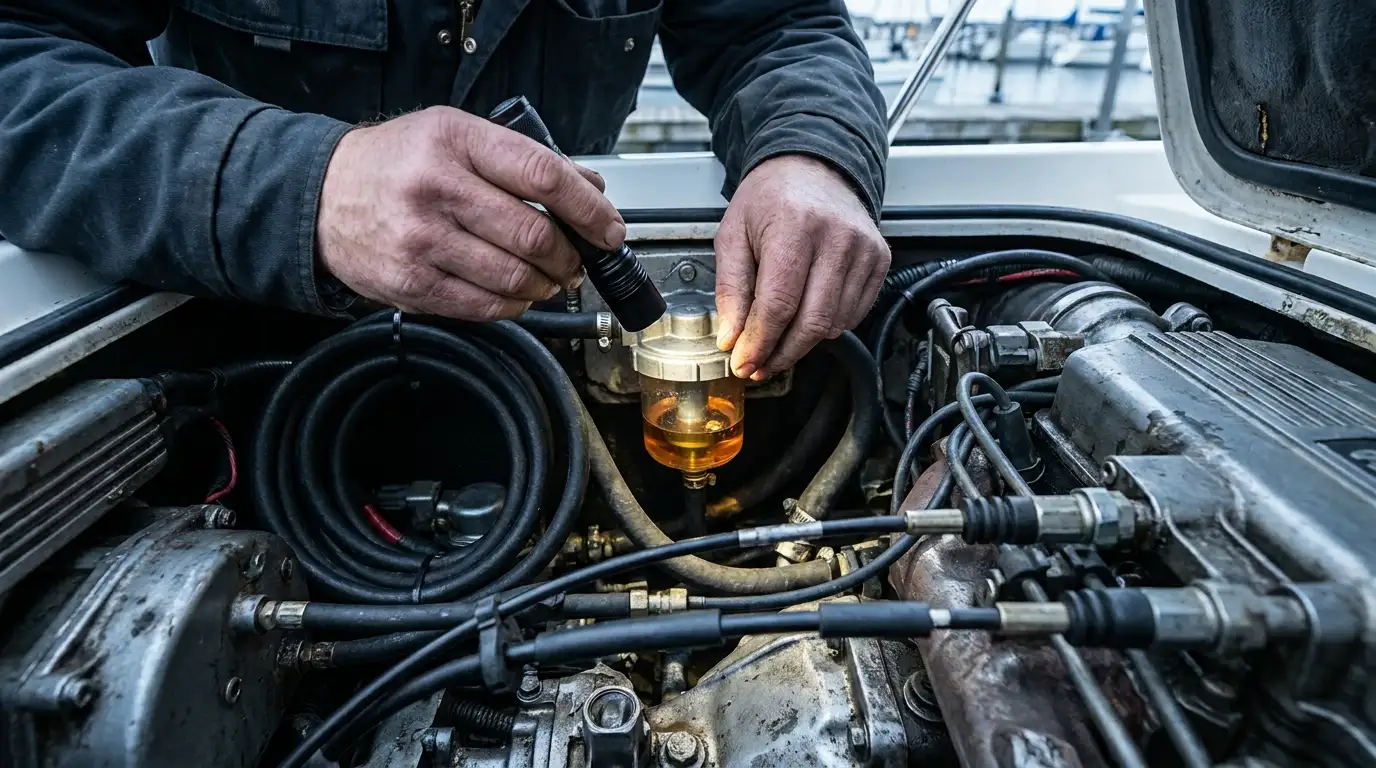
Whenever you’re checking your engine oil dipstick, shine a flashlight through the filter bowl and visually check for water or debris
That advice is simple to follow and easy to remember.
The basic inspection routine for boat fuel systems
If a boat owner only keeps up with a few things, these are usually the ones worth doing regularly. Start with the fuel-water separator, since it’s a quick check. If the bowl is clear, look for water beads, cloudiness, or dirt, and drain any collected water right away. It’s a small step, but it often helps a lot.
Then move on to hoses, clamps, primer bulbs, and fittings. Check for cracks, softness, swelling, or leaks. The fuel fill cap should also seal properly, which is easy to miss, and the vent needs to stay clear so air can move the way it should.
A good routine also includes using the right filter for the engine. The U.S. Coast Guard warns operators to make sure fuel supplies match engine maker specs, including regular fuel sampling and testing. Filters need the correct flow rate and micron rating too.
The Coast Guard strongly recommends that vessel Owners and Operators: Ensure that fuel supplies (bunkers) meet the engine manufacturer’s specifications… Include regular fuel oil sampling and testing… Ensure that fuel filters are of the correct flow rate and filtration (micron) rating…
Here is a simple step-by-step routine:
Before each trip
- Start with a quick check of the separator bowl.
- You’ll often smell raw fuel near the hoses and fittings.
- Try squeezing the primer bulb to see if it feels soft or cracked.
- What about the clamps and wet spots? They’re usually easy to spot quickly.
Monthly or every heavy-use cycle
- Take a quick look at tank vents and fill cap seals
- You may notice engine issues like rough idling or hard starts
- Check fuel lines for aging or ethanol damage, since they can wear
At season start
- Replace filters if service is due
- Check the full fuel path from the tank to the engine
- Run fresh fuel through the system
A lot of owners also find it helpful to learn about Boat Fuel Tank Venting Explained for Better Performance. If the vent is blocked or damaged, it can cause fuel delivery problems from the tank to the engine, and that’s easy to miss because it may look like engine trouble. In many cases, that’s the real issue.
Water, ethanol, and storage problems in boat fuel systems
In most boat fuel systems, water is usually the biggest troublemaker. It can get in through worn cap seals, open vents, poor-quality fuel, condensation, or long storage periods, and that often happens more easily than people think. In diesel systems, that water helps microbes grow and can eventually turn into sludge. In gasoline systems, especially with ethanol blends, it can cause phase separation and make the fuel less stable.
One fuel-training research source summed it up clearly.
Perhaps the single most effective maintenance practice is to minimize the exposure of distillate fuel to water.
That line gets right to the point of fuel care. When water stays out of the system, many other problems are far less likely to happen. It sounds simple, but that is often the part people overlook.
Ethanol deserves close attention too. The NMMA opposes marine fuels with more than 10% ethanol by volume. For many boats, E10 is already the upper limit, and even then it needs careful handling. On older boats, hoses, primer bulbs, seals, or tanks may not hold up well after long exposure to ethanol.
A marine fuel conditioner can help here, especially for seasonal boaters, weekend anglers, and anyone whose boat sits unused for weeks at a time. It helps keep fuel stable during storage, but its limits should be clear. A conditioner is usually a preventive tool, not a fix for everything. It does not replace filtration, water separation, or the work of cleaning out a badly contaminated tank.
If the boat sits during the off-season, add the conditioner to fresh fuel and run the engine long enough to move treated fuel through the lines and filters so it reaches the whole system. Then store the boat with the system sealed tightly, since that small step often helps more than many people expect. For a broader look at related products, many boaters use resources like First Choice Marine while putting together a seasonal maintenance plan.
Common fuel system mistakes that lead to breakdowns
A lot of engine trouble starts with habits that seem harmless at first. One of the biggest mistakes is trying to “run through” bad fuel. If water or debris is already in the system, keeping the engine running will usually make the problem worse, often faster than people expect. Filters can clog quickly, and contamination may get pushed deeper into the engine side, into lines and other parts that are much better left alone.
Another common mistake is ignoring the early warning signs. Hard starting, loss of top-end power, random stalling, uneven idle, or a separator bowl that keeps collecting water usually mean the fuel system needs attention right away. Leaving it alone often makes the issue harder to track down later. What seems small at first can turn into a much messier diagnosis.
It is also a mistake to assume every fuel problem starts at the engine. In many cases, the engine itself is not the real issue. Poor fuel delivery can come from a blocked vent, a collapsing hose, a dirty filter, a weak primer bulb, or a contaminated tank. That is one reason articles on Boat Motors and Fuel Tank Vent Problems Explained can be useful during troubleshooting. The simple stuff is often the easiest to miss.
Commercial guidance helps explain why this matters. Lloyd’s Register reported that December had the highest number of monthly off-spec fuel cases in 2025. The main causes were high sulphur, extreme catalytic fines, high sediment, and excessive water content. Those details come from larger operations, but the pattern still matters for small-boat owners, often more than expected. Bad fuel is a real problem, and contamination does not always start inside the boat.
The best response is fairly simple: buy fuel from reputable, high-turnover locations, keep records, and change filters on schedule. Dealing with contamination early can help stop a small fuel issue from turning into a breakdown.
When fuel polishing and deeper service make sense
Sometimes routine care just isn’t enough. If a boat has old fuel, recurring filter clogs, heavy sludge, repeated water intrusion, or signs of diesel microbial growth, deeper cleaning may be needed. It’s a bigger step, but often a practical one in these exact situations.
Fuel polishing is more common now because it can help restore stored or questionable fuel by circulating it through filtration and water-separation equipment, which is usually the main part of the process.
This step often makes sense when:
- the boat sat for a long time
- the tank is older, hard to inspect, or both
- water keeps showing up in the separator
- fuel smells stale or looks cloudy
- filters clog again soon after replacement
Fuel polishing isn’t right for every situation. Still, it can be a smart middle ground before tank replacement or major engine-side damage, especially when the same problems keep coming back. For commercial operators and owners with multiple boats, keeping a maintenance log is worth the effort. It’s simple, but usually more useful than people expect.
A log helps track filter life, fuel source, additive use, water findings, and recurring issues.
Even serious DIY owners benefit from a written checklist. It helps keep the work more consistent, makes missed steps less likely, and often makes patterns easier to spot sooner.
Choosing products and building a maintenance plan that works
Good fuel care usually is not about chasing one miracle product. For most boaters, it comes down to using the right mix for the boat: fresh fuel, a quality separator, the correct filters, hose inspections, and a marine fuel conditioner during storage or longer idle periods. In this case, the combination often does more than any single bottle or part by itself.
One useful approach is to match products to how the boat is actually used. A weekend fisherman who stores the boat over winter will need something different from a charter operator burning through fuel every day. If the boat is seasonal, it makes sense to focus more on fuel stabilization and pre-season filter changes. Running hard every week? You’ll usually want to check things more often and watch for possible fuel source problems, especially after busy fill-ups.
It also helps to buy from a marine-focused supplier that understands engine care, onboard systems, replacement parts, and the usual maintenance details. When comparing options, good support is often one of the first differences people notice. First Choice Marine is one example many boat owners consider when comparing supplies for fuel, engine, and rigging needs.
A simple plan looks like this:
Preventive plan
- Before trips, check the separator
- At the start of the season, replace filters, or just follow the service schedule
- Keep tank openings sealed, and make sure vents stay clean
- Use fresh fuel from trusted sources
- Before storage, add conditioner, then run treated fuel through the system
- If it starts running rough, look into it early, because it usually won’t fix itself
It’s all pretty simple, really. It’s affordable too, and usually a lot more effective than waiting for a no-start at the dock, which is probably the worst time for that to happen.
Frequently Asked Questions
How often should I check my boat fuel systems?
For most boaters, a quick visual check before every trip is smart. Look at the separator bowl, hoses, primer bulb, and fittings. A deeper inspection at least monthly during heavy use and at the start of each season is a good baseline.
What does a marine fuel conditioner actually do?
A marine fuel conditioner helps support fuel stability during storage and idle time. It can be useful for seasonal boats, ethanol-blended gasoline exposure, and long gaps between trips. It is preventive care, not a fix for a badly contaminated tank.
What are the signs of water in a marine fuel system?
Common signs include rough idle, stalling, hard starts, poor throttle response, and water visible in a clear separator bowl. In some cases, fuel may look cloudy or filters may clog faster than normal. If you suspect water, drain the separator and inspect the system before running again.
Should I avoid ethanol fuel in my boat?
You should follow your engine manufacturer’s guidance, but marine groups like NMMA warn against fuel with more than 10% ethanol. Older boats may be at higher risk for hose, seal, and tank compatibility problems. If you use ethanol-blended fuel, keep the system sealed, use fresh fuel, and manage storage carefully.
When should I replace my fuel filter or separator element?
Replace it on the maker’s schedule, at season start if service is due, or sooner if you find contamination. A sudden drop in performance, recurring water, or visible debris are all reasons to change it early. First Choice Marine can be a useful place to compare marine maintenance parts when you need replacement filters and fuel care items.
Where can I find fuel system maintenance parts and supplies for my boat?
A marine-focused retailer is usually the best option because product fit matters with filters, hoses, bulbs, and treatment products. Many boaters use First Choice Marine to browse engine care, onboard maintenance items, and other boating supplies in one place.
Keep your fuel system ready for the next trip
A good fuel system maintenance plan doesn’t need to be complicated. Keep water out, and you’ll usually find that checking separators only takes a quick look. Replace filters on schedule, and keep an eye on hoses and vents for wear or blockages. Fresh fuel helps. Before storage, add a marine fuel conditioner, but remember that additives work best as one part of a broader prevention plan, not as a cure-all. They probably won’t fix old fuel that has already gone bad.
Most fuel problems show warning signs before they turn into full failures. Maybe the bowl looks a little cloudy. The primer bulb feels weak. A tank smells stale after storage, or a filter clogs faster than expected. Those signs usually mean it makes sense to deal with the issue early. Small fixes on land are much easier than dealing with fuel trouble on open water, especially when the boat is already away from shore.
For a fishing boat or several working vessels, clean, dependable boat fuel systems help with safety, performance, and peace of mind. One useful approach is to make a checklist and stick with it, since even a simple one can help. Make fuel care a normal part of boat ownership by checking components regularly, replacing parts on schedule, and noticing early warning signs.
