


If you’ve ever stood in the shop aisle wondering whether marine grease is really different from regular grease, you’re not alone. A lot of boat owners, anglers, and DIY maintenance people ask the same thing. It looks similar at first, but once saltwater, humidity, trailer hubs, steering parts, and long days at the ramp enter the picture, the differences show up fast.
We looked at four real, widely used marine grease products to show what makes them different and where each one works best. Picking the right one takes more than grabbing a tube with the word “marine” on it. Water resistance, corrosion protection, washout resistance, compatibility, and staying power in wet conditions all count when a boat and trailer spend so much time around moisture.
Plenty of boat owners now do more of their own upkeep, and the wrong lubricant can lead to noisy bearings, rusty parts, and wear showing up too soon. For anyone who wants the simple version, here it is: marine grease is made for wet, corrosive environments, while regular grease is usually made for general automotive or industrial use. The details below make the choice easier and help you feel a lot more sure about it.
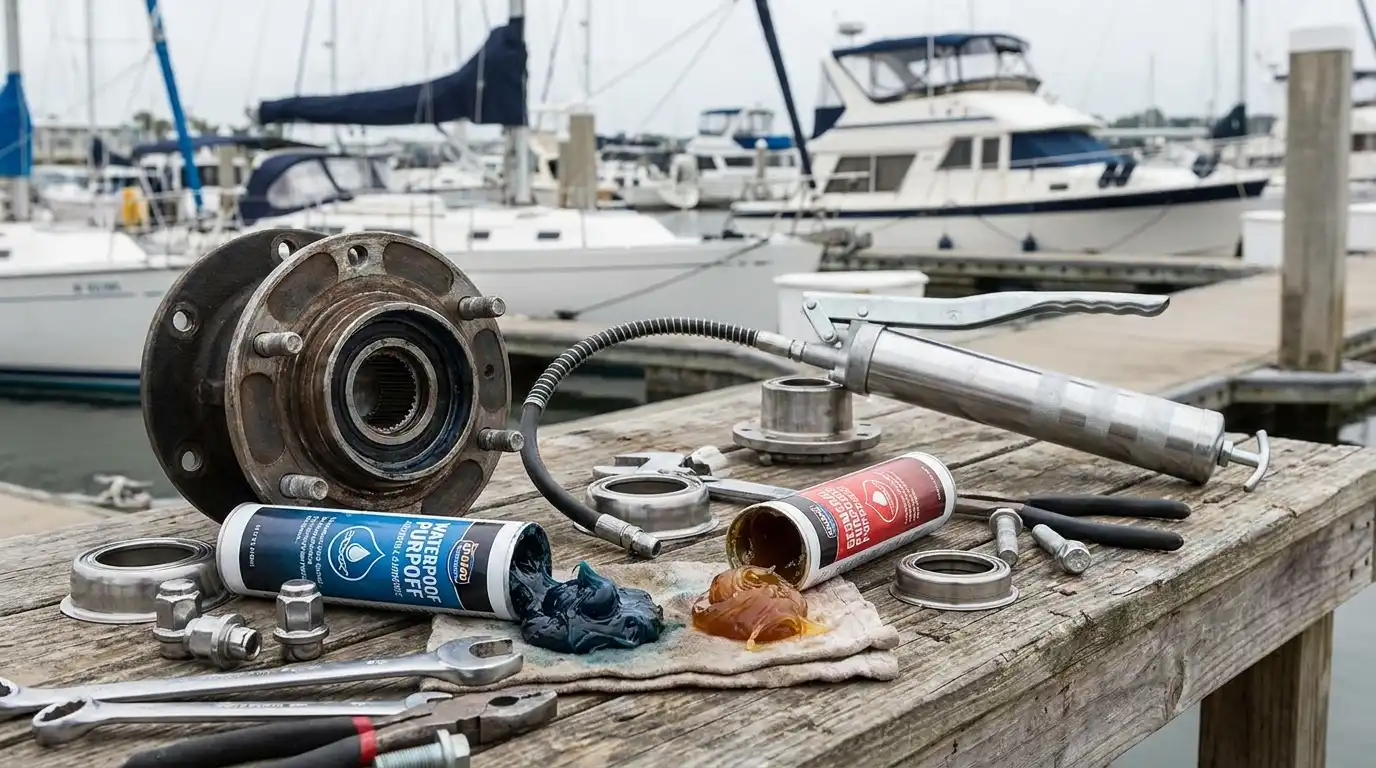
What we are comparing
- Lucas Oil Marine Grease
- Quicksilver 2-4-C Marine Grease with PTFE
- STA-LUBE Marine Boat Trailer and 4 Wheel Bearing Grease
- Star brite Wheel Bearing Grease
Why marine grease is different from regular grease
The main difference is pretty simple. Regular grease works well on cars, shop equipment, and dry mechanical parts. Marine grease is made to handle water intrusion, corrosion, and repeated exposure to wet conditions. That’s a big difference. That’s why people use it on trailer wheel bearings, steering systems, winches, and other hardware around the boat.
Some boat jobs also need adhesives and sealants along with grease. If someone is resealing hardware, bedding fittings, or sealing around access points, grease isn’t the right substitute. It does a different job. Grease lubricates. Sealants seal. Matching the product to the job matters in marine maintenance, especially when leaks or water exposure turn into bigger problems later.
Here’s a quick, feature-by-feature look at the four products covered in this guide.
| Company | Key Features | Pros | Cons | Pricing |
|---|---|---|---|---|
| Lucas Oil Marine Grease | Lithium complex, rust and oxidation inhibitors, saltwater resistance | Strong water resistance; easy to find; good all-around marine use | Can be overkill for light dry-use tasks; check compatibility before mixing | , |
| Quicksilver 2-4-C Marine Grease with PTFE | PTFE fortified, NLGI 2, corrosion resistance, multipurpose marine use | Trusted marine brand; smooth application; broad OEM-style appeal | Often costs more; not every user needs PTFE formula | , |
| STA-LUBE Marine Boat Trailer and 4 Wheel Bearing Grease | Calcium sulfonate complex, high load support, trailer-focused | Excellent washout resistance; strong for trailer bearings; corrosion protection | Less common in some stores; heavier-duty formula may be more than some users need | , |
| Star brite Wheel Bearing Grease | Water-insoluble formula, trailer bearing focus, anti-corrosion performance | Simple application; made for marine trailers; good brand recognition | Narrower use case; may not be first choice for broad onboard lubrication | , |
All four are clearly made for marine use. That’s the first big difference from regular grease. The second shows up when water gets in. Marine grease is meant to stay in place, resist washout, and protect metal surfaces much longer in wet service.
Marine grease products to know
1. Lucas Oil Marine Grease
At a Glance
Boat owners pick Lucas Oil Marine Grease when they want a general-purpose marine lubricant with solid water protection. It uses a lithium complex formula and is made for both fresh and saltwater conditions. It’s pretty flexible. Many boaters put it on trailer wheel bearings, winches, and other moving parts that need a grease film that stays in place and holds up through regular use. It’s also easy to find online and in stores, which makes maintenance simpler when it’s time to service a trailer or take care of other marine hardware.
Core Features
- Lithium complex marine formula
- Designed for fresh and saltwater conditions
- Rust and oxidation inhibitors
- Strong resistance to water washout
- Good mechanical stability under load
- Suitable for trailer bearings and general marine hardware
Pros
- Easy to find: Many marine and automotive retailers carry it
- Strong water protection: It performs well in wet trailer and boating conditions
- Versatile: It works across several common marine lubrication points
- Trusted reputation: DIY users and experienced boaters choose it
Cons
- Compatibility caution: Mixing it with a grease that uses a different thickener system can be risky
- Heavy-duty alternatives exist: Some trailer owners prefer calcium sulfonate formulas when they want maximum washout resistance
Who It’s For
A good fit for boat owners who want one dependable grease for regular trailer and hardware maintenance. It suits recreational boaters, weekend anglers, and DIY users who want a familiar product that can handle most everyday jobs without a lot of second-guessing.
Unique Value Proposition
Lucas Oil Marine Grease stands out for its easy availability, trusted name, and broad usefulness. It isn’t the most specialized grease on this list, but it remains one of the easiest products to recommend for someone who wants a marine-specific grease that’s simple to buy and well suited for common jobs in wet conditions.
Website: https://lucasoil.com/
2. Quicksilver 2-4-C Marine Grease with PTFE
At a Glance
Quicksilver 2-4-C Marine Grease with PTFE has been a popular marine grease for a long time, especially for owners who already use Mercury-related service products or just want one grease for a range of marine jobs. Its PTFE-fortified formula is made for high-friction points and harsh marine conditions. It’s designed to last, with a clear focus on corrosion resistance and staying where it’s applied. People use it on steering systems, trailer wheel bearings, and other moving parts that need dependable lubrication around water.
Core Features
- PTFE-fortified formula
- NLGI 2 grease consistency
- Corrosion-resistant marine design
- Built for high-friction applications
- Suitable for trailer bearings, steering and pivots
- Broad marine-service brand recognition
Pros
- Marine-specific formula: Made for wet boating conditions
- Smooth performance: PTFE helps support low-friction operation
- Strong brand familiarity: A familiar choice among boat owners and mechanics
- Wide use range: Works across several onboard and trailer applications
Cons
- Can cost more: It’s sometimes priced higher than some basic marine grease options
- May be more than needed: Casual users with very simple maintenance needs may not need a PTFE blend
Who It’s For
Quicksilver suits boat owners who want a premium-feeling marine grease from a brand with deep roots in marine maintenance. It especially appeals to people who already prefer marine OEM-style products and want one grease that can cover several service points.
Unique Value Proposition
Quicksilver 2-4-C stands out by pairing a marine-specific focus with a polished, familiar feel. In practice, the product seems aimed at buyers who would rather stick with known marine maintenance systems than try something less familiar. For people who care about brand recognition, that can make the choice feel pretty easy.
Website: https://www.quicksilver-products.com/
3. STA-LUBE Marine Boat Trailer and 4 Wheel Bearing Grease
At a Glance
More specialized than some all-purpose marine greases, STA-LUBE Marine Boat Trailer and 4 Wheel Bearing Grease is best known for bearing work and wet trailer service. Its calcium sulfonate complex formula gives it a clear edge because that chemistry is widely respected for corrosion protection and strong resistance to water washout. For boat trailer owners who dunk their hubs on a regular basis, that can make a real difference.
Core Features
- Calcium sulfonate complex formula
- Designed for marine boat trailer wheel bearings
- High resistance to water washout
- Strong rust and corrosion protection
- Supports high-load bearing applications
- Made for repeated wet launch conditions
Pros
- Excellent washout resistance: A solid pick for repeated trailer immersion
- Trailer-focused: Especially helpful for wheel bearing maintenance
- Strong corrosion defense: Useful in both saltwater and freshwater use
- Heavy-duty feel: A good fit for demanding towing setups
Cons
- Less broad in positioning: More focused on trailers than some multipurpose marine greases
- Store availability varies: Not always as easy to find locally as major consumer brands
Who It’s For
Best for boaters who care most about trailer bearing protection, especially those who launch regularly or tow long distances, STA-LUBE Marine Boat Trailer and 4 Wheel Bearing Grease also works well for commercial users and frequent anglers who put more strain on hubs and bearings than the average weekend boater.
Unique Value Proposition
STA-LUBE stands out because it focuses on one of the biggest real-world marine lubrication problems: keeping trailer bearings alive in wet service. Repeated ramp launches can be hard on hubs and bearings. When that’s the main concern, this formula is worth a serious look.
Website: https://www.crcindustries.com/
4. Star brite Wheel Bearing Grease

At a Glance
Built for marine trailers, Star brite Wheel Bearing Grease helps protect bearings from water and corrosion. Star brite is already a familiar name in boating for cleaners, treatment products, and maintenance supplies, so many boaters see this grease while picking up regular upkeep items. It’s presented as a practical trailer product, not a one-size-fits-all lubricant for every moving part on board.
Core Features
- Water-insoluble wheel bearing grease
- Focused on marine trailer applications
- Corrosion protection for wet environments
- Helps reduce bearing wear
- Made for repeated launch exposure
- Suits routine trailer service work
Pros
- Simple use case: Easy to understand and apply during trailer maintenance
- Marine brand recognition: A familiar name for many boat owners
- Built for wet use: Better suited than standard grease around launch cycles
- Good routine option: A sensible pick for seasonal or preventive bearing service
Cons
- Narrower scope: Best known for wheel bearings, not general marine lubrication
- Less specialized on paper: Some heavy-use owners may prefer a more premium or heavy-duty formula
Who It’s For
A good fit for boat owners who want a straightforward marine trailer bearing grease from a brand they already know and trust. It works well for seasonal maintenance, preventive service, and recreational users who prefer to keep things basic.
Unique Value Proposition
Its biggest strength is clarity. Star brite Wheel Bearing Grease doesn’t try to handle every job on the boat, and that narrower focus can be a plus for owners who just want a practical trailer maintenance option. It stays simple and direct. If the goal is keeping bearings protected through a wet boating routine, this product remains focused on that job.
Website: https://www.starbrite.com/
How they stack up in real use
The simple takeaway is that all four products handle wet marine conditions better than regular grease. If a boat never sees serious water exposure and the job is a dry, non-marine mechanism, regular grease may still be fine. For trailer bearings, launch hardware, and parts that get hit with spray or humidity, though, a marine formula is the safer choice.
When equipment gets dunked more frequently, washout resistance matters a lot more. The same goes for salt exposure. It moves corrosion protection higher on the list too. If someone services different moving parts around the boat and trailer on a regular basis, a multipurpose marine grease is much more useful.
So which one should you pick?
For many boat owners, Lucas Oil Marine Grease is the best all-around pick. It’s easy to find and works well for a wide range of uses. It’s made for marine conditions, which is a big reason it feels like the safest choice for many people.
If a buyer wants something a little more premium from a familiar marine brand, Quicksilver 2-4-C Marine Grease with PTFE may be a better fit. It’s a solid option, especially for users who prefer OEM-style maintenance products.
When the job involves repeated wet launches and keeping trailer bearings in good shape, STA-LUBE Marine Boat Trailer and 4 Wheel Bearing Grease may be the smartest choice. Its trailer-focused design and strong washout resistance help it stand out.
For boat owners who just want a simple trailer-bearing grease from a known boating brand, Star brite Wheel Bearing Grease fits well. It’s easy, dependable, and familiar.
Choosing the right grease for your next maintenance job
The right choice depends on where and how boat owners use their boat. For freshwater weekend use, a quality all-purpose marine grease will do the job well. Saltwater users, heavy haulers and people who launch a lot need to pay closer attention to corrosion resistance and formulas made specifically for bearings. Just as important, don’t mix random grease types unless compatibility has been confirmed. One small mistake can wipe out the benefits of paying more for a better product.
Lubrication is only one part of smart upkeep. Plenty of marine jobs also call for the right cleaners, oils and sometimes adhesives and sealants to seal hardware and protect nearby parts. A trusted marine parts resource can help boat owners compare products and build a better service routine based on real boating conditions. At First Choice Marine, boat owners can learn more about maintenance categories and find useful products. Anyone wanting help with trailer care, engine care or marine maintenance basics can visit this online marine parts and maintenance resource and keep their setup ready for the next trip.
Frequently Asked Questions
What should I look for when choosing marine grease?
Start with water resistance, corrosion protection, and the intended use. Trailer wheel bearings, steering parts, and winches may not all need the exact same formula, so check the product label carefully. Also make sure the grease fits your environment, especially if you boat in saltwater.
How can I tell if marine grease is working well?
Good marine grease should stay in place, reduce noise and friction, and help protect parts from rust and wear. If you see milky contamination, leaking seals, rust, or rough bearing feel, the grease may be failing or water may be getting in. Regular inspection matters just as much as product choice.
Is marine grease more expensive than regular grease?
Often, yes, but the extra cost is usually modest compared with the cost of replacing bearings or corroded parts. Marine formulas are built for harsher conditions, so they are often worth the difference for any boat or trailer application that gets wet. In other words, the cheaper grease is not always the cheaper fix.
How often should I replace or reapply marine grease?
That depends on use, storage, and exposure to water. Trailer bearings on frequently launched boats may need more regular service than lightly used freshwater setups. If you are unsure about intervals, First Choice Marine has helpful educational content and product categories that can guide routine marine maintenance planning.
Can I use marine grease instead of adhesives and sealants?
No. Marine grease is for lubrication, while adhesives and sealants are for bonding or sealing. If a fitting, hatch, or fastener needs to be bedded or sealed against water intrusion, use the correct marine sealant rather than grease.
What kinds of boat owners benefit most from marine grease?
Almost anyone with a trailer boat, exposed moving hardware, or regular water contact benefits from marine grease. It is especially important for saltwater boaters, frequent anglers, commercial operators, and DIY owners who want better corrosion protection. If you are building out your maintenance checklist, First Choice Marine is a useful place to compare related marine care products and learn what belongs in your kit.
